Latest Entries »

TAXONOMY
Kingdom: Animalia
Phylum: Mollusca
Class: Cephalopoda (octopuses, squid, cuttlefish; and Nautiloidea)
Order: Octopoda
Family: Octopodidae (octopus species)

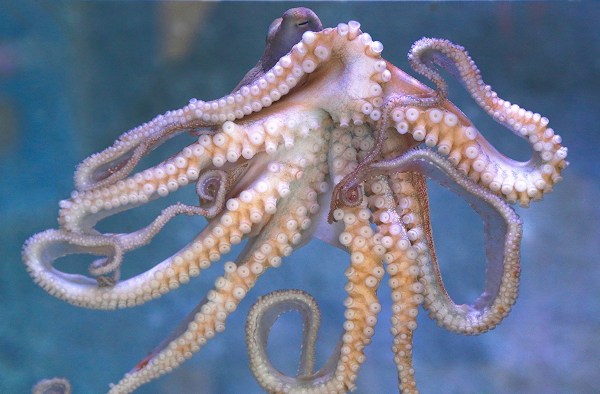
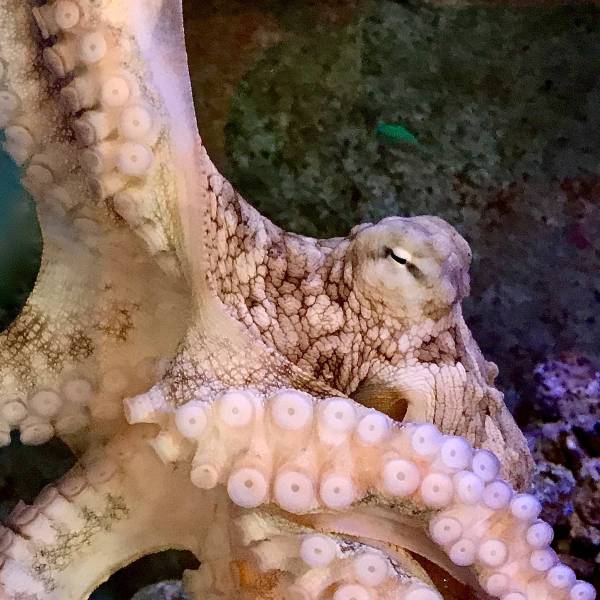
Genus/species: Octopus cyanea

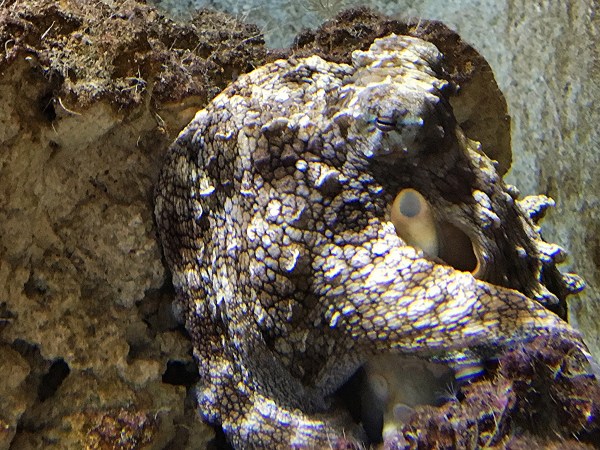
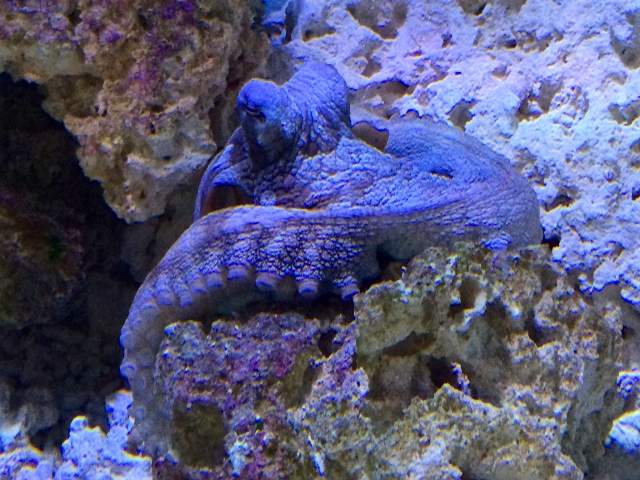
GENERAL CHARACTERISTICS:  Dark eye-spots are only sometimes visible and depends upon the patterns being displayed by individual octopuses. Cryptic Coloration: they are able to change coloration, and texture of their skin, to resemble their environment (adaptive or active
camouflage).


Bodies up to at least 16 cm (6 inches) and arms to at least 80 cm (30 inches).

DISTRIBUTION/HABITAT: Tropical reefs from Hawaii to East Africa. O. cyanea is found in excavated lairs in coral reefs and rubble which can be located by identifying remains of clams, crabs at the entrance.


DIET IN THE WILD: Feeds during daylight hours requiring exceptional camouflage. Consumes crabs, clams and fishes.

REPRODUCTION: Males have a long modified third right arm that they hold in an upright coiled position and wave toward the female. When the female is receptive to the signaling male, he inserts his arm into the female’s oviducts to pass her spermatophores keeping his distance to avoid being eaten by the female.

Day Octopus (aka Big Blue Octopus)
Day Octopus19111242362_db83003f76_k


PREDATORS: Seals and large fish.

CONSERVATION: IUCN Red List; not assessed 2015

References

California Academy of Sciences Color of Life Exhibit 2015

Ron’s flickr  https://www.flickr.com/photos/cas_docents/19111242362/in/album-72157652559028013/

Encyclopedia of Life  www.eol.org/pages/593207/details

Marinebio  marinebio.org/species.asp?id=553

Ron’s WordPress shortlink  http://wp.me/p1DZ4b-1xs

TAXONOMY
Kingdom: Animalia
Phylum: Chordata
Class: Amphibia
Order: Anura
Family: Dendrobatidae

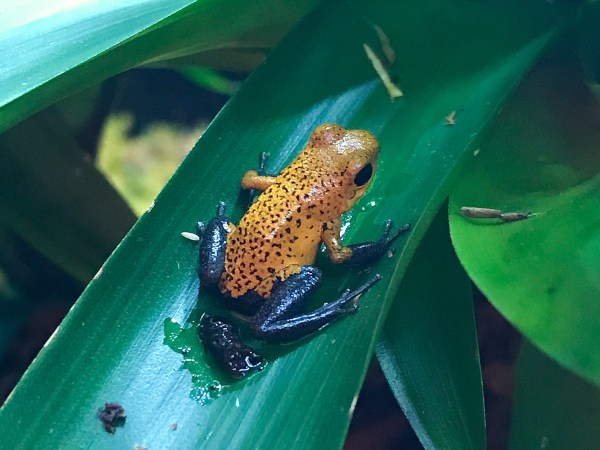
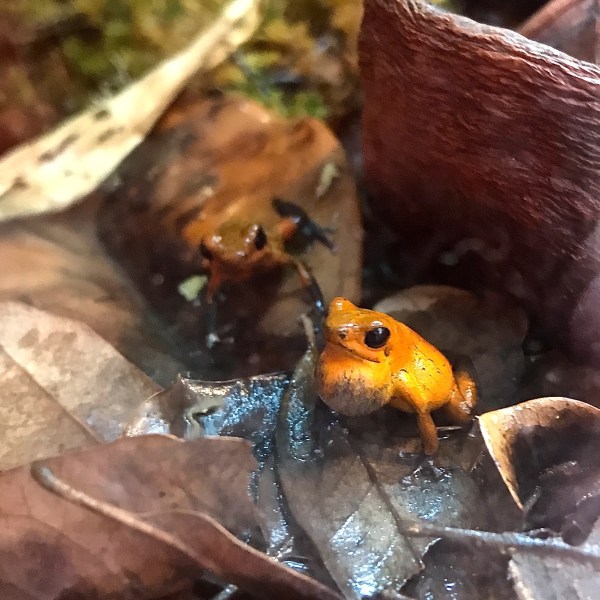
Genus/species: Oophaga (formerly Dendrobates) pumilio

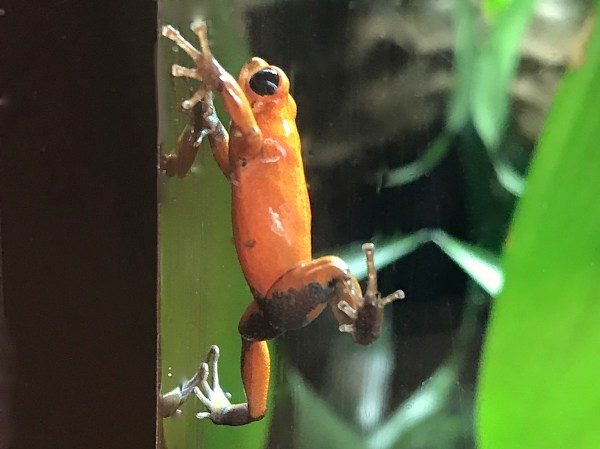
GENERAL CHARACTERISTICS: Despite the common name, coloration is reportedly highly variable among locations with up to 30 color morphs . Individuals may be ripe-strawberry red, brilliant blue, deep green or brown. The limbs are marbled dark blue and black. Body is slim, snout is rounded, the eyes large. The long, slender forelimbs end in finger and toe tips expanded into adhesive discs. Length to 2.5 cm (1 inch).

DISTRIBUTION/HABITAT: Nicaragua, Costa Rica, Panama. Primarily terrestrial in tropical rain forest leaf litter and decaying vegetation.

DIET IN THE WILD: Hunts diurnally, primarily upon ants and oribatid mites.

PREDATION: Night ground snakes are immune to the toxins of O. pumilio. Tadpoles are often consumed because their poison glands are underdeveloped.  They are in danger of an aggressive fungus – Chytrid Fungus – that is killing off frog populations around the globe.

REPRODUCTION: The male protects and keeps their eggs moist until they hatch. Then the female carries the tadpoles to a water filled bromeliad where the young feed on unfertilized eggs (oophagy).

CONSERVATION: IUCN Red List: Least Concern (LC)
population numbers are currently high despite illegal capture for the pet trade and habitat loss.

REMARKS: Alkaloids in the skin glands of poison frogs serve as a chemical defense against predation, and most come from the oribatid mites. In captivity, with a non-native food source, they lose their toxicity.


References

California Academy of Sciences Docent Rainforest Training Manual 2014

Ron’s flickr  http://www.flickr.com/photos/cas_docents/sets/72157608456457315/with/3142854919/

Animal Diversity Web animaldiversity.org/accounts/Oophaga_pumilio/

IUCN Red List  www.iucnredlist.org/details/55196/0

Encyclopedia of Life  eol.org/pages/330984/details

Ron’s WordPress shortlink http://wp.me/p1DZ4b-LZ

TAXONOMY
Kingdom: Animalia
Phylum: Chordata
Class: Actinopterygii (ray-finned fishes)
Order:Perciformes (Perch-likes)
Family: Pomacentridae (Damselfishes, Chromis, Aneomonefishes)
Subfamily: Amphiprioninae (anemonefishes)

Genus/species: Amphiprion ocellaris

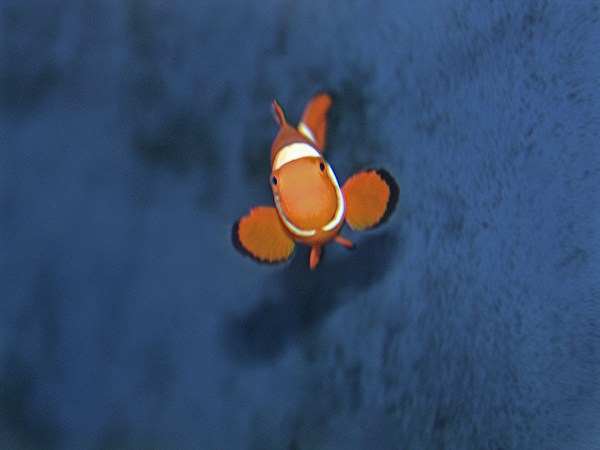
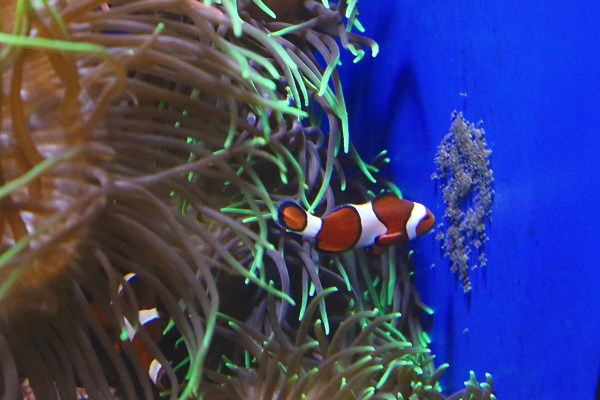
GENERAL CHARACTERISTICS: Adults are orange with three broad vertical white bands with thin black margins. Females are larger than males. Similar to the Clown Anemonefish (Amphiprion percula) but has 11 spines in the dorsal fin compared to 10, while the spiny part of the dorsal fin is also taller.

Length up to 9 cm (3.5 inches)

DISTRIBUTION/HABITAT: Found among tropical Pacific Ocean coral reefs. They sleep and feed among the tentacles of their host anemone. Stichodactyla gigantea, Stichodactyla mertensi, as well as the anemone Heteractis magnifica and others. The False Clownfish is usually found at depths of about 15 m (50 ft).

(Amphiprion ocellaris) aka FALSE CLOWNFISH

DIET IN THE WILD: Feeds primarily on zooplankton, especially copepods and also on filamentous algae.

REPRODUCTION: A. ocellaris breeds continuously at the Steinhart. Adhesive eggs are laid on a patch of cleared rock near the host anemone’s base and guarded by the male. Eggs hatch after 10 days. The tiny transparent planktonic larvae swim away from the anemone. Two weeks later the larvae metamorphose into small fish. As protandrous hermaphrodites; all individuals mature as males, and all females are sex-reversed males. In the absence of a female the largest male will turn into a female.

Longevity: Up to 12 years in captivity

REMARKS:  Clownfish and anemone display a classic case of mutualism. Clownfish become resistant to their host by gradually (matter of minutes to days) acquiring a covering of mucus
by brushing against the tentacles of their host. Once the fish has become chemosensorilly camouflaged, the host anemone’s nematocysts do not sting the clownfish.

Some of the anemone’s nutrition results from the clownfish’s activities; clownfish gain protection among the anemone’s nematocysts.

Nemo and his parents in Finding Nemo resemble this species. That said, Marlin, Nemo’s father, given the scenario would have changed into a female following the death of Nemo’s mother and remained near his host anemone, rather than swimming to Sydney. But then the film makers wouldn’t have a narrative to support this film! The name “Nemo” has found its way into FishBase (http://www.fishbase.org) as a common name for this species in the USA!        

References

California Academy of Sciences Steinhart Aquarium Philippine coral reef 2016

Animal Diversity Web  animaldiversity.org/accounts/Amphiprion_ocellaris/

fishbase  fishbase.org/summary/Amphiprion-ocellaris.html

Flickr  http://www.flickr.com/photos/cas_docents/sets/72157608339622313/

WordPress shortlink  http://wp.me/p1DZ4b-mp


TAXONOMY
Kingdom: Animalia
Phylum: Cnidaria
Class: Anthozoa
Order: Actiniaria
Family: Stichodactylidae

Genus/species: Heteractis magnifica

GENERAL CHARACTERISTICS: H. magnifica is the second largest in size of all sea anemones. Disc to 1 m (3 ft) in diameter. Column which may be red, purple, or pink, grows to 20 cm (8 in). Tentacles (exceed 8 cm 3 in long) are of uniform thickness and do not taper at te tip; tentacles and oral disc are colored alike in shades of magenta-purple, blue, green , red, white or brown.


DISTRIBUTION/HABITAT: Found in the Indo-Pacific at 1–25 m (3-85 ft) often on prominent structures in strong currents or in strong surge locations.

DIET IN THE WILD: Most nutrition is from products of zooxanthellae. Also may eat fish and crustaceans using their stinging nematocysts.

REPRODUCTION: Asexual reproduction by longitudinal fission. The presence of the symbiotic clown fish Amphiprion chrysopterus can increase the amount of asexual reproduction and general growth.
Sexual reproduction, their fertilized eggs develop into a planula larvae which settles on the ocean floor and develops into a polyp.


PREDATION: Symbiotic clownfishes, chase away any nibbling predators, especially bristle worms.

LONGEVITY: in the wild. It is estimated that some of these anemones are hundreds of years old. In captivity, the longest lifespan is 80 years.

CONSERVATION: IUCN: Not Evaluated

REMARKS: Host to at least 12 anemonefish species. When disturbed, H. magifica “balls up,”showing only the column with only a few tentacles protruding.
The magnificent anemone is motile when trying to re-position itself to obtain more sunlight. This species moves by creeping on its basal disc, or by letting the tide carry it.
Anemones can be semi-aggressive and sting other anemones that invade their space.

References

California Academy of Sciences Water is Life Animal Attractions 2017

Ron’s flickr https://www.flickr.com/photos/cas_docents/32131406193/in/album-72157629304397467/

Animal Diversity Web animaldiversity.org/accounts/Heteractis_magnifica/

Ron’s WordPress Shortlink  http://wp.me/p1DZ4b-1PJ


TAXONOMY
Kingdom: Animalia
Phylum: Chordata
Class: Actinopterygii
Order: Perciformes
Family: Cichlidae
Tribe: Lamprologini

Genus/species: Neolamprologus species

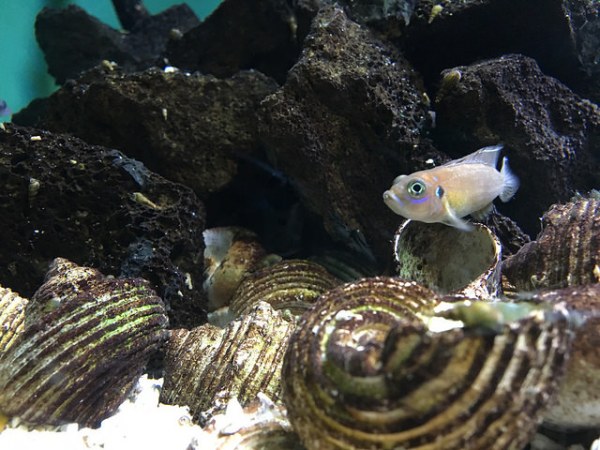
Male Neolamprologus brevis for example reach lengths of just 4.5 cm (1.75 inches) while females are even smaller, around 3 cm (1.25 inches) long. These cichlids probably evolved from fish that lived in rocky cave, but pressure from competition and the many predators of Lake

Lake Tanganyika has very high levels of carbonate hardness, and the calcium in the water ensures that empty shells dissolve much more slowly than they do in most rivers and lakes. In some places there are piles of shells more than 3 metres (10 feet) deep.

DIET IN THE WILD: Zooplankton and small invertebrates

REPRODUCTION: To protect their young eggs are laid by the female within a shell and fertilized as she lays them or immediately after by the male.The female protect the eggs within the shell by fanning her pectoral fins to keep the internal water oxygenated, and often rearranging the substrate to create barriers or to hide the shell from predators.

The eggs hatch within 48 hours, and the yolk sac is absorbed within five days. Fry typically emerge from the shell a week after spawning and they remain benthic for days or weeks after their emergence.

References

California Academy of Sciences Steinhart Aquarium Animal Attractions 2017

Ron’s flickr https://www.flickr.com/photos/cas_docents/15764972796/in/album-72157629304397467/

EOL eol.org/pages/5344/details

Conscientious Aquarium www.wetwebmedia.com/ca/volume_7/volume_7_1/shell_dwell.html

Ron’s WordPress Shortlink  http://wp.me/p1DZ4b-1PB

TAXONOMY
Kingdom: Animalia
Phylum: Chordata
Class: Actinopterygii
Order: Perciformes
Family: Cichlidae

Genus/species: Altolamprologus calvus

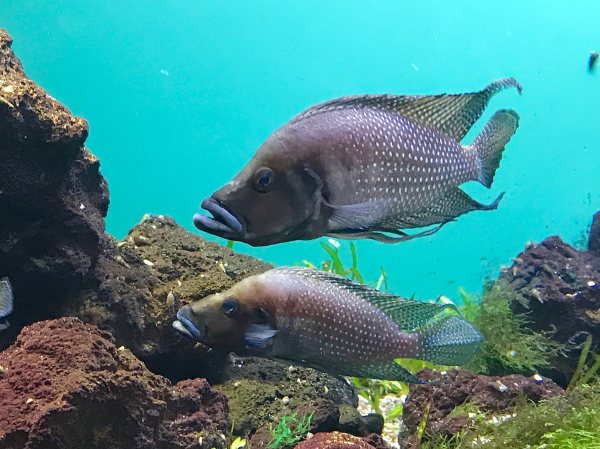
GENERAL CHARACTERISTICS: The body colors will vary between a black to a light whitish gray,and be with or without a yellow cast. They are laterally compressed body, a steep sloping forehead, stripes that are more apparent on the head and collar region, and brilliant white spots that decorate the posterior two-thirds of their flanks. Large dorsal fin running along the entire length of the back. It has a scaleless area on its forehead right between the eyes. Hence its species name “calvus” means “bald”

Length up to six inches, Males are about one-third larger than females.

DISTRIBUTION: One of 200 Cichlid species in Lake Tanganyika.
HABITAT: Rocky areas, particularly the reef-like structures in the lake.

DIET: Predator, and specializes in snatching young cichlids and tiny crustaceans found between rock crevices and rock piles.

Black Calvus  Altolamprologus calvus

REPRODUCTION: Spawning takes place in a cave, shell, or crevice too small for the male to enter. The male will release his milt at the entrance. The female will stay inside fanning the eggs and protecting them while the male guards outside. Typical spawns may number as many as 200 which take more than a week before they hatch and are mature enough to move out on their own.

Longevity: up to 8 years

IUCN Near Threatened                                                                                                                                                                        Excess sediment has its most severe effects on the rocky areas inhabited by Altolamprologus calvus, filling crevices and blanketing its food source. In addition there are rising levels of toxic heavy metals in the lake’s water.

References

California Academy of Sciences Steinhart Aquarium Animal Attractions 2017

Ron’s flickr https://www.flickr.com/photos/cas_docents/8393611475/in/album-72157629304397467/

Archive www.arkive.org/tanganyika-blackfin/altolamprologus-calvus/

 IUCN www.iucnredlist.org/details/60455/0

 Animal World  animal world.com/encyclo/fresh/cichlid/WhitePearlyCalvus.ph

 Ron’s WordPress Shortlink http://wp.me/p1DZ4b-qc


TAXONOMY
Kingdom: Animalia
Phylum: Chordata
Class: Amphibia (Amphibians)
Order: Anura
Family: Pipadae

Genus/species: Pipa pipa

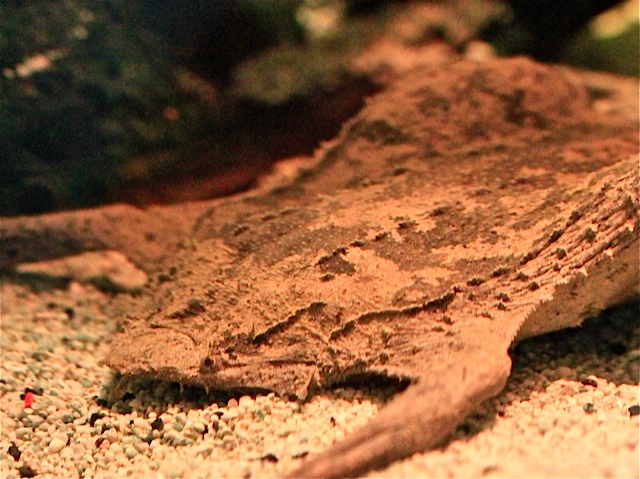
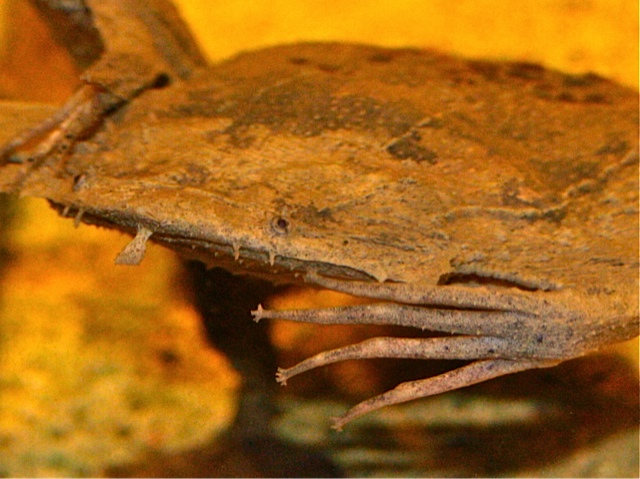
GENERAL CHARACTERISTICS: The stout body has a triangular head, small black beadlike eyes and nostrils at the end of two narrow tubes on its snout. Huge, webbed rear feet are used for propulsion. It is dark gray to brown color, along with flaps and projections of skin on the jaw and around the body, helping it blend into the surroundings.

Length up to 20 cm (8 in). Weight: 3.5 to 5.6 ounces.

DIET IN THE WILD: Juveniles are cannibals and predators. Adults  lye patiently in wait locating food with long fingers with star-shaped tactile organs on its fingertips in murky water P. pipa does not have teeth or a tongue, so its large mouth helps it swallow food whole eating  fish, worms, insects, and crustaceans.


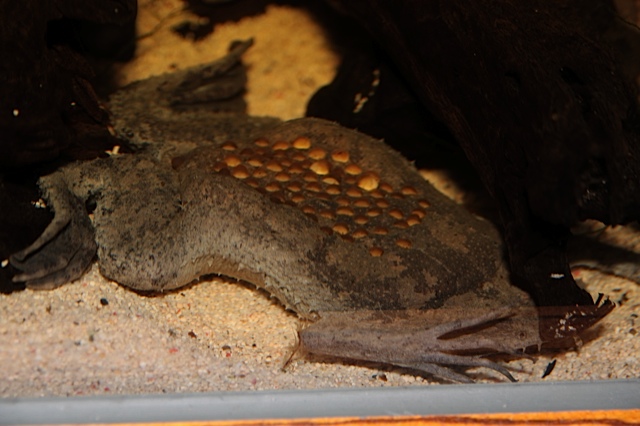
REPRODUCTION/DEVELOPMENT: Males utilize a rapidly repeated clicking sound to attract mates. Grasping the female from above, the male fertilizes the eggs as they are extruded. The male and female somersault together through the water, as fertilized eggs are released. Given the female’s swimming dexterity and an assist by the male, the eggs are placed on her back where they embed in the skin, which has become soft during mating season. Within 24 hours the female’s skin begins to swell around her eggs forming skin-covered pockets. Larvae mature through the tadpole stage within these pockets for 12–20 weeks, and eventually emerge as fully formed toads, though they are less than 2 cm (0.8 in) long. Surinam toads have reproduced successfully at the Steinhart for many years.

Mortality/Longevity: Though they often seem all skin and no flesh, these toads are eaten by some indigenous Amazonian peoples and other aquatic predators.Lives up to 8 years.

CONSERVATION: IUCN Least Concern

REMARKS: Like all Pipidae, it lacks a tongue. The clicking sound they make is produced by snapping the hyroid bone in their throats.
Pipid frogs seem more specialized for an aquatic life style than any other group of frogs as suggested by their flat bodies, dorsal eyes, the lateral line system of the adult, extensive webbing, powerful hind limbs that cannot be folded under the body, and elaborate aquatic courtship behaviors.

References

California Academy of Sciences Steinhart Aquarium animal attractions 2017

Ron’s flickr http://www.flickr.com/photos/cas_docents/3399392575/in/set-72157608456457315

Animal Diversity Web animaldiversity.org/accounts/Pipa_pipa/

Amphibiaweb http://amphibiaweb.org/cgi/amphib_query?where-genus=Pipa&where-species=pipa

Ron’s WordPress Shortlink  http://wp.me/p1DZ4b-pF

TAXONOMY
Kingdom:Animalia
Phylum: Chordata
Class: Actinopterygii (ray-finned fishes)
Order: Perciformes (Perch-likes)
Family: Chaenopsidae (Pike-, tube- and flagblennies)

Genus/Species Neoclinus uninotatus

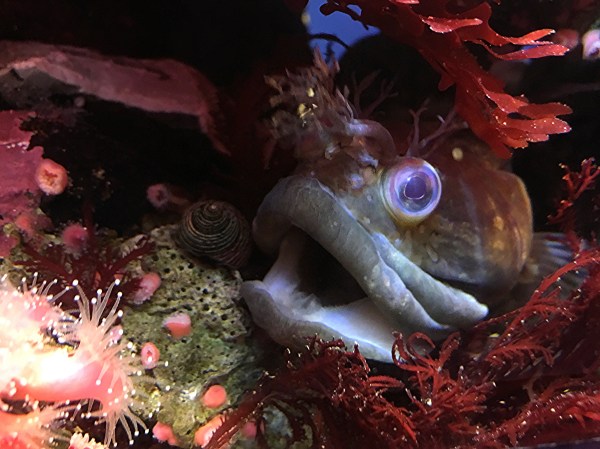
GENERAL CHARACTERISTICS: The color is usually light to dark brown with black specks and mottling. The jaw is large extending beyond the eye. There is one large ocellus (eye spot) between dorsal fin spines. A few carrier above the eye and one larger (longer than the eye diameter).

DISTRIBUTION/HABITAT: N. uninotatus is found along the California coast from Bodega Bay to the Baja California. It is usually found in rock crevices as well as inside objects, including bottles, cans, and tires which it guards fiercely.
Depth 3-27 m (10-90 ft)
Length up to 25 cm (10 in)

DIET IN THE WILD: Benthic crustaceans

REPRODUCTION: Both sexes guard the eggs with the male circulating water over them.

CONSERVATION: IUCN Least Concern.

REMARKS: The Sarcastic Fringhead is similar but has two ocelli on the dorsal fin.

References

California Academy of Sciences Steinhart Aquarium Waterplanet 2017

Ron’s flickr https://www.flickr.com/photos/cas_docents/32131392083/in/album-72157675574079744/

Pacific Coast Fishes of North America: Eschmeyer and Hearld, The Eaton Press,1983

fishbase www.fishbase.org/summary/Neoclinus-uninotatus.html

Ron’s WordPress Shortlink http://wp.me/p1DZ4b-1Pn


TAXONOMY
Kingdom: Animalia
Phylum: Chordata
Class: Amphibia
Order: Anura
Family: Dendrobatidae

Genus/species: Phyllobates lugubris

GENERAL CHARACTERISTICS: P. lugubris are small frogs, less than an inch in length, with the females slightly larger than the males. The head is longer than wide with a round snout. The back is jet black with paired dorsolateral stripes, of various colors including yellow, orange, gold or turquoise. They also have a thinner lighter turquoise or white ventrolateral stripe on each side from the tip of the snout to and along the front limbs.


DISTRIBUTION/HABITAT: This species inhabits the humid lowland and the premontane zone along the Atlantic coast of southeastern Nicaragua through Costa Rica to Central Panama. The frogs live in the leaf litter of the forest floor, near slow-moving water.

DIET IN THE WILD: Eat ants, mites, beetles, and spiders.

REPRODUCTION: Breeding occurs in the wet season. Males call to attract females, with a chortle that sounds like a hand rubbing an inflated balloon. A pair works together to create a ground nest in dry leaf litter. The female then deposits her eggs, which the male fertilizes. The male takes over and periodically moistens the eggs in the nest until the eggs hatch. He then carries 5 to 10 tadpoles at a time on his back to aquatic rearing sites. In about 2 months the tadpoles metamorphose into froglets that are about a half an inch long.
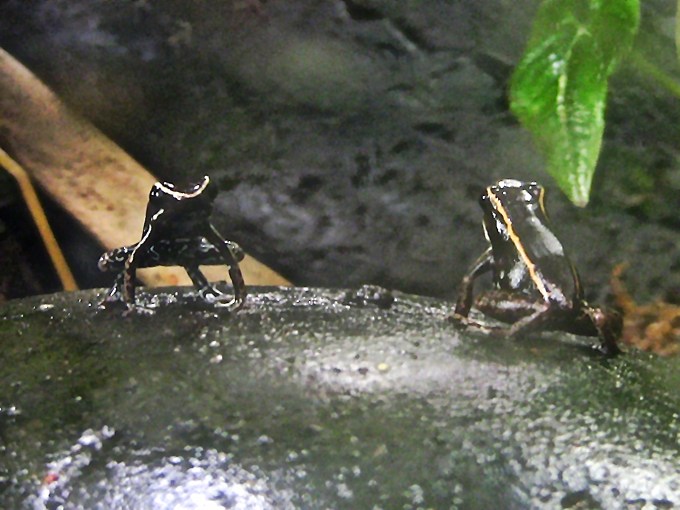
Phyllobates lugubris14933390504_dcd8c270b1_o

MORTALITY/LONGEVITY: Most poison dart frogs can live from 10 to 15 years in captivity. In general poison dart frogs have few predators. Their bright colors warn potential predators that they are toxic, even though in reality many of them merely taste bad because of sour but low potency toxins in their skins. Thus this group provides examples of both aposematic coloration and Batesian mimicry (an edible animal is protected by its resemblance to a noxious one that is avoided by predators).

CONSERVATION: IUCN Red List Least concern (LC) This species is relatively safe due to its wide distribution, tolerance to modification to its habitat, and its fairly large population. Some collected specimens have been found to be infected with Batrachochytrium dendrobatidis (chytrid fungus), but the pathogenic impacts are unclear.

REMARKS: Some South American natives capture other members of this genus (Phyllobates terribilis, P. bicolor, P. aurotaenia) to poison blow-gun darts. However, Phyllobates lugubris is not as toxic as other species in its genus and has not been documented to have been hunted primarily for its poison

P. lugubris is sympatric with another species, Eleutherodactylus gaigeae, known as the “false poison-dart frog.” This species mimics the appearance of P. lugubris in order to fend off predators, by having two paired red stripes running the length of the body. However, E. gaigae is a non-toxic mimic and does not produce batrachotoxins.

References

California Academy of Sciences Animal Attractions, Docent Rainforest Training Manual 2014

Ron’s WordPress shortlink  http://wp.me/p1DZ4b-1t1

Ron’s flickr  https://www.flickr.com/photos/cas_docents/14933390504/in/set-72157620708938680

Amphibiaweb  amphibiaweb.org/cgi/amphib_query?where-genus=Phyllobates&…

IUCN Red List www.iucnredlist.org/details/55263/0

Encyclopedia of Life eol.org/pages/1025277/details


TAXONOMY

Kingdom: Animalia
Phylum: Chordata
Class: Amphibia
Order: Anura
Suborder: Neobatrachia
Family: Centrolenidae

Genus/species: Cochranella granulosa

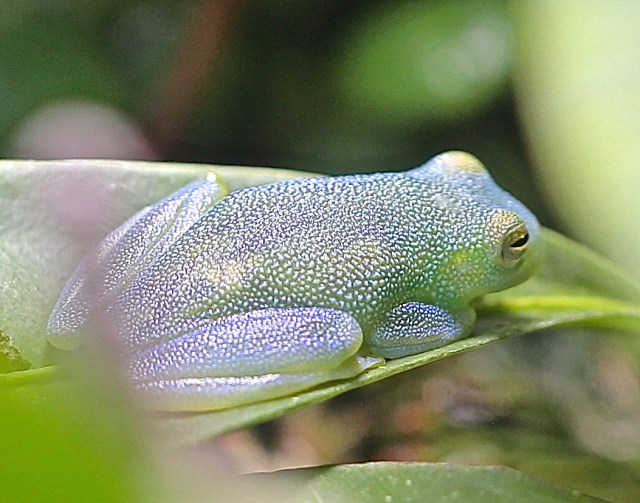
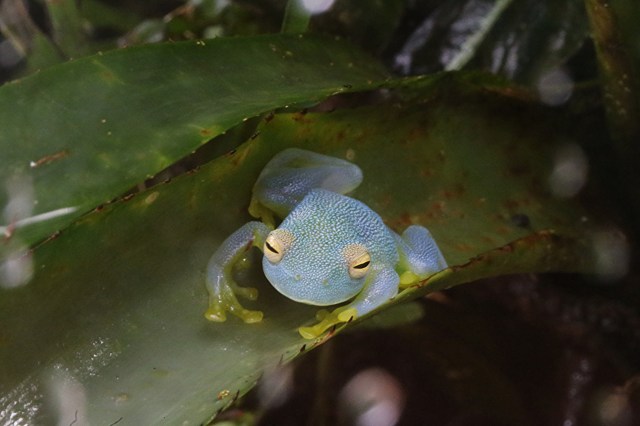
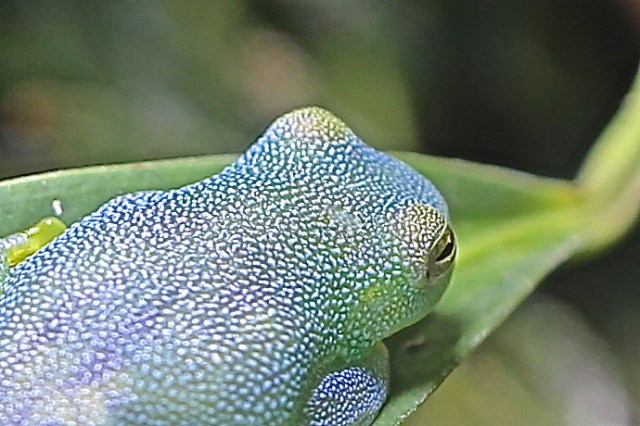
GENERAL CHARACTERISTICS: They are usually have a dark blue-green dorsum, often with scattered black spots. with the abdominal skin transparent showing internal organs. White stripe is present on the on upper lip.

Length about one inch long, females slightly larger than males.

9130488231_8c77964d0e_o-1

DISTRIBUTION/HABITAT: The Granular Glass Frog is native to Costa Rica, Honduras, Nicaragua, Panama, They are found Arboreally in subtropical or tropical moist lowland forests, rivers, and heavily degraded former forest.

Granular Glass Frog9586409513_a9555368e5_k

REPRODUCTION: C. granulosa lays eggs on leaves above water. Upon hatching the tadpoles drop into the water then grow into adults.

9130489037_84a1c9c5e5_b

CONSERVATION: IUCN: Least Concern (LC)
Generally threatened by habitat loss resulting from deforestation, and water pollution.

References

California Academy of Sciences Animal Attractions

Amphibiaweb www.amphibiaweb.org/cgi-bin/amphib_query?where-genus=Coch...

IUCN Red List www.iucnredlist.org/details/54964/0

Encyclopedia of Life eol.org/pages/1047969/details

Ron’s flickr  http://www.flickr.com/photos/cas_docents/sets/72157608456457315/with/9130483407/

Ron’s WordPress shortlink  http://wp.me/p1DZ4b-11e