Category: INDO-PACIFIC


TAXONOMY
Kingdom:Animalia
Phylum: Chordata
Class: Actinopterygii (ray-finned fishes)
Order: Perciformes (Perch-likes)
Family: Pomacentridae (Damselfishes)

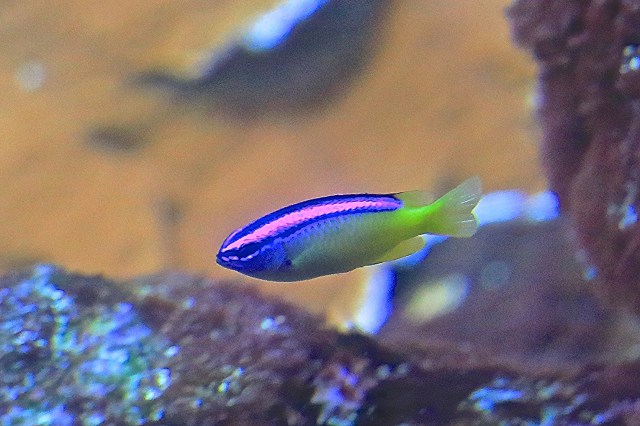
Genus/species: Chrysiptera caeruleolineata

GENERAL CHARACTERISTICS: Pale yellow to orange often with purplish tints. Bright neon-blue from the snout to the rear dorsal fin. 

Length up to 6.0 cm (2.35 inches).Blueline Demoiselle9830785676_ba56c0bdd1_o

DISTRIBUTION/HABITAT:  Indo-West Pacific. Found in rubble and rocky outcrops in sand channels of steep outer reef slopes 30 to 65 meters (100 to 200 feet).

DIET IN THE WILD: C. caeruleolineata feeds mainly on copepods.

Blueline Demoiselle9830859273_beff64f995_k

REPRODUCTION: The Blueline Demoiselle is oviparous with distinct pairing during breeding. Males guard and aerate the eggs.

CONSERVATION: IUCN Red List Not Evaluated

References

California Academy of Sciences Steinhart Aquarium Philippine Coral Reef 2016

Ron’s flicker  http://www.flickr.com/photos/cas_docents/sets/72157608339622313/with/9830778735/

fishbase www.fishbase.org/summary/SpeciesSummary.php?ID=5694

Reef Fish Identification Tropical Pacific,Allen et al 2003.

EOL eol.org/pages/994449/details

Ron’s WordPress Shortlink  http://wp.me/p1DZ4b-198


TAXONOMY
Kingdom: Animalia
Phylum: Chordata
Class: Actinopterygii (ray-finned fishes)
Order: Perciformes (Perch-likes)
Family: Pomacentridae (Damselfishes)

Genus/species: Dascyllus melanurus

GENERAL CHARACTERISTICS: Deep and compressed body; white with three black bars, rear two-thirds of tail is black; large white spot between eyes extends to lips. Pectoral fins transparent.

Length up to 8 cm (3 inches)

4436800067_8a0581806e_o


DISTRIBUTION/HABITAT: Blacktail Damselfish are found in the Western Pacific among branching corals in inshore and lagoon reefs to 68 m (210 ft).

DIET IN THE WILD: Omnivore; feeds on plankton, including larval shrimps and crabs, algae, ostracods, amphipods, pelagic tunicates, copepods, and fish eggs.

Dascyllus melanurus4437575636_cc28be23c1_b

REPRODUCTION: The Blacktail Damselfish is oviparous, with distinct pairing during breeding  The eggs are demersal and adhering  to the substrate  Males guard and aerate the eggs. Recent research suggests this species is a protogynous hermaphrodite.

CONSERVATION: IUCN Red List Not Evaluated

REMARKS: They hide among Acropora branching corals when threatened, though adults have an aggressive temperament.

References

California Academy of Sciences Philippine coral reef and Defenses Cluster 2016

Ron’s flickr https://www.flickr.com/photos/cas_docents/4436800067/in/album-72157608339622313/

Ron’s WordPress Shortlink: http://wp.me/p1DZ4b-G1 

fishbase  www.fishbase.se/summary/Dascyllus-melanurus.html

EOL eol.org/pages/211713/details

TAXONOMY
Kingdom: Animalia
Phylum: Chordata
Class: Actinopterygii (ray-finned fishes)
Order: Perciformes (Perch-likes)
Family: Pomacentridae (Damselfishes)

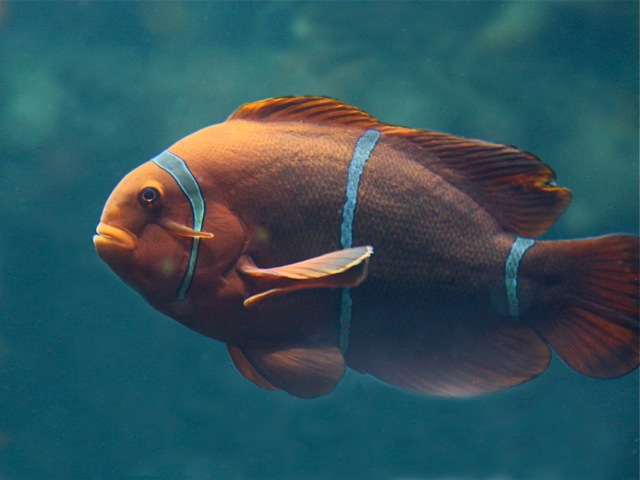
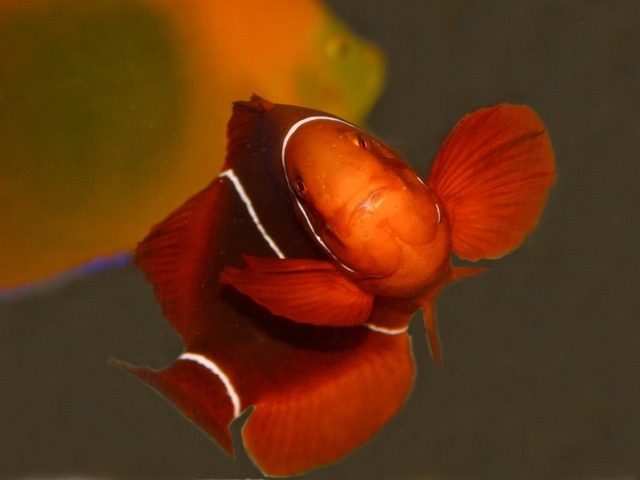
Genus/species: Premnas biaculeatus

Female below

GENERAL CHARACTERISTICS: Juveniles orange-colored; color deepens with age. Male smaller, bright red with three brilliant white bars, sometimes barely visible. Female becomes maroon or almost black with subdued bars. Note the conspicuous spine on cheek below the eye.

 Length to 17 cm (6.75 inches). 

DISTRIBUTION/HABITAT: Indo-West Pacific: Indo-Australian Archipelago including India, Burma, Thailand, Malaysia, Indonesia,Philippines, New Guinea New Britain, Solomon Islands, Vanuatu, and northern Queensland, Australia.  Premnas biaculeatus is found in lagoons and seaward reefs, 1–16 m (3.25-52.5 ft) exclusively with the sea anemone Entacmaea quadricolor. They are usually in pairs.

DIET IN THE WILD: Zooplankton and algae.

REPRODUCTION: Oviparous. Males and females guard and aerate the eggs. Protandrous hermaphrodite, In the case of the death of the female, the second largest changes from male to female. Size difference is maintained in order to avoid subordinates becoming a threat to the highest ranking male.; female is to about 2–3 times the size of her male partner.

LIFESPAN: 6 to 10 years in the wild.

PREDATORS: Wrasses

CONSERVATION: IUCN: Not evaluated

REMARKS: P. biaculeatus has a mutualist relationship with Entacmaea quadricolor. The anemone benefits from having spinecheek anemonefish protect them from butterflyfishes, which feed on their tentacles. P. biaculeatus also clean away debris and parasites from the anemone. Spinecheek anemonefish are protected from most fish by the venomous anemones tentacles which do not injure the anemone fish.

References

California Academy of Sciences Steinhart Aquarium Philippine Coral Reef 2016

ADW  http://animaldiversity.ummz.umich.edu/accounts/Premnas_biaculeatus/

fishbase http://www.fishbase.org/summary/Premnas-biaculeatus.html

eol  http://eol.org/pages/211316/details

Ron’s flickr http://www.flickr.com/photos/cas_docents/sets/72157608339622313/with/3342653723/

Ron’s WordPress Shortlink http://wp.me/p1DZ4b-FU

TAXONOMY
Kingdom: Animalia
Phylum:Chordata
Class: Actinopterygii (ray-finned fishes)
Order: Perciformes (Perch-likes)
Family: Pomacentridae (Damselfishes)
Subfamily: Amphiprioninae (anemonefishes)

Genus/species: Amphiprion ocellaris

GENERAL CHARACTERISTICS: Length to 9 cm (3.5 inches). Adults are orange with three broad vertical white bands, thin black margins on fins. Female larger than male. Similar to the Clown Anemonefish (Amphiprion percula) but has 11 spines in the dorsal fin compared to 10, while the spiny part of the dorsal fin is also taller.

Length up to 9 cm (3.5 inches)

DISTRIBUTION/HABITAT: Tropical Pacific Ocean among Coral reefs sleeping and feeding among the tentacles of their host anemones Stichodactyla gigantea, Stichodactyla mertensi, as well as the anemone Heteractis magnifica. The False Clownfish is usually found at depths of about 15 metres (50 ft).

DIET IN THE WILD:  Feeds primarily on zooplankton, especially copepods and also on filamentous algae.

REPRODUCTION: A. ocellaris breeds continuously at the Steinhart. Adhesive eggs are laid on a patch of cleared rock near the host anemone’s base and guarded by the male. Eggs hatch after 10 days. The tiny transparent planktonic larvae swim away from the anemone. Two weeks later the larvae metamorphose into small fish. As protandrous hermaphrodites; all individuals mature as males, and all females are sex-reversed males. In the absence of a female the largest male will turn into a female.
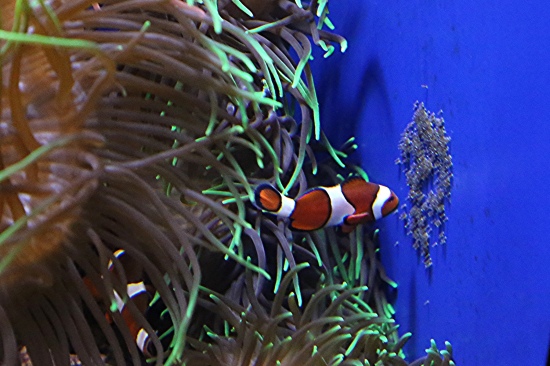
26696450165_4b73a224b7_k

Longevity: Up to 12 years in captivity

CONSERVATION: IUCN Red List Not Evaluated

REMARKS. Clownfish and anemone display a classic case of mutualism. Clownfish become resistant to their host by gradually (matter of minutes to days) acquiring a covering of mucus by brushing against the tentacles of their host. Once the fish has become chemosensorilly camouflaged, the host anemone’s nematocysts do not sting the clownfish.

Some of the anemone’s nutrition results from the clownfish’s activities; clownfish gain protection among the anemone’s nematocysts.

Nemo and his parents in Finding Nemo resemble this species. That said, Marlin, Nemo’s father, given the scenario would have changed into a female following the death of Nemo’s mother and remained near his host anemone, rather than swimming to Sydney. But then the film makers wouldn’t have a narrative to support this film! The name “Nemo” has found its way into FishBase as a common name for this species in the USA!

References

California Academy of Sciences Steinhart Aquarium Philippine coral reef 2016

Animal Diversity Web animaldiversity.org/accounts/Amphiprion_ocellaris/

fishbase.org/summary/Amphiprion-ocellaris.html

Ron’s flickr http://www.flickr.com/photos/cas_docents/sets/72157608339622313/with/3380825084/

Ron’s WordPress Shortlink  http://wp.me/p1DZ4b-FJ

TAXONOMY
Kingdom: Animalia
Phylum: Chordata
Class: Actinopterygii (ray-finned fishes)
Order: Perciformes (Perch-likes)
Family: Pomacentridae (Damselfishes)

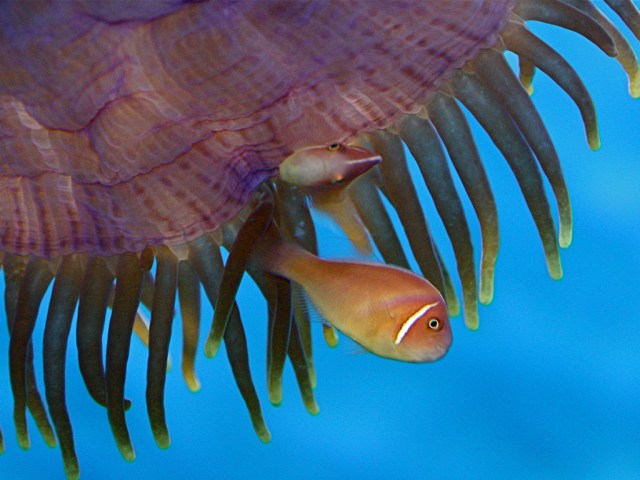
Genus/species: Amphiprion perideraion


GENERAL CHARACTERISTICS: Pinkish-orange coloration varies in saturation of color by individual. Distinctive narrow white head bar, narrow white dorsal stripe from eyes to tail.

Length: Up to 10 cm or 4 inches in length

DISTRIBUTION/HABITAT: Indonesia to Marshall Islands Southwest Japan to northwest Australia. Found in coral reefs from 3–30 m (10-100 ft).  They pursue a symbiotic life with at least 4 anemone species but most commonly with the large (to 1 m or 3.2 ft. diameter) mature magnificent sea anemone (Heteractis magnifica). Also associates with Heteractis crispa, Macrodactyla doreensis and Stichodactyla gigantea.

DIET IN THE WILD: Zooplankton, primarily copepods, as well as filamentous algae.

REPRODUCTION: Protandrous hermaphrodites. Like all anemonefishes, sex and growth are controlled by the dominant female. Elliptical eggs are laid on rocks close under the host anemone’s mantle. The male fish guards the eggs. Upon hatching the larvae drift in the plankton.

References

California Academy of Sciences Steinhart Aquarium Philippine Coral Reef 2016

Ron’ flickr  http://www.flickr.com/photos/cas_docents/sets/72157608339622313/with/4689320711/

Arkive  www.arkive.org/pink-anemonefish/amphiprion-perideraion/

fishbase www.fishbase.org/summary/2024

Australia Museum australianmuseum.net.au/pink-anemonefish-amphiprion-perid…

Ron’s WordPress Shortlink: http://wp.me/p1DZ4b-FB

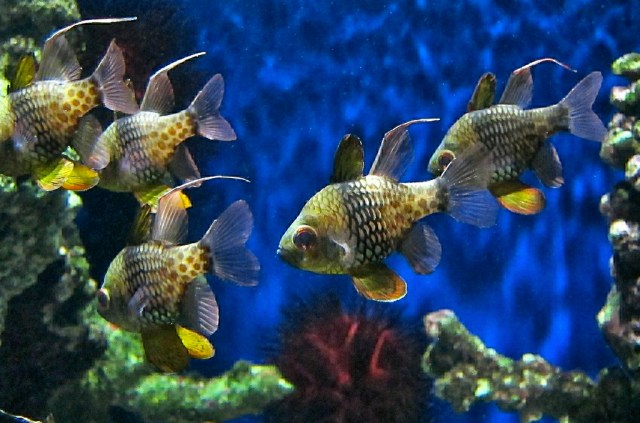
TAXONOMY
Kingdom: Animalia
Phylum: Chordata
Class: Actinopterygii
Order: Perciformes
Family: Apogonidae (Cardinalfishes)

Genus/species: Sphaeramia nematoptera

PajamaCardinalfish5251482115_ef180c71f5_b

GENERAL CHARACTERISTICS: The head is yellow with a wide black band encircling the central body. Eyes are large and red. The back half of the body has spots. 

Length up to 8.5 cm (3.3 in)

PajamaCardinalfish5251482115_ef180c71f5_b


DISTRIBUTION/HABITAT: S. nematoptera is found in the Indian and western Pacific oceans often in reef areas of bays and lagoons along with other members of their species, sheltered among branches of Porites spp.

PajamaCardinalfish4676390664_2406090ef7_b

DIET IN THE WILD: The Pajama Cardinalfish feeds on small fish and crustaceans. At night, it leaves the protection of coral shelter to feed along the bottom at about 15 m (50 feet) deep.

REMARKS: Note the large eyes, a common feature of nocturnal fishes that allows them to gather low light images. They are nocturnal and shelter during the day.

References

California Academy of Sciences Steinhart Aquarium Philippine Coral Reef 2016

Ron’s flickr https://www.flickr.com/photos/cas_docents/4676390664/in/album-72157625992053826/

fishbase www.fishbase.org/summary/Sphaeramia-nematoptera.html

Ron’s WordPress shortlink  http://wp.me/p1DZ4b-1ga

Eol   http://eol.org/pages/204401/details 

TAXONOMY
Kingdom: Animalia
Phylum: Chordata
Class: Actinopterygii (ray-finned fishes)
Order: Perciformes (Perch likes)
Family: Chaetodontidae (Butterflyfishes)

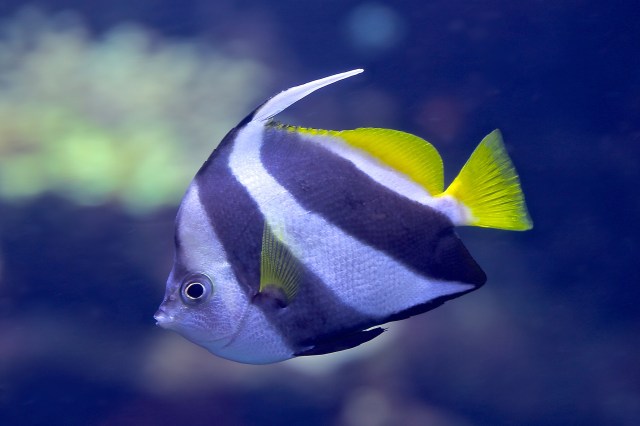
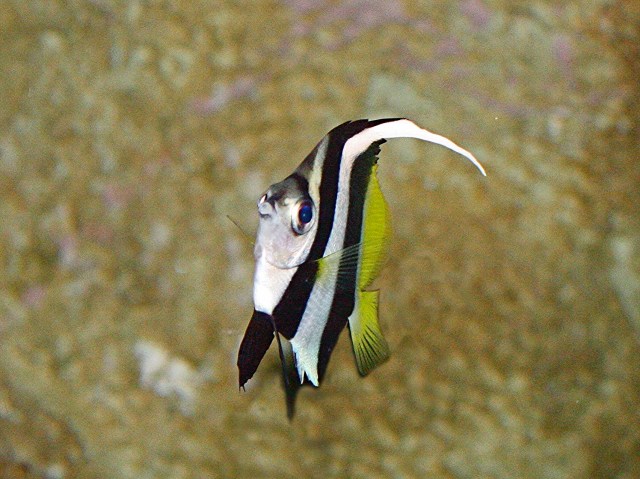
Genus/species: Heniochus diphreutes 

GENERAL CHARACTERISTICS: Their color is white with pair of black bands, second band terminating at end of anal fin. There is an elongate dorsal fin filament. All species have a deep, laterally compressed body with a continuous dorsal fin and distinctive rounded anal fin. The mouth is small, terminal, and protrusible with small brushlike teeth.

Length to 21 cm (8 inches)

Bannerfish14986703505_d27a215a05_k


DISTRIBUTION/HABITAT: Indo-Pacific; widely distributed from the Red Sea and the east coast of Africa to Hawaii on outer reef slopes, 15–210 m (50-690 ft.) in the tropics typically in cool upwelling water.

DIET IN THE WILD: Zooplankton.

REPRODUCTION: Oviparous forming pairs during breeding.

CONSERVATION: IUCN Least Concern (LC)

3266275817_271223e95d_o

REMARKS: Form large schools, and also occur in small groups or solitary. Their elongate dorsal fin filament, gives this group of fishes their “bannerfish” moniker; is the fourth dorsal spine. Often called the “false” Moorish Idol for its markings similar to the Steinhart’s iconic species; however, the flowing dorsal fin and larger size of the Idol are distinctive differentiations.

References

California Academy of Sciences Steinhart Aquarium, Philippine coral reef 2016

Ron’s flickr  http://www.flickr.com/photos/cas_docents/sets/72157625119200613/with/4714776293/

Ron’s WordPress Shortlink  http://wp.me/p1DZ4b-Go

fishbase www.fishbase.us/tools/UploadPhoto/start.php?speccode=7769

EOL eol.org/pages/213588/details

TAXONOMY
Kingdom: Animalia
Phylum: Chordata
Class: Actinopterygii (ray-finned fishes)
Order: Perciformes (Perch-likes)
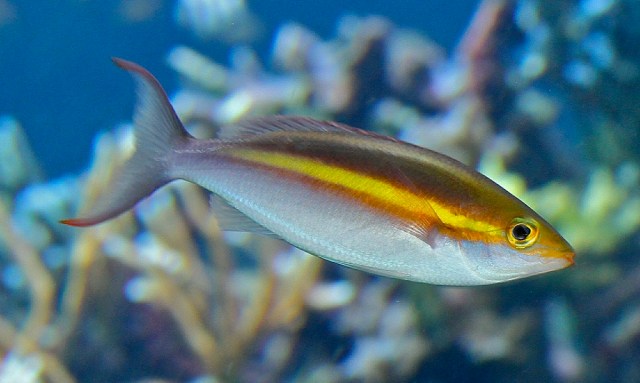
Family: Nemipteridae (Threadfin breams, Whiptail breams)

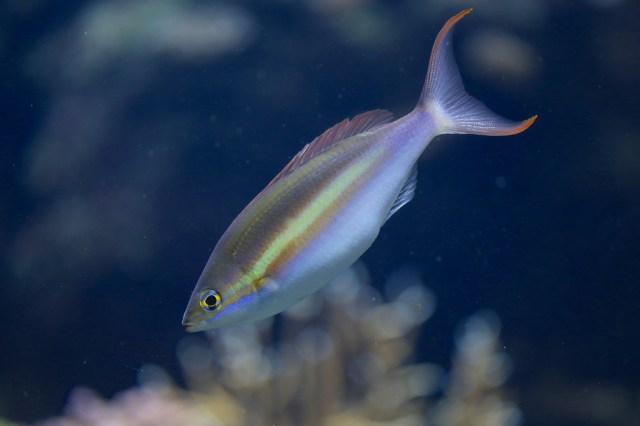
Genus/species: Pentapodus emeryii

GENERAL CHARACTERISTICS: Violet blue with two electric yellow horizontal stripes. They have a long, slender body and are sometimes known as Banana fish or the Banana Snapper.

 Length: 30.0 cm (12 inches)

8477578724_62301d77a4_b

DISTRIBUTION/HABITAT: Indo-West Pacific. Found in Lagoons and coastal reefs greater than 20m (65 feet). 

DIET IN THE WILD: Small fishes, crustaceans, ophiuroids and sipunculid worms.

CONSERVATION: IUCN Least Concern


Pentapodusemeryii6179759332_4569159598_b

References

California Academy of Sciences Steinhart Aquarium Philippine coral reef 2016

Ron’s flickr  https://www.flickr.com/photos/cas_docents/6179759332/in/album-72157625992053826/

Encyclopedia of Life: eol.org/pages/205344/details

IUCN  www.iucnredlist.org/details/155300/0

Ron’s WordPress shortlink  http://wp.me/p1DZ4b-1g1

fishbase: http://www.fishbase.org/summary/Pentapodus-emeryii.html


TAXONOMY
Kingdom: Animalia
Phylum: Chordata
Class: Actinopterygii (ray-finned fishes)
Order: Perciformes (Perch-likes)
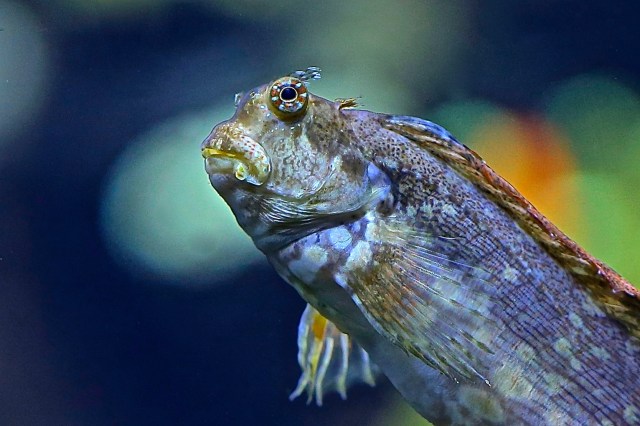
Family: Blenniidae (Combtooth blennies)

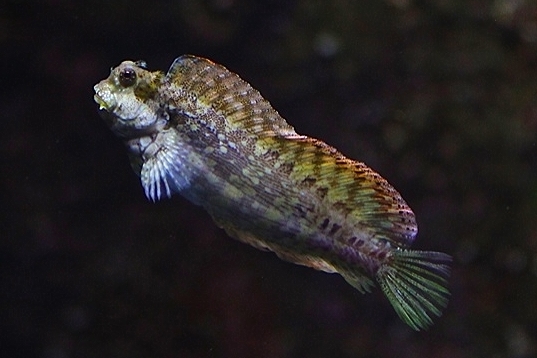
GENUS/SPECIES: Salarias fasciatus

GENERAL CHARACTERISTICS: The head has small, branched supraorbital and nuchal filamentous skin projections (cirri). The body is usually olive to brown with dark bars and a large number of round or elongated white spots of different sizes with several dusky bands.

Length up to about 12 cm (4.75 in).

Jeweled Blenny8748640285_1b56bb468a_o

DISTRIBUTION/HABITAT: Tropical Indo-Pacific. Found in intertidal areas to a few meters in-depth on reef flats and in shallow lagoons and estuaries.

DIET IN THE WILD: Algae eaters; tend to be territorial about feeding areas.

8043519996_54378d8b2c_o

REPRODUCTION: Oviparous; form pairs and guard nests.

CONSERVATION: IUCN Not evaluated

REMARKS: Tends to hop from rock to rock looking for food. Its nickname “Lawnmower Blenny” comes from its prodigious and efficient algal consumption using comb-like teeth that line the jaws.

References

California Academy of Sciences Philippine coral reef 2016

fishbase www.fishbase.org/summary/6058

EOL  eol.org/pages/1004162/details

fishbase www.fishbase.org/summary/6058

Ron’s flickr  https://www.flickr.com/photos/cas_docents/8748640285/in/album-72157625992053826/

Ron’s WordPress Shortlink  http://wp.me/p1DZ4b-1gZ

TAXONOMY
Kingdom: Animalia
Phylum: Chordata
Class: Actinopterygii (ray-finned fishes)
Order: Perciformes (Perch-likes)
Family: Serranidae (Sea basses: groupers and fairy basslets)
Subfamily: Anthiinae (Anthias)

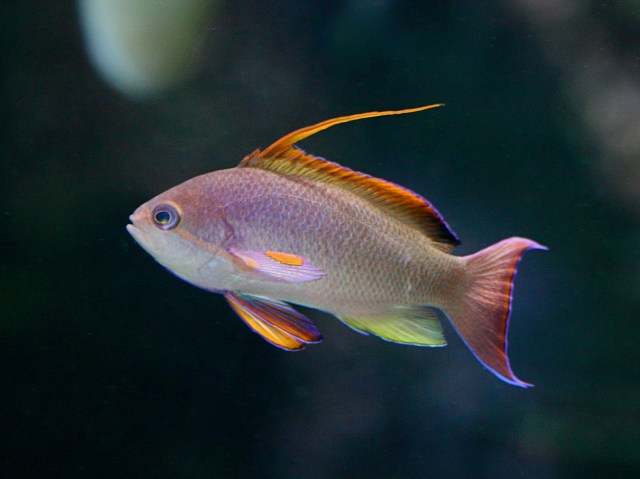
Genus/species: Pseudanthias squamipinnis

Male below

Scalefin Anthias aka Lyretail Fairy Basslet (male) IMG_0111

GENERAL CHARACTERISTICS: Males can get at least 5”. Females slightly smaller. Color patterns vary from one locality to another. Marked sexual dimorphism; Males often fuchsia in color with elongated third ray of the dorsal fin, a red patch on the pectoral fin and elongated margins of the tail. Females orange/gold color with violet streak below the eye.

Female below

Scalefin Anthias aka Lyretail Fairy Basslet (female) 9830744184_8184c027fd_k

DISTRIBUTION/HABITAT: Indo-West Pacific: Red Sea and Natal, South Africa to Niue, north to Japan, south to Australia. Found above coral outcrops or patch reefs of clear lagoons, channels, or outer reef slopes. depth range 0 – 55 m (170 feet).

DIET IN THE WILD: Zooplankton

REPRODUCTION: A protogynous hermaphrodite. All start life as females. The dominant fish will turn into a male, changing sex, and color and pattern. The male keeps a harem of several females.

CONSERVATION:  Not evaluated

References

California Academy of Sciences Steinhart Aquarium Philippine Coral Reef 2016

Ron’s flickr http://www.flickr.com/photos/cas_docents/sets/72157608545590153/with/3123885371/

Ron’s WordPress Shortlink http://wp.me/p1DZ4b-YX

fishbase  www.fishbase.org/summary/6568

Australian Museum australianmuseum.net.au/orange-basslet-pseudanthias-squam…

Encyclopedia Of Life eol.org/pages/204729/details