Tag Archive: RAINFOREST BIRDS


TAXONOMY
Kingdom: Animalia
Phylum: Chordata
Class: Aves (Feathered, winged, bipedal, endothermic (warm-blooded), egg-laying, vertebrates)
Order: Passeriformes (passerines or perching birds) Toes; three pointing forward and one back.
Family: Thraupidae (Tanagers)

Genus/species: Cyanerpes cyaneus

GENERAL CHARACTERISTICS: The male is violet-blue with black wings, tail and back, and bright red legs. The crown of its head is turquoise, and the underwing, visible only in flight, is lemon yellow. After the breeding season, the male moults into an eclipse plumage, mainly greenish with black wings. Females and immatures are mainly green, with paler, faintly streaked under parts and a pale stripe above the eye. The legs are red-brown in the female, and brown in young birds. Length ave 12.2 cm (4.8 inches).

male
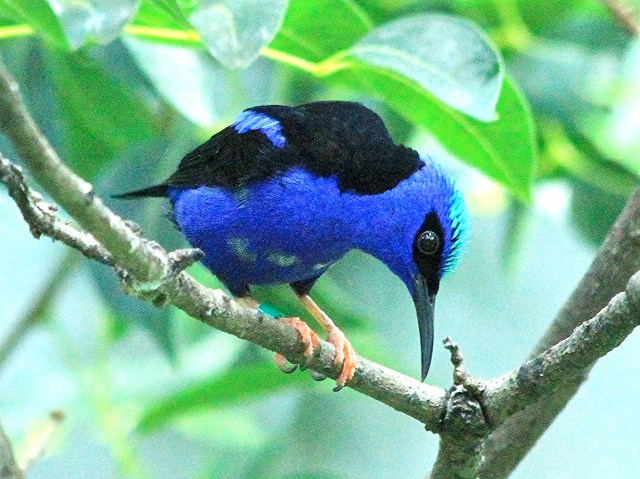
Cyanerpes cyaneus  4141915877_5600a8d45a_o

DISTRIBUTION/HABITAT: tropical New World from southern Mexico south to Peru, Bolivia and central Brazil, Trinidad and Tobago, and on Cuba. Found at the forest edge, open woodland, cocoa and citrus plantations.

DIET IN THE WILD: Nectar and small insects in flowers. It feeds on ripe fruits, pulp and seeds, taken into the fruit, thanks to the long slender bill. It examines the underside of small twigs and leaves, in order to catch small invertebrates.

REPRODUCTION: The female Red-legged Honeycreeper builds a small cup nest in a tree, and incubates the clutch of two brown-blotched white eggs for 12-13 days, with a further 14 days to fledging.

CONSERVATION: IUCN Red List Least concern (LC)                                                     Due to its extremely large range.

Female
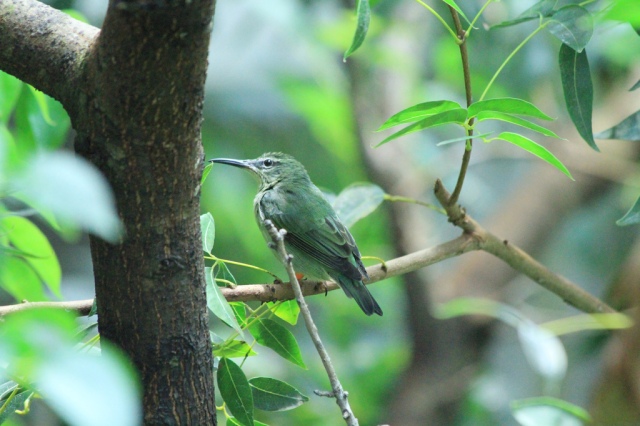
4141913837_6589cb943b_b

REMARKS: The call of Red-legged Honeycreeper is a thin, high-pitched tsip.

Female
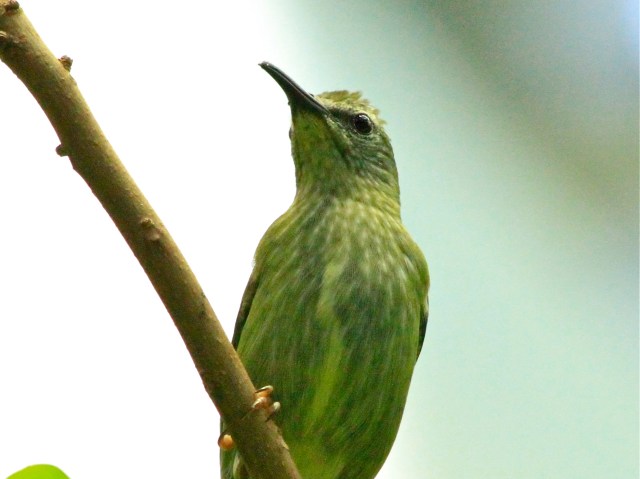
 

Red-legged Honeycreeper (female) 4141915745_6f640230c1_o

References

EOL eol.org/pages/918134/details

CornellLab of ornithologyneotropical.birds.cornell.edu/portal/species/identificati…

IUCN www.iucnredlist.org/details/22723012/0

Ron’s flickr   http://www.flickr.com/photos/cas_docents/sets/72157608454346681/

Ron’s WordPress Shortlink  http://wp.me/p1DZ4b-fs
TAXONOMY
Kingdom: Animalia
Phylum: Chordata
Class: Aves (Feathered, winged, bipedal, endothermic warm-blooded, egg-laying, vertebrates)
Order: Passeriformes (passerines or perching birds) Toes; three pointing forward and one back.
Family: Thraupidae (Tanagers)

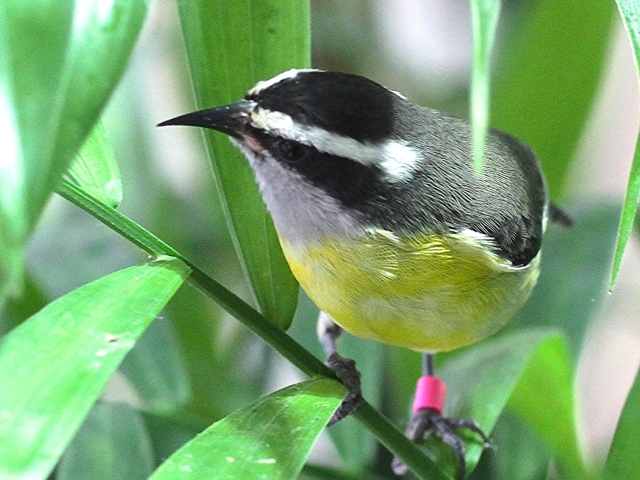
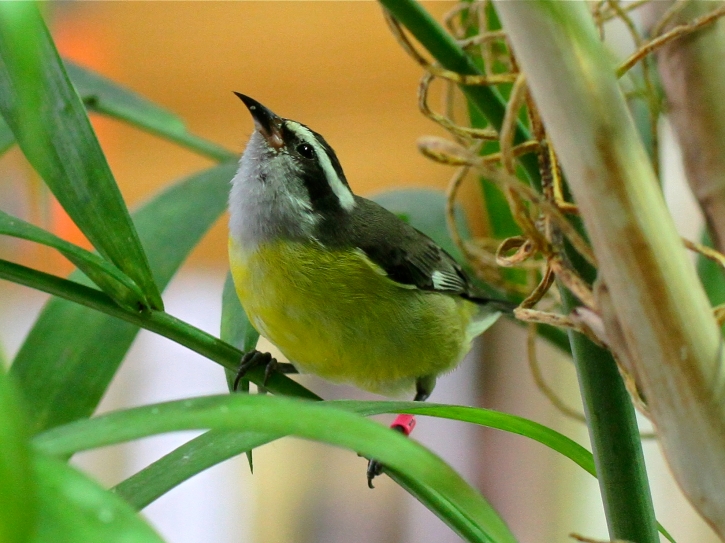
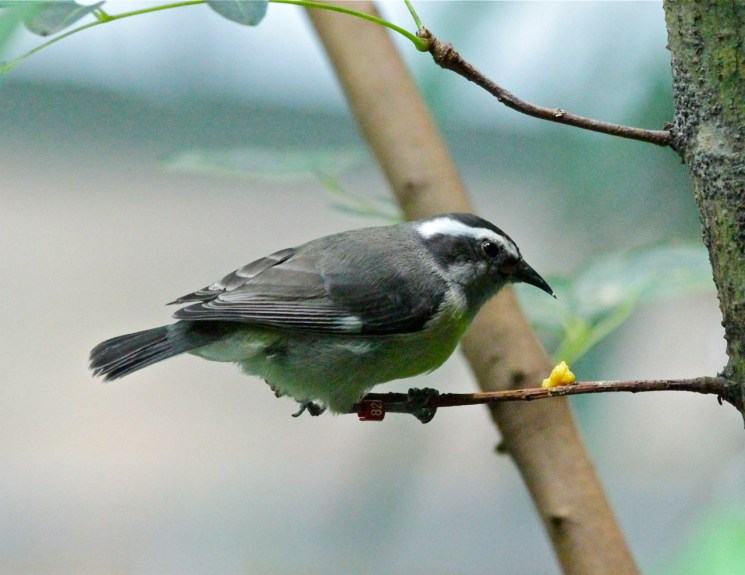
Genus/species: Coereba flaveola

GENERAL CHARACTERISTICS: Feathers on the dorsal side are dark gray. There is a white eyebrow stripe, white wing spot, and yellow breast, belly and rump. The throat can vary from white to black and the bill is down-curved. Monomorphic (males and females look similar). Small honeycreeper (length 4-5 inches).


DISTRIBUTION/HABITAT: West Indies, Caribbean mainland from Southern Mexico south to southern Brazil and northeast Argentina. Most commonly found at low elevations and rarely in the high mountainous forests in settled districts and secondary growth.

DIET: Primary food is from flowers for nectar.  Although it does use its sharp beak to pierce flowers from the side to feed, much like some hummingbirds, the Bananaquit cannot hover like a hummingbird. Also while clinging head downward; gleans small insects and spiders from foliage, or creeps over trunks and limbs searching for them.  Pollinates at least three species of Bromelioideae.

16669980639_1994ef2607_o

REPRODUCTION; The male and female build their own globe-shaped nests using leaves, grasses, and plant fibers from 5 to 30 feet above ground. Broods may contain from one to three white-cream color eggs.

LIFESPAN: 7 years in the wild.

CONSERVATION; IUCN RED LIST; Least Concern (LC)
Due to an extremely large range.

Bananaquit4329886077_48c1c841fd_o

REMARKS: The highly successful Bananaquit inhabits basically every island in the Caribbean except for Cuba. On some islands in the West Indies an entirely sooty color morph is frequent.

Peurto Rico has adopted the Bananaquit as its national bird, and many Caribbean and South American countries have featured the bird on their postage stamps.

References

Encyclopedia of Life http://eol.org/pages/1178271/details

IUCN Red List  www.iucnredlist.org/details/22722080/0

Cornell Lab of Ornithology neotropical.birds.cornell.edu/portal/species/overview?p_p…

Animal Diversity Web animaldiversity.org/accounts/Coereba_flaveola/

Ron’s WordPress Shortlink  wp.me/p1DZ4b-jv

Ron’s flickr https://www.flickr.com/photos/cas_docents/4041293060/in/album-72157608454346681/


Kingdom: Animalia
Phylum: Chordata
Class: Aves
Order: Passeriformes
Family: Thraupidae

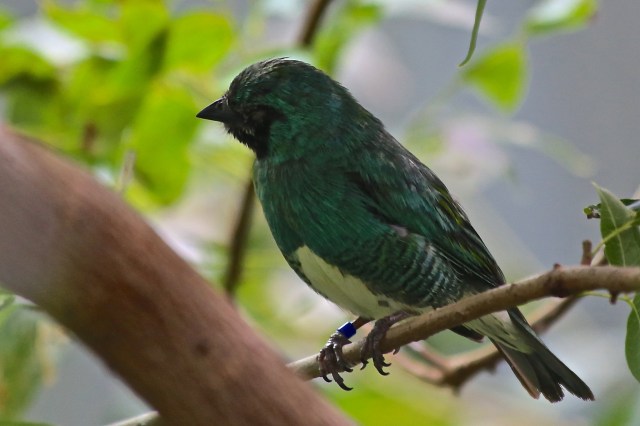
Genus/species: Tersina viridis

 GENERAL CHARACTERISTICS: Female Swallow Tanagers are a dull green overall with buffy yellow underparts. The male is light emerald-green, with a small deep black face and upper throat patch.  Length about 15 cm (6 inches).

Female below

Female Swallow Tanager15964984390_dcf5ecf5ad_k

DISTRIBUTION/HABITAT: South America, south to southern Brazil. Found in the humid forest edge and second-growth forest.

Male below

Male Swallow Tanager15529954514_08efef15f5_k

DIET IN THE WILD: Fruit and insects (insects are captured in sallying flight).

REPRODUCTION: Nest singly or in loose colonies in burrows in dirt banks, or in cavities in buildings.

CONSERVATION: IUCN: Least Concern (LC)

References: 

Cornell Lab of Ornithology neotropical.birds.cornell.edu/portal/species/overview?p_p…

Encyclopedia of life  eol.org/pages/1052941/details

Ron’s flickr  https://www.flickr.com/photos/cas_docents/15964984390/in/photostream/

Ron’s WordPress shortlink http://wp.me/p1DZ4b-1qj

TAXONOMY
Kingdom: Animalia
Phylum: Chordata
Class: Aves
Order: Passeriformes
Family: Thraupidae

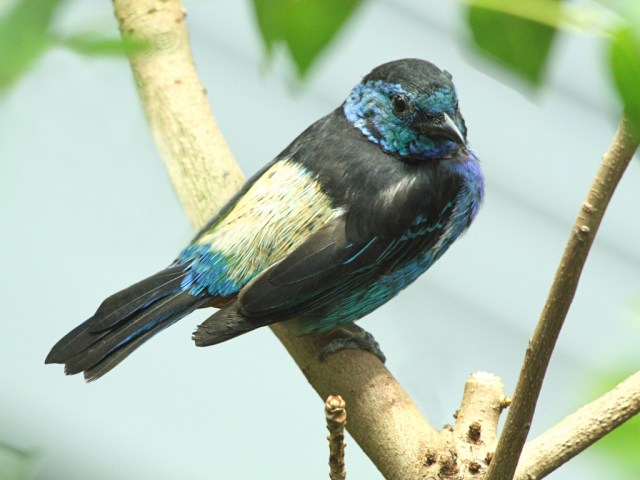
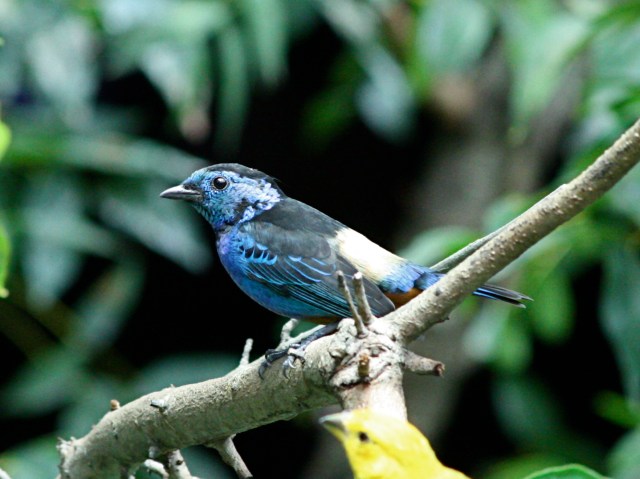
Genus/species: Tangara velia

3161169099_3a0b56ac4b_b

GENERAL CHARACTERISTICS: Medium sized predominately blue and black. The crown and back are black, with a bright opalescent rump. The head and underparts are deep iridescent blue and the lower belly is reddish chestnut and crissum. Sexes are similar in both size and plumage with the female being duller.

3168879341_57e5d64036_o

DISTRIBUTION/HABITAT: Bolivia, Ecuador, French Guiana, Guyana, Peru, Suriname, and Venezuela.
Found in tropical forests, from emergent to shrub layer, especially lowland rainforests and the forest edge, though found in some areas up to 1200 m (4000 feet).

DIET: Omnivorous

CONSERVATION: IUCN, Least Concern (LC)

3162005686_869f46bd04_o

REMARKS: Generally seen in pairs and/or small groups of mixed species. Emit a high-pitched twitter in flight.

Ron’s flickr  http://www.flickr.com/photos/cas_docents/sets/72157608454346681/with/3161783604/

Ron’s WordPress shortlink  http://wp.me/p1DZ4b-15Y


TAXONOMY
Kingdom: Animalia
Phylum: Chordata
Class: Aves
Order: Passeriformes
Family: Thraupidae

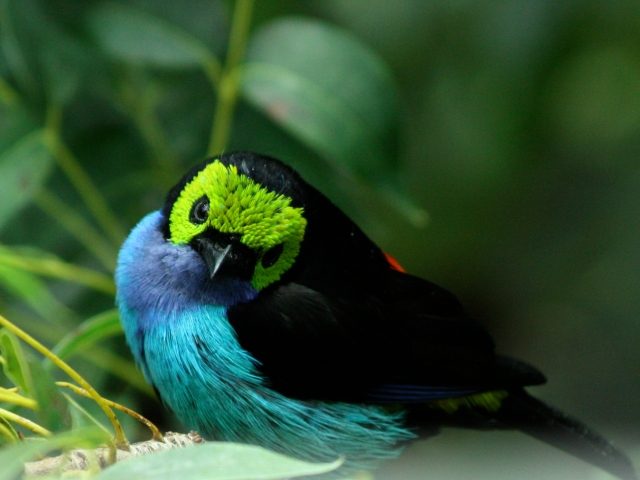
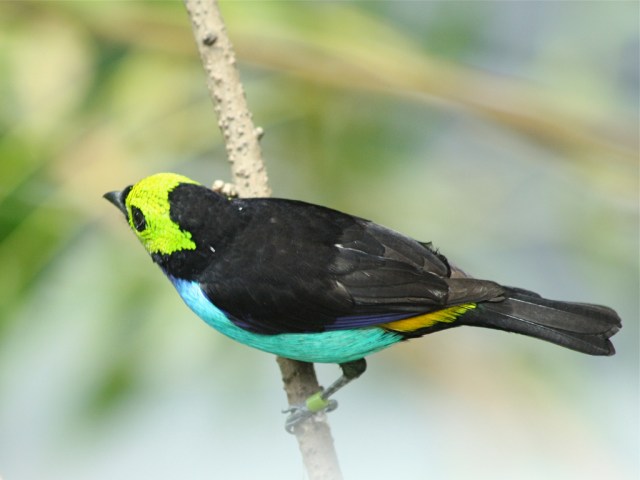
Genus/species: Tangara chilensis paradisea 

2981087747_5d4a822642_o

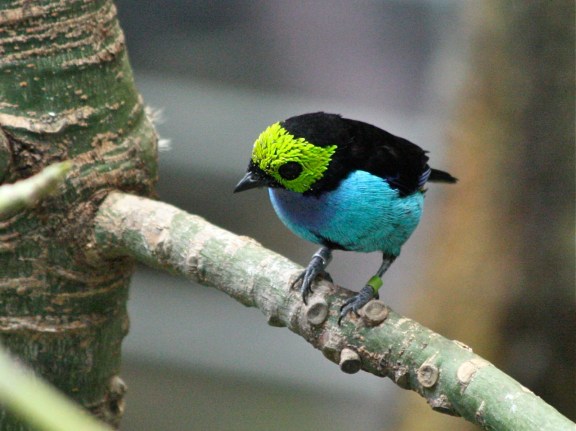
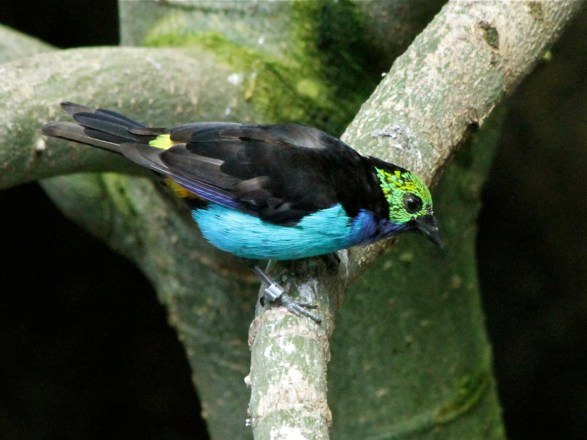
GENERAL CHARACTERISTICS: In Spanish, called “sieite colores” for its seven-colored appearance: green, yellow, scarlet, black, and three colors of blue feathers adorn this handsome bird. Monomorphic (males and females look similar). Length 13.5 to 15 cm 5.3 to 6 inches.

DISTRIBUTION/HABITAT: South America: common in Venezuela, Peru, Columbia, Ecuador, Brazil. Found in the canopy and edges of subtropical to tropical lowland humid forests, including parts of the Amazon basin and upwards to 1400 m (4500 feet). Often moves in mixed flocks.

DIET IN THE WILD: Mainly fruit, buds, leaves. Forage from middle heights to treetops. Also, like other  tanagers, picks insects from leaves or sometimes takes them in flight. Often moves and feeds in mixed flocks.

Paradise Tanager   3259028446_790c536452_b

REPRODUCTION: Female builds a cup nest where she lays two or three brown or lilac-speckled white eggs. Eggs hatch in 13–14 days; chicks fledge in additional 15–16 days. Nestlings are feed insects and fruit by both male and female..

CONSERVATION: IUCN, least concern.

Rainforest.

1-8-09, 11-11-11

flickr  http://www.flickr.com/photos/cas_docents/3259028446/in/set-72157608454346681

WordPress Shortlink  http://wp.me/p1DZ4b-15F

TAXONOMY
Kingdom: Animalia
Phylum: Chordata
Class: Aves
Order: Passeriformes
Family: Thraupidae

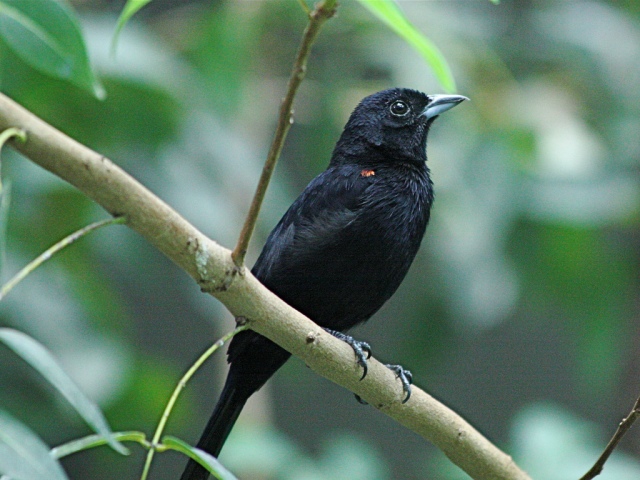
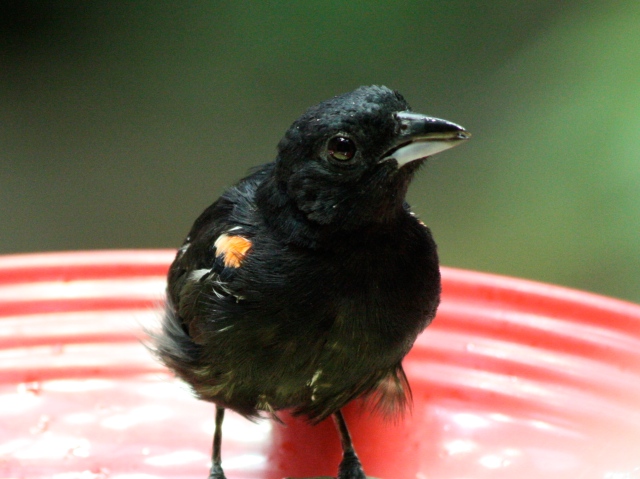
Genus/species: Tachyphonus phoenicius

Red-shouldered Tanager (male) 3334159981_db9f81a402_b

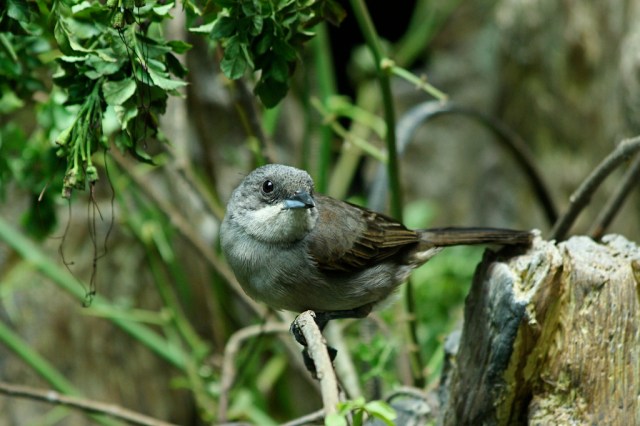
GENERAL CHARACTERISTICS: Males are basically all black, with a tiny red and white patch on the shoulder region and white underwing linings. Females, are brownish gray above, while the throat and middle abdomen are white. Pairs of Red-shouldered Tanagers usually forage in close proximity, low down, but often keeping within cover. Length 16-17 cm (6.3-6.7 inches).

Male above and below

Red-shouldered Tanager (male) 3186809464_2c975c664e_o

DISTRIBUTION/HABITAT: Bolivia, Brazil, Colombia, Ecuador, French Guiana, Guyana, Peru, Suriname, and Venezuela. Found in dry shrubland or seasonally wet or flooded lowland grassland. Also open rainforest, to 2000 m (6500 feet).

DIET IN THE WILD: Insects and fruit.

female below

Red-shouldered Tanager (female) 3105184668_a8dfdddccd_b

CONSERVATION: IUCN, least concern (population trend stable).

flickr http://www.flickr.com/photos/cas_docents/sets/72157608454346681/with/3334159981/

WordPress Shortlink  http://wp.me/p1DZ4b-15y


TAXONOMY
Kingdom: Animalia
Phylum: Chordata
Class: Aves
Order: Passeriformes
Family: Thraupidae

Genus/species: Tangara chilensis paradisea

GENERAL CHARACTERISTICS:  In Spanish, called “sieite colores” for its seven-colored appearance: green, yellow, scarlet, black, and three colors of blue feathers adorn this handsome bird. Monomorphic (males and females look similar).  Length 13.5 to 15 cm 5.3  to 6 inches.

DISTRIBUTION/HABITAT: South America: common in Venezuela, Peru, Columbia, Ecuador, Brazil. Found in the canopy and edges of subtropical to tropical lowland humid forests, including parts of the Amazon basin and upwards to 1400 m (4500 feet).  Often moves in mixed flocks.

DIET IN THE WILD: Mainly fruit, buds, leaves. Forage from middle heights to treetops. Also, like other Tangara tanagers, picks insects from leaves or sometimes takes them in flight. Often moves and feeds in mixed flocks.

REPRODUCTION: Female builds a cup nest where she lays two or three brown- or lilac-speckled white eggs. Eggs hatch in 13–14 days; chicks fledge in additional 15–16 days. Nestlings are feed insects and fruit by both male and female..

CONSERVATION: IUCN, least concern.

LOCATION: Rainforest

References

Ron’ flickr http://www.flickr.com/photos/cas_docents/sets/72157608454346681/

Ron’s WordPress shortlink  http://wp.me/p1DZ4b-jN