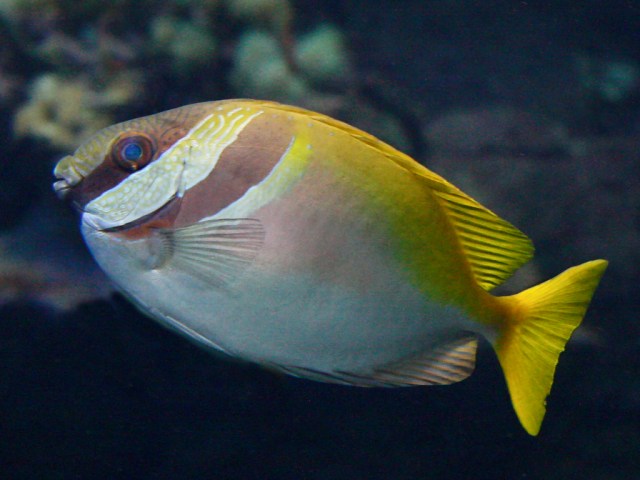
Latest Entries »

TAXONOMY
Kingdom: Animalia
Phylum:Chordata
Class: Actinopterygii (ray-finned fishes)
Order: Scorpaeniformes (Scorpionfishes and flatheads)
Family: Scorpaenidae (Scorpionfishes or rockfishes)

Genus/species: Sebastapistes cyanostigma
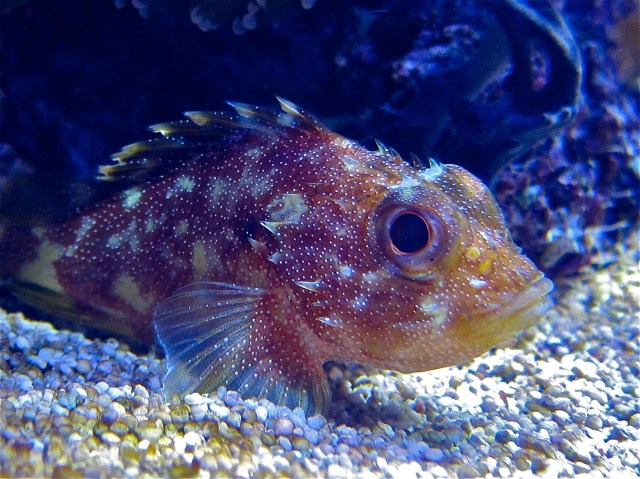
IMG_4381

GENERAL CHARACTERISTICS: large head, relatively smooth skin,spotted, usually yellow and white on a pinkish red background. No dark bars on underside of head. Common length : 6.4 cm or 2.5 inches.

DISTRIBUTION/HABITAT:Tropical, Indo-Pacific. Typically found among the branches of Pocillopora corals in surge areas of seaward reefs. Also observed between the branches of the fire coral.

DIET IN THE WILD: Crustaceans and small fishes.
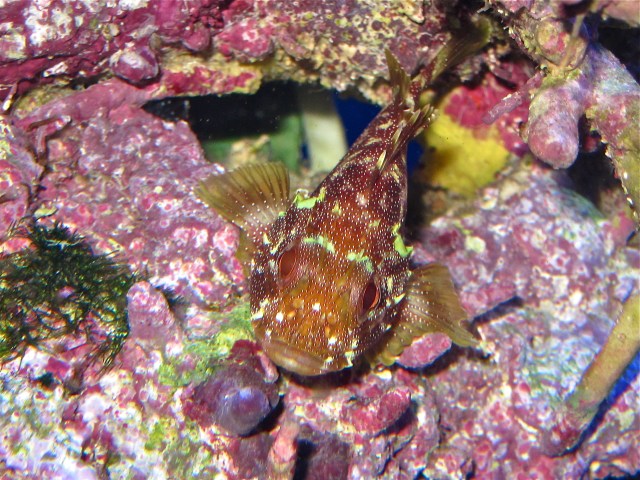
IMG_0029

REMARKS: A master of camouflage, this small fish hide among corals, changing colors to match its background. A viewer of the Fire Coral Tank where this little fish resides may look directly at the fish and still not see it. A true scorpionfish, it uses the sharp venomous spines on its back for protection.
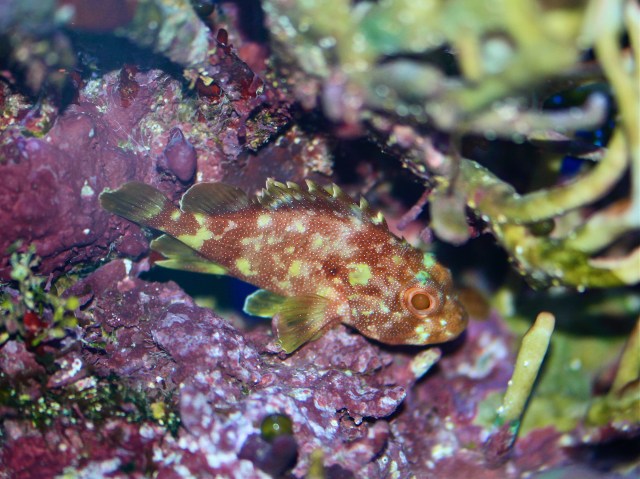
IMG_7182

Venoms Cluster

Fire Coral exhibit, PR24

flickr http://www.flickr.com/photos/cas_docents/sets/72157608341866427/

WordPress Shortlink  http://wp.me/p1DZ4b-NJ
TAXONOMY
Class: Actinopterygii (ray-finned fishes)
Order: Perciformes (Perch-likes)
Family: Blenniidae (Combtooth blennies

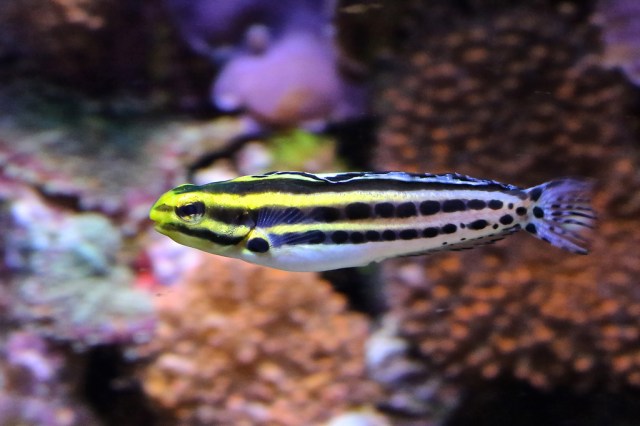
Genus/species: Meiacanthus grammistes

8393608989_a6c74ab647_b

GENERAL CHARACTERISTICS: Deep-bodied with a pointed snout and long continues dorsal fin. It is brown with tan wavy bands stretches the length of its body. On the dorsal fin near the head is a small blue spot. It grows to a size of 10 cm (4 inches) in length. Lined pattern on the body that ends in spots on the tail-fin base.

DISTRIBUTION/HABITAT: Western Pacific and Eastern Atlantic Ocean in sheltered lagoons and seaward reefs.

DIET IN THE WILD: DIET IN THE WILD: Omnivorous; small invertebrates and plant material. Remarks: About 50 blenny spp., including the 22 Meiacanthus spp., have evolved glands that produce venom and fangs to deliver it. The fangs are very large canines in the lower jaw that are grooved to inject venom when the fish bites, usually only in self-defense. Reports indicate that the fang blenny will bite the inside of a predator’s mouth and is quickly spit out.

IMG_9302

REPRODUCTION: Oviparous. Eggs are demersal and adhesive

Animal Attractions

flickr http://www.flickr.com/photos/cas_docents/8393608989/in/set-72157623764848303

WordPress Shortlink:  http://wp.me/p1DZ4b-NB


TAXONOMY

Class: Actinopterygii (ray-finned fishes)
Order: Perciformes (Perch-likes)
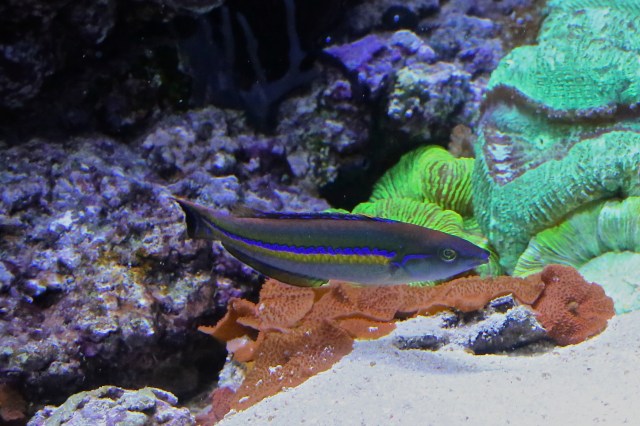
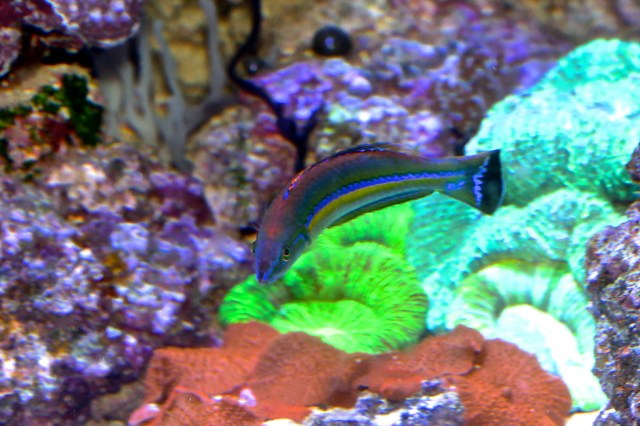
Family: (Labridae) Wrasses

Genus/species: Pseudojuloides cerasinus

IMG_3347

GENERAL CHARACTERISTICS: Green upper body, bicolor blue and yellow mid-body stripe; blue below. Length to 12 cm (5 in).

DISTRIBUTION AND HABITAT: East Africa to Samoa and Hawaii. S. Japan to Australia. Found among rubble, weed and coral areas of lagoon and seaward reefs to 61 m.

8362948295_de913680af_b

Reef Partners Cluster, Shrimpfish Exhibit

PR31

flickr  http://www.flickr.com/photos/cas_docents/sets/72157608208133134/with/7601888754/

WordPress Shortlink  http://wp.me/p1DZ4b-MI

TAXONOMY
Kingdom: Animalia
Phylum: Chordata
Class: Amphibia
Order: Anura
Family: Hylidae

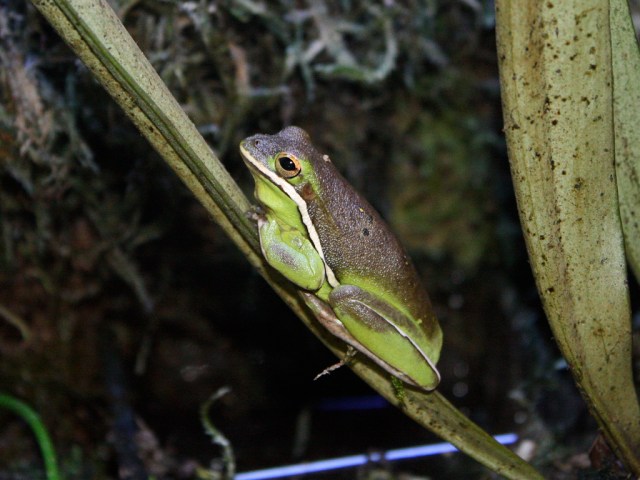
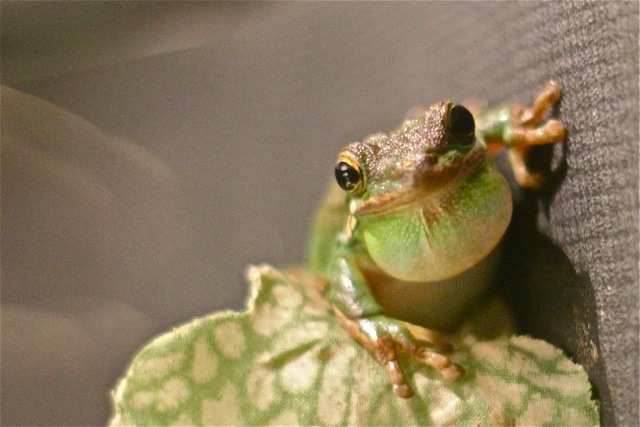
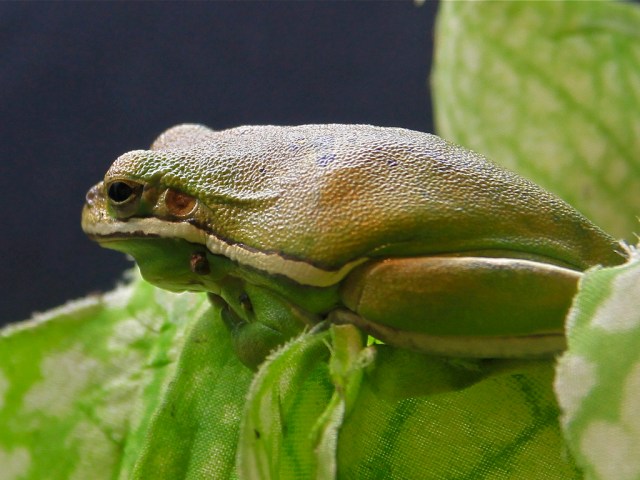
Genus/species: Hyla cinerea

3202286940_36e85084b3_b

GENERAL CHARACTERISTICS: Bright yellow-green above, though some are reddish-brown to green, often with small golden spots. White to cream below with a prominent white lateral stripe
on each side.  Up to 6 cm (2.5 in) long.

DISTRIBUTION/HABITAT: Central to Southeastern United States. North to Virginia’s eastern shore, south to the southern tip of Florida, west to central Texas. Habitat: Forest habitats in small ponds, large lakes, marshes, and streams, especially in richly vegetated areas.

Green Treefrog  8593645003_ef71a3137d_o

DIET IN THE WILD: Insectivores: flies, mosquitoes, and other small insects

PREDATORS: Predators include snakes, birds, large fish, and other frogs. Predatory aquatic insects such as giant water bugs may take tadpoles. Green frogs in captivity are known to live as long as 6 years.

REMARKS: Active at night. During the day, adults are well camouflaged among grasses and other vegetation, especially when legs are tucked below the body and eyes are closed.

4664138328_3b7a8bbb04_b

Swamp SW07

flickr http://www.flickr.com/photos/cas_docents/sets/72157608456457315/

WordPress Shortlink : http://wp.me/p1DZ4b-LT

TAXONOMY
Kingdom:  Animalia
Phylum:  Chordata
Subphylum:  Vertebrata
Class:  Amphibia
Order:  Anura
Family:  Megophryidae

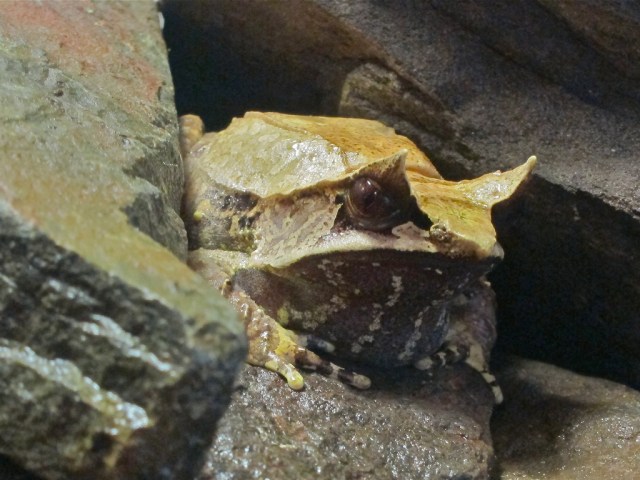
Genus/species: Megophrys nasuta

4427840755_184d36bab6_b

GENERAL CHARACTERISTICS: Have projections above each eye and nasal area, hence the name Horned Frog. Designed for camouflage; back is gray, tan, russet, or brown and darkens toward the side making the frog almost invisible among the forest leaf litter. The smooth skin resembles dead leaves.

4329887255_429231e129_b

DISTRIBUTION/HABITAT: Borneo, Malay Peninsula, Sumatra. Lives in relatively cool damp environs. Optimal temperature is between 22–24° C. Found on the rainforest floors, usually near small streams.

DIET IN THE WILD: Crabs and scorpions are their main food; also take arachnids, nestling rodents, lizards and other frogs that live on the forest floor.5536565600_f6c87f37ec_b-1


REMARKS: Call is unmistakable: a loud, resonating, metallic honk or henk, somewhat reminiscent of an air horn. The Jahai, an aboriginal group from northern Peninsular Malaysia, call this frog “Kengkang,” onomatopoeic after its call.

Rainforest Borneo  BO08

flickr  http://www.flickr.com/photos/cas_docents/sets/72157608456457315/with/4427840755/

WordPress Shortlink  http://wp.me/p1DZ4b-Mb


TAXONOMY
Kingdom: Animalia
Phylum: Arthropoda
Subphylum: Crustacea
Class: Malacostraca
Order: Decapoda
Infraorder: Caridea
Family: Hippolytidae

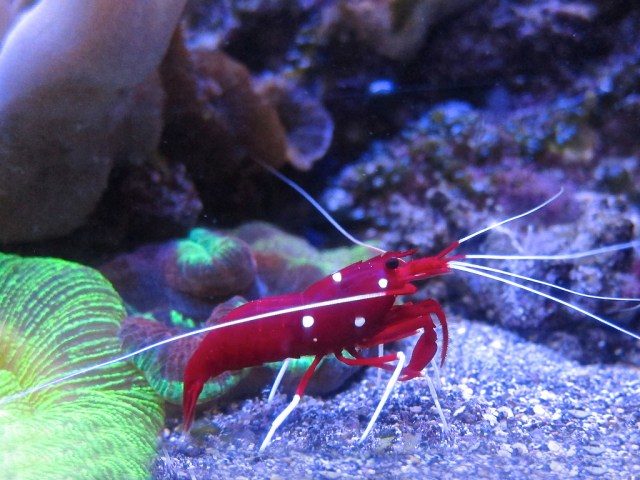
Genus/species: Lysmata debelius

GENERAL CHARACTERISTICS: Length up to 3 centimetres (1.2 in) long, with males and females appearing similar. It has a deep blood red body, with conspicuous white antennae and white tips to the third to fifth pereiopods. There are white dots on the cephalothorax and legs; white dots on the abdomen distinguish L. splendida from L. debelius

DISTRIBUTION/HABITAT: Widespread throughout the Indo-Pacific and Indian Ocean coral reefs. Often found lingering around an Eel’s hole where it will clean the face of the eel when it sticks its head out.

DIET IN THE WILD: Carnivore. As a “cleaner shrimp,” it will set up cleaning stations and remove dead tissue and parasites from fish that present themselves. It will also scavenge for meaty bits along the substrate bottom.

REPRODUCTION: Pairs of fire shrimps will reproduce continually. Hermaphrodite, therefore any two individuals may mate. The greenish egg mass is held beneath the abdomen of the female until the larvae hatch which become free swimming, entering the plankton undergoing several weeks of development.

Water Planet

WordPress Shortlink http://wp.me/p1DZ4b-KS

flickr  http://www.flickr.com/photos/cas_docents/with/8192327370/#photo_8192327370

TAXONOMY
Kingdom: Animalia
Phylum: Chordata
Class: Actinopterygii (ray-finned fishes) 
Order: Perciformes (Perch-likes) 
Family: Labridae (Wrasses)

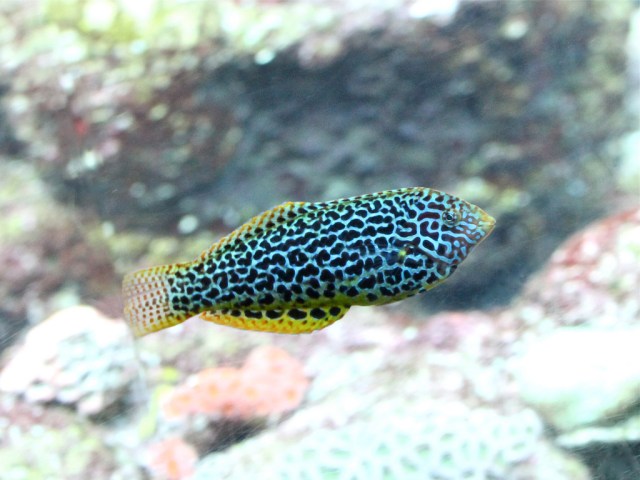
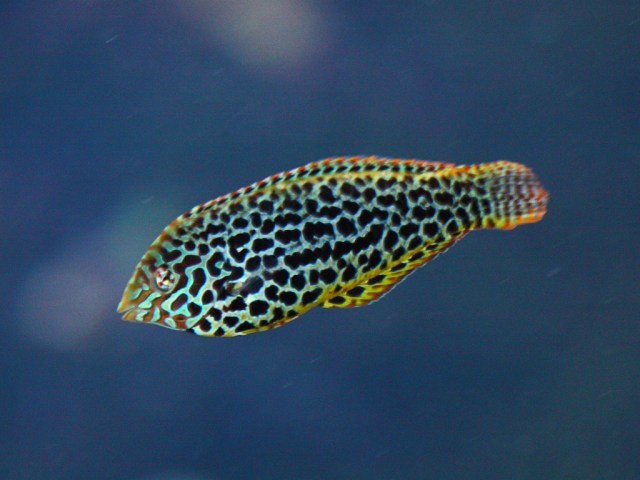
Genus/species: Macropharyngodon meleagris

GENERAL CHARACTERISTICS: Sexual dichromism. Females are white with black or brown irregular spots with white to blue margins over the body. Males have orangey-red background with green mottling. Max. length: 15 cm (6 inches).

DISTRIBUTION/HABITAT: Indo Pacific: Eastern Indian Ocean to western Pacific and the islands of Oceania. Habitat: Subtidal reefs and outer lagoons, at depths of 0–30 meters (98 feet).

DIET IN THE WILD: Feed on gastropods, hard shelled prey and foraminiferans.

REMARKS: Wrasses are most easily identified by their pointed snouts and prominent canine teeth that protrude in front of the jaw. Other common characteristics include their form of propulsion, which depends mostly on the winglike motion of the pectoral fins with only an occasional burst of speed provided by the caudal fin. Color, markings and body shapes change during maturation.

Philippine Coral Reef PR04

flickr http://www.flickr.com/photos/cas_docents/sets/72157608208133134/with/4770699386/

WordPress Shortlink  http://wp.me/p1DZ4b-KA

TAXONOMY
Kingdom: Animalia
Phylum: Chordata
Class: Actinopterygii (ray-finned fishes)
Order: Perciformes (Perch-likes)
Family: Labridae (Wrasses)

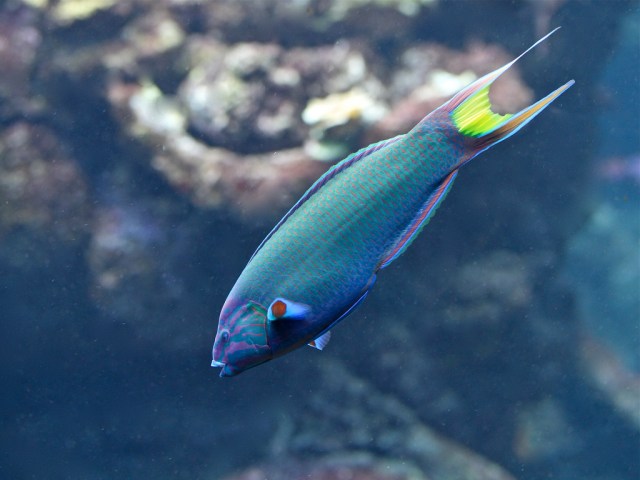
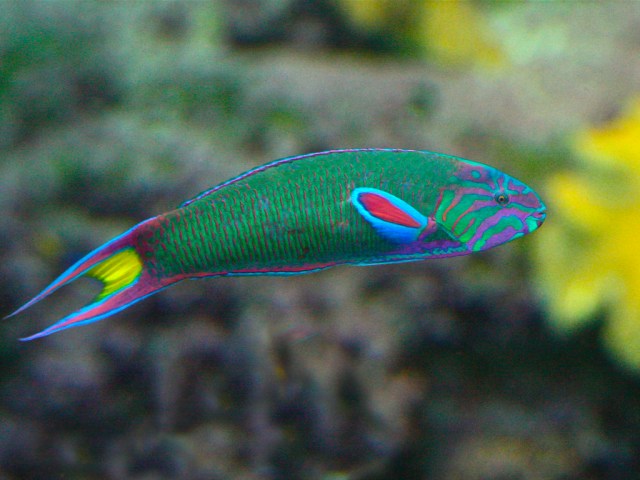
Genus/species: Thalassoma lunare

GENERAL CHACTERISTICS: Adult’s caudal fin is a large yellow crescent edged in purple and blue, the source of the species common name. Body dark green to blue with vertical red lines on scales; pectoral fins a bright pink surrounded by neon blue. The head is distinctive for its bright irregular pink and violet bands radiating from the mouth towards the body, a kind of fluorescent camouflage. Max. length: 25 cm or 10 inches.

DISTRIBUTION/HABITAT: Indo-Pacific; Red Sea to East Africa to the Line Islands, northwest to southern Japan, and southwest to northern New Zealand. Found on marine reefs to a depth of 20 m or 65.5 ft. Also lagoons, coastal reefs, protected seaward reefs, and estuaries.

DIET IN THE WILD: Feeds mainly on small benthic invertebrates and fish eggs

REPRODUCTION: Protogynous hermaphrodite

REMARKS: When frightened this fish will hide in the reef or bury itself in the sand; also buries in sand to sleep.

Philippine Coral Reef PR04

flickr http://www.flickr.com/photos/cas_docents/sets/72157608208133134/with/2989886808/

WORDPRESS SHORTLINK:  http://wp.me/p1DZ4b-Is

TAXONOMY
Kingdom: Animalia
Phylum: Chordata
Class: Actinopterygii 
Order: Perciformes
Family: Siganidae (Rabbitfishes and Spinefoots)

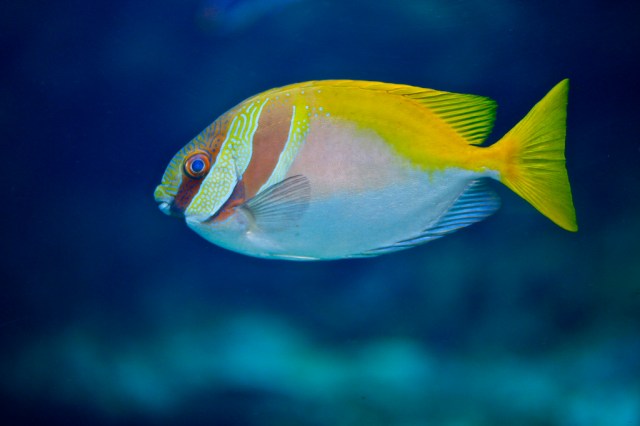
Genus/species: Siganus doliatus

GENERAL CHARACTERISTICS: Length to 25 cm (9.5 in). Light blue body above, silvery below with intricate patterns of thin blue and yellow lines; pair of brown bars on head and forebody; yellow tail.

DISTRIBUTION/HABITAT: Tropical west Pacific in coral rich areas of channels and lagoon slopes, reef flats and seaward reefs. Depth 1–15 m (3-45 ft).

DIET IN THE WILD: Feeds on benthic seaweeds Reproduction and Development: Pelagic spawner. Mortality/Longevity: Stout venomous spines discourage would-be predators.

REPRODUCTION: Pelagic spawner. Juveniles form schools. Pairs form at 7 cm (2.75 inches) which continue to form loose schools to feed in areas being flooded by the tide.

REMARKS : Fins and spines are venomous. Caution must be used when handling. Reactions can range from mild to severe
Named rabbitfish due to their voracious appetite.

Phillipine Coral Reef PR04

flickr http://www.flickr.com/photos/cas_docents/sets/72157608339530941/with/4533131275/

WordPress Shortlink http://wp.me/p1DZ4b-H6

Kingdom: Animalia
Phylum: Chordata
Class: Actinopterygii
Order: Perciformes
Family: Pomacentridae  Damselfishes

Amphiprion clarkii  

GENERAL CHARACTERISTICS:  To 12 cm (4.75 in). Black to entirely orange with pair of white or pale blue bars. Second bar wide; tail white or yellowish; other fins variably black to yellow-orange. There is also an orange variation: some are entirely pale orange, other than the two white bands; others have a dark patch on rear body.  (See remarks)

DISTRIBUTION/HABITAT: Indo-Pacific: Persian Gulf to Micronesia, New Caledonia and Fiji. Also Southwest Japan to northern Australia. Depth 1–55 meters (3-180 ft.) in outer reef slopes, less typically inhabit lagoons. Symbiotic with 10 species of sea anemones. Non-migratory.

DIET IN THE WILD:  Primarily planktonic copepods and benthic algae.

REPRODUCTION:  Monogamous; oviparous. Fertilization is external; benthic spawners; parents create a nest and male guards eggs. Are protandrous hermaphrodites; all mature as males In the absence of a female, the largest juvenile will mature within 5–6 months into the breeding male. The maturation of the smaller (all male) juveniles is stunted by the adult pair’s presence.

REMARKS: Coloration is apparently influenced by the host sea anemone species. Symbiotic with several anemones found in the Steinhart including Entacmaea quadricolor, Heteractis crispa, H. magnifica.

Philippine Coral Reef PR04 and Water Planet

flickr  http://www.flickr.com/photos/cas_docents/3057754480/in/set-72157608339622313/

WORDPRESS SHORTLINK: http://wp.me/p1DZ4b-Fn