Tag Archive: Philippine Coral Reef


TAXONOMY
Kingdom: Animalia
Phylum: Chordata
Class: Actinopterygii
Order: Perciformes (Perch-likes)
Family:  Haemulidae (Grunts) bottom-feeding predators, named for their ability to produce sound by grinding their teeth.

Genus/species  Plectorhinchus chaetodonoides  

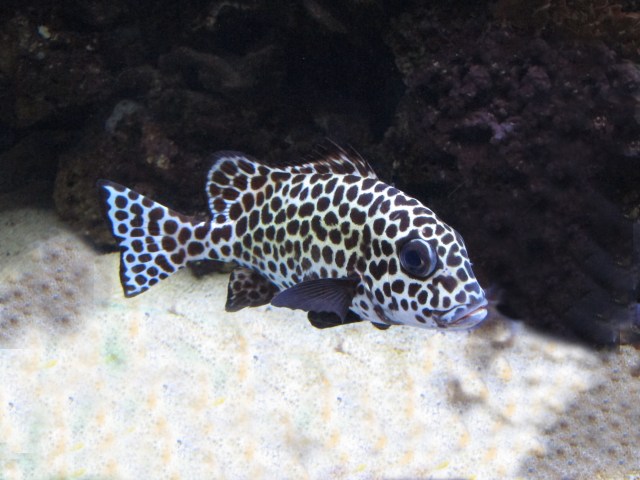
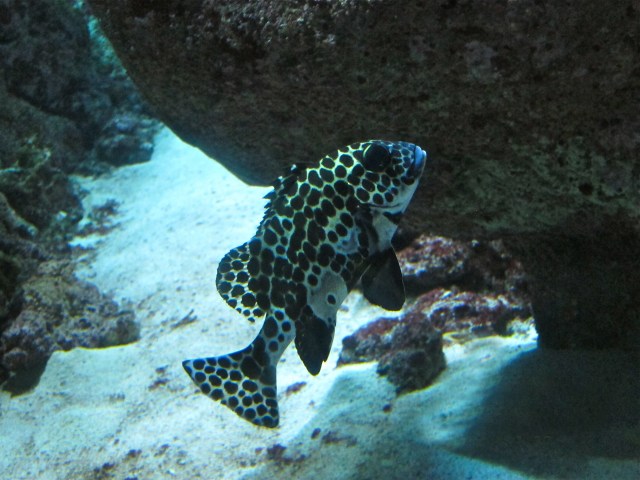
GENERAL CHARACTERISTICS: Juveniles brown with large white blotches. Becomes more spotted with age, reversing from white to black spotted in the process. Deeper bodies compared to most others in the genus

Length is up to 72 cm (29 inches) and weight to 7,000 g (15.5 pounds)

Spotted Sweetlips IMG_0501

 DISTRIBUTION/HABITAT Indo-West Pacific oceans. Inhabits coral-rich areas of clear lagoon and seaward reefs. 1 – 30 m (3-90 ft).


DIET IN THE WILD: Carnivore. Feeds on crustaceans, mollusks, and fishes at night.

CONSERVATION: IUCN Not evaluated

References

California Academy of Sciences Philippine coral reef 2016

Ron’s flickr http://www.flickr.com/photos/cas_docents/sets/72157625992053826/

Ron’s WordPress Shortlink    http://wp.me/p1DZ4b-nP

fishbase fishbase.org/summary/Plectorhinchus-chaetodonoides.html

TAXONOMY

Kingdom: Animalia
Phylum:  Chordata
Class:  Actinopterygii (ray-finned fishes)
Order: Perciformes (Perch-likes)
Family: Haemulidae (Grunts)

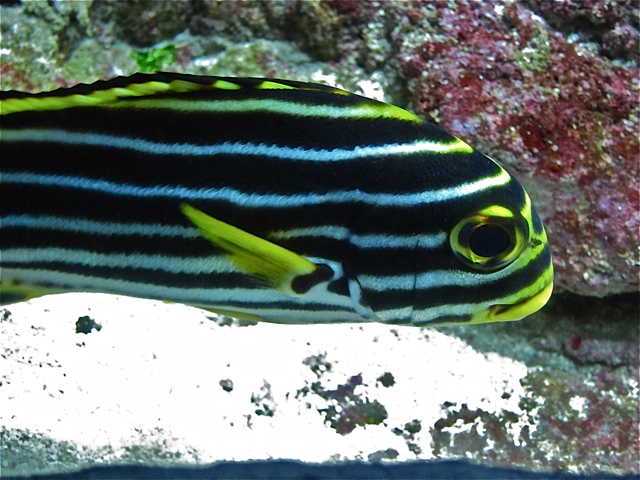
GENUS/SPECIES  Plectorhinchus vittatus


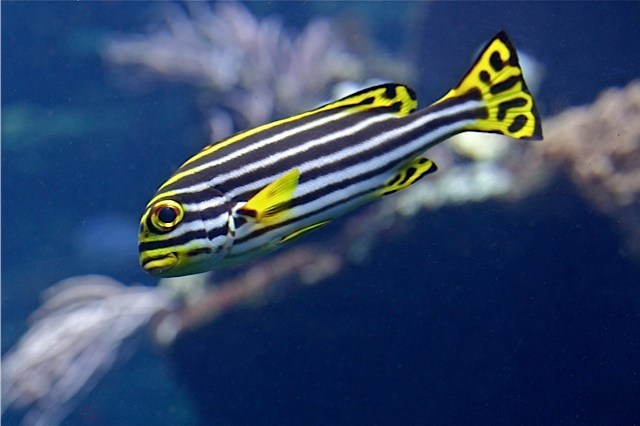
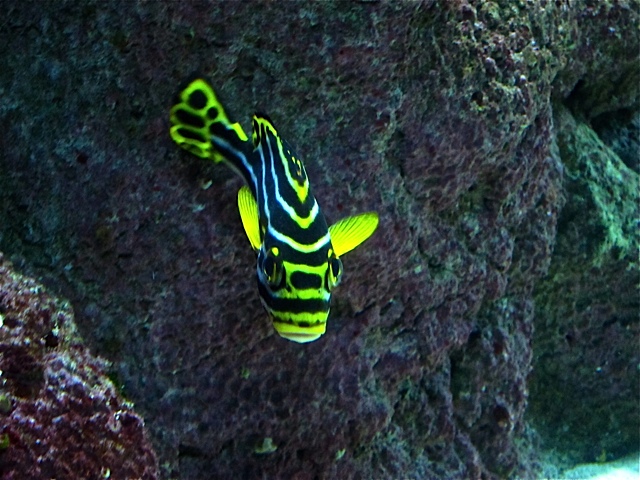
GENERAL CHARACTERISTICS; Juveniles are reddish-brown with white or cream-colored blotches at a size of less than 13 cm (5.1 inches). Adults have prominent lips and boldly patterned. White with black lines that extend onto the belly Lips and fins are yellow with spotted dorsal, anal and tail fins.

Length up to 86 cm (33.9 inches)


DISTRIBUTION/HABITAT: East Africa to Samoa, north to the Ryukus, south to Mauritius and New Caledonia.  Found in clear lagoons, reef channels, reef faces and slopes at depths of 5 to 80 feet.   

 DIET IN THE WILD:  P. vittatus  are bottom feeding carnivores preferring crustaceans, mollusks and small fish they can swallow whole. 

 REPRODUCTION: Oviparous

 CONSERVATION: IUCN Red List Not Evaluated


CONSERVATION: Not evaluated

References

 California Academy of Sciences Philippine coral reef 2016

 fishbase  www.fishbase.org/summary/Plectorhinchus-vittatus.html

 EOL  eol.org/pages/988173/details

 Ron’s flickr  http://www.flickr.com/photos/cas_docents/sets/72157625992053826/

Ron’sWordpress Shortlink  http://wp.me/p1DZ4b-Aq


TAXONOMY
Kingdom: Animalia
Phylum: Chordata
Class: Actinopterygii 
Order: Perciformes
Family: Siganidae (Rabbitfishes and Spinefoots) 

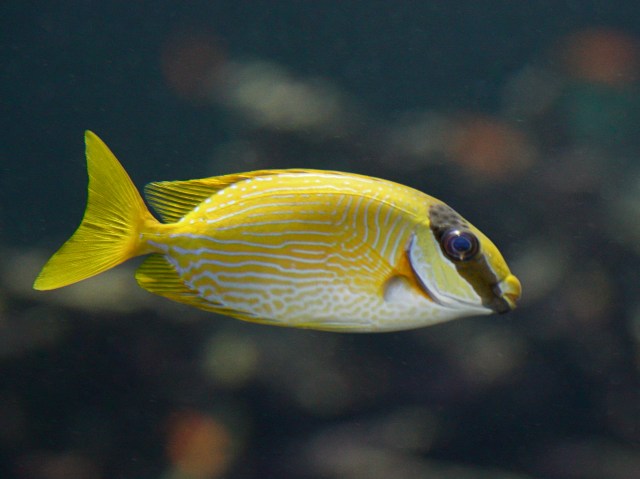
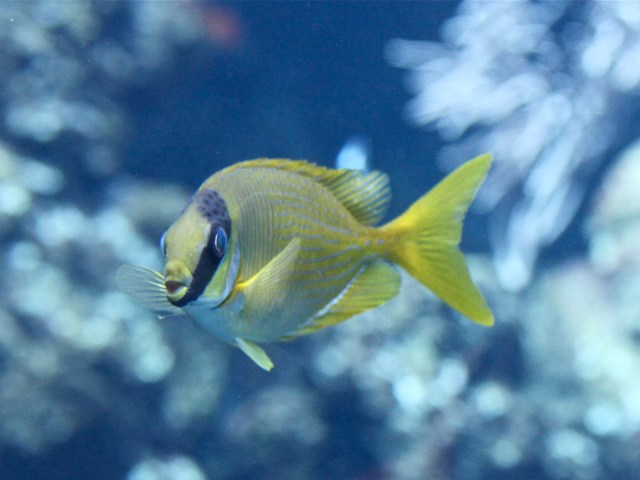
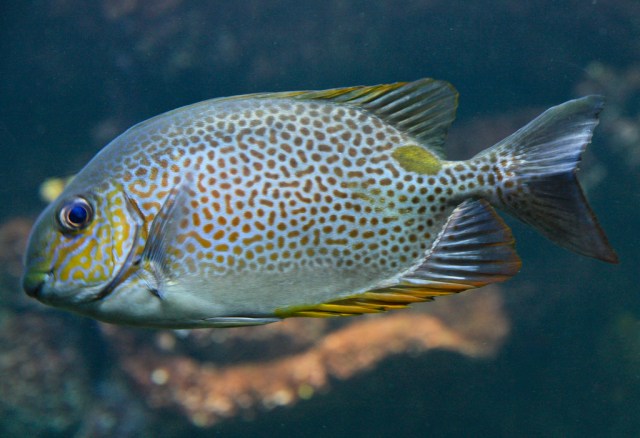
Genus/species: Siganus puellus


GENERAL CHARACTERISTICS:  Highly compressed body yellow with wavy, broken blue lines. Dark band from eyes to mouth. Dark dots extend from eyes to dorsal fin. Like all rabbitfishes, have small, rabbit-like mouths, large dark eyes, and a shy temperament, thus their common name.

Length up to 38 cm (15 inches)

DISTRIBUTION/HABITAT: Indo-West Pacific in shallow, coral-rich areas of lagoons
and seaward reefs to 30 m or 98 ft. Adults often in pairs; species forms large schools in shallows, lagoons and outer reef flats, particularly in areas dominated by luxurious growths of Acorpora coral.

DIET IN THE WILD: Juveniles feed on filamentous algae; adults on algae, tunicates, and sponges.

CONSERVATION: IUCN Red List Least Concern (LC)

REMARKS: Venomous spines, which can be flashed at any bothersome fish or hand.

References

California Academy of Sciences Steinhart Aquarium Philippine Coral Reef 2016 

fishbase  www.fishbase.org/summary/SpeciesSummary.php?id=4617

EOL eol.org/pages/203962/details

Australian Museum australianmuseum.net.au/masked-rabbitfish-siganus-puellus

IUCN www.iucnredlist.org/details/155025/0

Ron’s flickr  http://www.flickr.com/photos/cas_docents/sets/72157608339530941/with/3246996616/

Ron’s WordPress Shortlink  http://wp.me/p1DZ4b-Hh

TAXONOMY
Kingdom: Animalia
Phylum: Chordata
Class: Actinopterygii (ray-finned fishes)
Order: Perciformes (Perch-likes)
Family: Siganidae (Rabbitfishes and Spinefoots) 

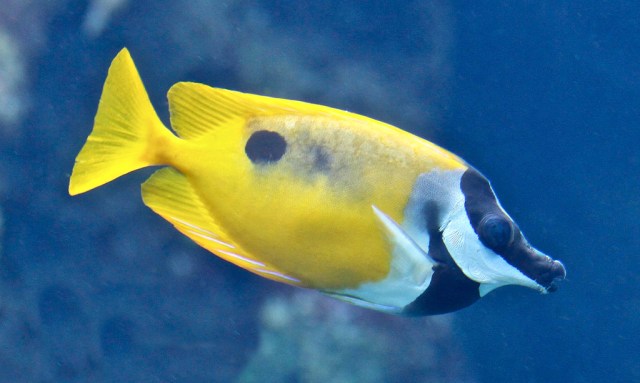
Genus/species: Siganus unimaculatus

GENERAL CHARACTERISTICS:   A dark chocolate ocular band occurs in an arc from base of 1st dorsal spine to chin with a narrow white blaze on midline of head profile. The thorax is dark chocolate and thee remainder of body is yellow-orange. Same as the Foxface Rabbitfish (S. vulpinus) except for the black spot or ‘blotch” on posterior upper side of body on S. unimaculatus.

Length up to 24 cm (9.5 inches)

Blotched Foxface Rabbitfish 13717964414_50be7e63d0_b

DISTRIBUTION/HABITAT: Western Pacific: Ryukyu Islands of Japan, the Philippines, to western Australia. Found in coral rich areas of lagoon often among stag horn corals and seaward reefs to depth of 30 m (98 ft).

Blotched Foxface Rabbitfish13717573555_6773f7d8a1_b

 DIET IN THE WILD: Diurnal herbivore of algae and zooplankton

REPRODUCTION: Spawns during outgoing tides.

 CONSERVATION: IUCN Not Evaluated

REMARKS: Rabbitfishes are named for their voracious appetites. They have  venomous spines on dorsal and anal fins, as do all in the genus.

Also they are highly esteemed as a food fish

Some researchers believe S. unimaculatus and S. vulpinus are a single species. The color is the same as in except for the blackish spot posteriorly on the upper side of the body.

References

California Academy of Sciences Steinhart Aquarium Philippine Coral Reef 2016

Ron’s flickr www.flickr.com/photos/cas_docents/13717964414/

fishbase www.fishbase.org/summary/4630

EOL eol.org/pages/221694/hierarchy_entries/44731451/details

Ron’s WordPress shortlink http://wp.me/p1DZ4b-1fs


TAXONOMY
Kingdom: Animalia
Phylum: Chordata
Class: Actinopterygii (ray-finned fishes)
Order: Perciformes (Perch-likes)
Family: Siganidae (Rabbitfishes, similar noses)

Genus/species: Siganus punctatus

GENERAL CHARACTERISTICS: The body is highly compressed with blue dark edged orange spots on the head and caudal fin. The eye has a silver iris. Adults are typically paired.  Like all rabbitfishes S. punctatus possess venomous spines.

Length: up to 40.0 cm (15 in)

DISTRIBUTION/HABITAT: Tropical Western Pacific. Found in clear lagoon and seaward reefs from 1–40 m (3,2-130 ft).

DIET IN THE WILD: Benthic algae/weeds

REPRODUCTION:  Fertilization is external; open water, substratum egg scatterers. Spawn in pairs.

CONSERVATION: IUCN Red List Not Evaluated

REMARKS: Venomous spines


References

California Academy of Sciences Steinhart Aquarium Philippine Coral Reef 2016

Ron’s flickr  http://www.flickr.com/photos/cas_docents/sets/72157608339530941/

Ron’s WordPress Shortlink  http://wp.me/p1DZ4b-xU

fishbase: www.fishbase.org/summary/4621

Australia Museum: australianmuseum.net.au/Spotted-Rabbitfish-Siganus-punctatus

TAXONOMY
Kingdom: Animalia
Phylum: Chordata
Class: Actinopterygii (ray-finned fishes)
Order: Perciformes (Perch-likes) 
Family: Siganidae (Rabbitfishes and spine-foots)

Genus/species: Siganus guttatus


GENERAL CHARACTERISTICS: Siganus guttatus has a Head with lines and spots. It is silvery ventrally and dusky blue dorsally, with numerous orange-gold spots and a large yellow spot below rear base of dorsal fin. 

Length to 42 cm (16.5 inches)

DISTRIBUTION/HABITAT: Found in East Indo-Pacific to 25 m (75 ft) in inner lagoons, turbid coastal reefs, mangroves and brackish waters. Typically in large groups of conspecifics.

DIET IN THE WILD: These fish are hearty eaters feeding primarily on algae and seagrasses, though are known to nip on large-polyp stony corals as well as soft corals.

REPRODUCTION: Spawners. Fry settles in seagrass beds around river mouths.

CONSERVATION: IUCN Not Evaluated 

REMARKS: Highly esteemed as a food fish.
The spines of rabbitfishes (Siganidae) are venomous, and can inflict painful wounds.

References

California Academy of Sciences Steinhart Aquarium Philippine Coral Reef 2016

flickr  http://www.flickr.com/photos/cas_docents/sets/72157608339530941/

WordPress Shortlink  http://wp.me/p1DZ4b-GK

EOL eol.org/pages/2804181/hierarchy_entries/44731406/details

fishbase fishbase.sinica.edu.tw/Summary/SpeciesSummary.php?id=4588

TAXONOMY
Kingdom: Animalia
Phylum: Chordata
Class: Actinopterygii (ray-finned fishes)
Order: Perciformes (Perch-likes)
Family: Caesionidae (Fusiliers)

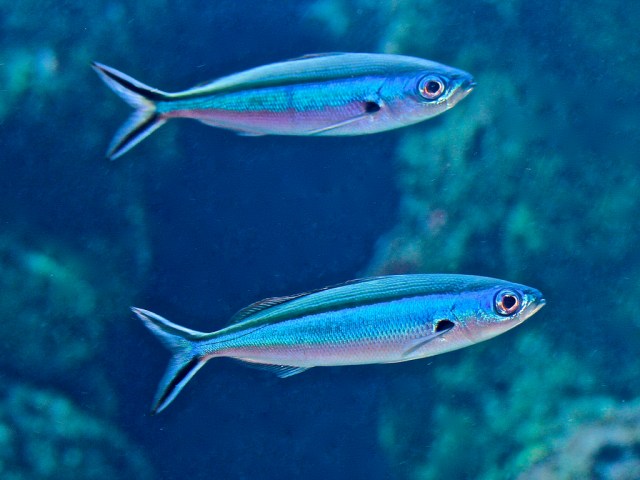
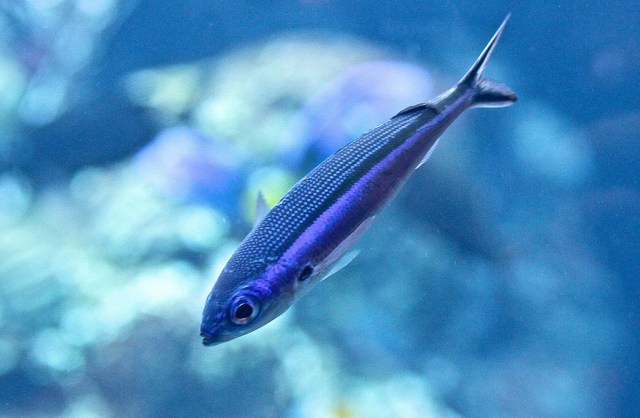
Genus/species: Pterocaesio tile

GENERAL CHARACTERISTICS: The body is elongate.  There is a broad iridescent blue mid-lateral band; dark olive above which becomes bright red along lower half of body at night. 

Length up to 30 cm (12 in)

BluestreakFusilier14026993384_d5edd89351_b

GENERAL CHARACTERISTICS: Elongate body. Broad iridescent blue mid-lateral band; dark olive above. Turns bright red along lower half of body at night. Max. size: 30 cm (12 inches).

BluestreakFusilier14003634876_69545bce85_b

DISTRIBUTION/HABITAT: Indo-Pacific: East Africa to the Marquesas, Japan, New Caledonia, and throughout Micronesia. Found on outer reef slopes and in clear, deep lagoons, to 60 m (180 ft) depth.

DIET IN THE WILD: Zooplankton

REPRODUCTION Oviparous; small pelagic eggs.

CONSERVATION: IUCN Not Evaluated

REMARKS: Caught commercially, primarily as tuna bait fish

References

California Academy of Sciences Steinhart Aquarium Philippine Coral Reef 2016

Ron’s flickr  https://www.flickr.com/photos/cas_docents/14026993384/

Ron’s WordPress Shortlink  http://wp.me/p1DZ4b-1fU

fishbase  www.fishbase.org/summary/PTEROCAESIO-TILE.html

Encyclopedia of Life  http://eol.org/pages/223543/details

TAXONOMY
Kingdom: Animalia
Phylum: Chordata
Class: Actinopterygii (ray-finned fishes)
Order: Perciformes (Perch-likes)
Family: Pomacentridae (Damselfishes)
Subfamily: Pomacentrinae

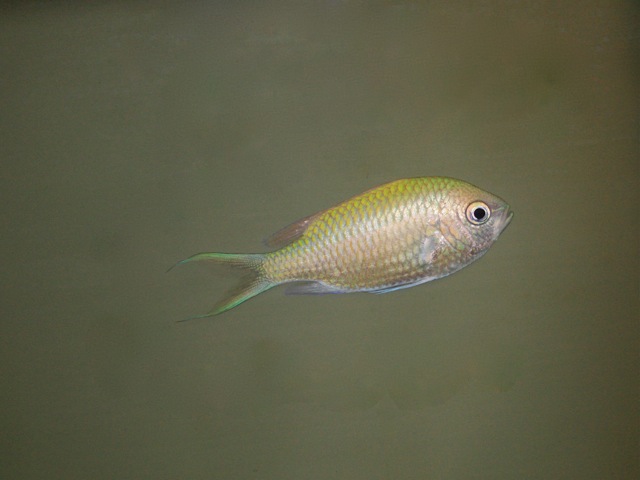
Genus/species: Chromis viridis

GENERAL CHARACTERISTICS: Adults are iridescent apple-green and light blue. Courting males develop blackish dorsal rays and upper pectoral rays. Caudal fin deeply forked with very long, trailing tips.

Length up to 9 cm (3.5inches)

DISTRIBUTION/HABITAT: Indo-Pacific.among reef flats, shallow lagoons, sheltered seaward reefs to 12 m (39 ft). Huge aggregations above branching corals, often well above the bottom. Swarms of juveniles occur above smaller isolated coral heads.

DIET IN THE WILD: Plankton.

REPRODUCTION: Oviparous, with distinct pairing during breeding. Elliptical demersal eggs are guarded by the male.

PREDATORS: In sunlight C. viridis blends with the blue of the water. In UV light it glows allowing individuals to see each other but remain invisible to most predators.

CONSERVATION: IUCN Red List Not Evaluated

References

California Academy of Sciences Steinhart Aquarium  Philippine Coral Reef and Defenses Cluster 2016

Ron’s flickr http://www.flickr.com/photos/cas_docents/sets/72157608339622313/with/5268900171/

Ron’s WordPress Shortlink http://wp.me/p1DZ4b-Gg

TAXONOMY
Kingdom: Animalia
Phylum: Chordata
Class: Actinopterygii (ray-finned fishes)
Order: Perciformes (Perch-likes)
Family: Pomacentridae (Damselfishes)

Genus/species: Dascyllus melanurus

GENERAL CHARACTERISTICS: Deep and compressed body; white with three black bars, rear two-thirds of tail is black; large white spot between eyes extends to lips. Pectoral fins transparent.

Length up to 8 cm (3 inches)

4436800067_8a0581806e_o


DISTRIBUTION/HABITAT: Blacktail Damselfish are found in the Western Pacific among branching corals in inshore and lagoon reefs to 68 m (210 ft).

DIET IN THE WILD: Omnivore; feeds on plankton, including larval shrimps and crabs, algae, ostracods, amphipods, pelagic tunicates, copepods, and fish eggs.

Dascyllus melanurus4437575636_cc28be23c1_b

REPRODUCTION: The Blacktail Damselfish is oviparous, with distinct pairing during breeding  The eggs are demersal and adhering  to the substrate  Males guard and aerate the eggs. Recent research suggests this species is a protogynous hermaphrodite.

CONSERVATION: IUCN Red List Not Evaluated

REMARKS: They hide among Acropora branching corals when threatened, though adults have an aggressive temperament.

References

California Academy of Sciences Philippine coral reef and Defenses Cluster 2016

Ron’s flickr https://www.flickr.com/photos/cas_docents/4436800067/in/album-72157608339622313/

Ron’s WordPress Shortlink: http://wp.me/p1DZ4b-G1 

fishbase  www.fishbase.se/summary/Dascyllus-melanurus.html

EOL eol.org/pages/211713/details

TAXONOMY
Kingdom: Animalia
Phylum: Chordata
Class: Actinopterygii (ray-finned fishes)
Order: Perciformes (Perch-likes)
Family: Pomacentridae (Damselfishes)

Genus/species: Premnas biaculeatus

Female below
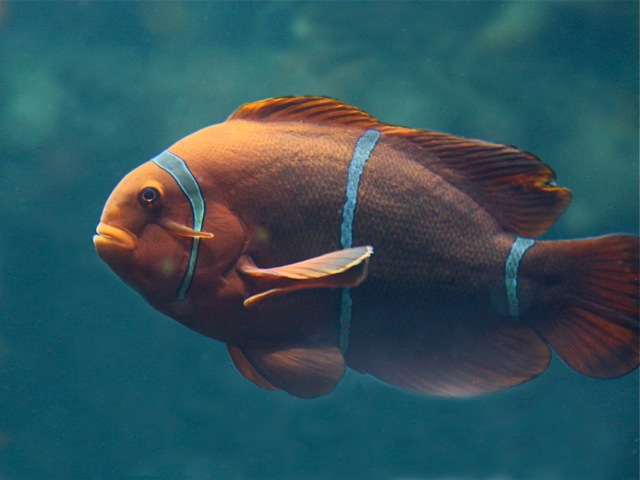
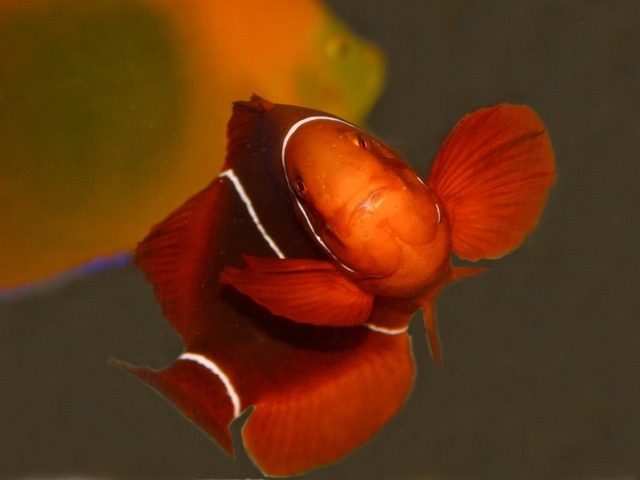
GENERAL CHARACTERISTICS: Juveniles orange-colored; color deepens with age. Male smaller, bright red with three brilliant white bars, sometimes barely visible. Female becomes maroon or almost black with subdued bars. Note the conspicuous spine on cheek below the eye.

 Length to 17 cm (6.75 inches). 

DISTRIBUTION/HABITAT: Indo-West Pacific: Indo-Australian Archipelago including India, Burma, Thailand, Malaysia, Indonesia,Philippines, New Guinea New Britain, Solomon Islands, Vanuatu, and northern Queensland, Australia.  Premnas biaculeatus is found in lagoons and seaward reefs, 1–16 m (3.25-52.5 ft) exclusively with the sea anemone Entacmaea quadricolor. They are usually in pairs.

DIET IN THE WILD: Zooplankton and algae.

REPRODUCTION: Oviparous. Males and females guard and aerate the eggs. Protandrous hermaphrodite, In the case of the death of the female, the second largest changes from male to female. Size difference is maintained in order to avoid subordinates becoming a threat to the highest ranking male.; female is to about 2–3 times the size of her male partner.
LIFESPAN: 6 to 10 years in the wild.

PREDATORS: Wrasses

CONSERVATION: IUCN: Not evaluated

REMARKS: P. biaculeatus has a mutualist relationship with Entacmaea quadricolor. The anemone benefits from having spinecheek anemonefish protect them from butterflyfishes, which feed on their tentacles. P. biaculeatus also clean away debris and parasites from the anemone. Spinecheek anemonefish are protected from most fish by the venomous anemones tentacles which do not injure the anemone fish.

References

California Academy of Sciences Steinhart Aquarium Philippine Coral Reef 2016

ADW  http://animaldiversity.ummz.umich.edu/accounts/Premnas_biaculeatus/

fishbase http://www.fishbase.org/summary/Premnas-biaculeatus.html

eol  http://eol.org/pages/211316/details

Ron’s flickr http://www.flickr.com/photos/cas_docents/sets/72157608339622313/with/3342653723/

Ron’s WordPress Shortlink http://wp.me/p1DZ4b-FU