Tag Archive: BIRDS


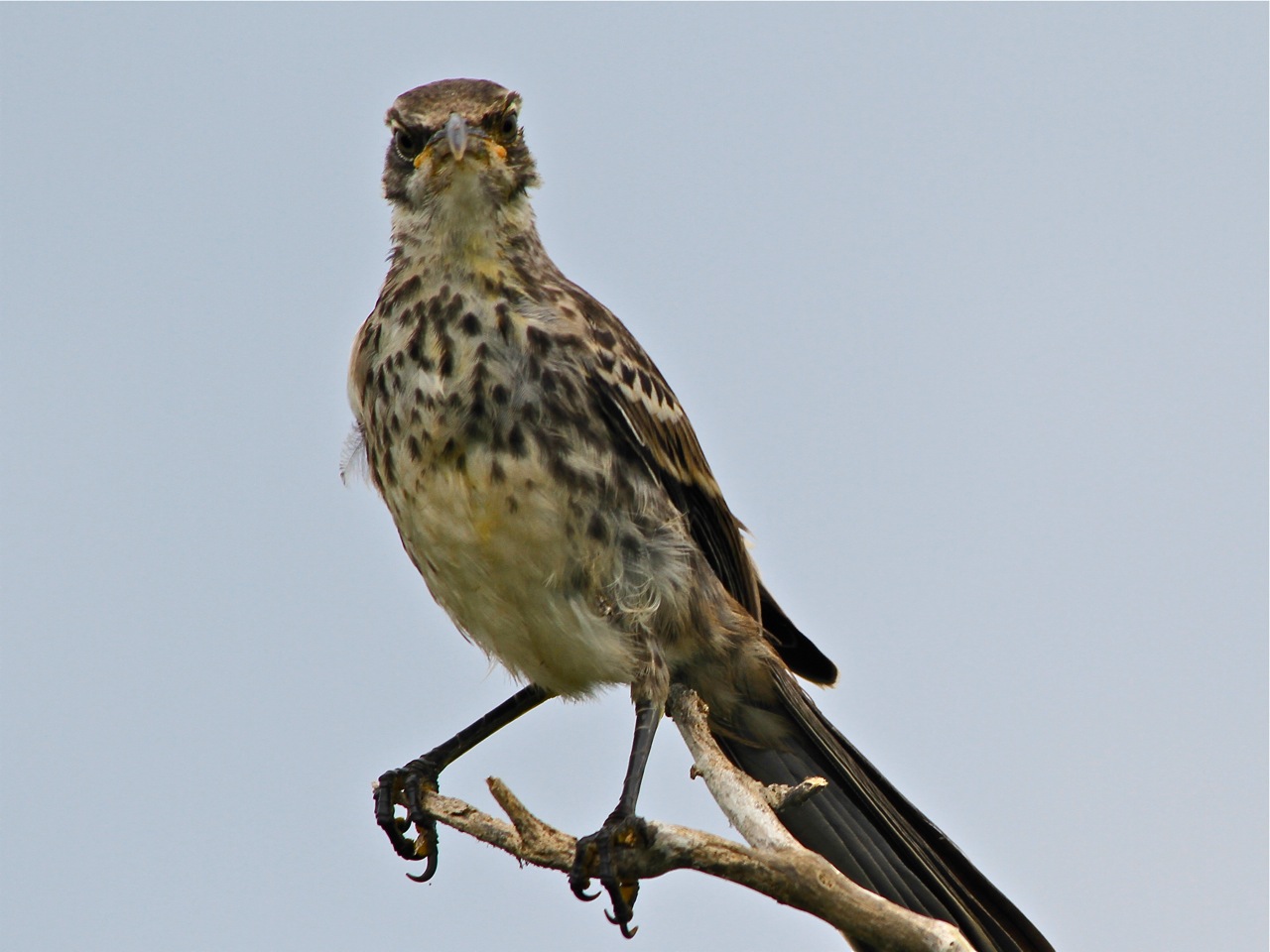
Nesomimus spp.                  Mimidae   

Distribution: Galápagos Islands. There are four species with no overlapping ranges.

Habitat: Arid zone.

Appearance:  Only thrush-sized, long-tailed, grey and brown streaked land bird.

Diet: Omnivorous and predatory compared to mainland relatives.  They eat young finches, lava lizards, centipeds, carrion and seabird eggs.

Reproduction:  They build their nests in trees and cacti.  About two or three females in each group breed at a time. Cooperative breeder on most islands: non-breeders act as helpers at nests in their group’s territory, and some breeders help raise nestlings in nests other than their own.

Remarks: It will steal any food left by humans unattended and also likes liquids using their large cured bill.

Evolution: It was the mockingbirds-not the finches that intrigued Darwin.  He found three different species on four different islands with each island home to just one species.  Since they were all closely related, he wondered if all were from a common ancestor. It was this line of thinking that led to his theory of evolution.

WordPress          http://wp.me/p1DZ4b-5l


Phaethon aetherus                           Phaethontidae


Distribution: Caribbean, South Atlantic, Indian Ocean and the Galápagos Islands.


Habitat: Anywhere there are cliffs.


Appearance; The adult is a slender, mainly white bird, 48 cm long, excluding the central tail feathers which double the total length, and a one meter wingspan. The long wings have black markings on the flight feathers. There is black through the eye. The bill is red.


Diet: P. aetherus feeds on fish and squid by plunge diving and they are also can take a flying fish in flight.


VIDEO LINK   http://www.youtube.com/watch?v=VySe1X12gqs&hd=1

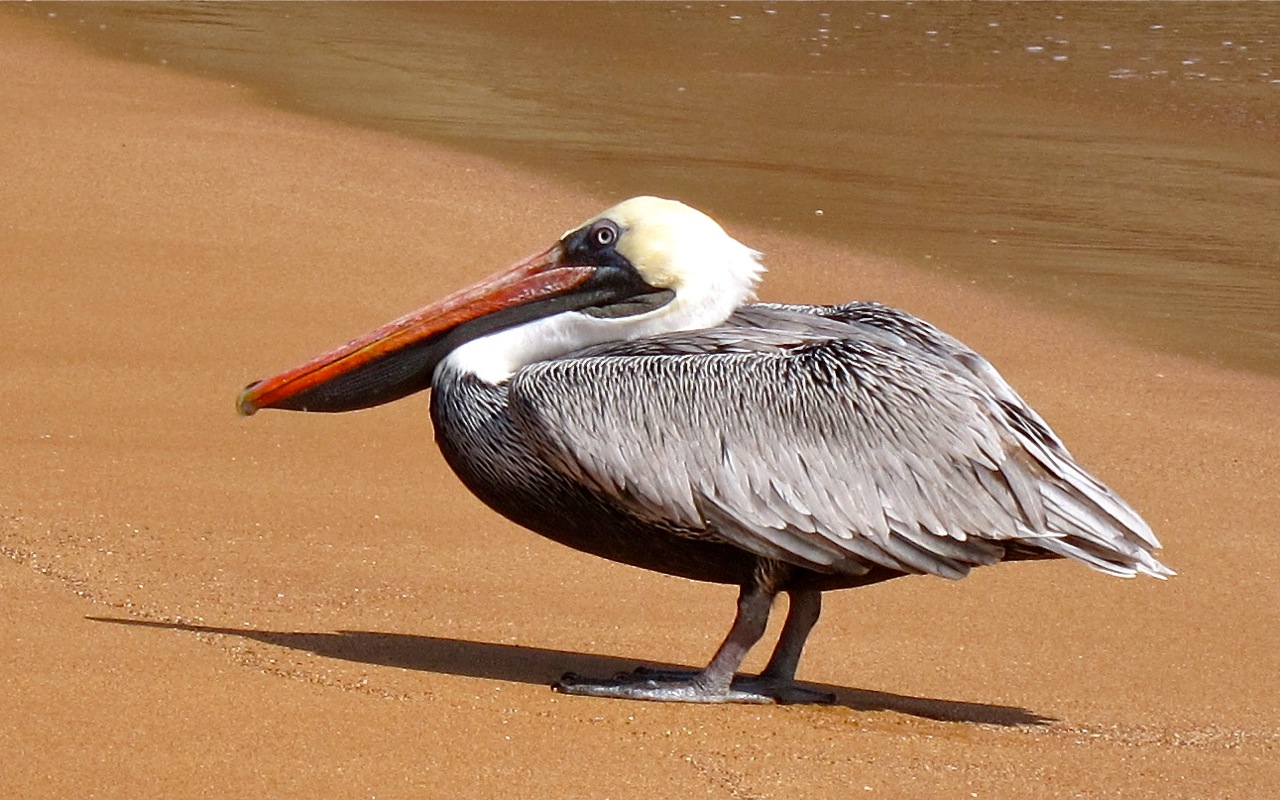
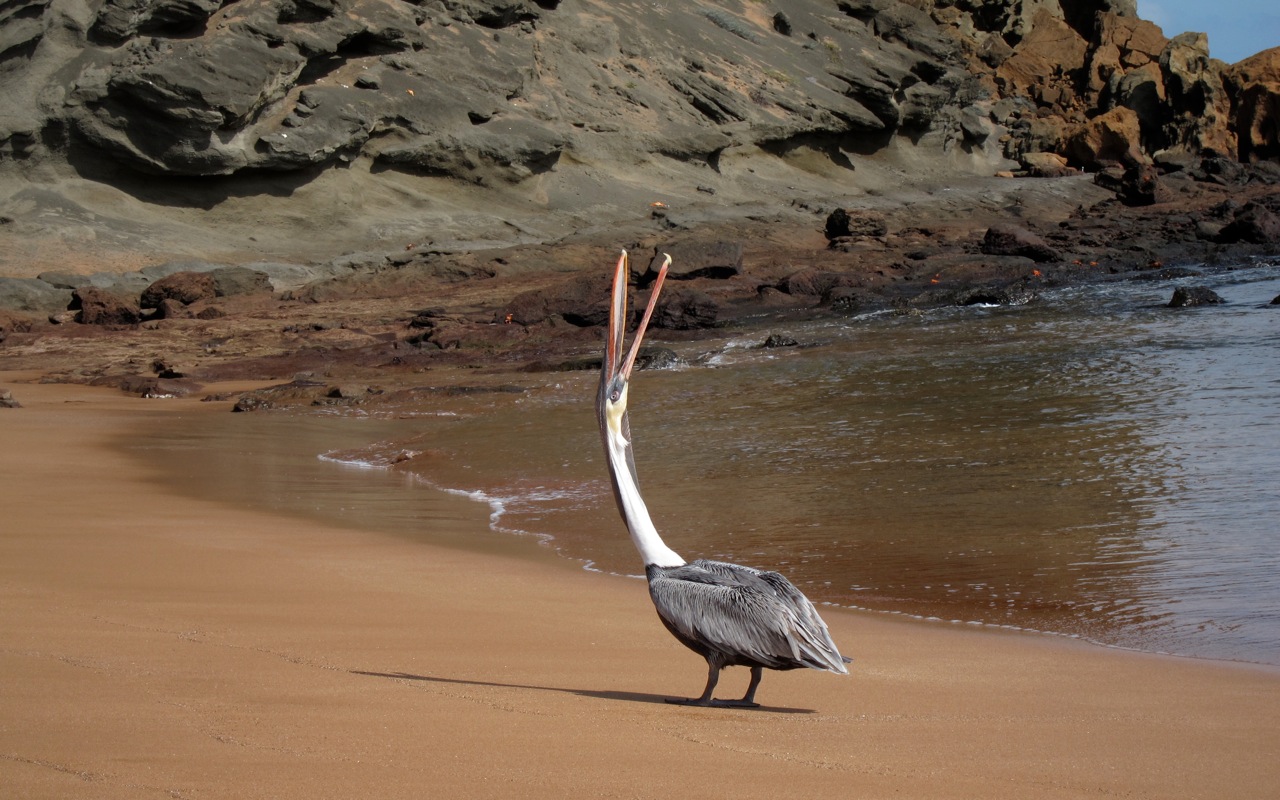
Pelecanus occidentalis     Pelecanidae   

Distribution:  California south to Tierra del Fuego and though out the Caribbean and Gulf of Mexico.

Habitat: Marine inhabiting bays and estuaries.

Appearance:  It is 106–137 cm (42–54 in) in length, weighs from 2.75 to 5.5 kg (6.1 to 12 lb) and has a wingspan from 1.83 to 2.5 m (6.0 to 8.2 ft).  It is uniformly brown. When breeding the adults develop a bright yellowish-white head and chestnut neck.  The pouch becomes various shades of red.

Diet: Small fish.

Remarks:  Nest among the mangroves in small colonies.

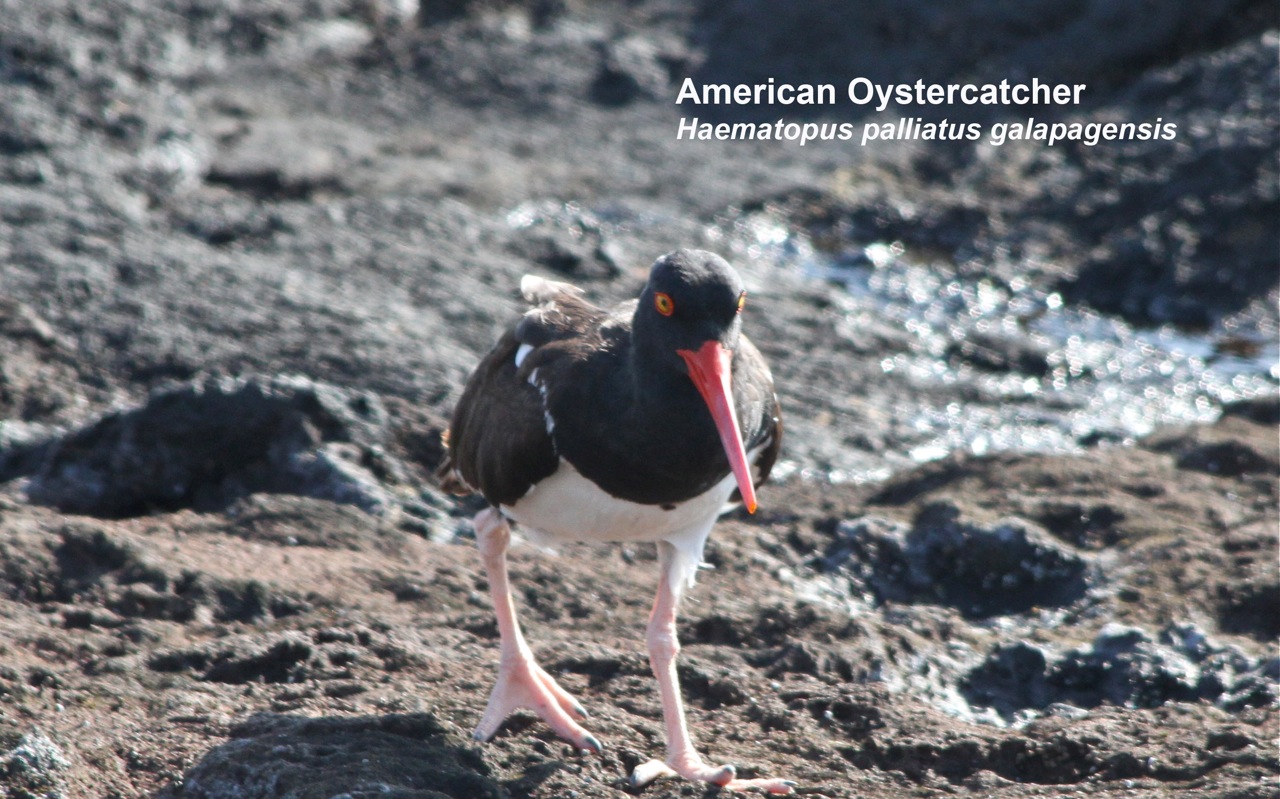
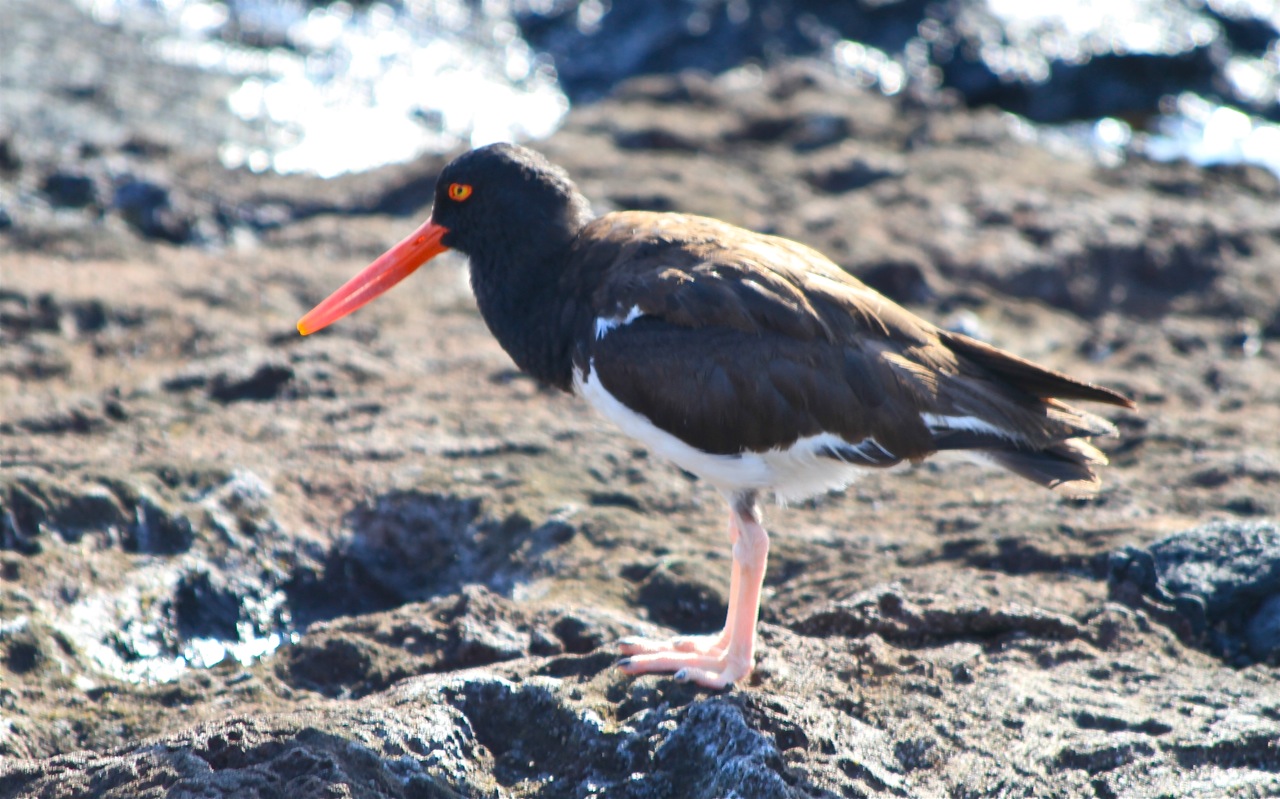
Haematopus palliatus galápagensis            Haematopodidae

Distribution: Galápagos Islands, coasts of Central and South America.

Habitat: Rocky shores and pebble beaches.

Appearance: Black and white body and a long, thick orange beak. This shorebird is approximately 19 inches (42 – 52 cm) in length.

Diet: Marine invertebrates. The large, heavy beak is used to pry open bivalve mollusks.

flickr LINK  http://www.flickr.com/photos/cas_docents/sets/72157626944185876/

Frigatebird VIDEO LINK   http://www.youtube.com/watch?v=VySe1X12gqs&hd=1

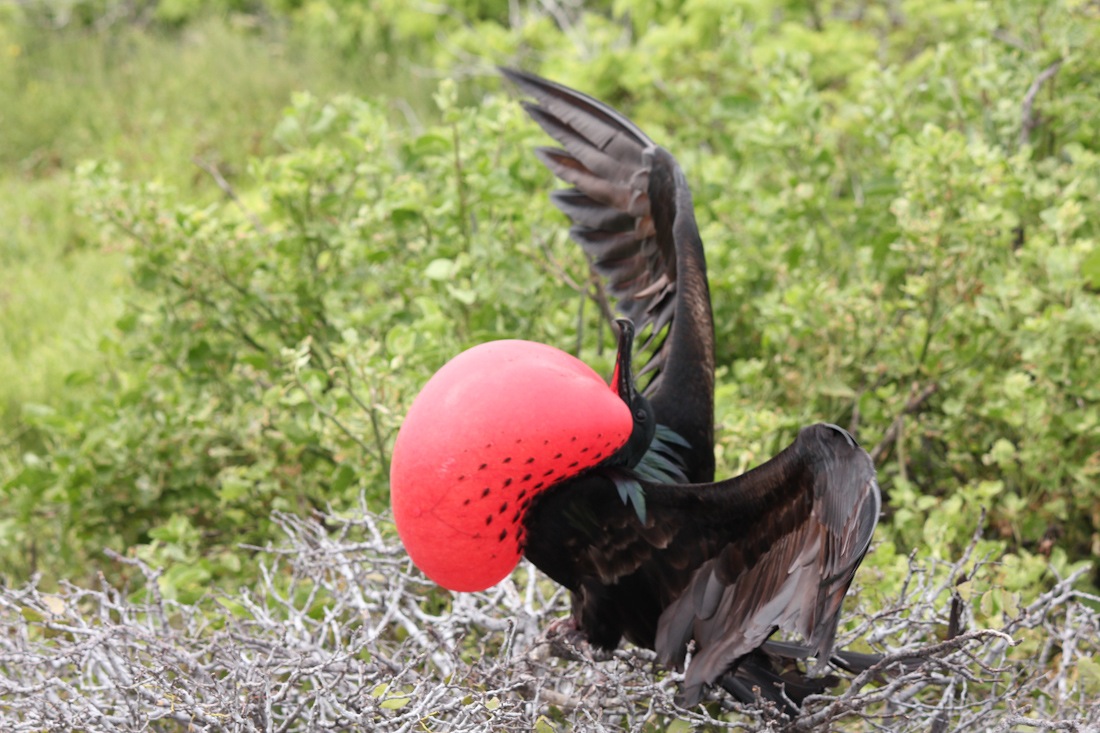
Great Frigatebird (Fregata minor) and the Magnificent Frigatebird (Fregata magnificens).                        Fregatidae

Distribution: Coastal on Galápagos Islands
pagos, North Seymour Island and most commonly Genovesa  Island.  Both species are found elsewhere in the Atlantic also.  In addition three other great pantropical frigatebird species are found elsewhere but not on the Galapagos Islands.  Habitat: Frigatebirds build nests in low-lying shrubs and producing a single egg.  They cannot swim because they will drown in water. They have a small uropygial gland thus have very limited oil for their feathers.

Appearance: They look like giant blackish swallows with  a wingspan of approximately seven feet and their deeply forked scissor-like tails afford them excellent  maneuverability. Males have large red gular sacs or throat sacs during mating season.  Male F. minor has green irridescence  while F. Magnificens has purple irridescence on it feathers.Reproduction: Nests in low-lying shrubs and produce a single egg. Both parents take turns feeding for the first three months but then only by the mother for another eight months. It takes so long to rear a chick that frigatebirds cannot breed every year. It is typical to see juveniles as big as their parents waiting to be fed.
 

á

Swallow-Tailed Gull

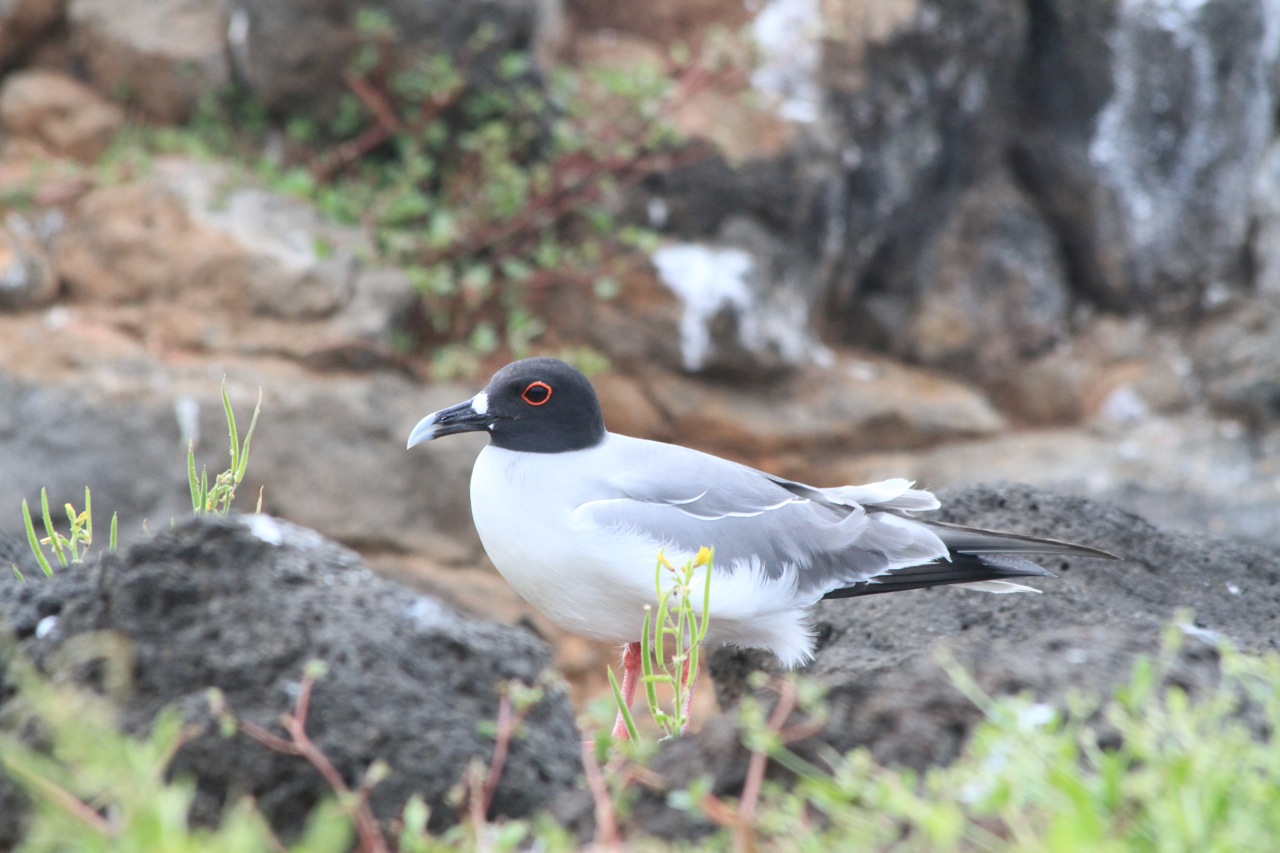
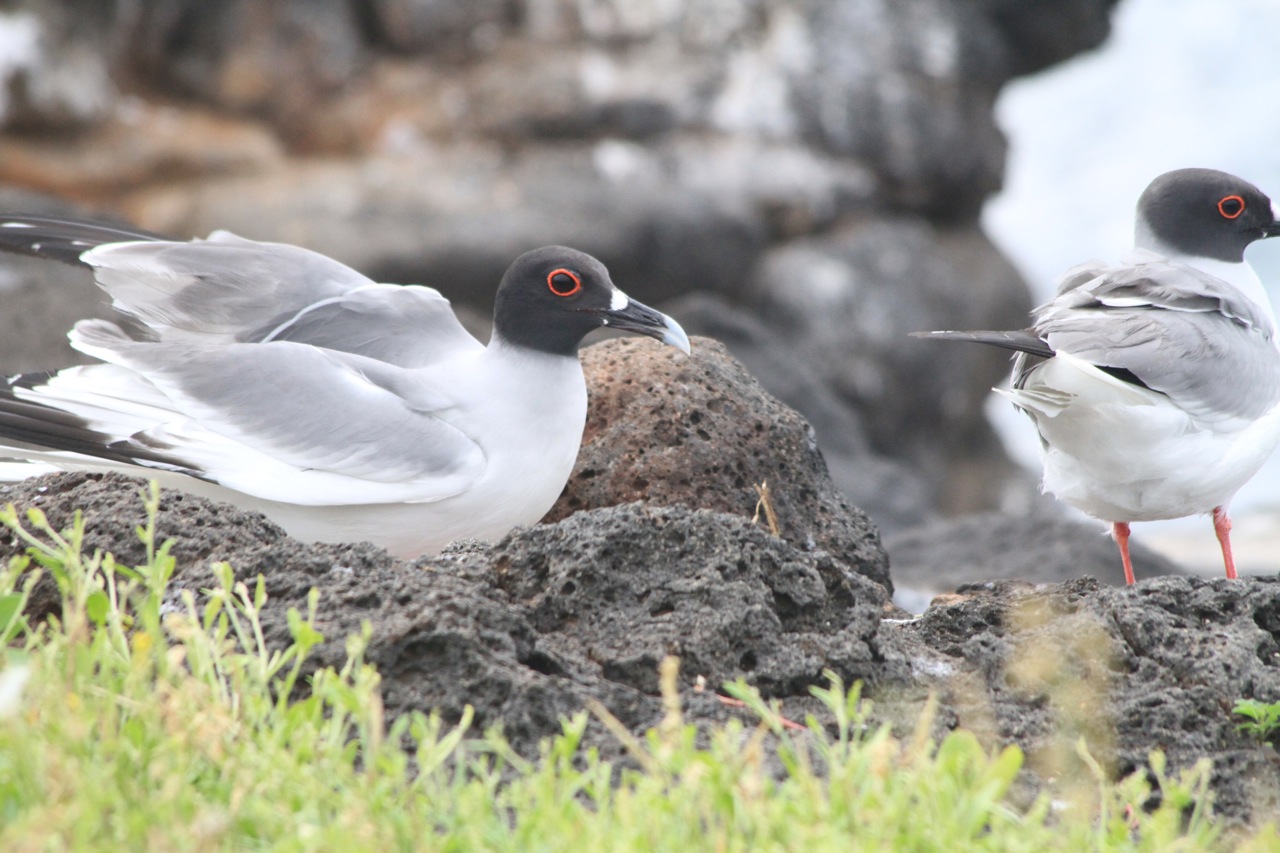
Creagrus furcatus               Laridae

Distribution: Endemic to the Galápagos Islands except for a small colony on Malpelo Island off the west coast of Colombia.

Appearance:  Gulls are medium-sized to largish seabirds with long, pointed wings and longish, rather stout, hook-tipped bills, usually with a marked gonydeal angle. Their legs are longish and their feet webbed.  C. furcatus is unmistakable; the only common whitish gull with a distinctive forked tail. Adult: Upper parts and neck grey; under parts white. In breeding plumage has dark grey head, large eye with red eye-ring, and black bill with pale base and tip. 51 – 58 cm (20 – 22.8 in).

Diet: Gulls feed by picking food from the surface of the water or by scavenging, often along the shoreline. Feeds mostly nocturnally, usually several miles from land. Flight is bouyant and tern-like.   

VIDEO LINK   http://www.youtube.com/watch?v=VySe1X12gqs&hd=1

Waved Albatros

Phoebastria irrorata           Diomedeidae

Distribution: Only in the offshore waters of Central south America from northern Chile to northern Ecuador and west to the Galápagos.

Habitat: Pelagic rarely approaching shore except to breed.

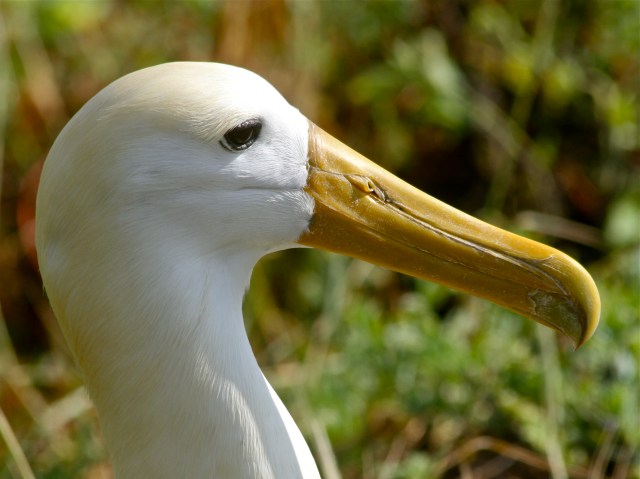
Appearance:  P. irrorata are medium-sized albatrosses, measuring about 86–90 cm (34–35 in) long, weighing in at 3.4 kg (7.5 lb), and having a wingspan 2.25m or 7.4 ft.  They are distinctive for their yellowish-cream neck and head, which contrasts with their mostly brownish bodies. They have a very long, bright yellow bill, which looks disproportionately large in comparison to the relatively small head and long, slender neck. They also have chestnut brown upper parts and underparts, except for the breast, with fine barring, a little coarser on the rump. They have brown upper-wings, back, and tail, along with a whitish breast and underwings. Their axillaries are brown. Finally they have blue feet. Juveniles are similar to adults except for more white on their head.   Chicks have brown fluffy feathers.

Diet: Fish squid and occasional crustaceans.

Remarks: P. irrorata has been observed attacking boobies forcing them to dislodge fish they have captured which the albatrosses then claim as their own.

Waved Albatrosses do have difficulty taking off and landing due to their huge wings and slender bodies. To make it easier they sometimes take off on cliffs that are more inland and not next to the coast. The problem is when they come in to land they have a high stalling speed, and when they take off it’s hard to beat their massive wings.

For reproduction see Ron’s Aquarium photos on flickr link  below.

áReád-Footed Booby   Sula sula                       Sulidae

Distribution: found widely in the tropics, and breed colonially in coastal regions especially  islands.  

Habitat: Feed at sea, but nest on land, perching in coastal trees and shrubs.

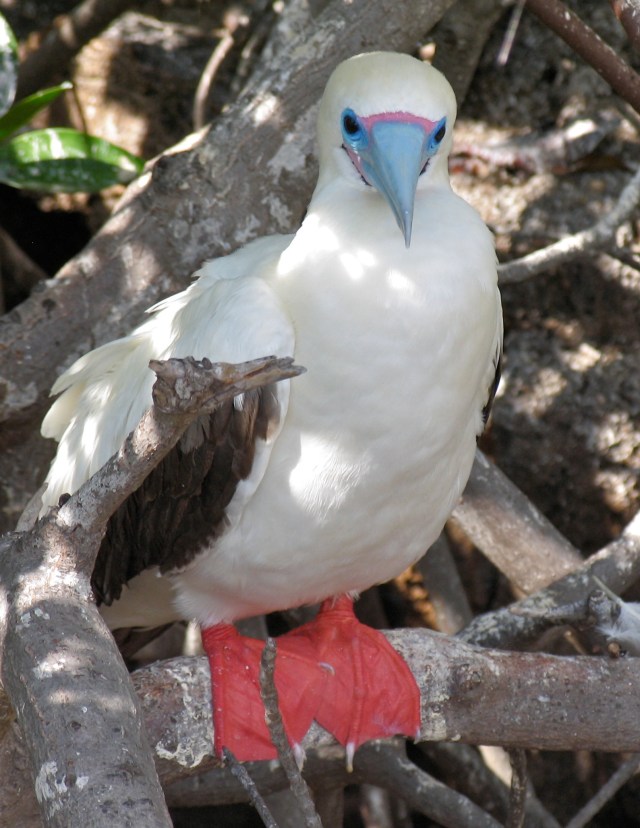
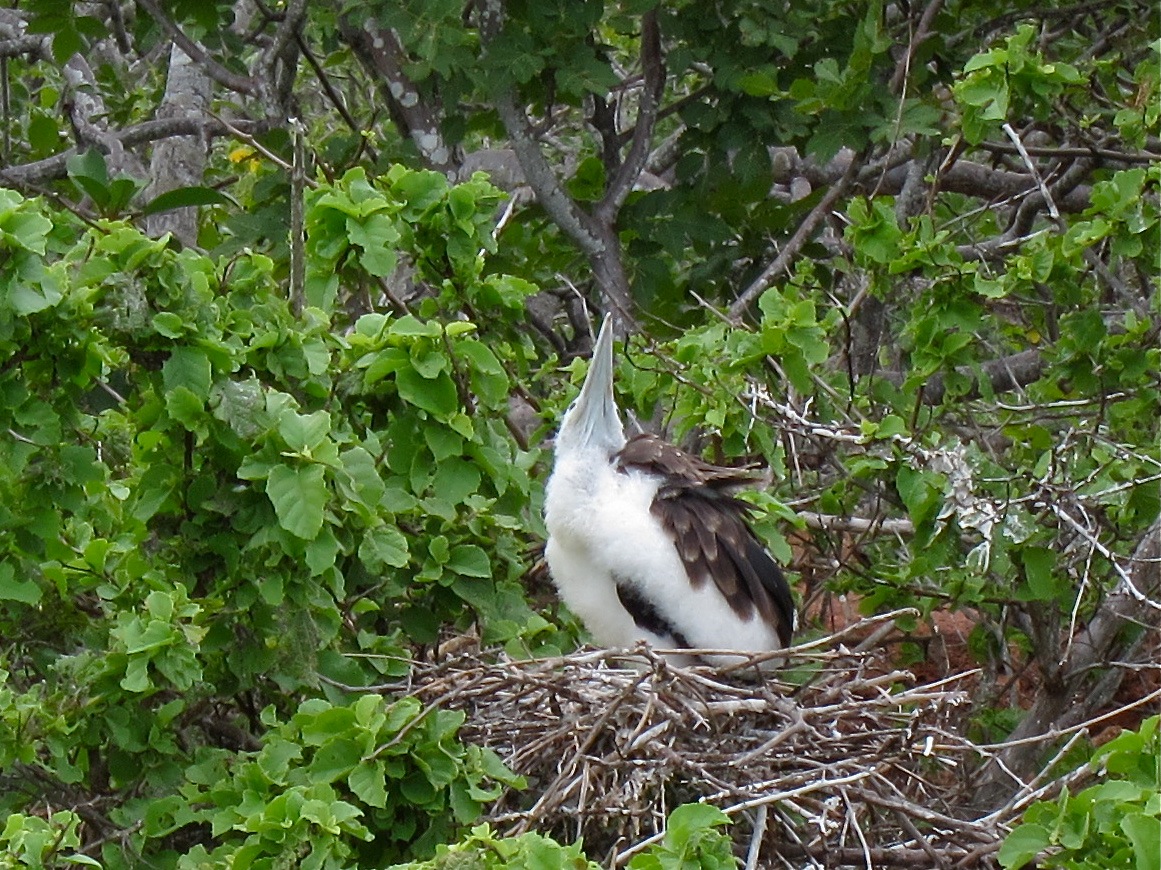
Appearance: The Red-footed Booby is the smallest of all boobies at about 70 centimetres (28 in) in length and with a wingspan of up to 1 metre (3.3 ft). It has red legs, with its bill and throat pouch colored pink and blue.  Red-footed boobies appear in a variety of color morphs but all have red feet giving its name. In the white morph the plumage is mostly white (the head often tinged yellowish) and the flight feathers are black.

Diet: S. sula  are spectacular divers, plunging into the ocean at high speeds to catch prey. They mainly eat small fish or squid which gather in groups near the surface.

Remarks: These gregarious birds live in colonies and, during mating season, hundreds of animals may gather to pair up and mate. Females lay only one egg every 15 months, and both parents care for chicks. Young mature slowly, but the low reproduction rate is balanced by these birds’ long lifespan—over 20 years.

The biggest threats to red-footed boobies are a fishing industry that thins their food source, and coastal development with disappearing of the world’s coastlines.

Photo: Jean Haddad

Masked Booby

Sulidae dactylata                         Sulidae

Distribution: Breeds in Bahamas and West Indies, and on other islands in tropical Atlantic, Indian, and Pacific oceans such as the  Galápagos Islands.

Habitat: Tropical seas, except when nesting in small colonies, on sandy beaches in shallow depressions.

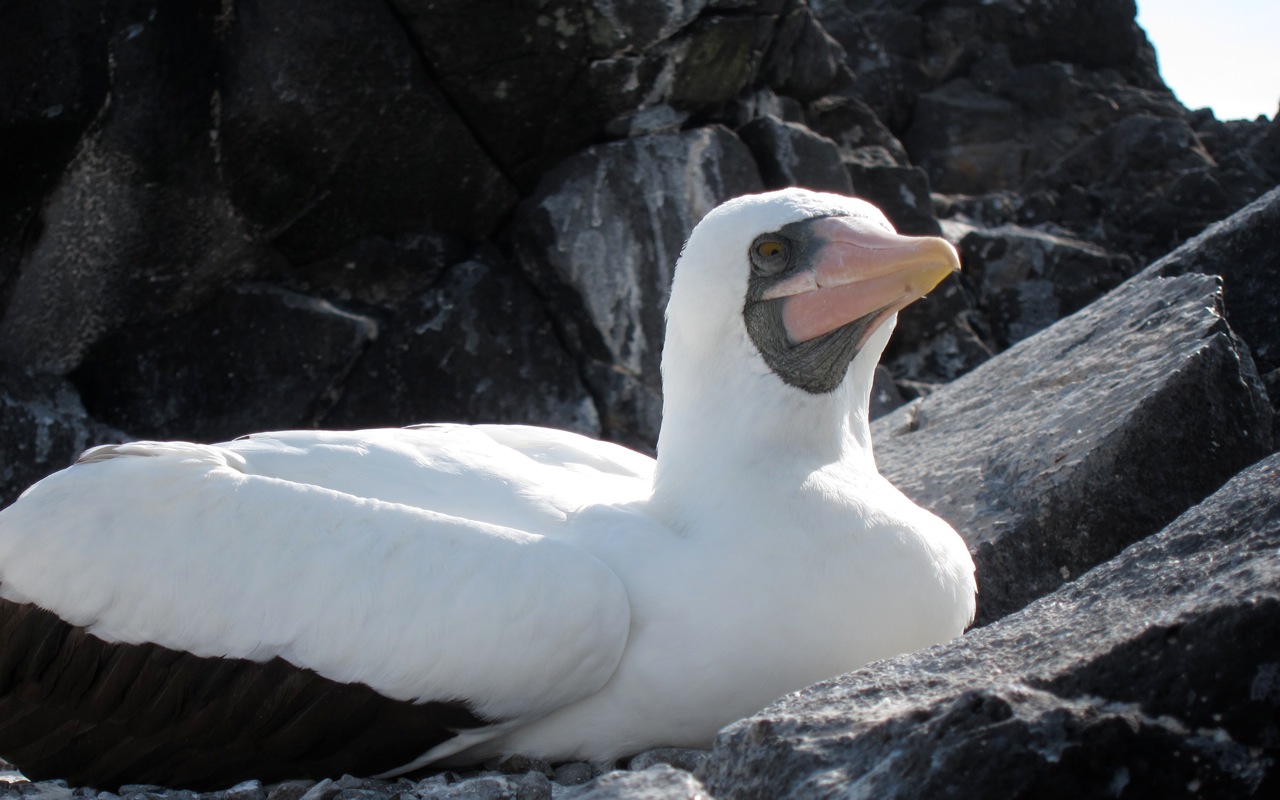
Appearance: 32inches; (81 cm). A stocky white seabird with black tail, black tips and trailing edges to the wings, and stout pinkish or orange bill.

Diet:Mainly eat small fish, including flying fish.

Remarks: Boobies have little fear of humans. Because of their tameness they were easily killed for food by early mariners, who gave them their name (from the Spanish bobo or stupid) for this reason. Boobies obtain their prey in spectacular plunges from the air into the sea

Galápagos Video link   http://www.youtube.com/watch?v=VySe1X12gqs&hd=1

Blue-Footed Booby

Sula nebouxii   Sulidae

Distribution:  Baja Peninsula to northern peru and Galápagos Islands.

Habitat: The Blue-footed Booby is strictly a marine bird. Their only need for land is to breed, which they do along rocky coasts.

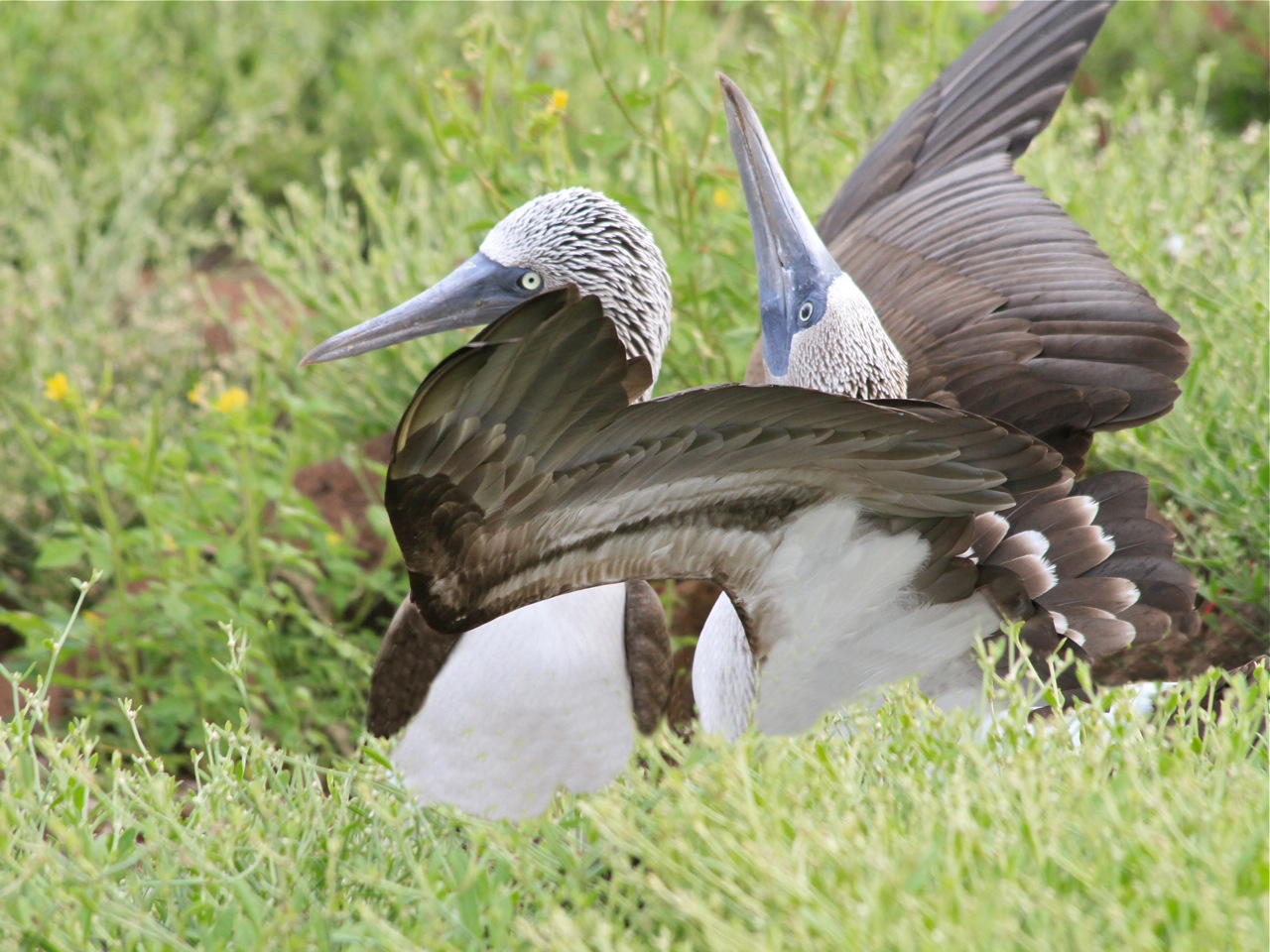
Appearance:   Average 81 centimetres (32 in) long and weighs 1.5 kilograms (3.3 lb), with the females slightly larger than the males.   S. nebouxii has long pointed wings and a wedge shaped tail.  The booby’s  yellow eyes are placed on either side of their bill and oriented towards the front with excellent binocular vision.  The male has more yellow on its iris than the female.   Their feet range from a pale turquoise to a deep aquamarine. Males and younger birds have lighter feet than females do.

Remarks: When they spot a school of fish, they will all dive in unison. They point their bodies down like an arrow and dive into the water plunging from heights of 33–100 ft (10–30.5 m) and even up to 330 ft (100 m). They hit the water around 60 mph (97 km/h) and can go to depths of 82 ft usually eating while underwater.