Category: Uncategorized


TAXONOMY
Kingdom: Animalia
Phylum: Chordata
Class: Aves
Order: Passeriformes
Family: Thraupidae

Genus/species: Tangara chilensis paradisea 
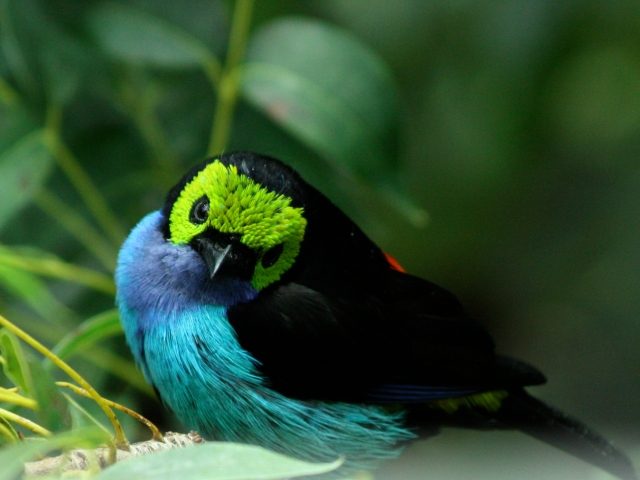
2981087747_5d4a822642_o

GENERAL CHARACTERISTICS: In Spanish, called “sieite colores” for its seven-colored appearance: green, yellow, scarlet, black, and three colors of blue feathers adorn this handsome bird. Monomorphic (males and females look similar). Length 13.5 to 15 cm 5.3 to 6 inches.

DISTRIBUTION/HABITAT: South America: common in Venezuela, Peru, Columbia, Ecuador, Brazil. Found in the canopy and edges of subtropical to tropical lowland humid forests, including parts of the Amazon basin and upwards to 1400 m (4500 feet). Often moves in mixed flocks.

DIET IN THE WILD: Mainly fruit, buds, leaves. Forage from middle heights to treetops. Also, like other  tanagers, picks insects from leaves or sometimes takes them in flight. Often moves and feeds in mixed flocks.
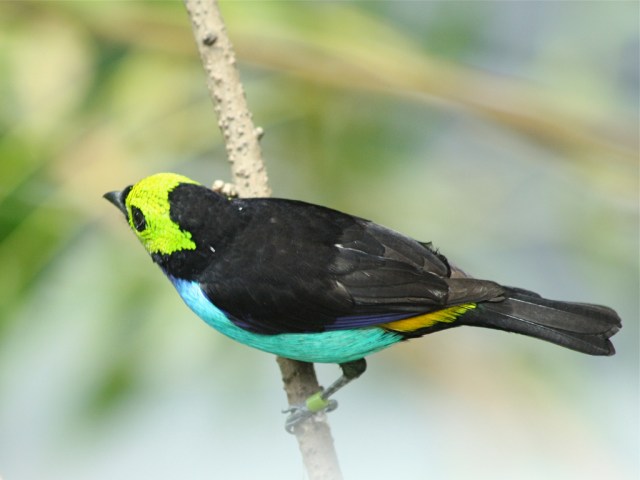
Paradise Tanager   3259028446_790c536452_b

REPRODUCTION: Female builds a cup nest where she lays two or three brown or lilac-speckled white eggs. Eggs hatch in 13–14 days; chicks fledge in additional 15–16 days. Nestlings are feed insects and fruit by both male and female..

CONSERVATION: IUCN, least concern.

Rainforest.

1-8-09, 11-11-11

flickr  http://www.flickr.com/photos/cas_docents/3259028446/in/set-72157608454346681

WordPress Shortlink  http://wp.me/p1DZ4b-15F
TAXONOMY
Kingdom: Animalia
Phylum: Chordata
Class: Aves
Order: Passeriformes
Family: Thraupidae

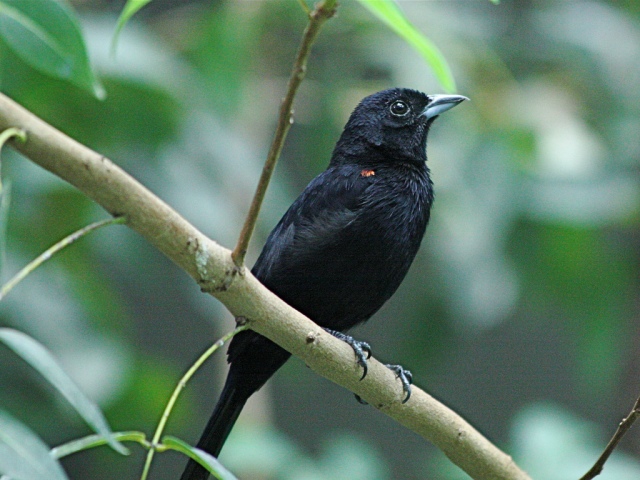
Genus/species: Tachyphonus phoenicius

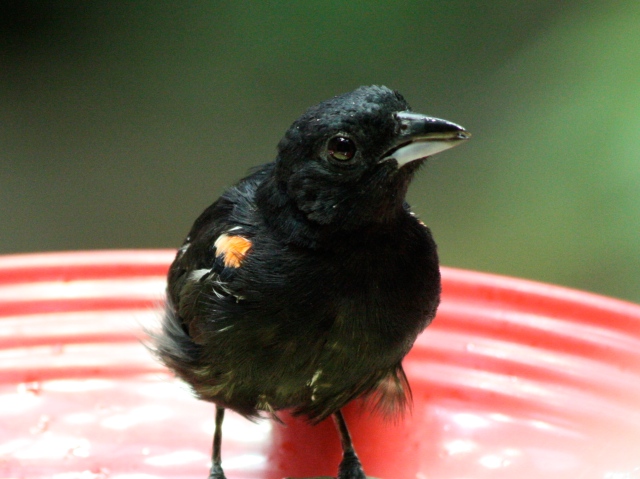
Red-shouldered Tanager (male) 3334159981_db9f81a402_b

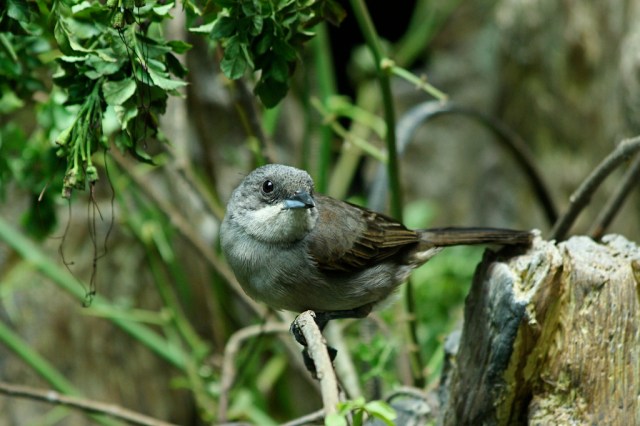
GENERAL CHARACTERISTICS: Males are basically all black, with a tiny red and white patch on the shoulder region and white underwing linings. Females, are brownish gray above, while the throat and middle abdomen are white. Pairs of Red-shouldered Tanagers usually forage in close proximity, low down, but often keeping within cover. Length 16-17 cm (6.3-6.7 inches).

Male above and below

Red-shouldered Tanager (male) 3186809464_2c975c664e_o

DISTRIBUTION/HABITAT: Bolivia, Brazil, Colombia, Ecuador, French Guiana, Guyana, Peru, Suriname, and Venezuela. Found in dry shrubland or seasonally wet or flooded lowland grassland. Also open rainforest, to 2000 m (6500 feet).

DIET IN THE WILD: Insects and fruit.

female below

Red-shouldered Tanager (female) 3105184668_a8dfdddccd_b

CONSERVATION: IUCN, least concern (population trend stable).

flickr http://www.flickr.com/photos/cas_docents/sets/72157608454346681/with/3334159981/

WordPress Shortlink  http://wp.me/p1DZ4b-15y


TAXONOMY
Kingdom: Animalia
Phylum: Chordata
Class: Actinopterygii
Order: Perciformes
Family: Centrarchidae (Sunfishes)

Genus/species: Pomoxis nigromaculatus

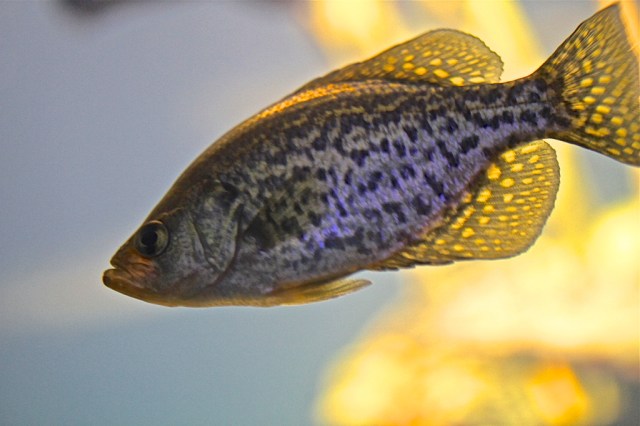
Black Crappie  5230993160_366f8f8c16_b

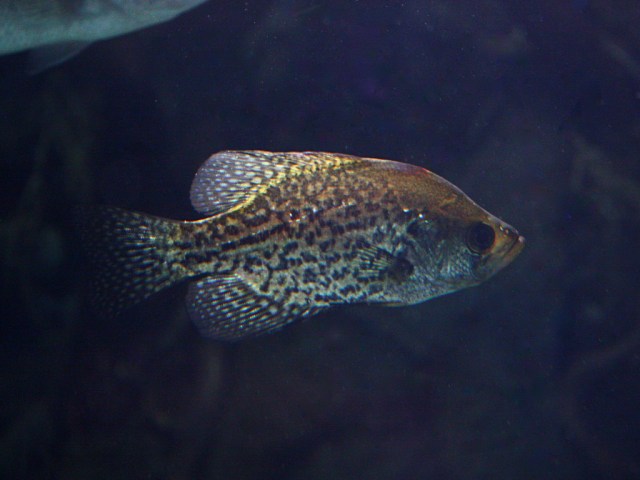
GENERAL CHARACTERISTICS: Length 13-38 cm (5 – 15 in) in length. The average weight varies from 0.25-0.90 kg (9 – 31 oz). Deep and laterally compressed body with symmetrical dorsal and anal fins. Color is silvery-gray to green with irregular or mottled black splotches over the entire body. Color varies among populations of P. nigromaculatus with age, habitat, and breeding are all determinants of the intensity of mottling.

DISTRIBUTION/HABITAT: North America: native to freshwaters of central and eastern North America, today widely introduced throughout the U.S.  Habitat: Lakes, ponds, sloughs, and backwaters and pools of streams. Prefers clear water and sites with vegetation over mud or sand.

DIET IN THE WILD: Mid-water omnivore that feeds in vegetation and open water. Its numerous gill rakers allow it to consume planktonic crustaceans; however aquatic insects, minnows, and fingerlings of other species comprise its main diet.

Black Crappie 3202662242_7502b65334_b

REPRODUCTION: P. nigromaculatus produce an average of 40,000 spherical eggs and the male watches o the nest until eggs hatch, which is usually about 2–3 days.

PREDATORS: Larger fishes such as pike, walleye and muskellunge. Average lifespan 10-13 years.

CONSERVATION: Not endangered.

REMARKS: A very popular tasty sport fish.

Feeding Strategies WP31 and Swamp SW02

flickr http://www.flickr.com/photos/cas_docents/sets/72157608608528651/with/3202662242/

WordPress Shortlink  http://wp.me/p1DZ4b-ZD

TAXONOMY
Kingdom: Animalia 
Phylum: Chordata
Class: Actinopterygii (ray-finned fishes) 
Order: Perciformes (Perch-likes) 
Family: Serranidae (Sea basses: groupers and fairy basslets)
Subfamily: Anthiinae (Anthias)

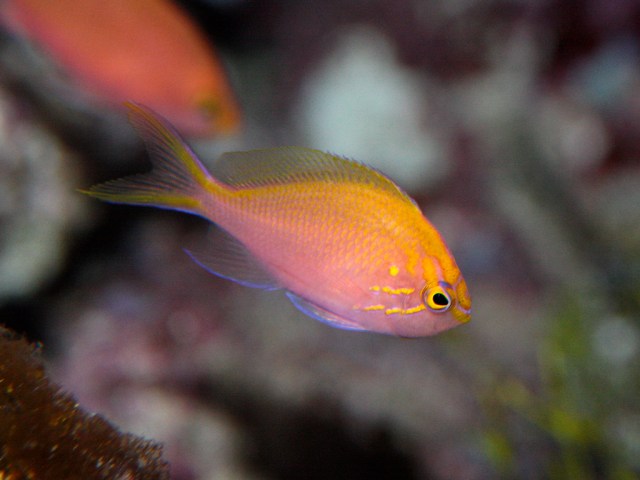
Genus/species: Serranocirrhitus lathus

4482852401_4ab3a860ab_b

GENERAL CHARACTERISTICS: Unlike its cousins the Pseudanthias species, the Flathead Anthias has a deep body and elongate pectoral fins that extend back as far as the posterior part of the anal fin.. Predominantly pink, with heavy yellow-to-orange scale margins and facial markings. Max.length: 10 cm (4 inches).

DISTRIBUTION/HABITAT: Western Pacific. Found near coral reefs usually at depths of 18 m (60 feet) or more, either solitarily or in small haremic groups; also found near caves, ledges, and drop-offs, usually close to crevices where they retreat if threatened.

DIET IN THE WILD: Zooplankton

REMARKS; First described in 1949 as a hawkfish in the family Cirritidae but in 1978 it was placed in the subfamily Anthiinae (Anthias).

Animal Attractions Staff Picks SP14

flickr http://www.flickr.com/photos/cas_docents/4482852401/in/set-72157608545590153/

WordPress Shortlink http://wp.me/p1DZ4b-Zl

Python reticulatus:  Kingdom Animalia,  Phylum Chordata,  Subphylum Vertebrata,  Class Reptilia,  Order Squamata, Suborder Serpentes,  Family Boidae

DISTRIBUTION:  Reticulated pythons can be found throughout Southeast Asia. Their range includes the Nicobar Islands, Burma through Indochina, and Borneo, Sulawesi, Ceram and Timor in the Malay archipelago. 

HABITAT:  Steamy tropical rainforests  near small rivers or ponds in tropical environments.

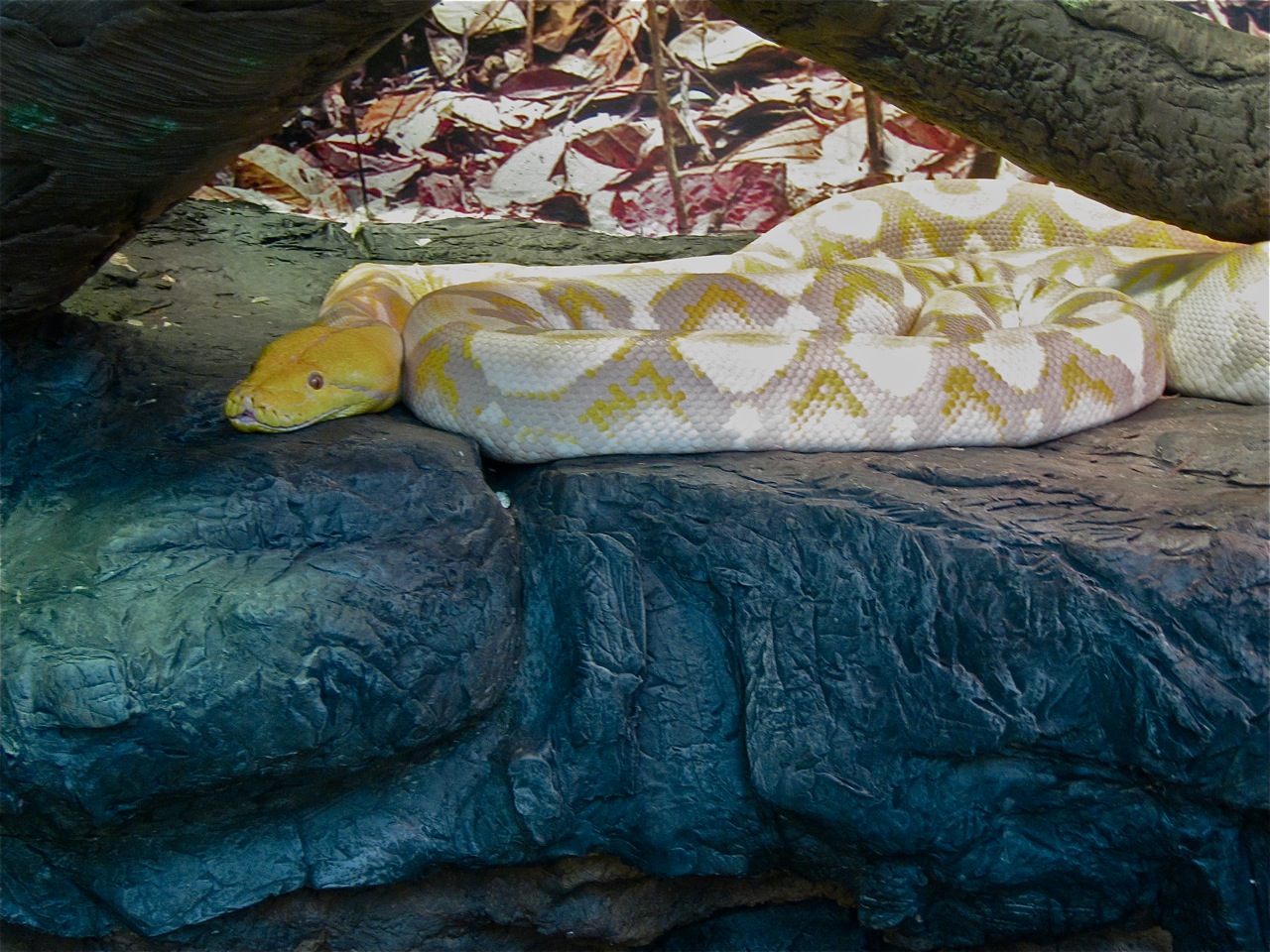
APPEARANCE: Normally colored reticulated pythons have several pigments: melanin (blacks), and xanthins (yellows) amongst other more subtle colors. Lemondrop is a “lavender albino” which is the same thing as a “tyrosinase positive albino” (t-positive) which have the inability to complete the synthesis of melanin but can produce other melanin related pigments such as various shades of brown, grey and red resulting the “lavender” color. A “normal albino” (t-negative) reticulated python is yellow and white with pink/red eyes. Melanin and other melanin pigments areas are pure white but non-melanin pigments are present giving alternate colors (xanthines produce yellows). To make matters more complicated different albino snakes may have mutations giving them additional color morphs.

DIET:  P. reticulatus is strictly carnivorous swallowing their food whole with backward curved teeth (which are replaced if lost) preventing escape of a bitten prey.  It typically feedis on birds and mammals but can extend to dogs, large deer, pigs and very rarely humans. They are usually ambush predators, waiting in trees for unsuspecting prey.  P. reticulatus  does not crush their prey but squeezes more tightly each time the prey exhales suffocating it or causing the heart to stop.

REPRODUCTION: Lays 25-80 eggs and guards nest but not hatched young. 

REMARKS: Non-venomous.  They are heavily sold for their skin and meat.  Also tourists visiting these areas often buy materials made from these snakes. This specimen is a male, 14.5 ft long 60 lbs, 6 yrs old.  Level one.  9-30-11

WORDPRESS SHORTLINK    http://wp.me/p1DZ4b-aE 


Carettochelys insculpta  Family Carettochelyidae,  Pig-nose Turtles

DISTRIBUTION: Southern New Guinea and Kimberly Plateau of Australia.

HABITAT: Shallow, slow-moving rivers, lagoons, lakes and swamps with sandy or silty bottoms. Also in estuaries. Active nocturnally. Emerge from water only in order to nest.

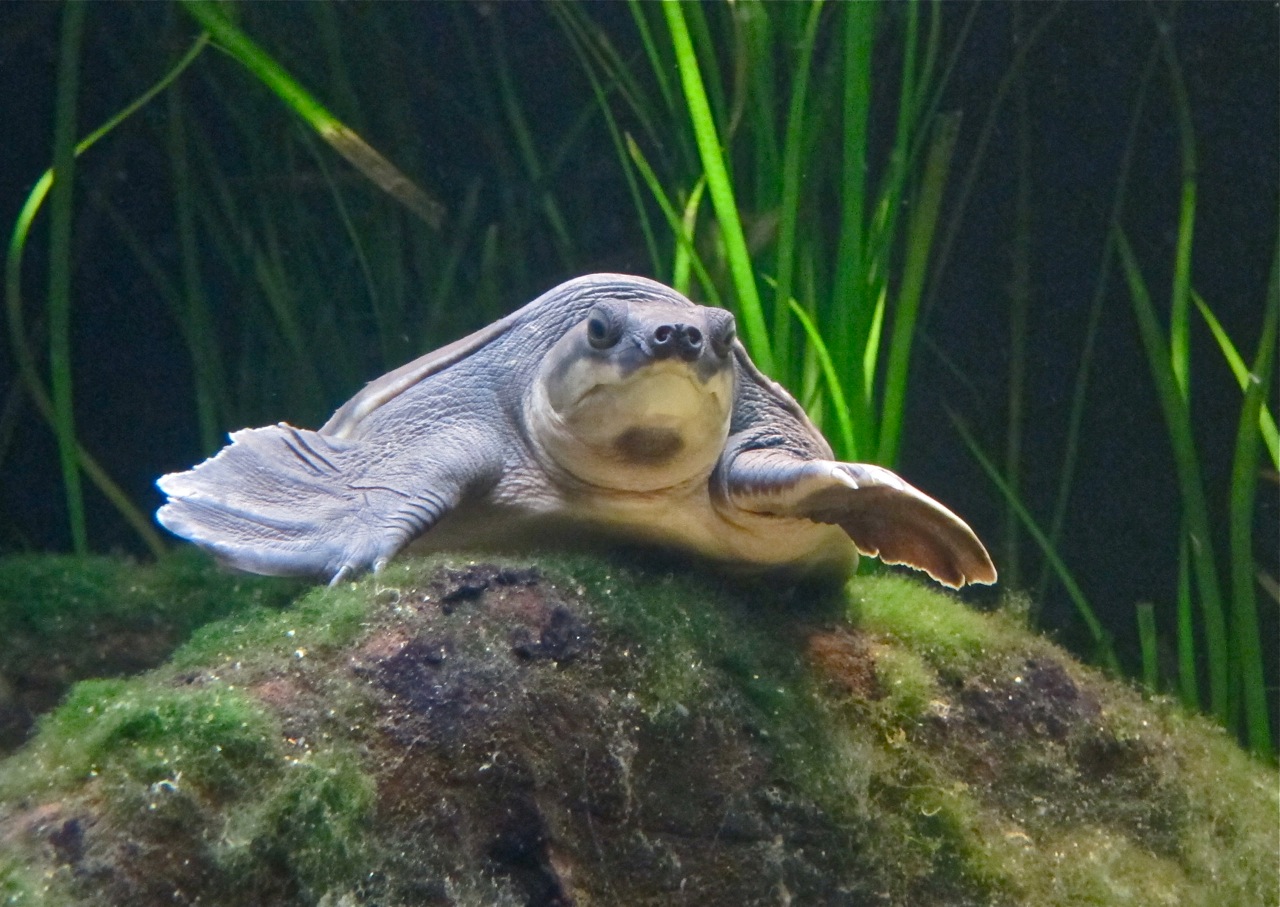
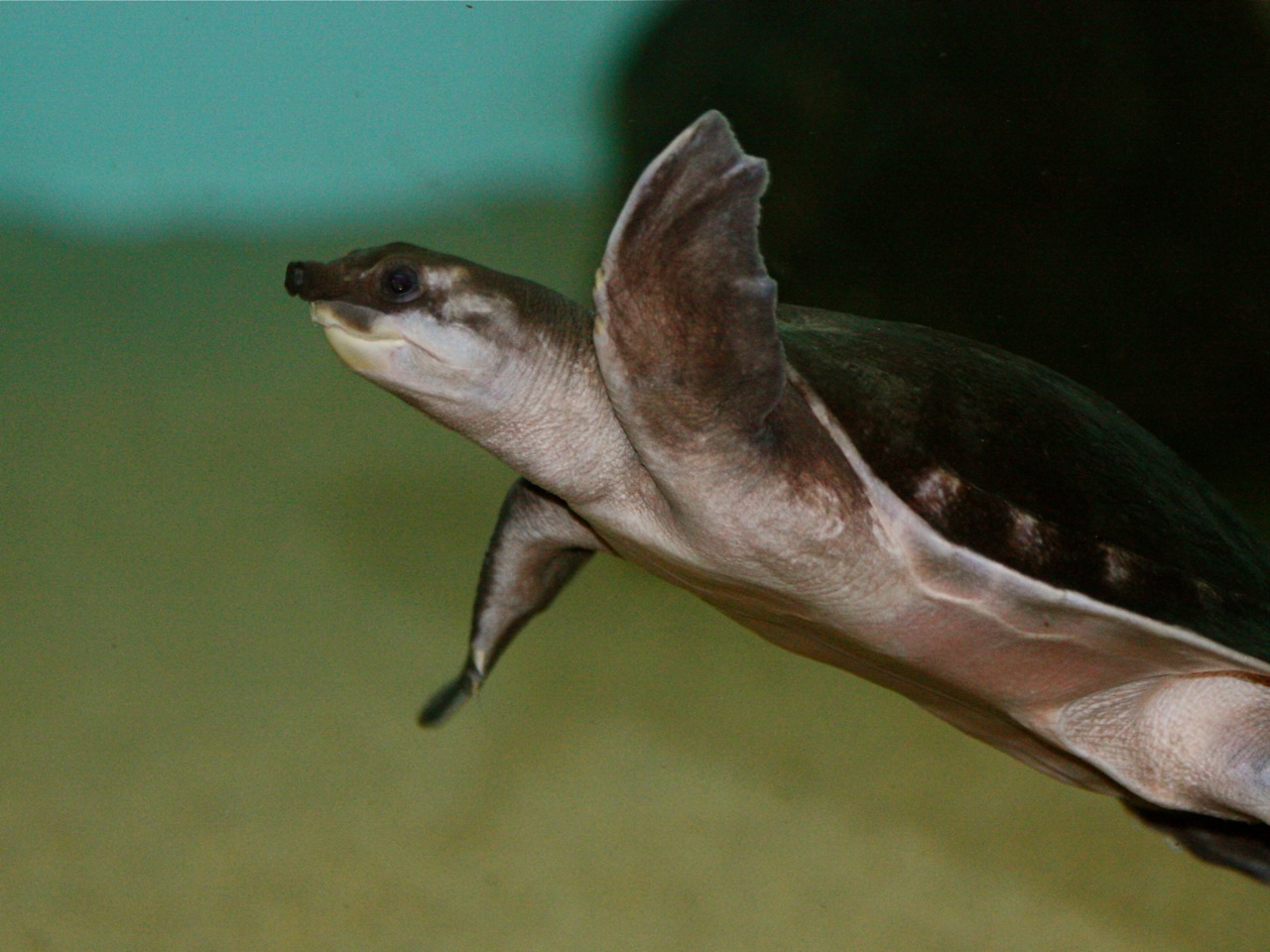
APPEARANCE: Length to 75 cm. Pitted, leathery, gray-green carapace and a white plastron. Limbs are clawed and paddlelike. Short head terminates in a broad, tubular, “piglike” snout. Carapaces of juveniles have serrated perimeters and a central keel.

DIET: Opportunistic omnivores. Principal food is the fruits of shoreline trees. Eat other plant material: leaves, flowers that fall into river from banks, and aquatic algae. Also take insect larvae, mollusks and crustaceans. Scavenge fishes and mammals as carrion.

REMARKS; Australian populations were not discovered by biologists until 1969. Species first described from the Fly River of New Guinea in the 1800s. Secretive animals. Use forelimbs to burrow by scooping sand substrate over their carapace. Adults may thermoregulate underwater by lying over small thermal springs.

Only extant species in its family.

LOCATION: Waterplanet with Australian lungfish.

flickr LINK  http://www.flickr.com/photos/cas_docents/sets/72157608449490716/

WORDPRESS SHORTLINK  http://wp.me/p1DZ4b-8Q