Category: INDO-PACIFIC


TAXONOMY
Kingdom: Animalia (animals)
Phylum: Chordata (chordates)
Class: Actinopterygii (ray-finned fishes)
Order: Beryciformes (Sawbellies)
Family: Monocentridae (Pinecone fishes)

Genus/species: Monocentris japonica


GENERAL CHARACTERISTICS: Body except for caudal peduncle armored with huge, immovable scales. Body yellow, scales outlined in black; lower jaw black. Length to 17 cm (6.7 inches).

 PineconeFish14809348647_ca6e4f130d_k

DISTRIBUTION/HABITAT: Indo-Pacific. Tropical marine found in schools in clear water above rocky bottom near reefs. Depth range 10 – 200 m (33-660 feet).

PineconeFish14996127685_785385956b_k


DIET IN THE WILD: Feeds at night on small invertebrates and zooplankton

 CONSERVATION: IUCN 2006 red list of threatened species

 REMARKS: By moving its jaw M. japonica  exposes a bioluminescence producing organ with pure culture of luminous bacteria which emit light.

 Location: Dark Cluster

 References

 eol eol.org/pages/214300/details

 fishbase www.fishbase.org/summary/Monocentris-japonica.html

 Ron’s flickr www.flickr.com/photos/cas_docents/14809348647/

Ron’s WordPress shortlink  http://wp.me/p1DZ4b-1kC

TAXONOMY
Kingdom: Animalia
Phylum: Chordata
Class: Actinopterygii (ray-finned fishes)
Order: Perciformes (Perch-likes)
Family: Labridae (Wrasses)

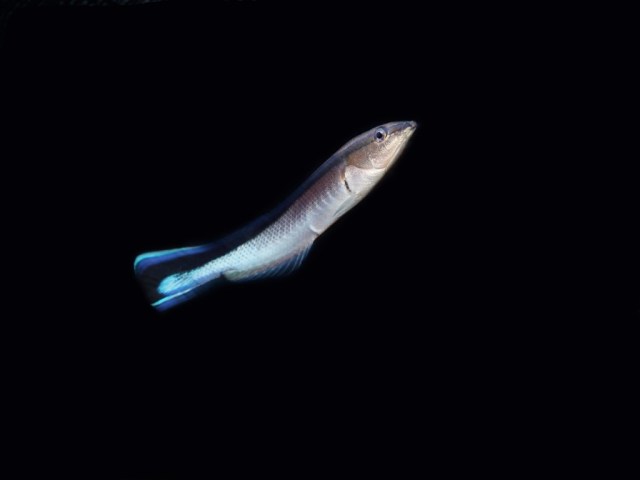
Genus/species: Labroides dimidiatu

GENERAL CHARACTERISTICS: Length to 11.5 cm (4.5 inches). Elongate body, tubular mouth. Blue to yellow above fading to white or yellow below. There is a black stripe from the eye to the caudal fin margin. The stripe widens posteriorly.

DISTRIBUTION/HABITAT: Indo-Pacific in virtually all coral reef habitats: inner lagoons and subtidal reef flats to seaward reefs, 0.5-40 m (18 in to 125 ft), typically near branching corals. Active diurnally. Aggressively territorial. Nocturnally retires to small crevices in the reef, enclosing itself in a mucus cocoon. Remains in stations where other fish come to be cleaned.

DIET: The most common cleaner wrasse on reefs. Pick external parasites from other fishes. Also clean the wounds of other fishes by removing scar tissue. Clean the gills and even enter the mouth of the host.

REPRODUCTION: Monogamous. A protogynous hermaphrodite.
Open water/substratum egg scatterers, non guarders.

CONSERVATION: IUCN, Least concern

Cleaner Wrasse13298334135_9737aa3d26_b

Philippine Coral Reef PR04

flickr http://www.flickr.com/photos/cas_docents/sets/72157608208133134/with/2977676226/

WordPress Shortlink http://wp.me/p1DZ4b-Kp

fishbase fishbase.sinica.edu.tw/summary/SpeciesSummary.php?ID=5459

EOL eol.org/pages/204814/details

Australia Museum  australianmuseum.net.au/Common-Cleanerfish-Labroides-dimi…

TAXONOMY
Kingdom: Animalia
Phylum:Chordata
Class: Actinopterygii (ray-finned fishes)
Order: Perciformes (Perch-likes)
FamilyChaetodontidae (Butterflyfishes)

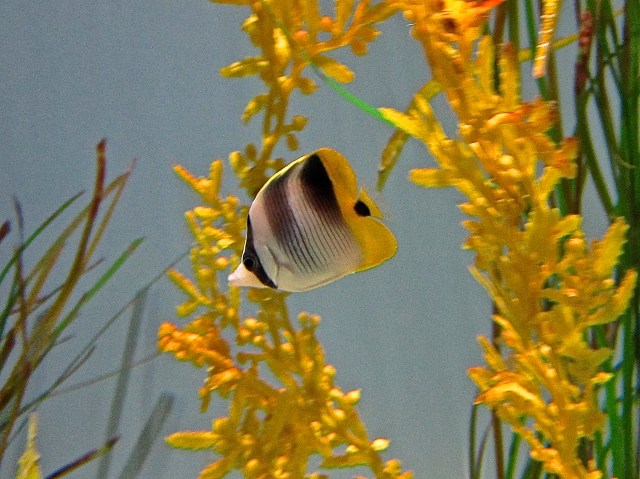
Genus/Species: Chaetodon mitratus 

Chaetodon mitratus or Indian Butterflyfish SP07IMG_0103

GENERAL CHARACTERISTICS: Head and body yellow, diagonal stripes two very broad black from dorsal to ventral contour eye bar black to orange. Snout length 2.7-3.3 in. . Body depth 1.7-1.9 .

DISTRIBUTION/HABITAT: Western Indian Ocean. Found in deep tropical marine coral reefs. 22-80 meters (70-260 ft)

DIET IN THE WILD: Coral polyps, zooplankton

REPRODUCTION: Oviparous. Form pairs during breeding

CONSERVATION: IUCN Least Concern (LC)

Chaetodon.mitratusIndian ButterflyfishSP07low.IMG_0100.IMG_0100

REMARKS: Little is known of C. mitratus

References

WordPress shortlink  http://wp.me/p1DZ4b-1dl

flickr  http://www.flickr.com/photos/cas_docents/12918681523/in/set-72157625119200613/

fishbase www.fishbase.org/summary/speciessummary.php?id=8927

EOL eol.org/pages/215193/overview

TAXONOMY
Kingdom: Animalia
Phylum: Chordata
Class: Actinopterygii (ray-finned fishes)
Order: Perciformes (Perch-likes)
Family: Chaetodontidae (Butterflyfishes)

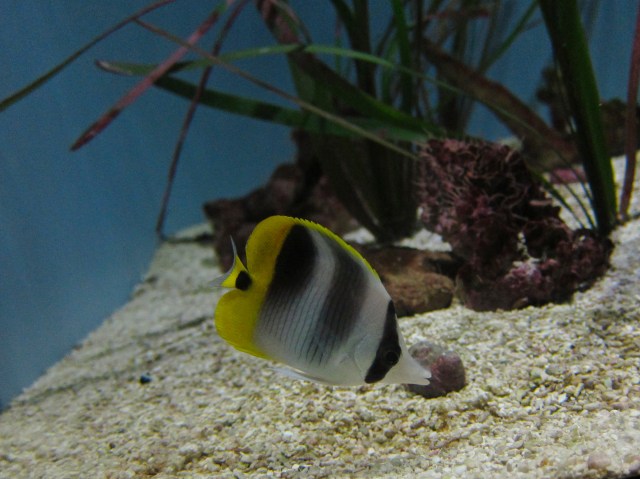
Genus/species: Chaetodon ulietensis

IMG_0142

GENERAL CHARACTERISTICS White for and mid-body and a bright yellow rear. A pair of diffuse dark saddles are across the back with a black spot on the base of the tail and black bar through the eye. Size to 15 cm (6 in).

DISTRIBUTION/HABITAT: Central and Western Pacific in coral-rich areas of lagoons and seaward reefs to 30 m (100 ft).

DIET IN THE WILD Wide range of foods including invertebrates and algae.

REPRODUCTION Monogamous usually seen in pairs.. Oviparous.

CONSERVATION: IUCN, Least Concern (LC)

IMG_0161

Color Cluster

WordPress shortlink http://wp.me/p1DZ4b-Uf

flickr http://www.flickr.com/photos/cas_docents/sets/72157625119200613/with/8599840724/

flickr www.flickr.com/photos/cas_docents/sets/72157625119200613/…

Australian Museum australianmuseum.net.au/Doublesaddle-Butterflyfish-Chaeto…

EOL eol.org/pages/1012794/details

TAXONOMY
Kingdom:Animalia
Phylum: Chordata
Class: Actinopterygii (ray-finned fishes)
Order: Perciformes (Perch-likes)
Family: Pomacanthidae (Angelfishes)

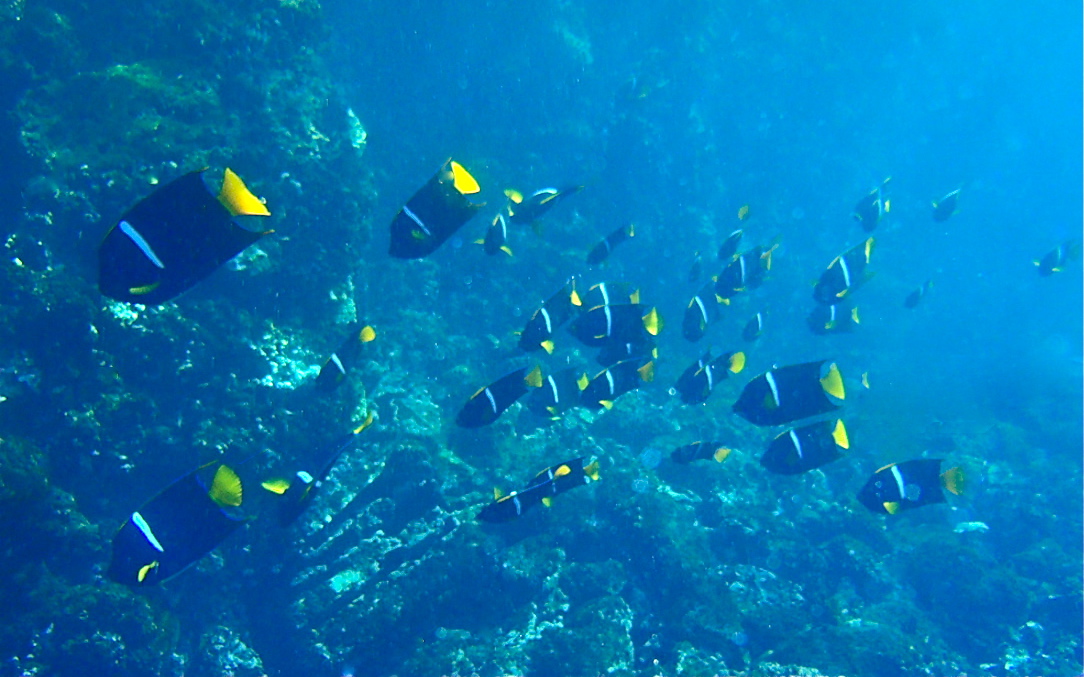
Genus/species: Holacanthus passer

GENERAL CHARACTERISTICS: Bodies of both males and females are a dark blue with a vertical band of white behind the pectoral fins, and yellow tails. The pelvic fins of the male are white while the females are yellow. Juveniles are primarily yellow with iridescent blue edged fins, blue stripes toward the posterior of the body with orange around the eyes. Rays of the dorsal and anal fins taper down and end in long filaments. Max size: 30–35 cm (12-14 inches).  Like all angelfish, have a blunt snout and a large strong spike at the anterior most bone of the operculum.

Photo below take 2011 Galapagos Islands

DISTRIBUTION/HABITAT: Tropical reefs of the eastern Pacific from the coast of Peru north to the Gulf of California and as far west as the Galápagos  Islands.  Commonly found around shallow rocky and coral reefs at depths of 3 to 27 m( 10 to 89 feet). 

DIET IN THE WILD: Sponges, tunicates, sessile invertebrates, zooplankton and graze on benthic micro algae. Feed during the day, are lethargic at night.

California Academy of Sciences specimens below.


REFERENCES
WordPress Shortlink wp.me/p1DZ4b-78
flickr www.flickr.com/photos/cas_docents/12353760984/
fishbase www.fishbase.org/summary/Holacanthus-passer.html

TAXONOMY
Kingdom:Animalia
Phylum: Chordata
Class: Actinopterygii (ray-finned fishes)
Order: Perciformes (Perch-likes)
Family: Serranidae (Sea basses: groupers and fairy basslets)

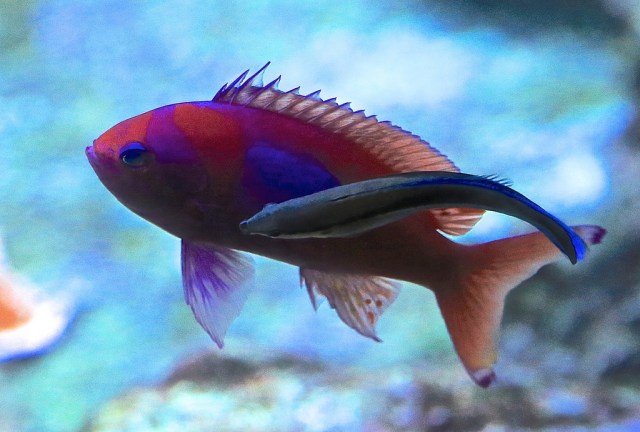
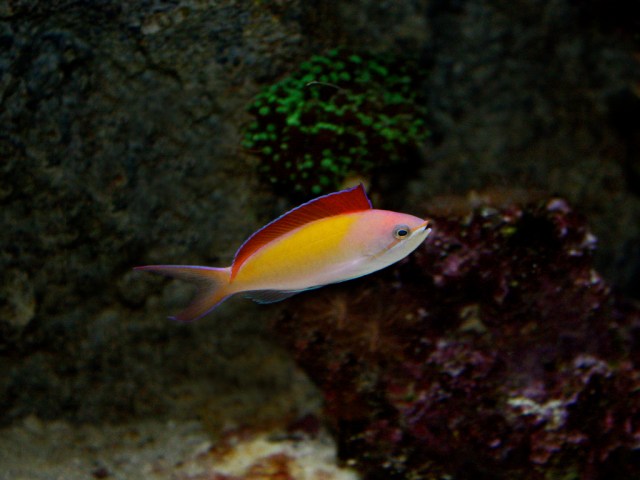
Genus/species: Pseudanthias dispar

Peach Fairy Basslet aka Redfin Anthias 2989036131_c7b264ace3_b

GENERAL CHARACTERISTICS: Sexes dichromatic. Male: orange to yellow body, lavender to pink head and bright red dorsal fin. Female: orange to peach upper head, body, and fins; pink line from the tip of the snout angling down, passing through the lower part of the eye .. Max. size: 9.5 cm (3.75 inches).

DISTRIBUTION: East Indo-Pacific along upper edge of steep reef slopes 1 – 15 m (3.25 – 50 feet) .

DIET IN THE WILD: Zooplankton. Occur in large feeding aggregations.

REPRODUCTION: Protogynous hermaphrodites. If a dominant male dies, the largest female of the group will change sex to take its place.   Males erect dorsal fin as courtship display.
Anthias gather in huge schools of hundreds. Schools are made up of smaller “harems” consisting of a single dominant male, a few less dominant males, and many females.

PREDATORS: Taken by many larger predators.

CONSERVATION: Not evaluated.

Philippine Coral Reef PR04 5-22-13

Animal Attractions SP14 3-15-12

Ref: Fishbase , EOL.

TAXONOMY
Kingdom: Animalia
Phylum: Chordata
Class: Actinopterygii (ray-finned fishes)
Order: Perciformes (Perch-likes)
Family: Pomacentridae (Damselfish)

Genus/species: Chrysiptera parasema

GENERAL APPEARANCES:: Small, blue-bodied fish with a yellow tail; 7–9 cm (2.75 – 3.5 inches) long. Colors become less contrasting with age.

Yellow-tail Blue Damselfish 4533756786_58d0151ab2_o

DISTRIBUTION/HABITAT: Western Pacific in coral-rich areas of sheltered lagoon and inshore coral reefs. Inhabits rubble beds on lagoon reefs to 16 meters (52 feet) deep. Occurs in small groups on Acropora patches.

DIET IN THE WILD: Omnivore.

REPRODUCTION: Oviparous, distinct pairing during breeding. Eggs are demersal and adhere to the substrate.

Ref: fishbase, EOL, Reef Fish Identification, Tropical pacific, Allen et al. 2003

Philippine Coral Reef PR04

flickr http://www.flickr.com/photos/cas_docents/sets/72157608339622313/with/4533756786/

WordPress Shortlink  http://wp.me/p1DZ4b-19h

TAXONOMY
Kingdom: Animalia 
Phylum: Chordata
Class: Actinopterygii (ray-finned fishes) 
Order: Perciformes (Perch-likes) 
Family: Serranidae (Sea basses: groupers and fairy basslets)
Subfamily: Anthiinae (Anthias)

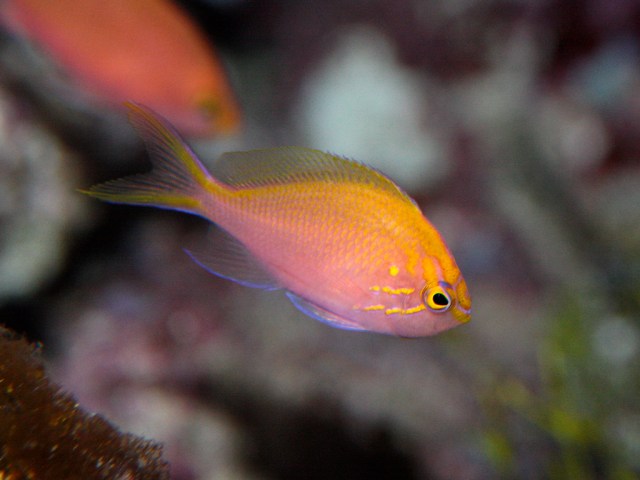
Genus/species: Serranocirrhitus lathus

4482852401_4ab3a860ab_b

GENERAL CHARACTERISTICS: Unlike its cousins the Pseudanthias species, the Flathead Anthias has a deep body and elongate pectoral fins that extend back as far as the posterior part of the anal fin.. Predominantly pink, with heavy yellow-to-orange scale margins and facial markings. Max.length: 10 cm (4 inches).

DISTRIBUTION/HABITAT: Western Pacific. Found near coral reefs usually at depths of 18 m (60 feet) or more, either solitarily or in small haremic groups; also found near caves, ledges, and drop-offs, usually close to crevices where they retreat if threatened.

DIET IN THE WILD: Zooplankton

REMARKS; First described in 1949 as a hawkfish in the family Cirritidae but in 1978 it was placed in the subfamily Anthiinae (Anthias).

Animal Attractions Staff Picks SP14

flickr http://www.flickr.com/photos/cas_docents/4482852401/in/set-72157608545590153/

WordPress Shortlink http://wp.me/p1DZ4b-Zl

TAXONOMY
Kingdom: Animalia
Phylum: Arthropoda
Subphylum: Crustacea
Class: Malacostraca
Order: Decapoda
Family: Atyidae

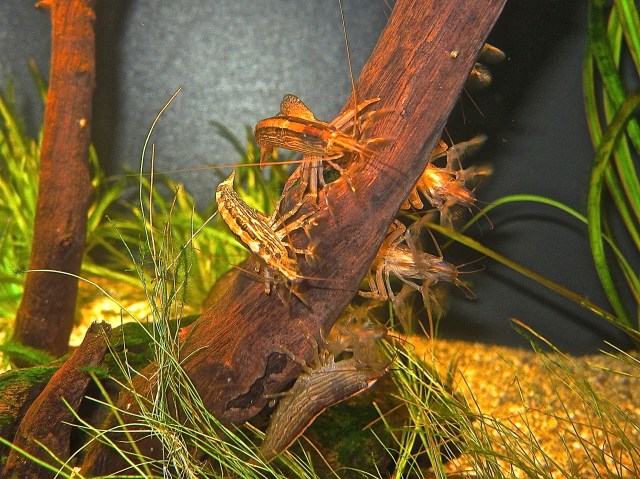
Genus/species: Atyopsis moluccensis

Bamboo Shrimp IMG_0285

GENERAL CHARACTERISTICS: Most species are a brown base color with a tan strip running from head to tail. They vary greatly in color however. Some a greenish-yellow or even red as the base color. Clawless and 4-5 inches in length. Male bamboo shrimp displays two larger forelegs, while the female’s legs are all the same size.

DISTRIBUTION/HABITAT: Found on high islands from Sri Lanka to the Samoan Islands, and as far north as Okinawa, as well as on the Asian mainland from the Malay Peninsula in freshwater areas where their is high current..

DIET IN THE WILD: Filter feeder. using four fan-like appendages on the head to sweep food particles from the water.

Bamboo Shrimp  8724380835_382a2b1ec6_o

Water Planet

WordPress Shortlink http://wp.me/p1DZ4b-XZ

flickr  http://www.flickr.com/photos/cas_docents/8717355179/in/set-72157608602469734

TAXONOMY
Phylum: Mollusca
Class: Cephalopoda
Order: Octopoda
Family: Octopodidae.

Genus/species: Amphioctopus marginatus
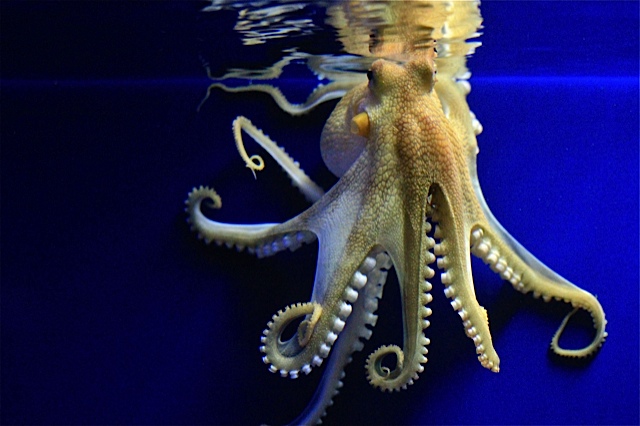


GENERAL CHARACTERISTICS
The main body (mantle) is small to medium-sized, 5–8 cm (15 cm [6 in] including arms) in length. The arms are usually dark with contrasting white suckers. They have only soft bodies with no internal skeleton with a hard parrot-like beak allowing them to hide in very small spaces.

DISTRIBUTION/HABITAT
The tropical western Pacific and coastal waters of the Indian Ocean on sandy bottoms.

DIET: Shrimp, crabs, and clams. A.marginatus uses its sharp parrot-like beak to crush the shells of its prey. Shells of prey that are difficult to pull or bite open can be “drilled” in order to gain access to the soft tissue: salivary secretions soften the shell, and a tiny hole is created with the radula (a rasp-like structure of tiny teeth used for scraping food particles off a surface). The octopus then secretes a toxin that paralyzes the prey and begins to dissolve it. The shell is pulled apart and the soft tissues are consumed.
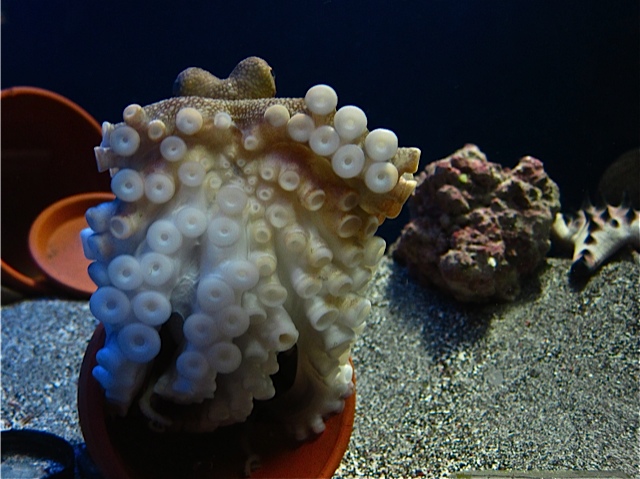
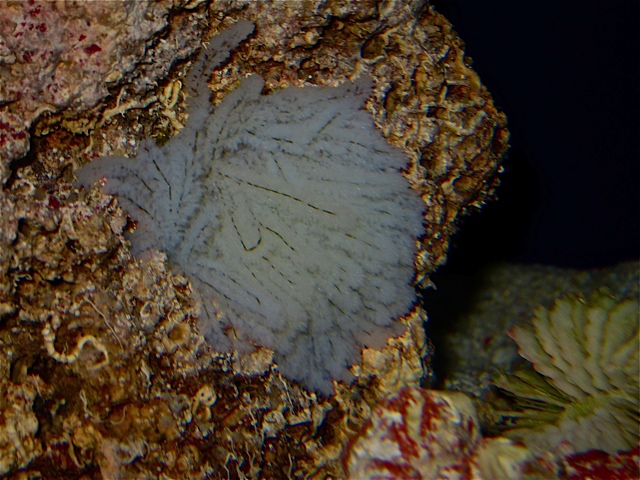
REPRODUCTION: Octopus reproduction strategy provides a counterpoint to the male sacrifice of the flower mantis and the bird-eater tarantula,  The coconut octopus female mates with the male, and retreats into a den where she lays her eggs. At this point, she no longer feeds, instead spending the rest of her now short life protecting her eggs from predators and continually cleaning and aerating them.  She dies shortly after the hatching of her eggs and their subsequent entry into the plankton.

Egg mass below
MORTALITY/LONGEVITY:  10–12 months

REMARKS: The species’ common name derives from this octopus’ habit of carrying around coconut shell halves, by fitting its body into the bowl and extending rigid arms from the coconut’s edge to the substrate and tiptoeing away in gait called “stilt-walking”  or bipedal walking.    

Below A. marginatus using a shell. 

IMG_0198

The Steinhart is the first public aquarium in the U.S. to display the coconut octopus.  Our octopus was collected by Bart Shepherd, Curator of the Steinhart Aquarium, during a 2011 research expedition to the Philippines.

flickr  http://www.flickr.com/photos/cas_docents/6776485376/in/set-72157608597736188

WORDPRESS SHORTLINK http://wp.me/p1DZ4b-pu