Tag Archive: marine


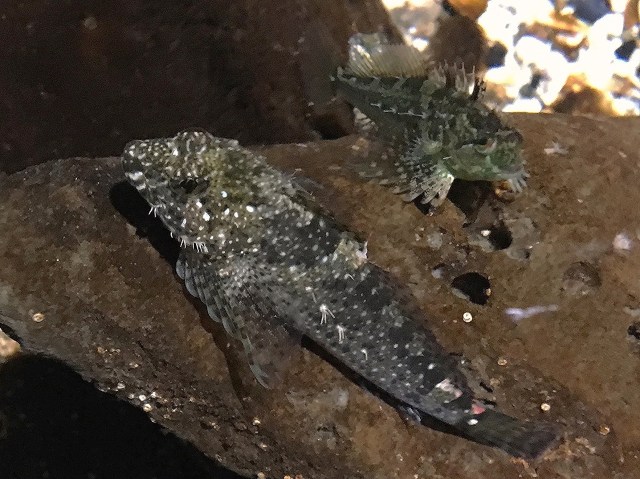
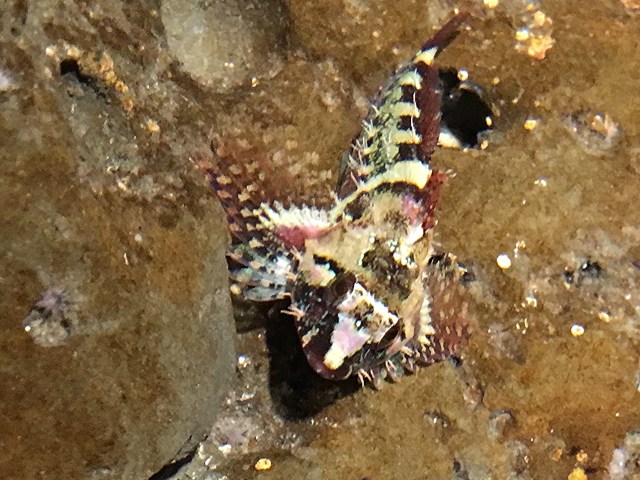
Sculpins are small fish of the family Cottidae (order Scorpaeniformes).

GENERAL CHARACTERISTICS: Sculpins are elongated, tapered fish, usually with wide, heavy heads. The gill covers have one or more spines, the pectoral fins are large and fan like, and the skin is either naked or provided with small spines.

26443280072_865a4ff4c5_o

DISTRIBUTION/HABITAT: Marine tidepools, California coast.

Sculpins26443283022_e0865caf03_o

References

California Academy of Sciences Steinhart Aquarium Tidepool 2016


TAXONOMY
Kingdom: Animalia
Phylum: Chordata
Class: Actinopterygii (ray-finned fishes)
Order: Perciformes (Perch-likes) 
Family: Acanthuridae (Surgeonfishes, tangs, unicornfishes)

Genus/species: Acanthurus olivaceus 

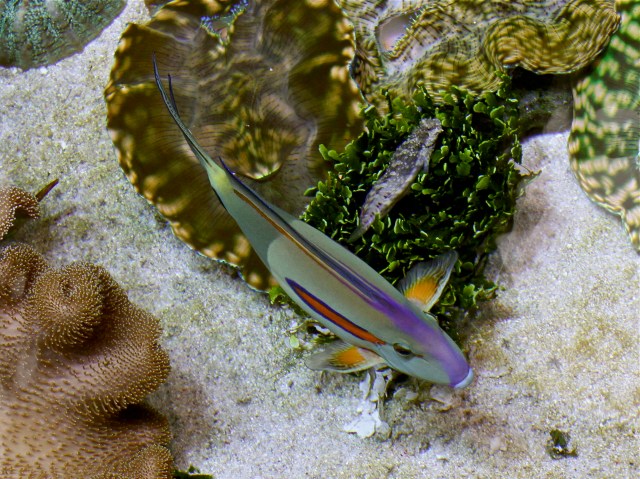
GENERAL CHARACTERISTICS: Adult coloration: light gray-brown  head and forebody, dark gray-brown behind; blue-edged elliptical orange band behind upper gill cover. Juveniles less than 6 cm are yellow, subadults become a dirty yellowish-brown. A “ scalpel ,” (distinctive spine) on either side of the tail base, identifies it as surgeonfish. Color marks emphasize the scalpels.

Length up to 35 cm (13 in)

Orangeband Surgeonfish4405089732_995ac616e4_b

DISTRIBUTION/HABITAT: Eastern Indo-Pacific. Near reefs over sand, bare rock and rubble substrates, 3–45 m (10-150 ft.). Juveniles inhabit protected bays and lagoons in depths as shallow as 3 m. Adults occur singly or in schools.

Orangeband Surgeonfish aka Orange Shoulder Tang IMG_6416

DIET IN THE WILD: The small mouths have a single row of teeth used for grazing on surface film of detritus, diatoms and filamentous algae covering sand and rocks.

REPRODUCTION: Fertilization is external. They are oviparous and do not display obvious sexual dimorphism.

CONSERVATION: IUCN, Least Concern (LC)

REMARKS: An important food fish.

References

California Academy of Sciences Steinhart Aquarium Philippine Coral Reef 

Ron’s flickr http://www.flickr.com/photos/cas_docents/2979737382/in/set-72157608332652056/

Ron’s WordPress Shortlink http://wp.me/p1DZ4b-1aq

Ref: fishbase http://www.fishbase.org/country/CountrySpeciesSummary.cfm?Country=Philippines&genusname=Acanthurus&speciesname=olivaceus

IUCN www.iucnredlist.org/details/177991/0

EOL http://eol.org/data_objects/24984776

TAXONOMY
Kingdom: Animalia
Phylum: Chordata
Class: Actinopterygii (ray-finned fishes)
Order: Perciformes (Perch-likes)
Family: Carangidae ((Jacks and pompanos)

Genus/species: Trachinotus mookalee

GENERAL CHARACTERISTICS: Dorsal snout profile very steep. Pompano may also refer to various other, similarly shaped members of Carangidae, or the order Perciformes. Their appearance is deep bodied and mackerel-like, typically silver and toothless with a forked tail and narrow base. There are twenty described species and most are valued as food.
Common length : 90.0 cm (35 inches). Max. wt. 8.1kg (17.85 lbs)

Indian Pompano19251381660_2573191e7a_k

DISTRIBUTION/HABITAT: Indo-West Pacific found in tropical shallow coastal waters.

Indian Pompano8396538496_c3d6f271a5_k


DIET IN THE WILD: Pompano are primarily bottom feeders that opportunistically “graze” preferred species.  Well developed pharyngeal plates are present, and indicate that hard-shelled organisms such as crabs and mollusks are important in the diet. 

CONSERVATION: IUCN Red List Not Evaluated

References

California Academy of Sciences Reef Lagoon 2016

Ron’s WordPress shortlink http://wp.me/p1DZ4b-1Eg

Ron’s flickr  https://www.flickr.com/photos/cas_docents/19251381660/in/album-72157627919810858/

fishbase  http://fishbase.org/summary/SpeciesSummary.php?ID=1964&AT=Indian+Pompano

EOL http://www.eol.org/pages/26259/details

TAXONOMY
Phylum: Heterokontophyta
Class: Phaeophyceae
Order: Laminariales
Family: Laminariaceae

Genus/species: Macrocystis pyrifera

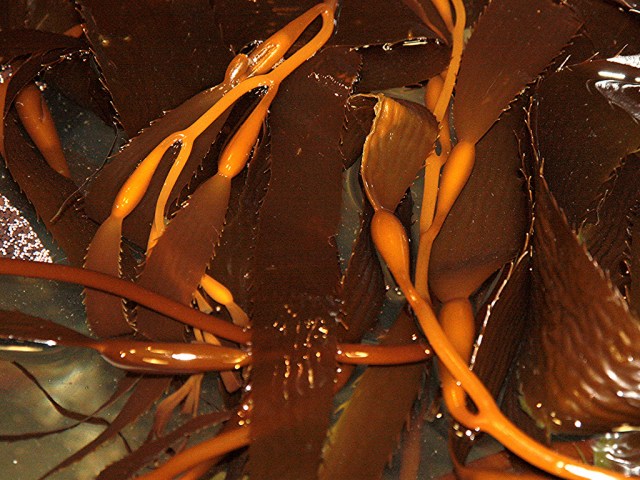
GENERAL CHARACTERISTICS: Stout holdfast attaches to solid substrate to anchor its long, limber stipes (central stalks) and deeply incised blades. Held upright by gas-filled bladders at the base of blades, kelp fronds grow straight up to the surface,

Giant Kelp5055944979_13b2c8c620_b

DISTRIBUTION/ HABITAT: North Atlantic and northern Pacific;
also the Mediterranean Sea and off Brazil. Kelp Forest in general to 100 ft to 175 ft. The water depth zone is often known as the Laminaria zone.

They can grow at a rate of 0.6 metres (2 ft) a day to reach over 45 metres (148 ft) long in one growing season.

REPRODUCTION; Drifting M. pyrifera sporophytes (kelp rafts) are created following sporophyte detachment from benthic substrates. Kept afloat by numerous pneumatocysts (gas-filled bladders), M. pyrifera sporophytes may remain alive and adrift for more than 100 days. the reproductive longevity of drifting M. pyrifera sporophytes is long enough to support effective long-distance dispersal of over 1000 km (620 miles).

LIFESPAN: Five years.

REMARKS: Giant kelp forests are home to many marine species who depend upon the kelp directly for food and shelter, or indirectly as a hunting ground for prey. Invertebrates graze on the blades, fish seek shelter in the fronds and thousands of invertebrates such as brittle stars, sea stars, anemones, sponges and tunicates live in the holdfast. In addition sea otters wrap up in a kelp frond to keep from drifting away when sleeping.

Tidepool

References

 
Ron’s WordPress shortlink  http://wp.me/p1DZ4b-1CJ

Encyclopedia of Life  eol.org/pages/906815/details

TAXONOMY
Phylum Cnidaria
Class Anthozoa
Subclass Zoantharia
Order Actiniaria (anemones)
Family Actiniidae

Genus/species: Anthopleura xanthogrammica

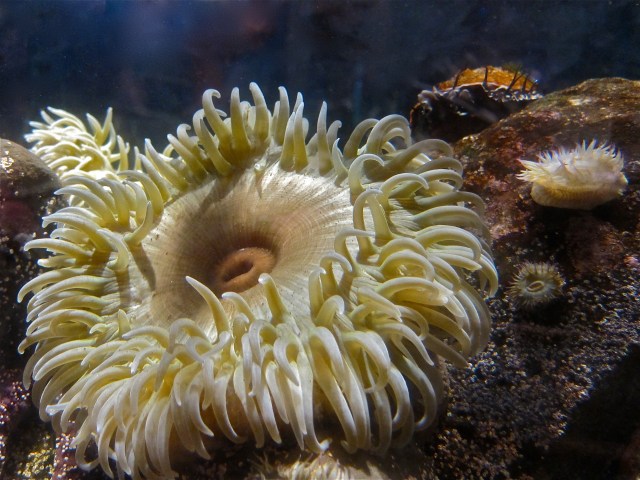
GENERAL CHARACTERISTICS: A  solitary species and one of the largest species of anemone in the world. Column to 30 cm (12 in) tall and 30 cm (12 in) tentacular crown with 25 cm (10 in ) diameter mid base. The base bottom is only slightly larger than column diameter and adheres to rocks.  Tentacles are green, blue, or white without pink on the tips.  No marks or bands.  The oral disk is flat and usually green, but can be grayish-blue to greenish-blue.  Contracted animals form a green to dark greenish-brown, occasionally white hemispherical mound.

DISTRIBUTION/HABITAT: Alaska to Panama in prefers rocky areas and deeper tide pools of the low to middle intertidal zones to 9 m (30 ft), and wharf pilings. Usually solitary; in favorable locations can occur in numbers to 14 per square m.

DIET IN THE WILD: Detached mussels and sea urchins, also take crabs and small fishes. Zoochlorellae endosymbionts supplement host’s diet.

PREDATORS: Nudibranchs, snails, sea spiders and some sea stars, especially leather stars.

REPRODUCTION: A. xanthogrammica have separate sexes releasing sperm and eggs in late spring to summer. The larvae swim or float freely. They do not use asexual reproduction.


REMARKS: Some fishes and the hermit crab Pagurus samuelis develop protection from the anemone’s toxins by covering themselves with mucus that prevents them from being stung.

The bright green can be attributed to green pigment in the anemone epidermis and to symbiotic algae that live in the tissues that line the gut. Inside there may be zoochorellae (green algae) or zooxanthellae, which are dinoflagellates. The symbiotic algae are reduced in numbers or even absent (aposymbiotic) when in shady areas.

LOCATION: Tidepool and California coast.

REFERENCES

Walla Walla University

www.wallawalla.edu/academics/departments/biology/rosario/…

 eol eol.org/pages/704306/details#cite_note-Skiles-4

flickr  http://www.flickr.com/photos/cas_docents/sets/72157625127345346/

WordPress shortlink: http://wp.me/p1DZ4b-w4

TAXONOMY
Kingdom: Animalia
Phylum: Chordata
Class: Actinopterygii (ray-finned fishes)
Order: Syngnathiformes (Pipefishes and seahorses)
Family: Syngnathidae (Seahorses, Pipefishes, and Seadragons)

Genus/species: Phycodurus eques

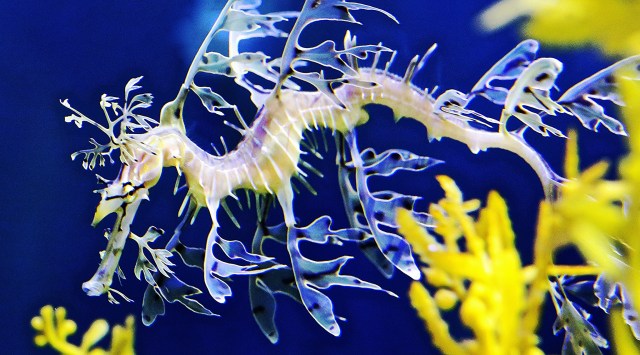
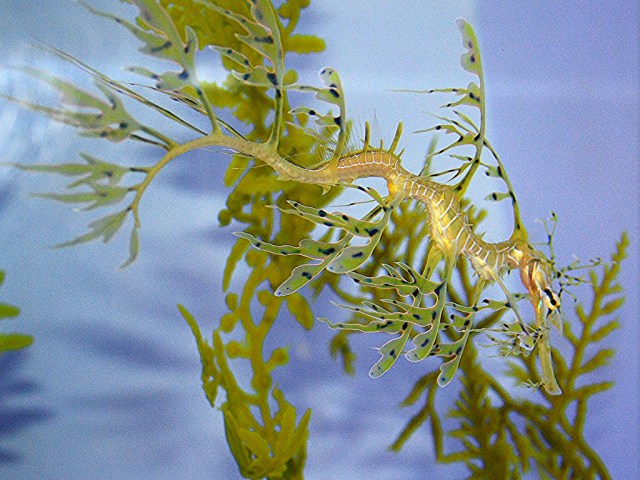
GENERAL CHARACTERISTICS: Color varies from brown tones,to greenish or reddish depending on depth. Their body is scaleless and covered is in hard bony plates with long sharp spines on each bony plate that may be defensive. Leaf-like appendages protrude from the head, body, and tail and transparent dorsal and pectoral fins. Their long, thin pipe-like snout has no jaw.
Maximum length of the leafy seadragon is about 35 cm (14 in).

leafy seadragon11042381084_94c0a006a8_k

DISTRIBUTION/HABITAT: Endemic to southern Australia.
Found amongst brown algae (kelp) in shallow, temperate water, associated with seagrass beds and rocky reefs.

DIET IN THE WILD: Do not have a jaw, teeth or a stomach. They swallow their prey whole by creating a suction to suck mysid shrimp, zooplankton and fish larvae into their mouths.

REPRODUCTION: Like the seahorse, the male seadragon carries the eggs. He develops about 120 shallow depressions in a spongy section of the ventral surface of his tail. The female deposits her eggs in the depressions.

LONGEVITY: 7-10 yrs.

PREDATORS: Depend on camouflage and sway like plants in the water to hide from predators.

CONSERVATION:IUCN Red List (2006.) Near Threatened. Habitat destruction, pollution, excessive fertilizer runoff, and poaching by humans has lead to a decrease in numbers. They are fully protected with special licenses required to collect or export them.

REMARKS: Unlike its seahorse relative that swims vertically, the seadragon swims horizontally. It is a very slow swimmer, as might be expected from its tiny fins, but is protected not only by its camouflage but by sharp spines that deter predators.
The leafy seadragon has the honor of being the official emblem of Australia.

leafy seadragon2980686562_a871c0e383_b

Color of Life
P. eques moves very slowly through the water and mimics seaweed, which makes it a master at camouflage.

References

California Academy of Sciences Water planet: Centerpiece Water Dependence 2015

Ron’s flickr https://www.flickr.com/photos/cas_docents/11042381084/in/album-72157608441047857/

Ron’s WordPress shortlink  http://wp.me/p1DZ4b-1C2

fishbase fishbase.org/summary/Phycodurus-eques.html

Animal Diversity Web animaldiversity.org/accounts/Phycodurus_eques/

IUCN Red List www.iucnredlist.org/details/17096/0

Aquarium of the Pacific www.aquariumofpacific.org/onlinelearningcenter/species/le…


TAXONOMY
Kingdom: Animalia
Phylum: Mollusca
Class: Cephalopoda
Order: Sepiida
Family: Sepiidae (Cuttlefishes, shell internalized)

Genus/species: Sepia bandensis

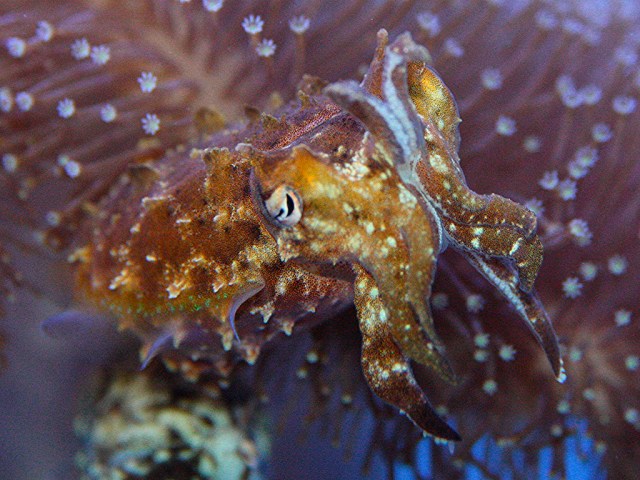
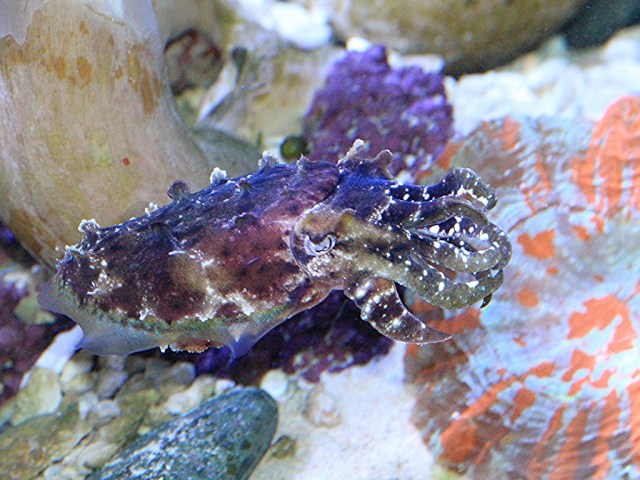
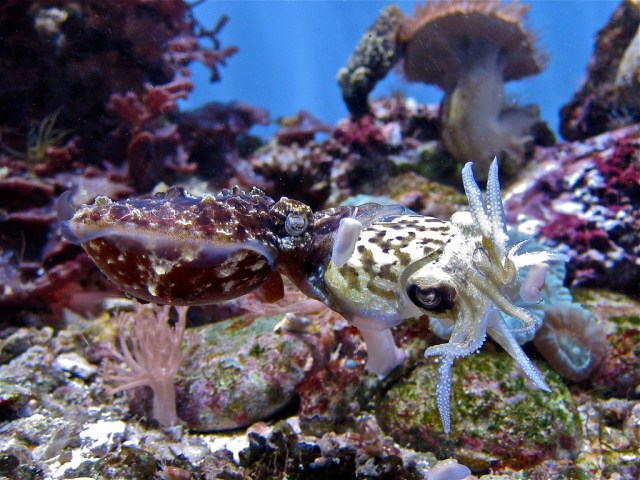
GENERAL CHARACTERISTICS:. Sepia bandensis has 8 arms with rows of suckers along each and 2 feeding tentacles. It moves by the undulation of lateral fins that surround the body. Cuttles have an internal shell within their bodies that they can fill with more or less gas to create neutral buoyancy. The cuttlebone is often collected and used as a calcium supplement, beak sharpener, and all-purpose toy for caged birds.
Like most cephalopods, cuttlefish have 3 hearts. Two hearts pump blood to the gills, and a central heart pumps oxygenated blood to the body.
Length: 5 cm – 10 cm (2 in – 4 in)

3953684509_d8a7ff53db_b

DISTRIBUTION/HABITAT: The Indo-Pacific region, including the Philippines, Indonesia, and Papua New Guinea.
Found in shallow coastal waters near or on coral reefs or sandy substrates.

4155077422_fbdca1e012_b

DIET IN THE WILD: Crustaceans and fish. The Cuttlefish changes colors and patterns as it approaches prey then ejects its feeding tentacles to capture its prey with its suckers and eating it with a parrot-like beak and a radula. Active diurnally.

ACADEMY DIET: Shrimp and crab (M Avila, staff biologist)

6502617393_a6e58de35b_b

LONGEVITY: Life span: 6 mos. to 3 yrs.

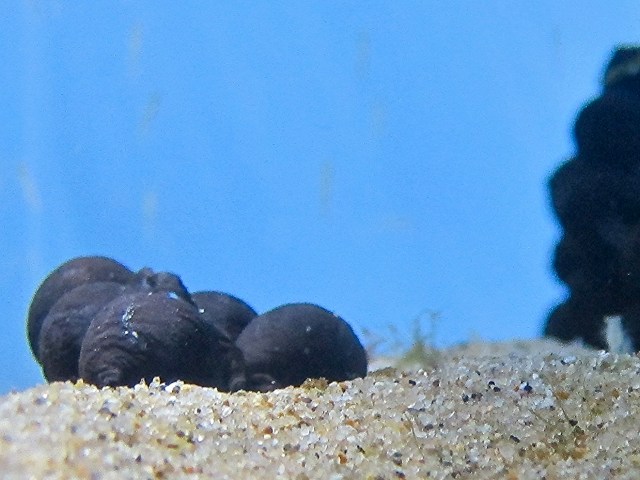
eggs below

5519039392_2b09a5da70_o

REMARKS: Masters of camouflage, cuttlefish and most cephalopods can change their colors, shapes and textures in seconds to avoid predators and blend into their surroundings. They have keen vision, but are color blind.

They also produce large amounts of ink, both as a decoy and foul-tasting deterrent. Known as sepia ink, after the genus name of cuttlefish, it was a dye once prized by artists.

The Steinhart Aquarium is the first institution in the U.S. to breed dwarf cuttlefish. To date, (2010) more than 350 have hatched at the Academy, most of which have been sent to other aquaria and research institutions. Quote from Rich Ross, Academy biologist and cuttlefish breeder extraordinaire: Over time, [cuttlefish] learn to recognize and respond to you, and will often greet you when you walk into the room (or maybe they just know you bring the food). 

Color of Life note: Cuttlefish are excellent examples of cryptic coloration. Chromatophores in the cuttlefish skin are controlledneurologically, allowing almost immediate color change disappearing into its background right before your eyes.
Ref: California Academy Color of Life exhibit

References 

California Academy Color of Life exhibit

The Marine Biology Coloring Book 2nd Ed. Thomas Niesen 2000

EOL Encyclopedia of Life  eol.org/pages/591499/details

Ron’s flickr  https://www.flickr.com/photos/cas_docents/3953684359/in/album-72157652559028013/

Ron’s WordPress shortlink    http://wp.me/p1DZ4b-1yp

TAXONOMY
Phylum: Mollusca
Class: Gastropoda (slugs, snails, nudibranchs, abalone)
Order: Archaeogastropoda (sea snails)
Family: Haliotidae (abalones)

Genus/species: Haliotis rufescens

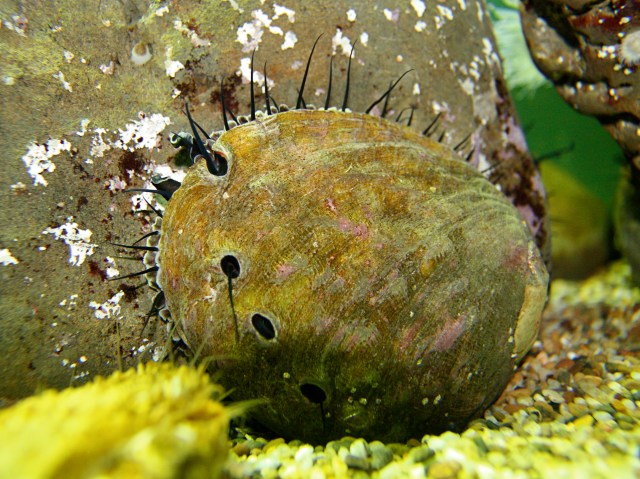
GENERAL CHARACTERISTICS: The red abalone is a large limpet-like snail with a flattened and rounded shell. The shell can reach up to 30 cm (11.8 in) in length and is usually brick-red and overgrown with fouling organisms. Color varies with diet and varies between aquamarine, green, or white. Water enters anteriorly through row of holes parallel to the rim of the shell and exits posteriorly carrying waste products and gametes. When in danger, the abalone clamps its shell tightly to the substrate, protecting soft parts of its body. The shell’s color is influenced by the animal’s diet. The red color is from the pigment phycoerythrin consumed in its red alga diet. Color varies with a diet of brown algae (varies between aquamarine, green, or white).

DISTRIBUTION/HABITAT: Red abalone are found from Oregon to Baja California. They are uncommon in the lower intertidal zone in rocky areas with heavy surf. Most are now found at six to 17 m (20 to 56 ft) depth in central California.


DIET IN THE WILD: Small abalones feed on diatoms and algae; larger animals browse the seaweeds. Red abalone eat algae, especially red and brown species. Usually foraging at night, they trap drifting pieces of algae (kelp) with the tentacles that extend from the foot. The algae is then carried by the foot to the mouth, and is torn and consumed with by the radula.

flickr Feeding Video http://www.flickr.com/photos/cas_docents/6393536637/in/set-72157626486149324


PREDATORS: Sea stars, crabs, octopuses, sea otters and human divers are among the abalone’s primary predators.

REPRODUCTION: After spawning takes place, fertilized eggs sink. Larvae develop in the plankton until they settle to the bottom, metamorphose, and begin to graze. Growth slows with increasing size and age. Mortality is very high in the planktonic stages. Mature individuals can live more than 20 years.

REMARKS: Red abalone are highly endangered due to overexploitation by the abalone fishery. The population plummeted in the late twentieth century, but poaching continues to be a problem. California passed many strict regulations to protect the red abalone: abalone smaller than 20 cm (8 in) in diameter are protected, the canning of abalone is prohibited, and the shipment of fresh or frozen meat out of California is prohibited. Red abalone is the only species that can still be fished. Aquacultured abalone is now increasingly available.

Abalone blood is blue-green and cannot clot making injury possibly fatal.

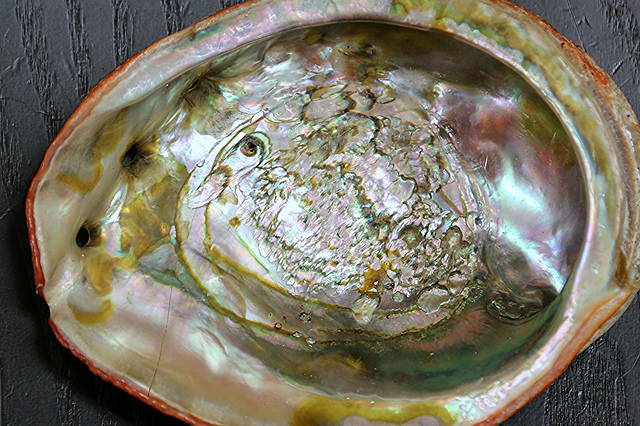
Red Abalone Shell19600303421_7eae835178_z

Color of Life note: Iridescence is caused by two or more semi-transparent, inorganic and/or organic surfaces that cause multiple light reflections. An example found in our tidepool is the Red Abalone inner shell surface which produces an impressive vibrant luster when exposed to light.  The aragonite and conchiolin secreted by the abalone in forms a crystalline structure that reflects light, causing the shell’s iridescence. The inner surface of the shell is known as mother-of-pearl, or nacre. Ref: California Academy of Sciences, Color of Life Exhibit 2015   Jewelry is still made from abalone shells and is quite popular.                        Ref: www.best-deal.com/search/landing/query/red+abalone+shells...


Other references

Marine Biology Coloring book, T.M. Nielsen, 2nd Ed. Harper Resource 1982, 2000.

Encyclopedia of Life  eol.org/pages/620396/details

Monterey Bay Aquarium  www.montereybayaquarium.org/animal-guide/invertebrates/ab…

California Fish and Game www.dfg.ca.gov/marine/pdfs/response/abalone.pdf

Ron’s flickr https://www.flickr.com/photos/cas_docents/6393536637/in/album-72157608597736188/


TAXONOMY
Kingdom: Animalia
Phylum: Arthropoda (Invertebrate animal having an exoskeleton (external skeleton), a segmented body, and jointed appendages). Includes the insects, arachnids, myriapods, and crustaceans.
Subphylum: Crustacea ( crabs, lobsters, crayfish, shrimp, krill and barnacles.)
Class: Malacostraca (Body plan comprises 20 body segments (rarely 21), and divided into a head, thorax, and abdomen). Crabs, lobsters, crayfish, shrimp, krill, woodlice, scuds (Amphipoda)mantis shrimp.
Order: Decapoda (“ten-footed”) crayfish, crabs, lobsters, prawns and shrimp
Family: Palinuridae (langouste or rock lobsters)

Genus/species: Panulirus interruptus

GENERAL CHARACTERISTICS: One of the largest spiny lobster species. The exoskeleton is generally red to orange in color with black markings. Spiny projections are located on the carapace (upper shell) and sides of the abdomen. Their two primary antennae may equal the length of their body. Panulirus interruptus lacks the large pinching claws of their Maine lobster relatives. Average mass is 908 g (32.00 oz) ranging from 454 to 2270 g (16.00 to 80.00 oz). On average, they are 30 cm (11.81 in) long, though they can measure as large as 90 cm (35.43 in) in length.
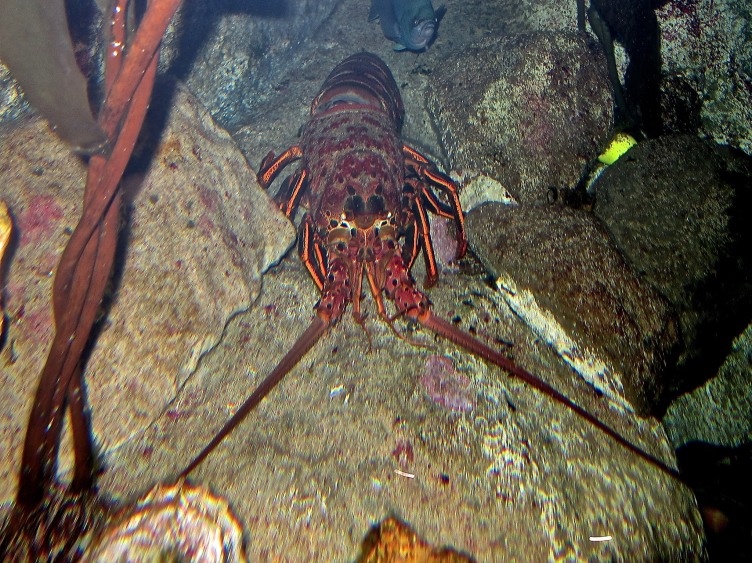
15790212682_b1f9460bd4_k

DISTRIBUTION/HABITAT: Monterey Bay, California to Baja California, Mexico. Found in rocky reefs in caves and rocky crevices. Maximum depth 240 feet.

DIET IN THE WILD: Nocturnal scavenging on sea urchins, small clams, mussels, algae and worms.

REPRODUCTION: Breed once a year during warmer months. Males attach sperm packets to females where she can produce up to 800,000 eggs which hatch into tiny young after 10 weeks. They reach legal size for harvest at 7-11 years of age.

LIFESPAN: In captivity 8 to 25 years.

PREDATORS: Giant Sea Bass, California Sheephead, cabezon, horn sharks, Leopard Sharks, octopus, sea otters and humans.

The photo below is a recent Moult ( shedding of the exoskeleton  typically to let the organism grow).
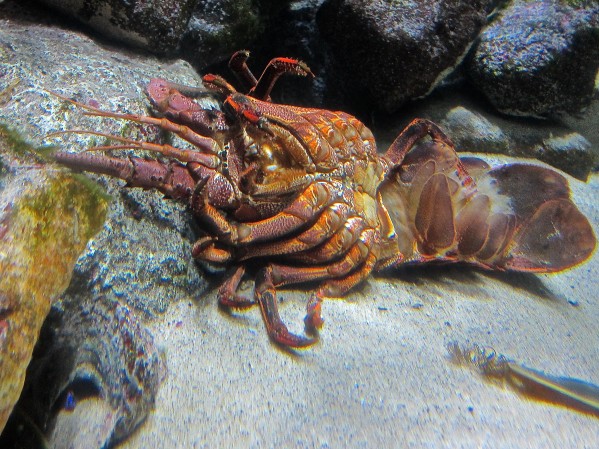
CA Spiny Lobster Molt15837588685_55717b70aa_k

CONSERVATION: IUCN Red List and CITES No special status. California fish and game regulates taking of lobster which requires a sport fishing license. In 2003 over 270 metric tons were harvested.

REMARKS: For defense P. interruptus has sharp spines on the body, tail and antennae. It also can use its powerful flexing tail to flee predators.

Southern California Coastal Marine

References

Animal Diversity Web ADW, animaldiversity.ummz.umich.edu/accounts/Panulirus_interru…

California department of fish and game nrm.dfg.ca.gov/FileHandler.ashx?DocumentID=36321&inli…

Ron’s flickr https://www.flickr.com/photos/cas_docents/15790212682/in/set-72157608602469734/

WordPress shortlink http://wp.me/p1DZ4b-1pi

TAXONOMY
Kingdom:Animalia
Phylum: Echinodermata
Class: Echinoidea
Order: Echinoida
Family: Strongylocentrotidae

Genus/species: Strongylocentrotus franciscanus

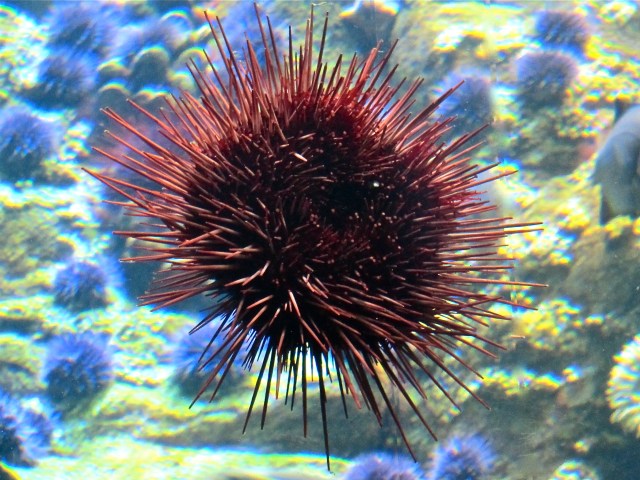
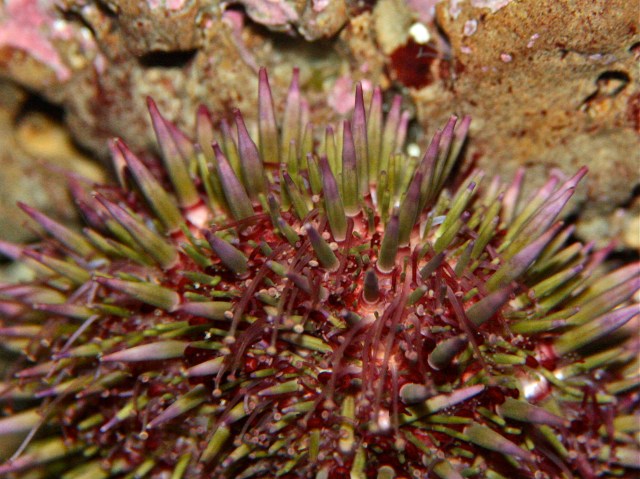
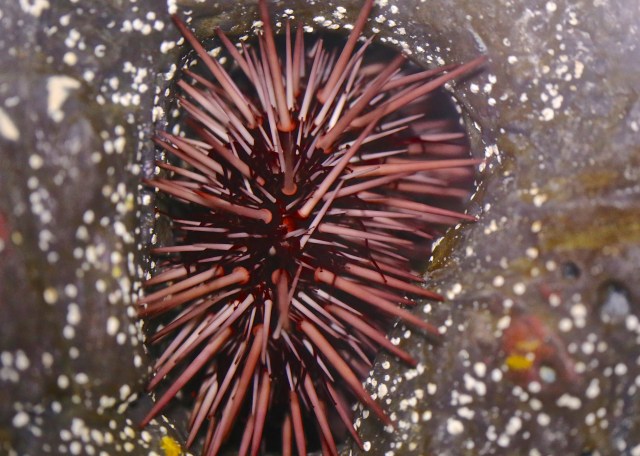
GENERAL CHARACTERISTICS: Largest urchin found in the Pacific Northwest. Color of spines varies–may be red, brick-red, pink, purple, or even maroon. Tube feet are dark, often wine red. The largest recorded test diameters approaching 19 cm (7.5 inches). Spines up to 7 cm (2.75 inches) long. (deters predators and facilitates movement).

(Strongylocentrotus purpuratus is smaller and a strong purple color. )

Strongylocentrotus franciscanus6063267260_280398b0bb_o

DISTRIBUTION/HABITAT: N. Japan and Alaska to Isla Cedros, Baja California. Found in very low intertidal on open, coastal rocky substrates; more abundant subtidally to 90 m deep. Juveniles often shelter among the rigid outer spines of adults.

Strongylocentrotus franciscanus3750941637_8fa3f8704a_o

DIET IN THE WILD: Herbivorous upon red and brown algae; preference is for the giant brown kelp Macrocystis. Their grazing can cause “barren grounds” in which no algae remain.

Strongylocentrotus franciscanus8519677227_2871028244_k

REPRODUCTION: Broadcast spawners. Fertilized eggs develop into planktonic larvae, known as echinoplutei, which go through a number of stages of development over 6-10 weeks then settle to substrate.

MORTALITY: Can live more than 100 years. A favored treat of sea otters. Other predators include the sunflower star Pycnopodia helianthoides, leather star Dermasterias imbricata, red rock crab Cancer productus, spiny lobster Panulirus interruptus and sheepshead fish. Starfish may swallow red sea urchins whole or split the animals open along their vertical axis.

CONSERVATION: IUCN; Not Evaluated

REMARKS: Raw gonads (uni) are considered gastronomic delicacies by some people. Removal of sea urchins promotes growth of kelp and thus improves habitat for many other species, including rockfish juveniles .

Small urchins (less than 5 cm test diameter) often hide under the adults.

Have been known to bore holes into metal pier pilings.

Tube feet of red sea urchins are chemo-receptive, allowing them to detect food sources and predators.

They may reabsorb their own tissues if no other source of energy is present. (“Red Sea Urchins”, 2013; Kato and Schroeter, 1985)

LOCATION California Rocky Coast

References

Ron’s flickr https://www.flickr.com/photos/cas_docents/6063267260/in/set-72157608501343477/

Walla Walla University www.wallawalla.edu/academics/departments/biology/rosario/…

Oregon State University fishbull.noaa.gov/1014/19ebertf.pdf

University of Michigan Animal Diversity  Web.http://animaldiversity.ummz.umich.edu/accounts/Strongylocentrotus_franciscanus/

Ron’s WordPress shortlink  https://fishoncomputer.wordpress.com/wp-admin/post-new.php