Tag Archive: lizards


Conolophus subcristatus                 Iguanidae family
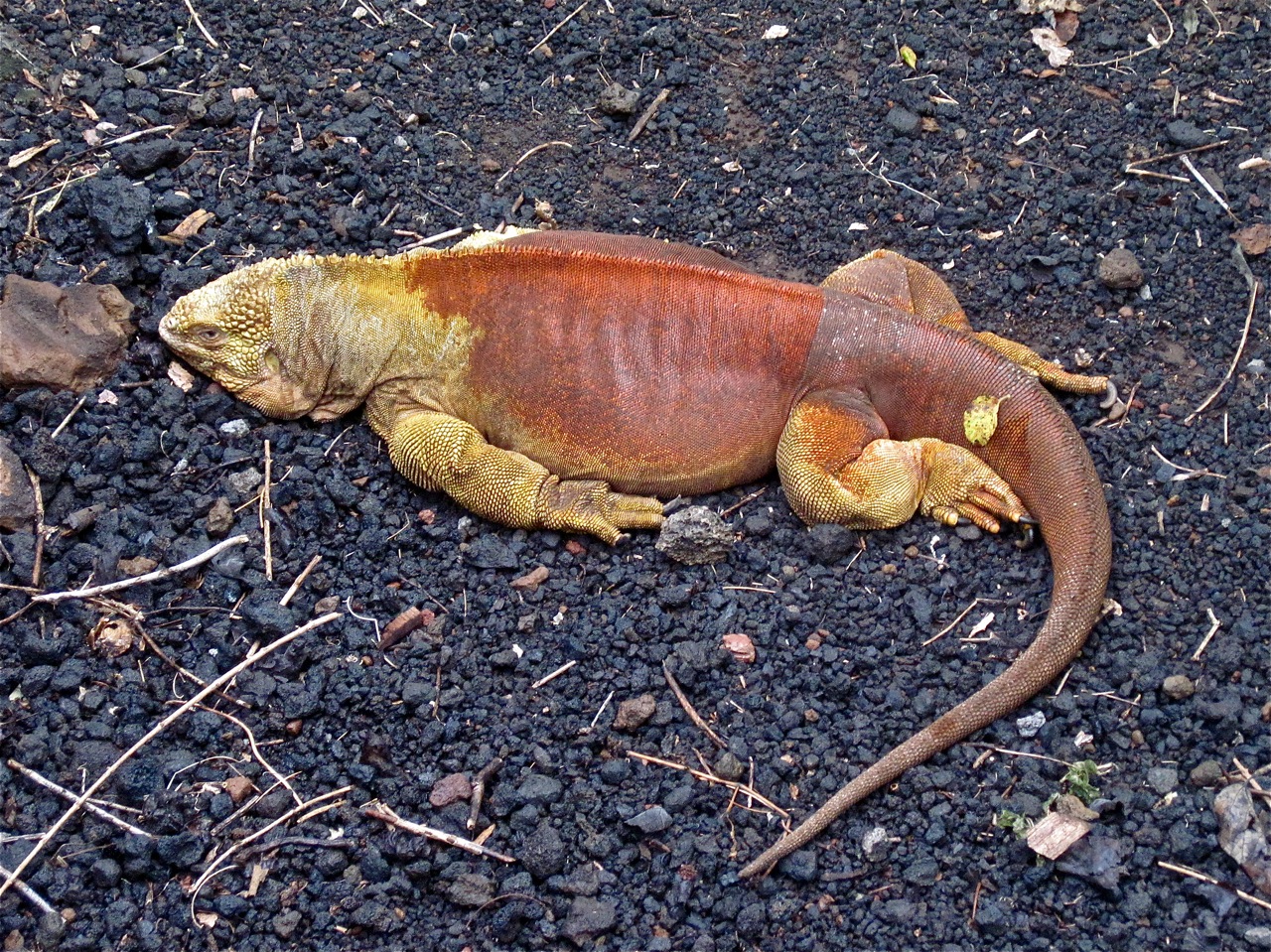
HABITAT: Arid low altitude portions of the islands.

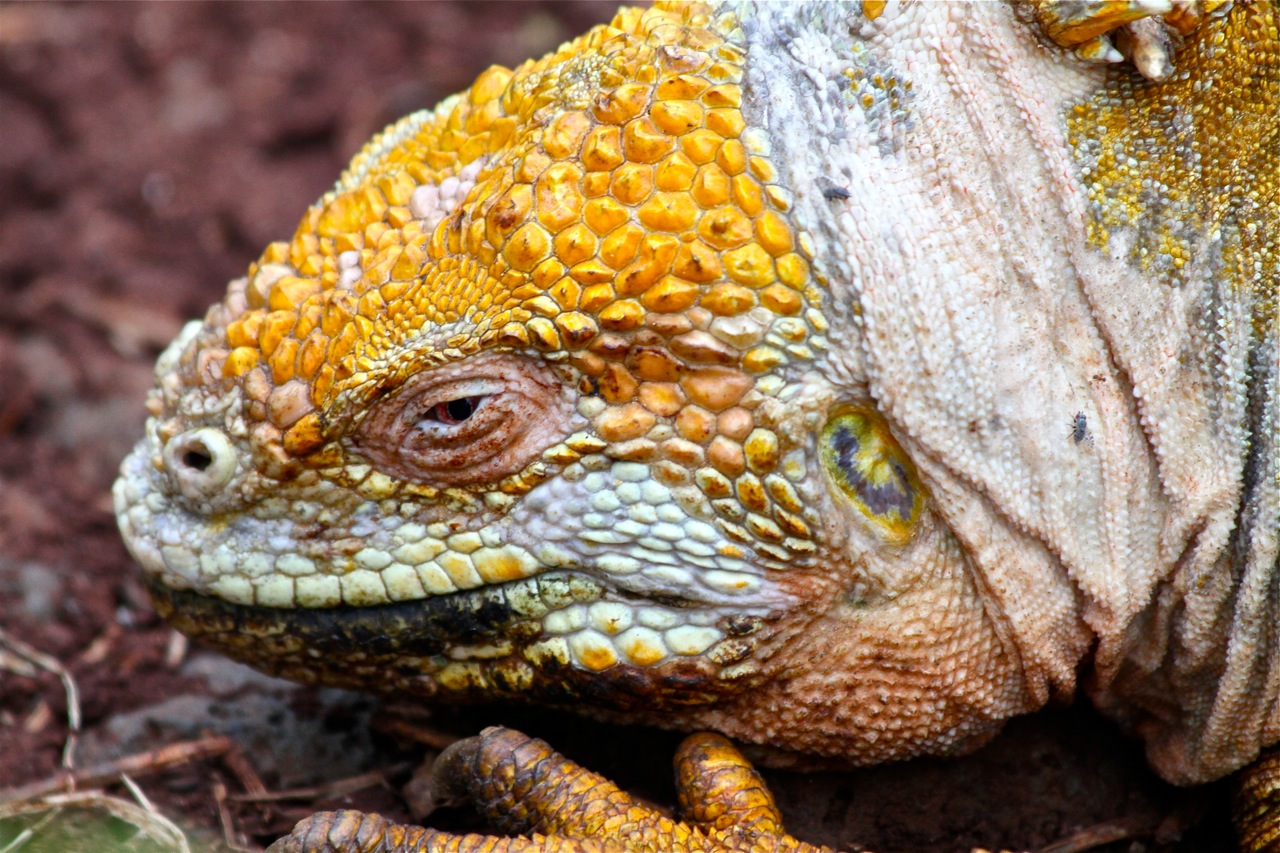
 APPEARANCE: Iguanas have distinctive eyelids, external eardrums, dewlaps (throat pouches), each limb has 5 toes with sharp claws allowing them to climb.  Charles Darwin described the Galapagos Land Iguana as “ugly animals, of a yellowish orange beneath, and of a brownish-red color above: from their low facial angle they have a singularly stupid appearance”.

C.subcristatus   grows  to approximately 3 ft (1 m) in length and weigh up to 25 pounds.
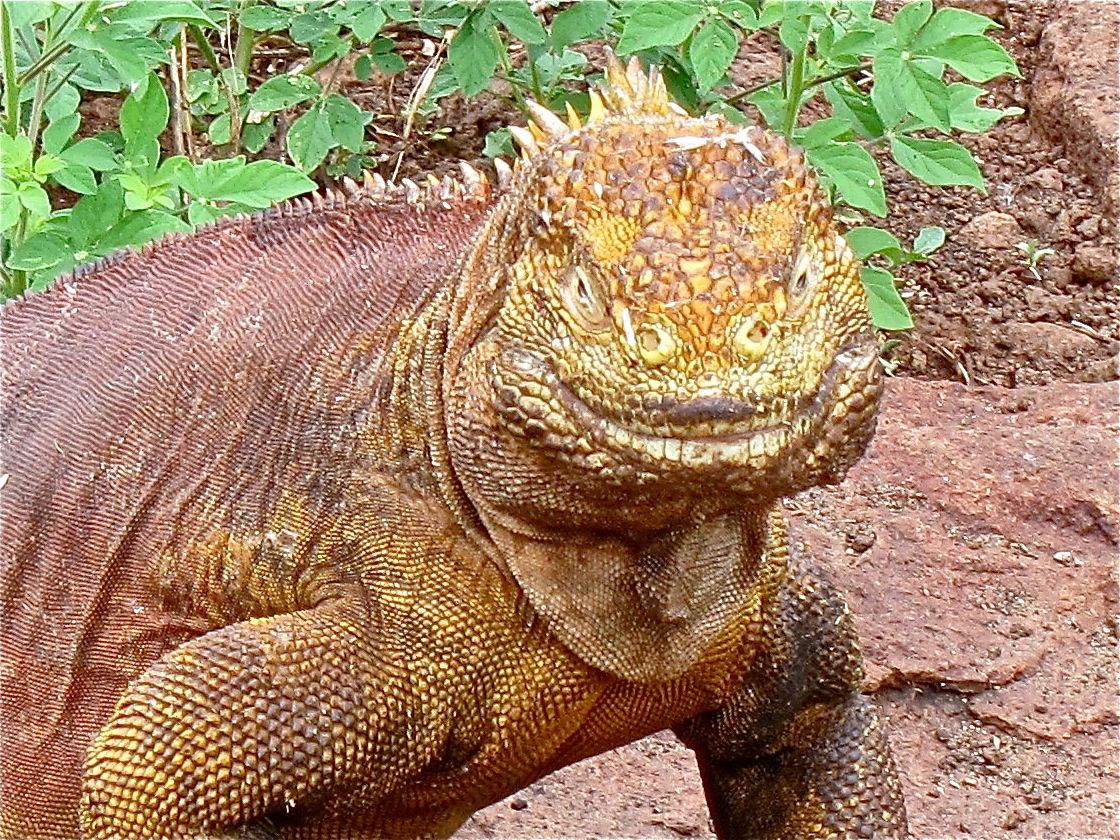
DIET: The mainstay of its diet is the prickly pear cactus. They eat the pads and fruit including the spines. The cactus provides both food and water for the land iguana, making it possible to survive without fresh water for a year.  C. subcristatus  are also opportunistic carnivores supplementing their diet with insects, centipedes and carrion.

REMARKS: Part of the adaptation to the drier environment includes a conservation of energy by slow movement. This makes the animals seem lazy or stupid. Land iguanas burrow into the ground creating tunnels which provides a place for nesting, shade during the day and protection at night.

WORDPRESS SHORTLINK    http://wp.me/p1DZ4b-6R

VIDEO LINK   http://www.youtube.com/watch?v=VySe1X12gqs&hd=1
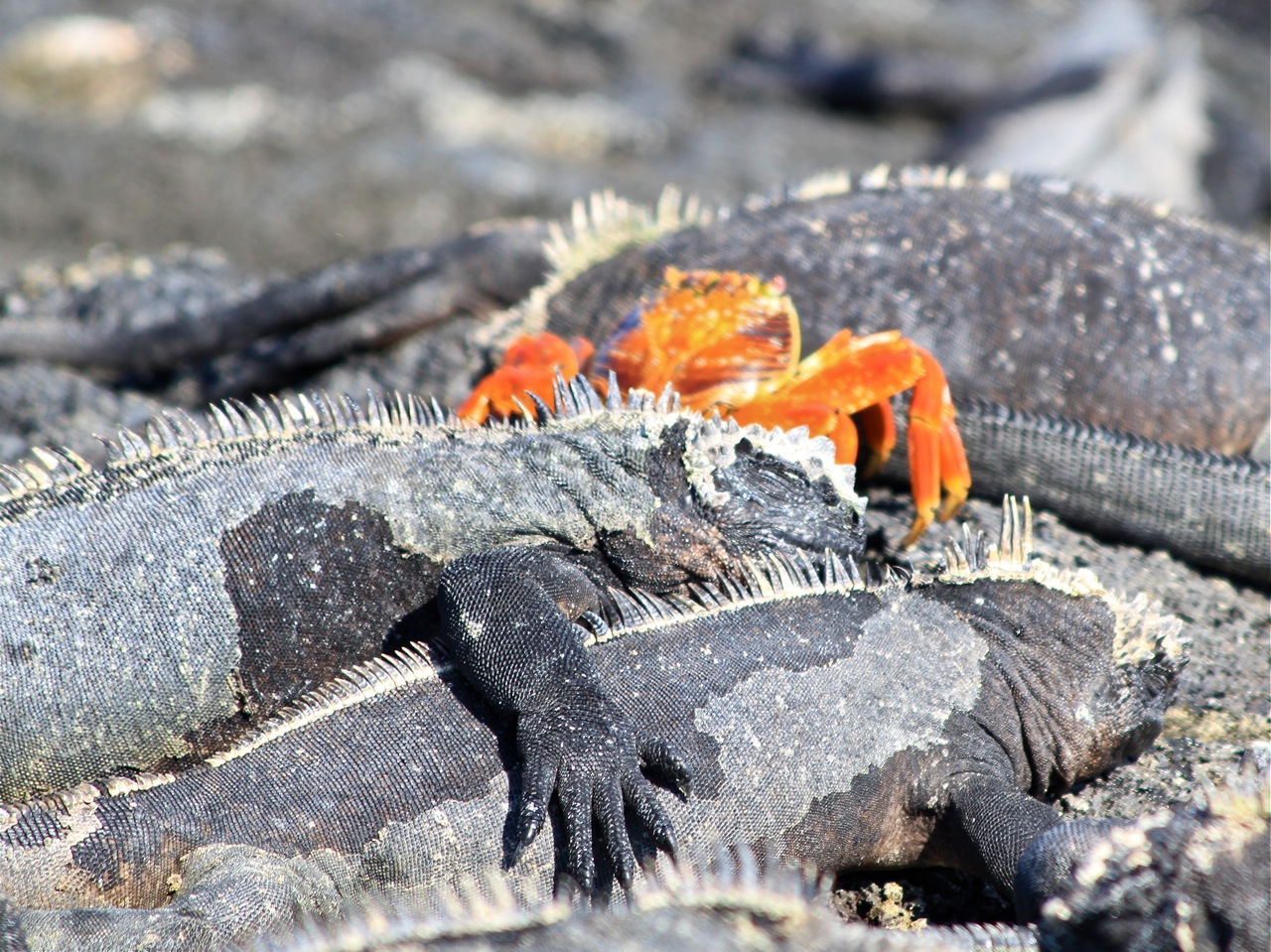
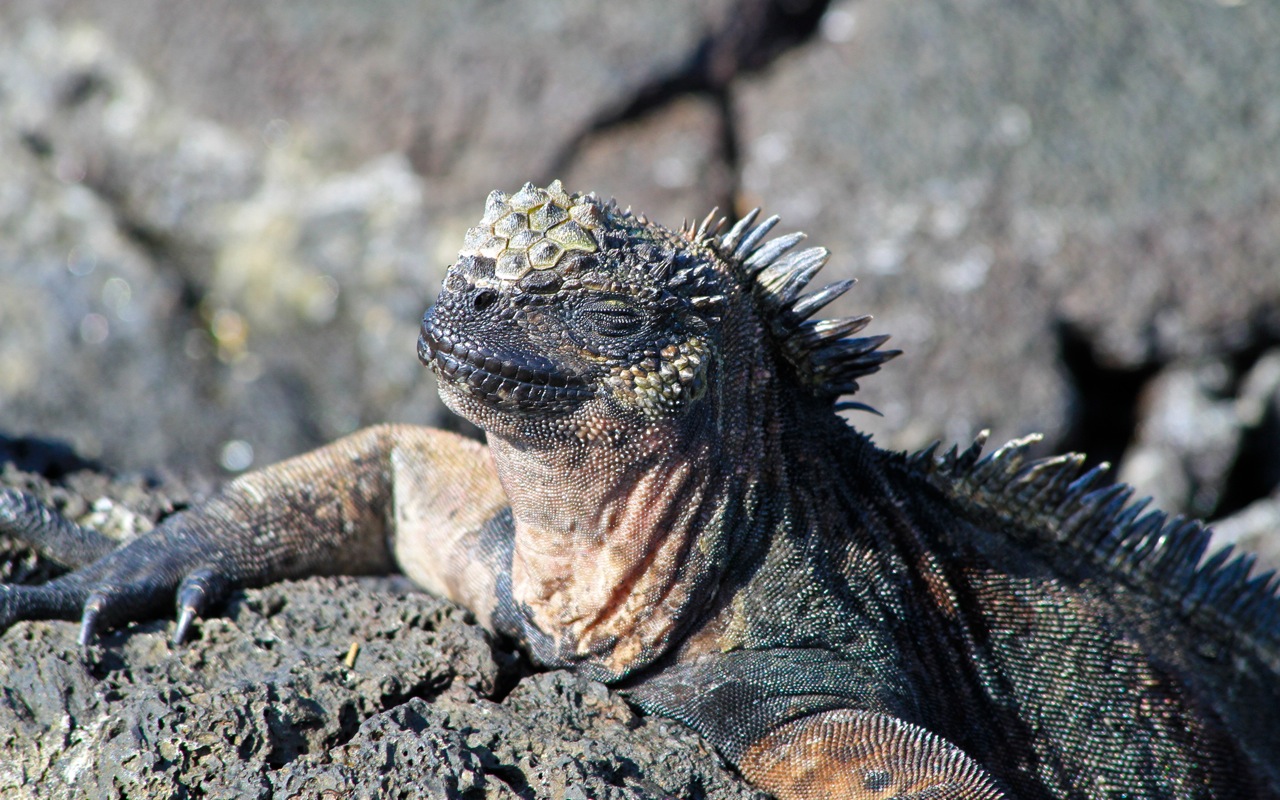
Amblyrhynchus cristatus    (Iguanidae)

 DISTRIBUTION: Found only on the Galápagos Islands. It has spread to all the islands in the archipelago.

HABITAT: has the ability, unique among modern lizards, to live and forage in the sea, making it a marine reptile. A. cristatus can dive over 30 ft (10 m) into the water. It mainly lives on the rocky Galapagos shore, but can also be spotted in marshes and mangrove beaches.

APPEARANCE: Not always black; the young have a lighter coloured dorsal stripe, and some adult specimens are grey. The iguanas living on the islands of Fernandina and Isabela are the largest found anywhere in the Galápagos. On the other end of the spectrum, the smallest iguanas are found on the island on Genovesa. Adult males are up to 1.7 metres (5.6 ft) long, females 0.6–1 metre (2.0–3.3 ft), males weigh up to 1.5 kilograms (3.3 lb). its laterally flattened tail and spiky dorsal fins allow it to swim further and faster, while its long, sharp claws allow it to hold onto rocks and other materials around it when there are strong currents so that it doesn’t drown or get lost/too far away from land.

DIET: The marine iguana feed almost exclusively on marine algae. Larger members of the species feed more often by diving at high tide while smaller animals are restricted to intertidal feeding at low tide.

REPRODUCTION: Males defend mating territories during the three-month annual breeding season. Females lay one to six eggs in burrows dug 30 to 80 cm deep. The eggs are laid in sand or volcanic ash up to 300m or more inland. Females guard the burrow for several days then leave the eggs to finish incubation, which is approximately 95 days. Nesting months are January through April depending on the island.

REMARKS:  As an ectothermic animal,  A. cristatus can spend only a limited time in the cold sea, where it dives for algae.  However, by swimming only in the shallow waters around the island they are able to survive single dives of up to half an hour at depths of more than 15 m.   After these dives, they return to their territory to bask in the sun and warm up again.

WordPress Shortlink   http://wp.me/p1DZ4b-6G

VIDEO LINK   http://www.youtube.com/watch?v=VySe1X12gqs&hd=1

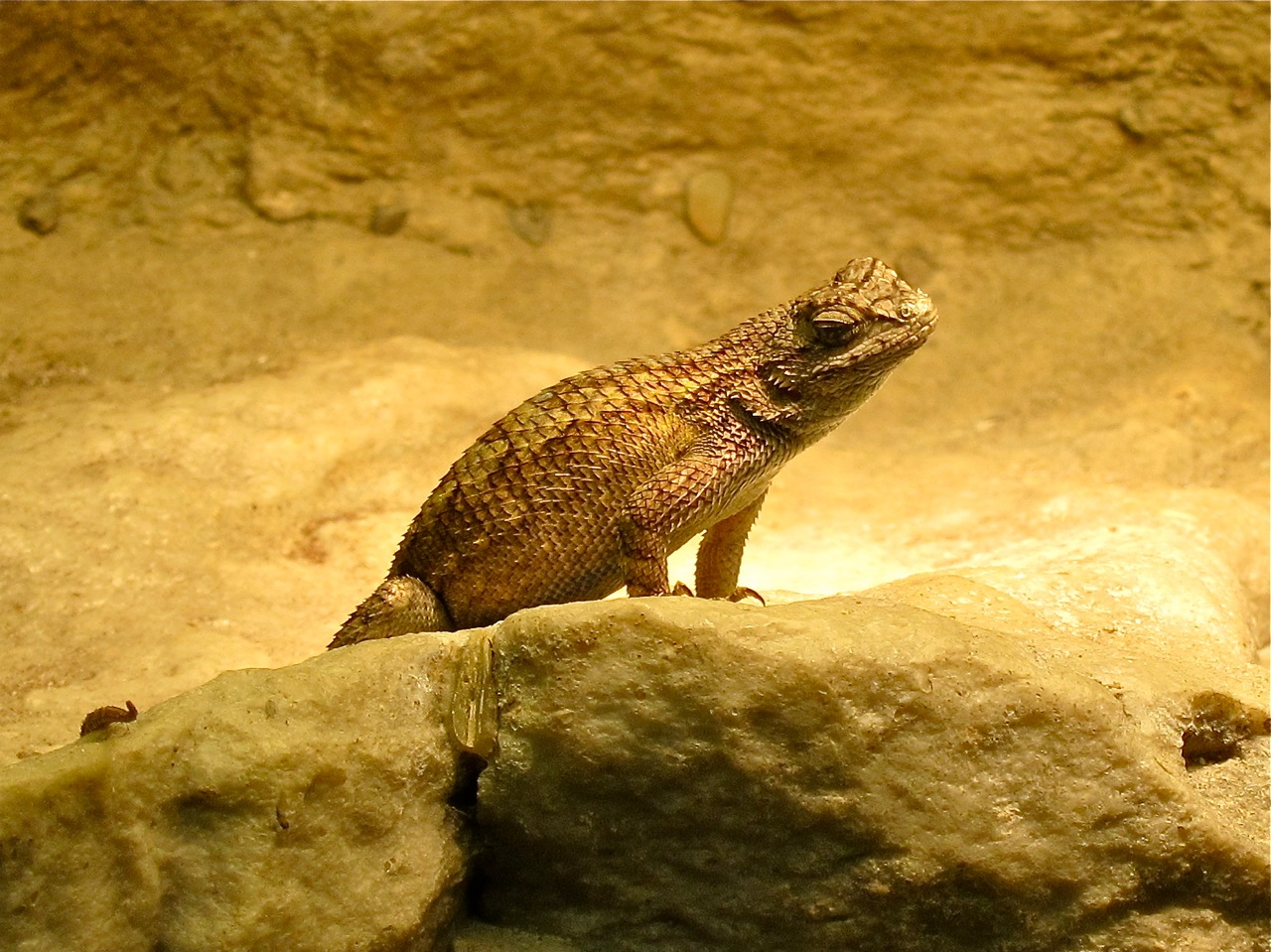
Western Fence Lizard

Sceloporus occidentalis              Phrynosomatidae

Distribution:  Western U.S.

Habitat: Grassland, broken chaparral, sagebrush, woodland, coniferous forest, and farmland, and occupies elevations from sea level to 10,800 ft. They generally avoid the harsh desert.

Appearance: 13-15cm (5-6 inches) They are brown to black in color (the brown may be sandy or greenish), but their most distinguishing characteristic is their bright blue belly, and the ventral side of the limbs are yellow. These lizards also have blue patches on their throats. This bright coloration is faint or absent in both females and juveniles. The scales of S. occidentalis are sharply keeled.

Diet: Fruits, leaves, buds and flowers.

Remarks: The presence of western fence lizards is thought to diminish the danger of transmission of Lyme disease by ticks. The incidence of Lyme disease is lower in areas where the lizards occur, and when ticks carrying Lyme disease feed on these lizards (which they commonly do, especially around their ears), the bacteria that cause the disease are killed

Cuban Knight Anole

Anolis equestris      Iguanidae

Distribution: Cuba and have been introduced into Dade and Broward counties in Florida.

Habitat: They are arboreal living in the shady canopy of large trees.

Appearance: Grow to a length of 12 to 20 inches (30 to 51 cm). They are the largest of the Genus Anolis. The snout is long and wedge-shaped and the tail is slightly compressed with a serrated upper edge. Each toe is expanded to form an adhesive pad allowing the anoles to easily run up smooth, vertical surfaces, or run body downward on a horizontal plane.  The body is covered with small granular scales with a yellow or white stripe under the eye and over the shoulder. They are bright green in color, which can change to a dull grayish-brown.

Diet: Insects, small lizards, amphibians.

Remarks:  They are easy to distinguish from other anoles by their size and the large, pink throat fan or dewlap.  When courting or defending its territory amale anole will extend its throat sac.


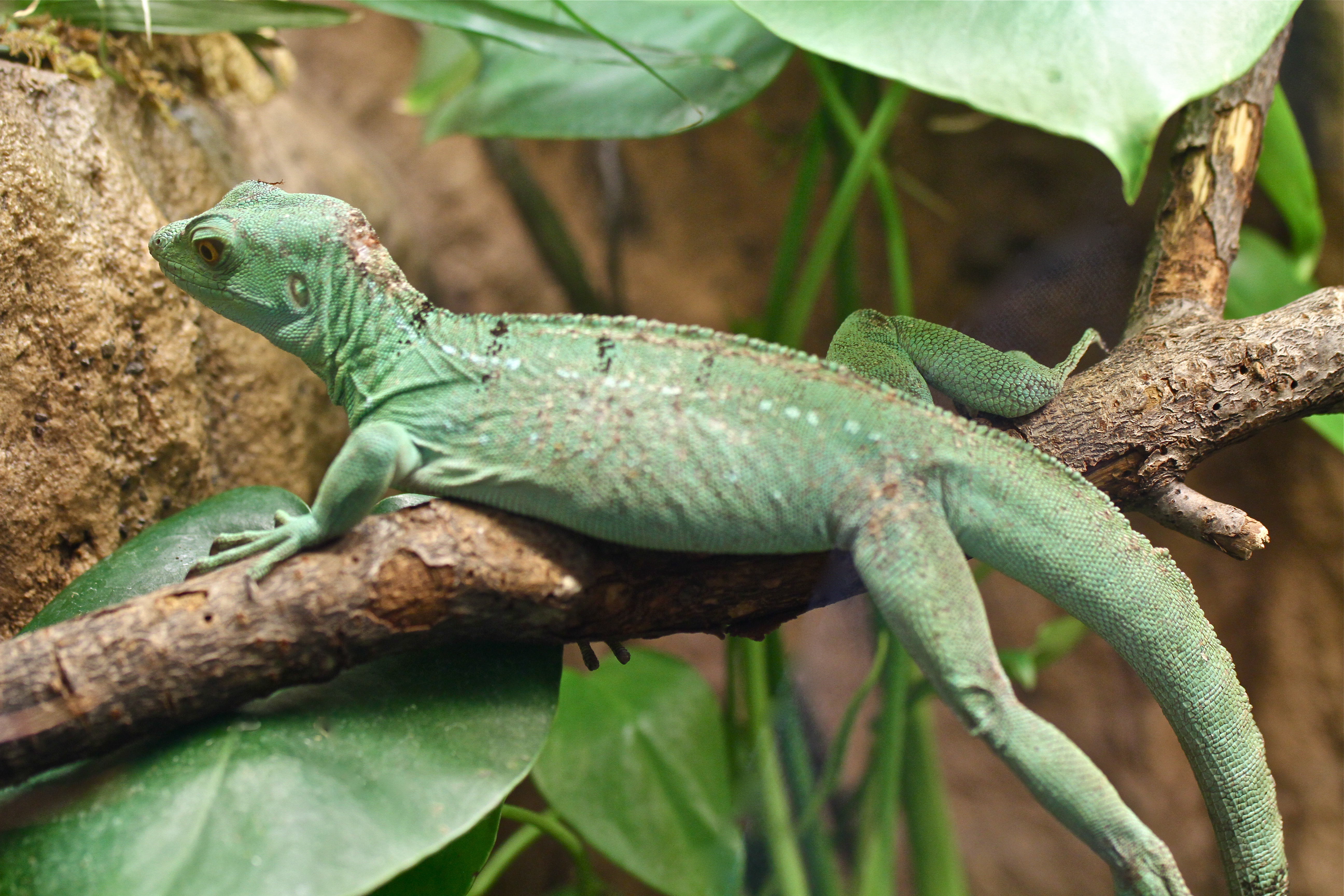
Green Basilisk Lizard

Basiliscus plumifrons     Corytophanidae

Distribution: Central and South America.

Habitat: Arboreal and semi-aquatic; inhabit the trees and bushes of the rainforest, often along riverbanks.

Appearance: Length, including tail, can be up to 85 cm.  Adult color is bright green, or slightly blue-green. Males have distinctive, high crests on their heads and backs, which they use to impress females. The females have only one small crest.

Diet: Omnivores, surviving on a diet of plant material, insects, fruit, and small vertebrates.

Remarks: Green basilisk lizard has been called the “Jesus Christ” lizard, because of its ability to walk on water. Their rear feet have long toes with fringes of skin that unfurl in the water, increasing surface area. They rapidly move their legs as they slap their splayed feet hard against the water. This creates tiny air pockets that keep them from sinking, provided they keep running fast enough. They can move more. When gravity eventually takes over, the basilisk is an excellent swimmer.             

Gila Monster

Heloderma suspectum                      Helodermatidae

Distribution: Southwestern United States and Mexico.

Habitat: Scrubland, succulent desert, and oak woodland, seeking shelter in burrows, thickets, and under rocks in locations with ready access to moisture.

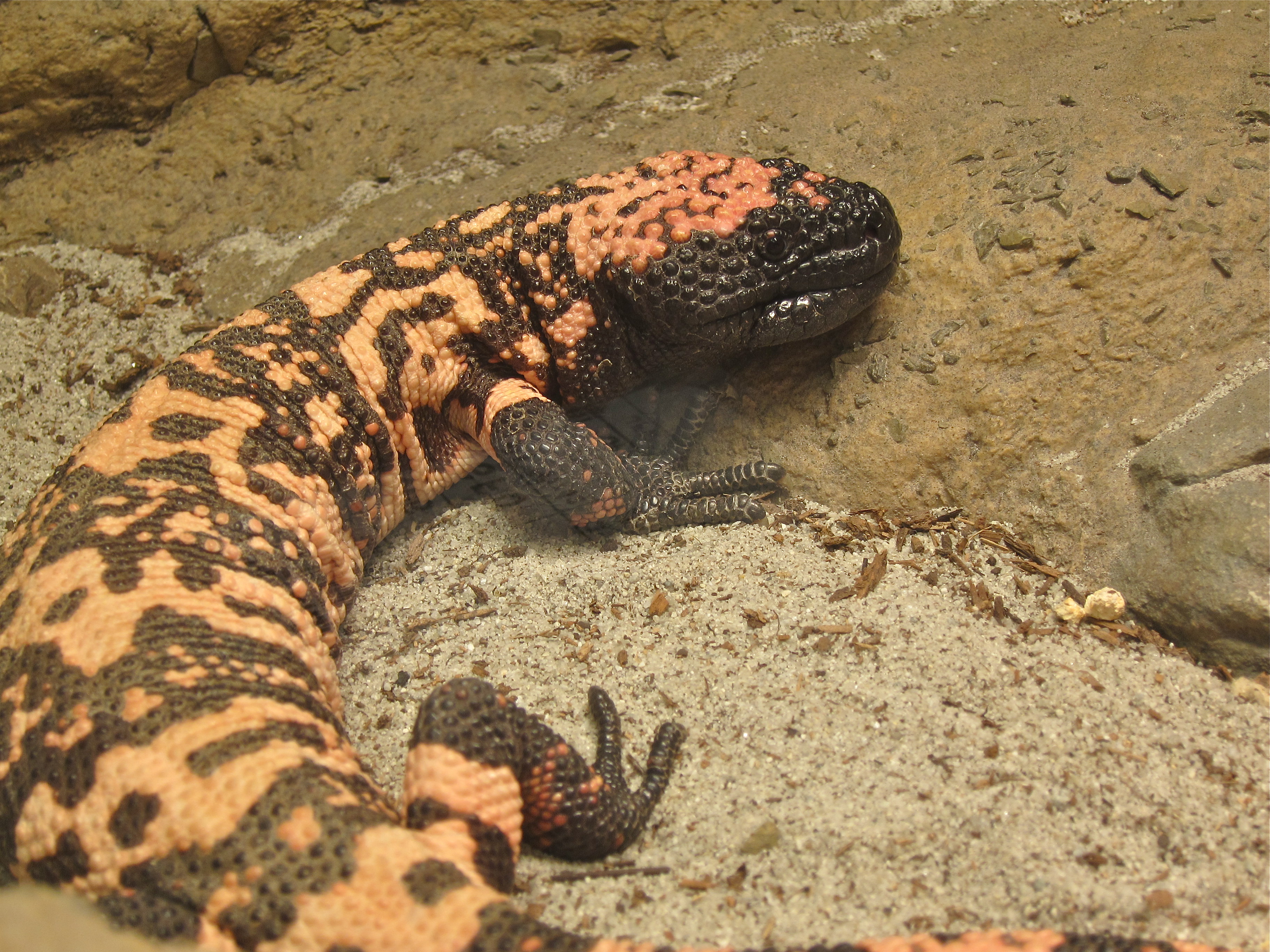
Appearance: Their black bodies are covered in bead-like scales with bright spots, blotches, or bands of pink, orange, or yellow, which probably warn other animals to stay away. Their bulky bodies, slow moving stride, thick forked tongue, and snorting hisses, reinforce the name Gila monster.

Diet: Eggs, young birds and small mammals.

Remarks: Jaw muscles are strong and after biting its prey it will not release, giving venom time to work. Glands in the lower jaws secrete the venom into grooves in its teeth which mixes with saliva killing or disabling its prey. Venom is very painful to humans but does not usually result in death.

Rhinoceros Iguana

Cyclura cornuta                           Iguanidae

Distribution: Haiti and Dominican Republic.

Habitat: Primarily found near coastlines; however, many have been forced to relocate inland due to human expansion.

Appearance: One of the largest of the Iguanas, mature Rhinoceros Iguanas can be anywhere from two to four feet in length. They get their name from three horn-like outgrowths on the end of their nose. They are a dusky gray or olive green in color, with barely visible dark cross bands,

Diet: Mainly herbivorous eating leaves, flowers and fruit. They may eat carrion (mostly dead birds and fish.

Remarks: As with most Iguanas, Rhinoceros Iguanas have good hearing, smell and excellent eyesight.

Frilled Lizard

Chlamydosaurus kingie

Distribution: Northern Australia and Southern New Guinea.

Habitat: Tropical and warm temperate forests and savanna woodlands of northern Australia. They spend most of their lives in the trees,

Appearance: Length to 3 ft (0.9 m) and weight: to 1.1 lbs (0.5 kg). They have a thin fold of skin that usually hangs like a cape (frill) which when erect can be 12 inches (30 cm) across used to communicate with each other.

Diet: Mostly insects and some small mammals.

Remarks: Escapes to a tree for protection.