Tag Archive: cichlids


TAXONOMY
Kingdom: Animalia
Phylum: Chordata
Class: Actinopterygii (ray-finned fishes)
Order: Perciformes (Perch-likes)
Family: Cichlidae (Cichlids)

Genus/species: Tilapia buttikoferi

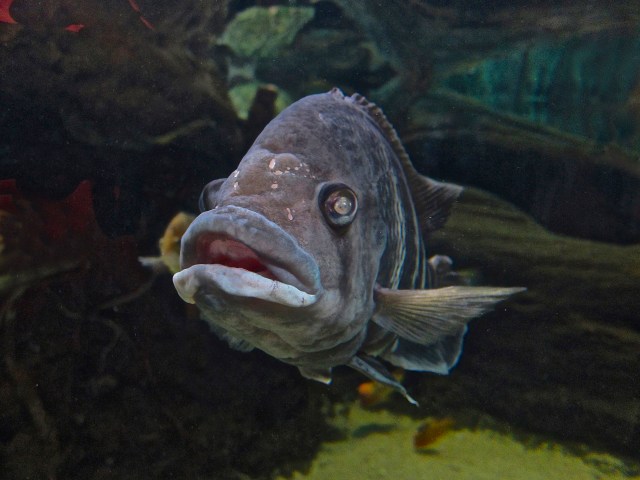
Hornet Tilapia 4562623192_2331f3feaf_b-2

GENERAL CHARACTERISTICS: Length to 12 inches. Color is yellowish-grey, with 7-8 broad, oblique brownish-black bars, broader than the light spaces

DISTRIBUTION/HABITAT: Native to Western Africa. Found in coastal rivers and streams.

DIET IN THE WILD: A voracious omnivore, T. buttikoferi feeds on fish and crustaceans and vegetable matter.

CONSERVATION: IUCN least concern.
Hornet Tilapia 9260875598_b14d228439_o

REMARKS: After salmonids and carps, tilapia are fast growing and easily bred. Tilapia are the most important fishes in aquaculture by the gross weight of production. They have imported and bred throughout the world for both aquatic and nutritious purposes and are legal in Texas and Florida.

Swamp Cichlids SW02

flickr  http://www.flickr.com/photos/cas_docents/sets/72157627952093337/with/4562623192/

WordPress Shortlink  http://wp.me/p1DZ4b-12j

TAXONOMY
Kingdom: Animalia
Phylum: Chordata
Class: Actinopterygii (ray-finned fishes)
Order: Perciformes (Perch-likes)
Family: Cichlidae (Cichlids)

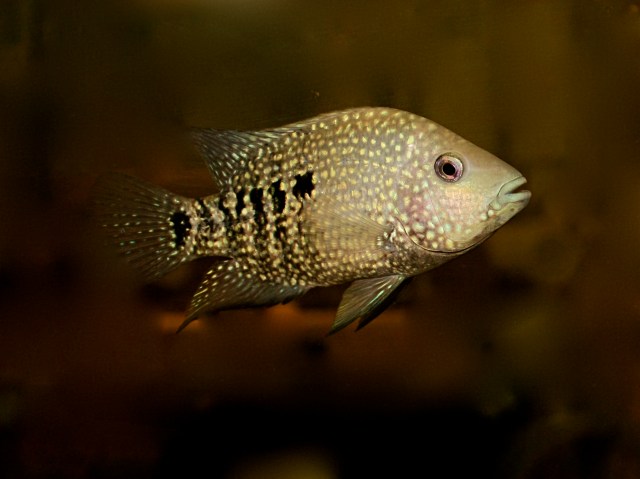
Genus/species: Herichthys cyanoguttatus

Texas Cichlid aka Rio Grande Cichlid  2999113747_5988dd62cb_o

GENERAL CHARACTERISTICS: Light grey with many small turquoise to white dots over the body. A single black spot on central side and second spot on the caudal peduncle; three black bars behind central spot. Max. length: 30 cm (12 inches), common length : 11.3 cm (4.5 inches)

DISTRIBUTION/HABITAT: Originally restricted to the lower Rio Grande drainage in Texas and south to northeastern Mexico. Introduced to central Texas and central Florida. Found in pools and open runs of rivers; prefers warm water and areas with vegetation.

DIET IN THE WILDt: Worms, crustaceans, insects, and plant matter. Sorts through mouthfuls of gravel, eats the small animals, and spits out the rest.

2999122499_4e5fd3ed0b_o

REMARKS: Considered a game fish in Texas and Mexico. This species is the only cichlid native to the U.S.

Swamp, SW08 Alligator Gars

flickr  http://www.flickr.com/photos/cas_docents/sets/72157608608528651/with/2999113747/

WordPress Shortlink http://wp.me/p1DZ4b-11T

PHYLUM    Chordata

CLASS        Actinopterygii   (ray-finned fishes)

ORDER    Perciformes   (Perch-likes)

FAMILY   Cichlidae (Cichlids)

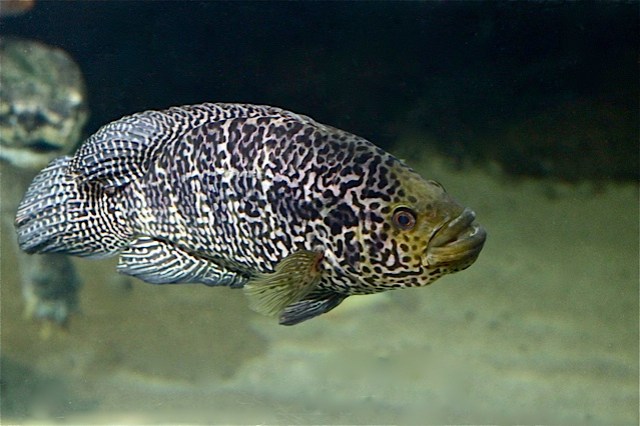
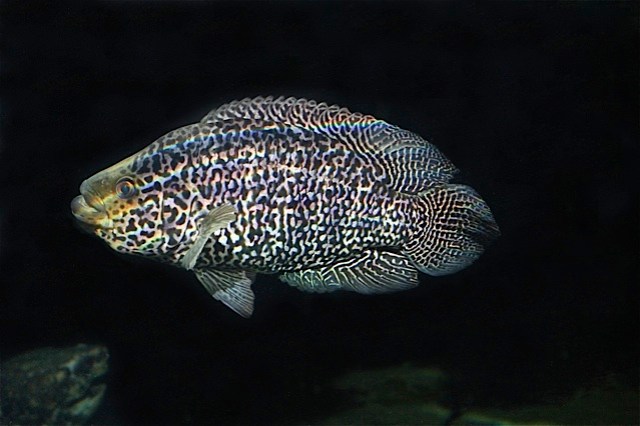
GENUS/SPECIES    Parachromis (Nandopsis) managuensis


GENERAL CHARACTERISTICS

Body has a light background with black markings all over; series of large black spots on along the sides.   Males will constantly dig and defend their territory. They will usually have brighter coloring to the body than females.    Size:  32.5–35 cm (13–14 in).


DISTRIBUTION/HABITAT

Central America: Honduras to Costa Rica preferring lakes, with  turbid warm water depleted of oxygen. Likes mud bottoms but also found in springs and ponds over detritus and sand bottoms.    


DIET IN THE WILD

Small fishes and invertebrates; a voracious predator that makes a meal of any fish small enough to fit into its unusually large mouth.           


Swamp SW02

 Flickr  http://www.flickr.com/photos/cas_docents/sets/72157625017923579/

WORDPRESS SHORTLINK  http://wp.me/p1DZ4b-AF

TAXONOMY

KINGDOM      Animalia

PHYLUM        Chordata

CLASS           Actinopterygii  (ray-finned fishes)

ORDER          Percifomes  (Perch-likes)

FAMILY         Cichlidae  (Cichlids)

GENUS/SPECIES  Katria katria


GENERAL CHARACTERISTICS

Katria katria  has a unique pattern of two prominent black vertical bars on an iridescent golden background. Max length: 5.5 cm (2 in).


DISTRIBUTION/HABITAT

One of 17 cichlid species indigenous to Madagascar.

Lives in freshwater pools, slow flowing runs and rapids with predominantly sand and gravel substrate, with a few very large rocks.


DIET IN THE WILD

Omnivorous.

 REPRODUCTION

Substrate spawner. Pairs of Katria have been observed guarding either eggs or small juveniles close to the top of the rocks in the Nosivolo Rver in November, 2005.


CONSERVATION STATUS

IUCN List: Vulnerable.

This species has a restricted distribution within the Nosivolo and Mangoro rivers, but its habitat is in very good condition and it does not have to deal with either exotic predators or competitors. Given the lack of evidence for decline in quality of habitat or population size (it is a very common species within its range), this species is assessed as vulnerable on account of its restriction to a single location.


LOCATION

Rainforest Madagascar MA04

Flickr  http://www.flickr.com/photos/cas_docents/sets/72157627949403670/

WordPress Shortlink http://wp.me/p1DZ4b-yS

Actinopterygii (ray-finned fishes),  Perciformes (Perch-likes), Cichlidae (Cichlids)

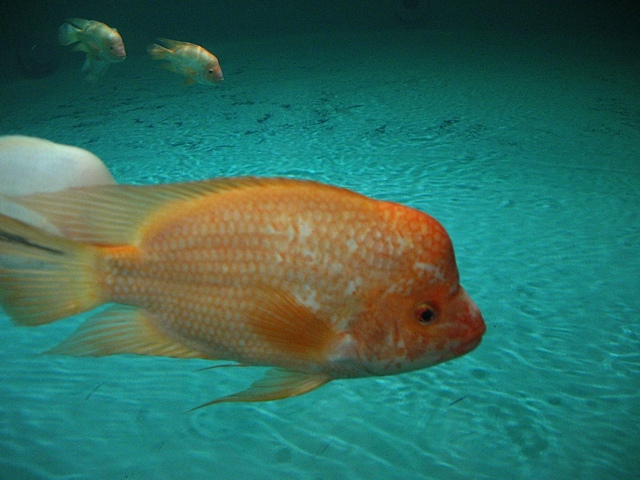
Amphilophus labiatus

FEMALE WITH BROOD BELOW

DISTRIBUTION: Atlantic slope of Mexico and Nicaragua; in Lakes Nicaragua and Managua.

HABITAT: Lakes; rarely enters streams or rivers.

APPEARANCE: The body of the Red Devil is robust and stocky. It has a great deal of variability in its structure and coloration. Some are bright red while others are white or yellow.  Males will develop an impressive nuchal hump as they grow. Length to 24 cm or approximately 10 in.

DIET: Small fishes, snails, insect larvae, worms and other bottom-dwelling organisms.

REPRODUCTION/DEVELOPMENT: Fertilization is external.  A. labiatus a substrate spawner prefers to spawn on flat surfaces.  Female lays 600–700 eggs and guards the clutch. The larvae hatch after about 3 days. After another 5-7 days they become free swimming.

MALE BELOW

flickr http://www.flickr.com/photos/cas_docents/6885205471/in/set-72157627952093337

WORDPRESS SHORTLINK http://wp.me/p1DZ4b-oC

Ref. Fishbase and Animal World

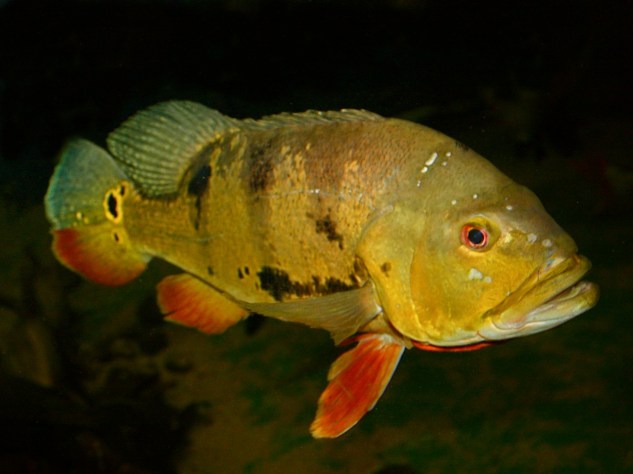
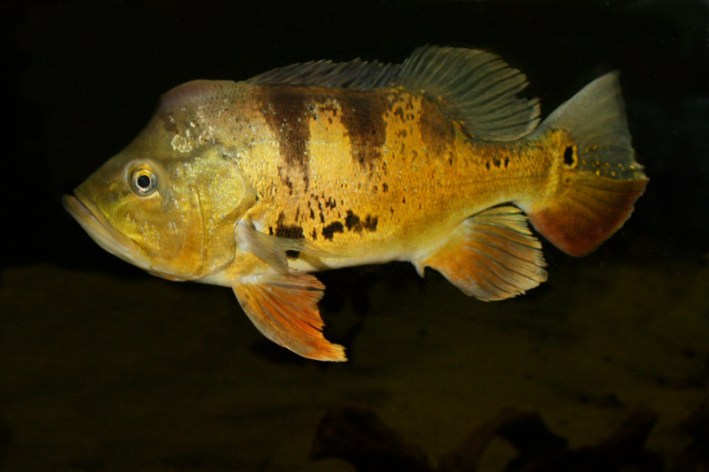
Cichla ocellaris (Cichlidae)  Cichlid

Female below.

DISTRIBUTION: Amazon, Orinoco, and La Plata basins in South America. Currently established in southern Florida.

HABITAT: Warm freshwater.

APPEARANCE: Elongate body with deeply notched dorsal fin, large mouth with projecting lower jaw. Color: olive-green fading ventrally to yellow-white, with three dark vertical bars on sides and series of dark spots in between. A large black spot encircled by silver adorns the caudal fin. Max. length: 60 cm. Male has a lump no top of the skull.

DIET: Diurnal feeders on other fishes. High speed pursuit predators.

REPRODUCTION and DEVELOPMENT: Substrate spawner. Both parents guard their clutch for about 9 weeks. Like most cichlids, breeding pairs are highly territorial and aggressive.

REMARKS: Legally introduced to Florida. Are considered a prized sport and food fish.

LOCATION: Flooded amazon tunnel, AM11

WORDPRESS SHORTLINK  http://wp.me/p1DZ4b-b9

Male below; note lump on top of the skull.

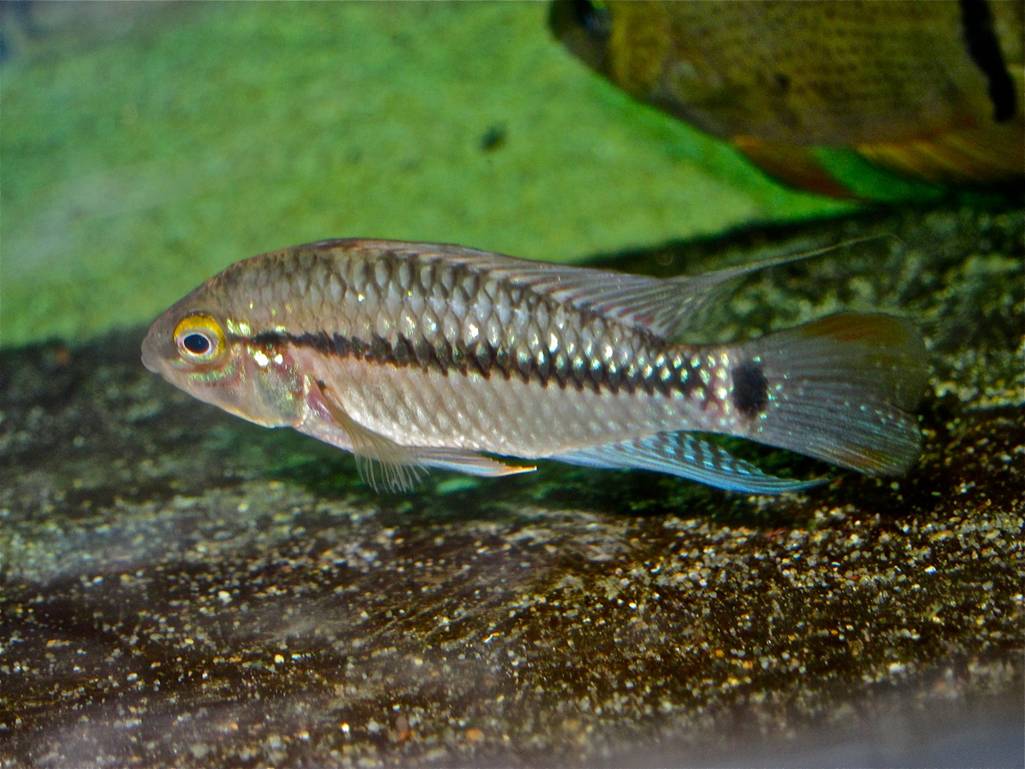
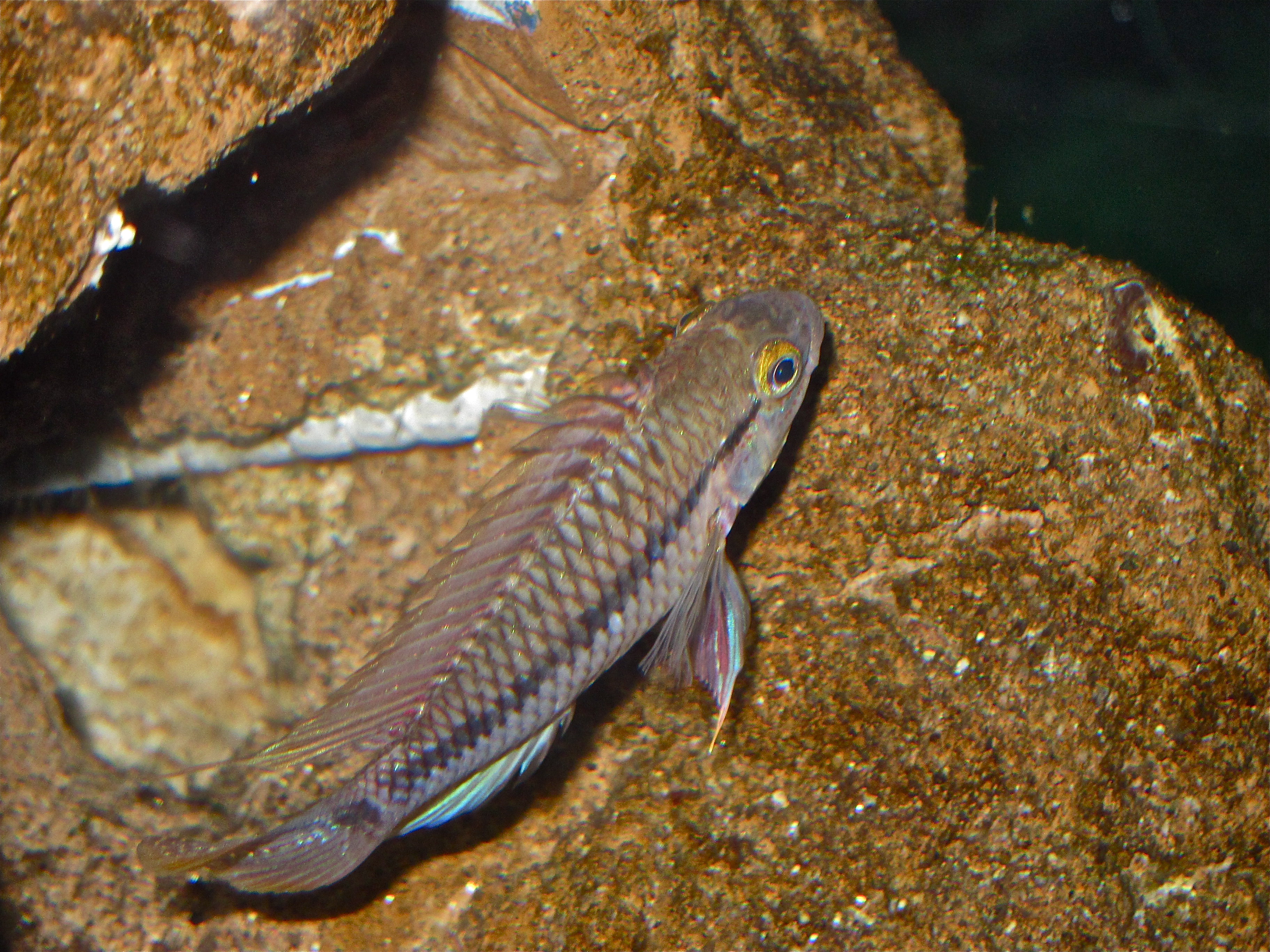
Apistogramma eunotus       Actinopterygii (Ray-finned fishes),Perciformes (Perch-likes) , Cichlidae (Cichlids)

DISTRIBUTION: Native to the western Amazon basin in the area around the Peruvian/Brazilian border. It’s found in the tributary systems of several rivers, including the Rio Ucayali, Rio Yavarí, Rio Japurá and the Amazon itself.

HABITAT: Slow-moving streams, creeks and tributaries, as well as smaller rivers.

APPEARANCE: Maximum length 3.5″ (male) 3″ (female).  The male is the larger fish and has much more prominent coloring, especially the blue markings around the gill area that give this fish its common name. The male also has elongated dorsal and anal fins.

DIET: A. eunotus is a micropredator. Their main prey items consist of insect larvae, fry of other fishes and other invertebrates

REMARKS:  Apistogramma is a genus of approximately a hundred species of fish from the family Cichlidae found in tropical areas of the Amazon basin and Venezuela. Apistogramma literally means “irregular lateral line” referring to a common trait of the species under this taxon. Most species are strongly sexually dimorphic.

Location: Flooded Amazon Tunnel, AM11

WORDPRESS SHORTLINK:  http://wp.me/p1DZ4b-ad