Latest Entries »

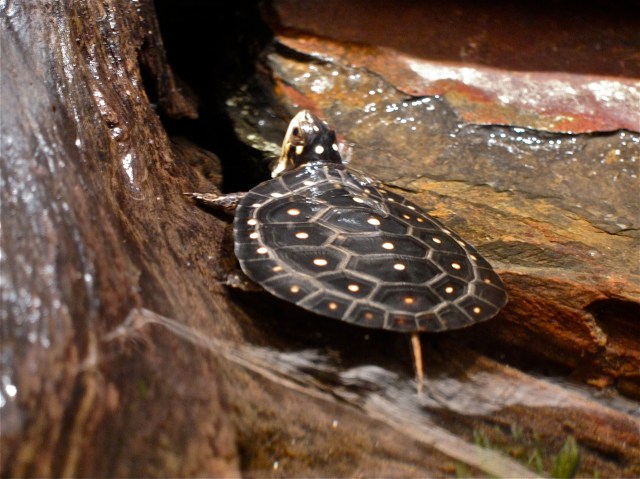
Class: Reptilia, Order: Testudines. Family: Emdidae, Clemmys guttata  

DISTRIBUTION: Southern Maine west to extreme northeastern Illinois and south along the coastal plain to northern Florida. 

HABITAT: Swamps, bogs, fens, marshes, woodland streams, and wet pastures.  

APPEARANCE: Carapaces are overall black with a few, to many scattered yellow spots. Their faces are adorned with splotches of orange and yellow. Adults, especially males, have orange coloration on the legs. Adults will reach an overall length of approximately 12 cm (5 in). 

DIET: Omnivorous and eats exclusively in the water, consuming plant material including aquatic vegetation, green algae.  Animal food includes aquatic insect larvae, worms, slugs, milipedes, spiders, crustaceans, tadpoles, salamanders and small fish. 

REMARKS:  Spotted turtles shed their scutes in small pieces occasionally resulting in completely smooth shelled specimens. C. guttata are very intelligent turtles and have been tested like the Wood Turtles in mazes and have been proven to have the brain capacity of a mouse.

Swamp SW05  11-10-11

flickr LINK  http://www.flickr.com/photos/cas_docents/sets/72157608449490716/

WORDPRESS SHORTLINK: http://wp.me/p1DZ4b-fE

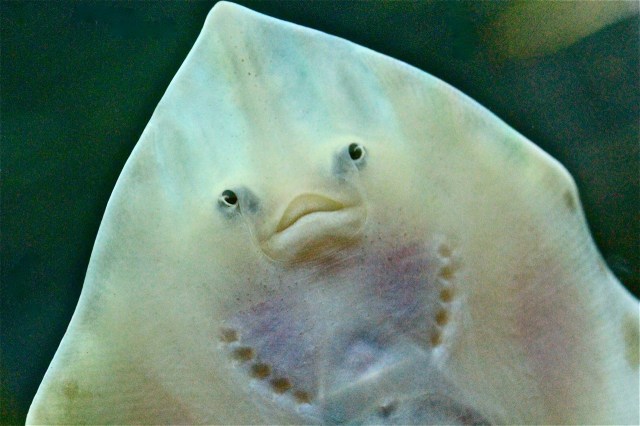
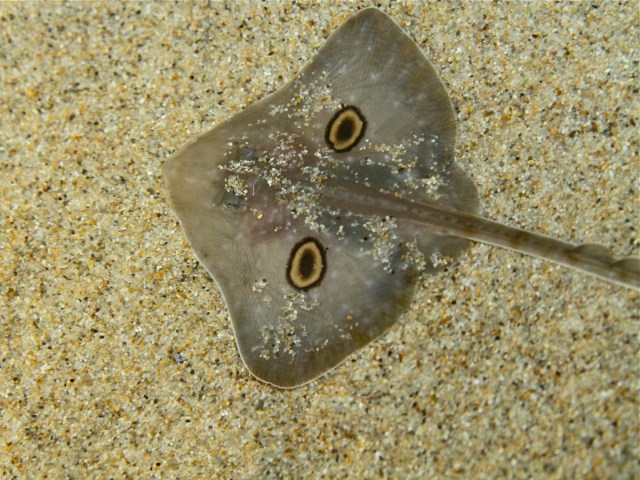
Raja binoculata  Class Chondrichthyes, Subclass Elasmobranchii (sharks and rays), Order Rajiformes (Skates and rays), Family Rajidae (Skates).

DISTRIBUTION: Bering Sea and southeastern Alaska to central Baja California.

HABITAT: Bottom dwellers on soft substrates, usually from shallow water to 300 m.  Found along the coast in estuaries, bays, and over the continental shelf. 

APPEARANCE:  Largest species of skate, adults usually 1.8 m (5.9 ft) and 91 kg (200 lb). There are two large dark spots with pale borders, one on each wing. The ventral side is white, sometimes with dark spots or blotches.

DIET: Benthic shrimps, worms, clams, some fishes.

REPRODUCTION and Development: Oviparous, and is one of the few skate species that typically have more than one embryo within each egg capsule, commonly called “mermaid’s purses”.   The egg capsule of a big skate is the largest of any skate, measuring 23–31 cm (9–12 in) long and 11–19 cm (4–7 in) wide.  The young emerge after 9 months and measure 18–23 cm (7–9 in).

REMARKS: Commercially fished off California.   R. binoculata‘s slow reproductive rate has led it to be assessed as Near Threatened by the World Conservation Union. 

LOCATION: Salt marsh pop-up CC03

 WORDPRESS SHORTLINK   http://wp.me/p1DZ4b-ev

TAXONOMY

Kingdom: Animalia

Class: Amphibia

Order: Anura

Family: Hylidae

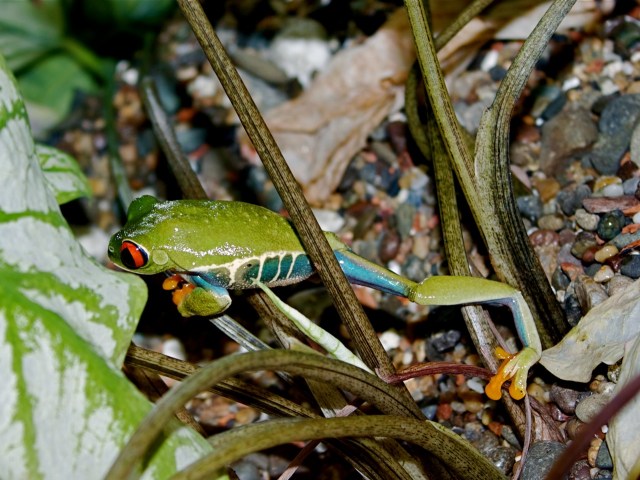
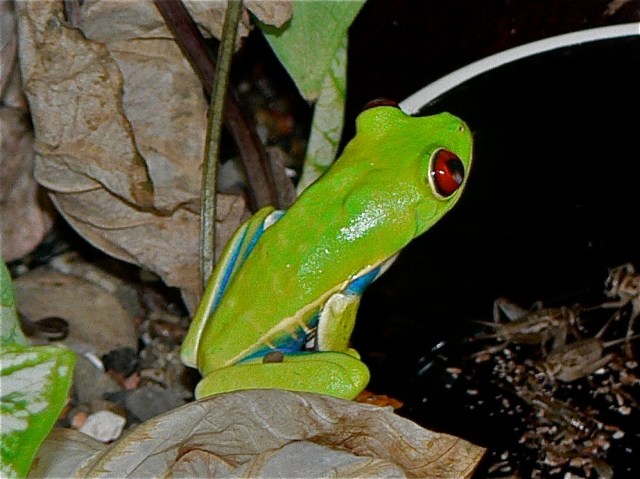
Genus/species: Agalychnis callidryas


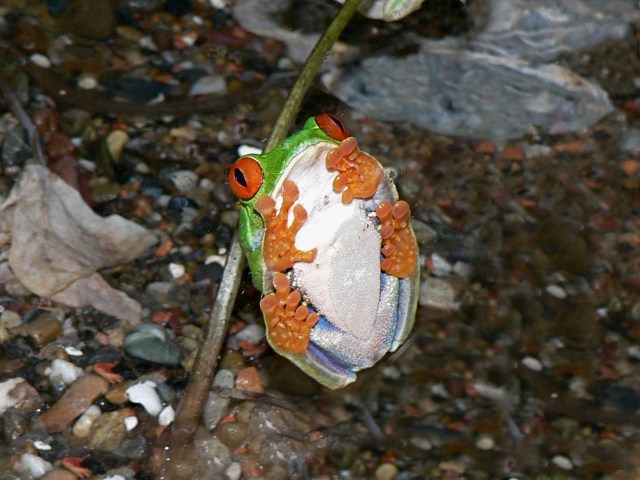
GENERAL CHARACTERISTICS:  Males are smaller (about 5 cm or 2.5 inches) than females (almost 7.62 cm or 3 cm). Both have neon green backs. With its bright orange-red suction toe pads it easily clings, climbs, and jumps among arboreal surfaces. Their distinctive bright red, bulging eyes provide highly developed parabolic vision. A reticulated pale nictitating membrane shields the frog’s sensitive eyes.

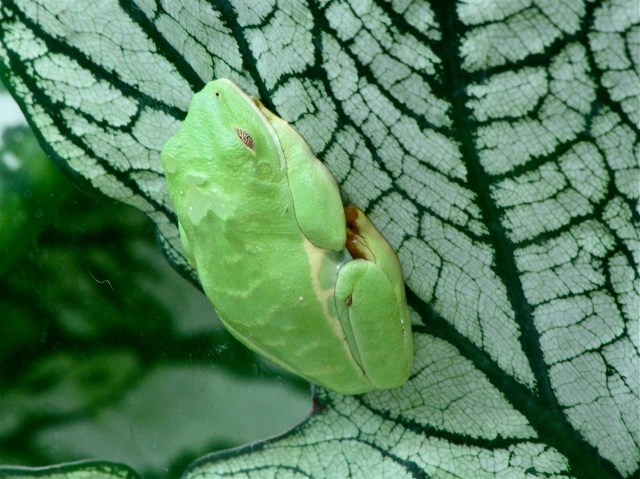
DISTRIBUTION/HABITAT: Southeastern Mexico, through Central America, to northwestern Colombia.  Lives near ponds or rivers in neotropical rainforests from sea level up to 960m. These nocturnal frogs are completely arboreal. During the day they remain motionless, blending in among the foliage. They live in warm (75-85°F, day; 66-77°F, night), humid (80-100%) climates.

DIET IN THE WILD: Carnivorous; crickets, moths, beetles, flies, grasshoppers and even smaller frogs.

REPRODUCTION: Males call from branches and leaves of trees above ponds in the rainy season; they vocalize in unison and threaten one another competing for females. Females with one or several males attached, climbs to a leaf above the water. Clutches of 11–78 eggs are deposited on the leaf, which usually is folded around the egg clutch. Hatchling tadpoles drop into the water where they become mid-water filter feeders

PREDATORS: Life span: 3–5 yrs. Preyed upon by birds, turtles, lizards, snakes, bats and other mammals.

CONSERVATION STATUS: Neither endangered nor threatened currently, A. callidryas has become the familiar icon for conservation of the world’s rainforests Global warming, deforestation, climatic and atmospheric changes, wetland drainage and pollution have caused dramatic declines and deformities in all amphibian populations including those of the neotropical rainforests.

Costa Rica Rainforest  CRO6

flickr http://www.flickr.com/photos/cas_docents/sets/72157608456457315/with/3143683892/

WORDPRESS SHORTLINK  http://wp.me/p1DZ4b-dZ

DAYTIME COLORS BELOW

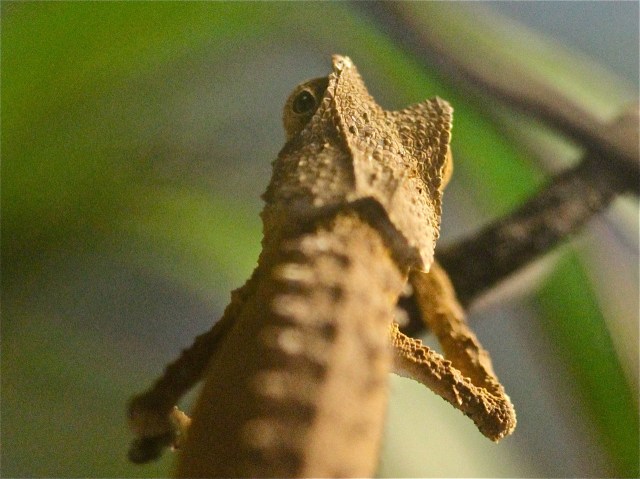
Brookesia stumpffi 

Class Reptilia,  Order Squamata,  Suborder Iguania,  Family: Chamaeleonidae

DISTRIBUTION: Northern Madagascar

HABITAT: Rainforest floor.

DIET: Small insects.

REMARKS: Can rapidly change colors to blend with the forest leaf litter to avoid predators.  When disturbed will play dead in an effort to resemble a fallen leaf. 

Text Ref. California Academy of Sciences Marco Schmidt

LOCATION: Madagascar MA14

WORDPRESS SHORTLINK http://wp.me/p1DZ4b-dt

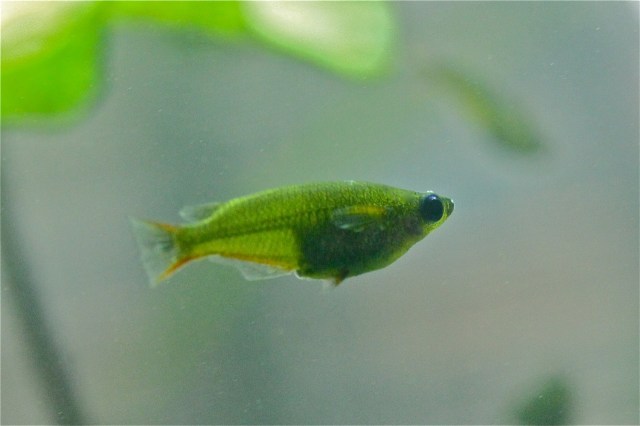
Oryzias woworae   Actinopterygii (Ray-finned fishes), Beloniformes (Needle fishes),  Adrianichthyidae (Ricefishes) 

DISTRIBUTION: Daisy’s ricefish was collected from a freshwater stream on Muna Island, off the southeastern coast of Sulawesi in Indonesia in 2007.

HABITAT:  fresh and brackish waters.

APPEARANCE: about an inch long, steel blue body (in males), highlighted with brilliant red stripes on its abdomen, pectoral fins and caudal fins. O. woworae  also have striking,  blue eyes

REMARKS:  many species are found in Japanese rice paddies gives this group of fishes its common name

LOCATION: Rainforest Borneo Exhibit  Southeast Asia Community tank  BO09 

REFERENCE; California Academy Rainforest Blog 3-27-11 and fishbase

WORDPRESS SHORTLINK  http://wp.me/p1DZ4b-dh

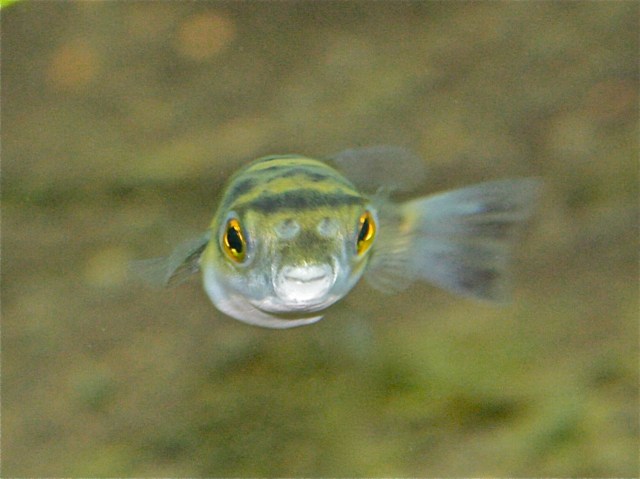
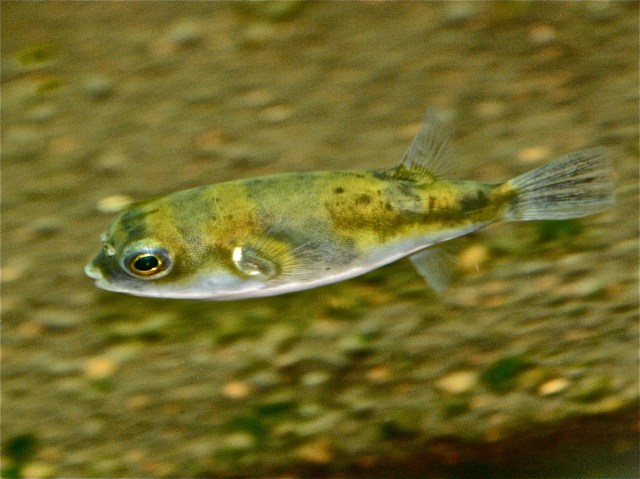
Colomesus asellus (Tetradontidae) Pufferfish

DISTRIBUTION: Peru, Colombia, Brazil. The Amazon Basin.

HABITAT: Mostly warm freshwater and coastal streams.

APPEARANCE: Max size: 7.5 cm, green above, white below, and patterned with black transverse bands across the dorsal surface.

DIET: An active carnivore, especially of snails.

REPRODUCTION: Pairs breed during the wet season, spawning in rivers. Small eggs are scattered on the substrate and hatched larvae are carried downstream.

MORTALITY and LONGEVITY: Life span: 10+ years.

REMARKS: Continuous growth of teeth keeps these fish ready for their crunchy and abrasive diet of crustaceans and snails. In captivity, these puffers should have a daily dose of snails to prevent beak overgrowth.

Like other puffers, can inflate themselves when threatened, presenting a much larger and spineladen body to suddenly disheartened predators.

Flooded Amazon Cardinal Tetra Exhibit.  AM14

WORDPRESS SHORTLINK   http://wp.me/p1DZ4b-d7

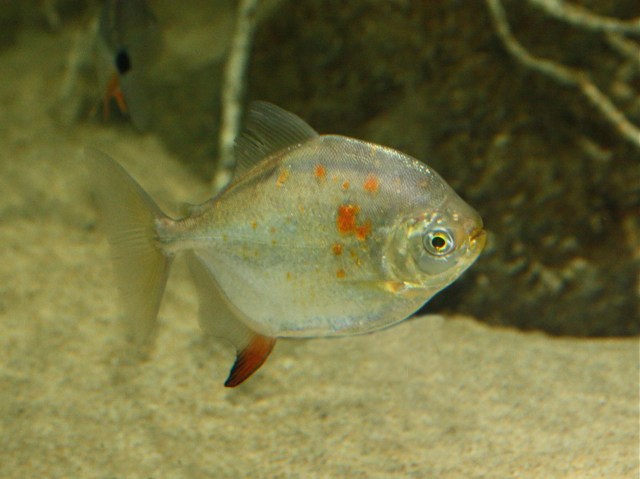
Metynnis sp. (Characidae) Characins

DISTRIBUTION: Tropical South America primarily Amazon and Orinoco basins.

HABITAT: Calm river reaches overhung by foliage.

APPEARANCE: Almost circular in profile; juveniles may be spotted or striped; adults solidly silver with anal and caudal fins edged in red or orange; grows to length of 30 cm (12 in) in wild.

DIET: Generally herbivorous, eating leaves of river plants; occasionally eats worms and small insects.

REPRODUCTION and DEVELOPMENT: Females release up to 2000 eggs; juveniles hatch in a few days.

REMARKS: A schooling species related to piranhas.  

LOCATION: Anaconda exhibit, AM3

WORDPRESS SHORTLINK  http://wp.me/p1DZ4b-ca


TAXONOMY

Kingdom: Animalia

Phylum: Chordata

Class: Reptilia

Family: Iguanidae.

Genus/species: Iguana iguana

DISTRIBUTION: Widely distributed from Mexico to southern Brazil and Paraguay, as well as on Caribbean Islands.

HABITAT: Tropical rainforests at low altitudes. Is arboreal and spends most of its time in the low canopy, 12–15 m (40–50 ft) above ground, coming down only to mate, lay eggs, and change trees.

APPEARANCE: Green iguanas are among the largest lizards in the Americas: 2 m (6.5 ft) in length, 5 kg (11 lbs) in weight. They can be various shades of green, ranging from bright green to a dull gray-green. The skin is rough with a set of pointy scales along the back. They have long fingers and claws to help them climb and grasp branches. Males have a flap of skin, called a dewlap, on the ventral side of the neck. It can be inflated to make them seem larger, to attract females, and to adjust their body temperature. The tail is almost half their length, and can be used as a whip to drive off predators. They can detach their tail if caught, and it will grow back.

DIET: Primarily herbivores, eating plants, especially leaves and fruit.

REPRODUCTION and DEVELOPMENT: Iguanas reach sexual maturity in 2–3 years. Green iguanas breed at the onset of the dry season. A month or two later, the females lay a clutch of 14–76 eggs in burrows excavated in communal nesting sites. At the end of a three month Incubation period, the newly hatched iguanas emerge. Because hatching takes place during the rainy season, food is plentiful.

MORTALITY/LONGEVITY: Reptiles, birds and mammals prey upon the hatchlings. Less than 3% live to adulthood. Adults are highly prized for their meat, and are hunted by humans. They are also captured for the pet trade.

CONSERVATION: The green iguana has become extinct in some countries and is endangered in others because of excessive hunting and habitat loss. In Costa Rica a program is being developed to breed and raise green iguanas in semi-captivity. After successful breeding, the hatchlings are maintained for 6–10 months, then released into the surrounding area with supplemental food and protection. When they are adults, some are harvested for food and to generate income by supplying leather for handicrafts. Such programs have decreased forest destruction and helped to protected wild iguanas.

REMARKS: In parts of Central America where iguanas are eaten for food, they are called “bamboo chickens” or “chicken of the trees.”

*Not currently on Display

WORDPRESS SHORTLINK  http://wp.me/p1DZ4b-bB

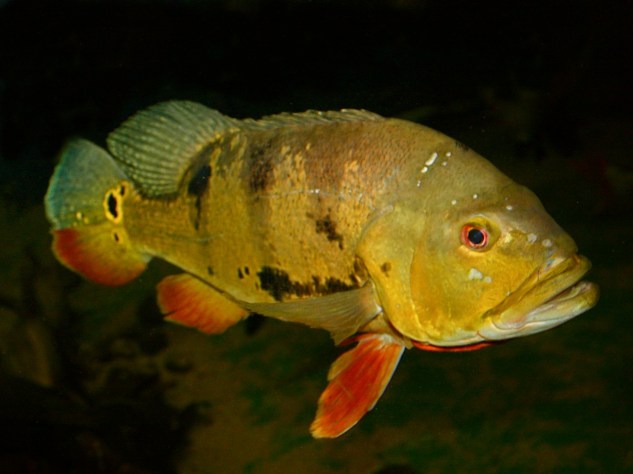
Cichla ocellaris (Cichlidae)  Cichlid

Female below.

DISTRIBUTION: Amazon, Orinoco, and La Plata basins in South America. Currently established in southern Florida.

HABITAT: Warm freshwater.

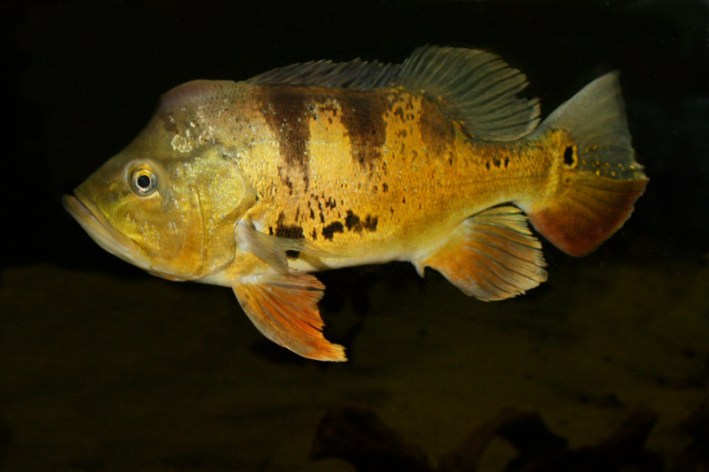
APPEARANCE: Elongate body with deeply notched dorsal fin, large mouth with projecting lower jaw. Color: olive-green fading ventrally to yellow-white, with three dark vertical bars on sides and series of dark spots in between. A large black spot encircled by silver adorns the caudal fin. Max. length: 60 cm. Male has a lump no top of the skull.

DIET: Diurnal feeders on other fishes. High speed pursuit predators.

REPRODUCTION and DEVELOPMENT: Substrate spawner. Both parents guard their clutch for about 9 weeks. Like most cichlids, breeding pairs are highly territorial and aggressive.

REMARKS: Legally introduced to Florida. Are considered a prized sport and food fish.

LOCATION: Flooded amazon tunnel, AM11

WORDPRESS SHORTLINK  http://wp.me/p1DZ4b-b9

Male below; note lump on top of the skull.

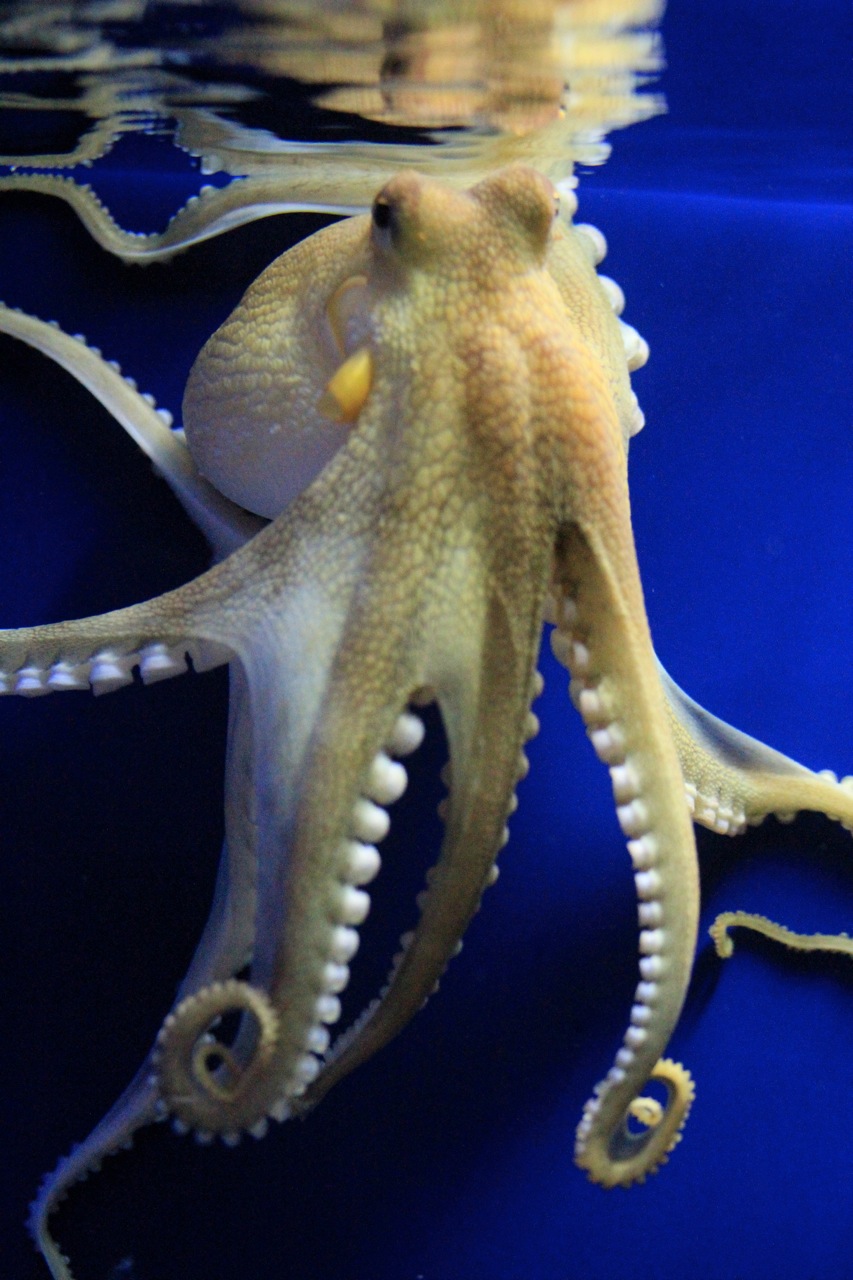
Amphioctopus marginatus

Kingdom: Animalia, Phylum: Mollusca. Class: Cephalopoda, Order: Octopoda, Family: Octopodidae                                        

DISTRIBUTION: Tropical waters of the western of the western Pacific Ocean.

HABITAT: Sandy bottoms in bays or lagoons.

APPEARANCE: The main body of the octopus is typically around 8 centimeters (3 in) in size, and, with arms, approximately 15 centimeters (6 in) long. The octopus displays a typical color pattern with dark divergent lines similar to veins, usually with a yellow siphon The arms are usually dark in color, with contrasting white suckers. In many color displays, a lighter trapezoidal area can be seen immediately below the eye.

DIET: Shrimp, clams and crabs.

REMARKS: A. marginatus  is one of only two octopus species known to display such behavior, the other being Abdopus aculeatus.   A. marginatus  has been observed using discarded coconut shells as a shelter.

LINK  to National Geographic video  http://www.indiesquidkid.com/tag/amphioctopus/

 LOCATION: STAFF PICK  SP04

 WORDPRESS SHORTLINK  http://wp.me/p1DZ4b-aU