Latest Entries »

TAXONOMY
Kingdom: Animalia
Phylum: Chordata
Class: Actinopterygii
Order: Cypriniformes
Family: Cyprinidae (carps, true minnows, and their relatives (as the barbs and barbels).

Genus/species: Pethia padamya

9830844836_c473e373de_b

GENERAL CHARACTERISTICS: This species exhibits sexual dimorphism. The male has a beige to light brown background with a bright red stripe running the length of the body. The dorsal, anal, and pelvic fins of the male are yellowish-green in color with contrasting black spots.
The female is light beige with a silvery sheen on the scales. The fins are a light yellowish-green; however, only the dorsal fin contains the contrasting black spots, which are fainter than those of the male. Both sexes have a black and prominent spot in the dorsal area, as well as a smaller spot in the caudal area.
Average length is 4.5cm (about 2 inches).
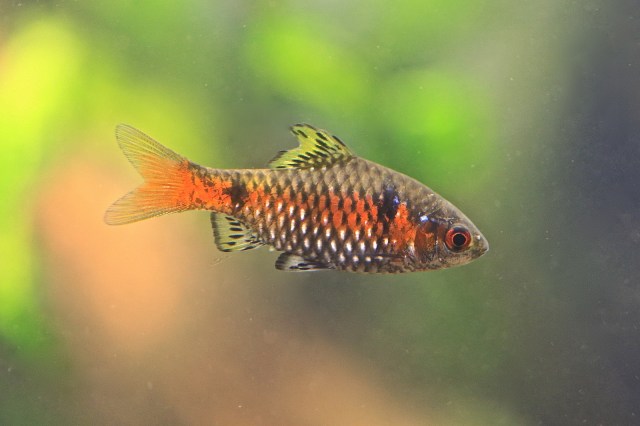
Odessa Barb 9830830994_eb9d56b36b_h

DISTRIBUTION/HABITAT: Central Myanmar in one pond and one river.

DIET IN THE WILD: Not well-studied, omnivores. Cyprinids are stomachless fish with toothless jaws. Even so, food can be effectively chewed by the pharyngeal teeth the gill rakers of the specialized last gill bow.

REMARKS: Named “Odessa barb” because it was said to have first appeared in pet enthusiast’s circles in Odessa, Ukraine in the early 1970s.

flickr  http://www.flickr.com/photos/cas_docents/9830830994/in/set-72157608614099673

WordPress shortlink http://wp.me/p1DZ4b-16w

TAXONOMY:
Kingdom: Animalia
Phylum: Mollusca:
Class: Gastropoda  (snails and slugs)
Order: Vetigastropoda:  (primitive group of sea snails)
Family: Trochidae (“top snails”, because in many species the shell is shaped like a toy top)

Genus/species: Norrisia norrisi

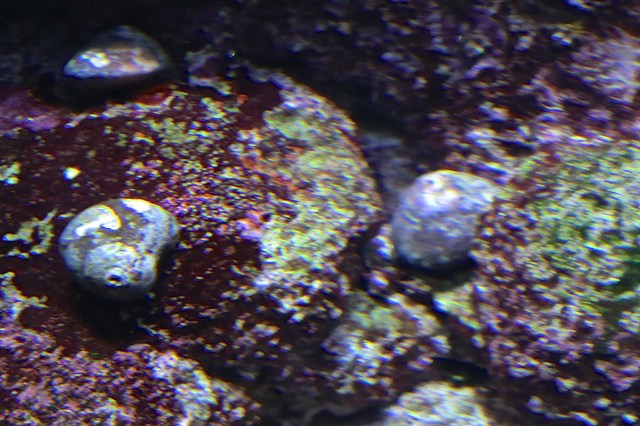
Red Foot Moon Snail Norrisia norrisi IMG_7601

GENERAL CHARACTERISTICS: Smooth brown shell that ranges in size from a few mm to 55mm or 2 inches.

DISTRIBUTION/HABITAT: Eastern Pacific found on kelp from Point Conception to Baja California, May live in water 15-24°C or 59 to 75°F.

DIET IN THE WILD: The Norris’ top snail feeds mainly on brown algae but in aquariums they use their file-like tongue or radula to eat most types of algae helping to keep the aquarium clean.

PREADATORS: Commonly eaten by seastars.

REMARKS: Used to help control algae in the Philippine coral reef. PR04

IMG_7602

flickr http://www.flickr.com/photos/cas_docents/sets/72157608597736188/ 

WordPress shortlink  http://wp.me/p1DZ4b-16o

TAXONOMY
Kingdom: Animalia
Phylum: Chordata
Class: Aves
Order: Passeriformes
Family: Thraupidae

Genus/species: Tangara velia

3161169099_3a0b56ac4b_b

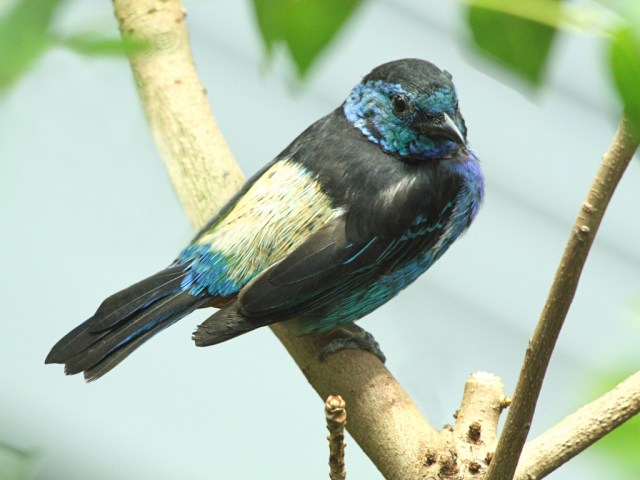
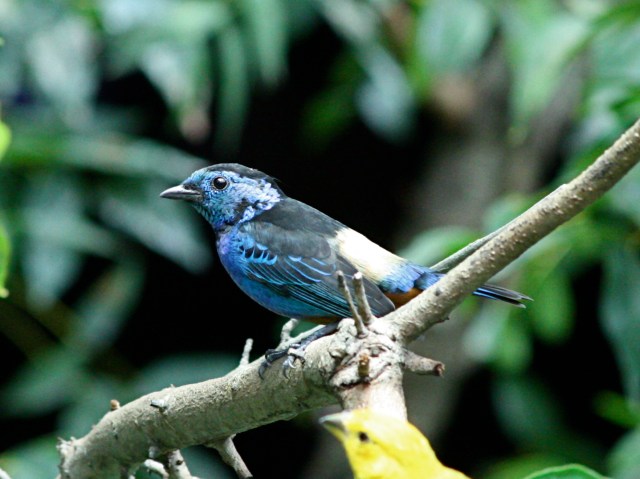
GENERAL CHARACTERISTICS: Medium sized predominately blue and black. The crown and back are black, with a bright opalescent rump. The head and underparts are deep iridescent blue and the lower belly is reddish chestnut and crissum. Sexes are similar in both size and plumage with the female being duller.

3168879341_57e5d64036_o

DISTRIBUTION/HABITAT: Bolivia, Ecuador, French Guiana, Guyana, Peru, Suriname, and Venezuela.
Found in tropical forests, from emergent to shrub layer, especially lowland rainforests and the forest edge, though found in some areas up to 1200 m (4000 feet).

DIET: Omnivorous

CONSERVATION: IUCN, Least Concern (LC)

3162005686_869f46bd04_o

REMARKS: Generally seen in pairs and/or small groups of mixed species. Emit a high-pitched twitter in flight.

Ron’s flickr  http://www.flickr.com/photos/cas_docents/sets/72157608454346681/with/3161783604/

Ron’s WordPress shortlink  http://wp.me/p1DZ4b-15Y


TAXONOMY
Kingdom: Animalia
Phylum: Chordata
Class: Aves
Order: Passeriformes
Family: Thraupidae

Genus/species: Tangara chilensis paradisea 

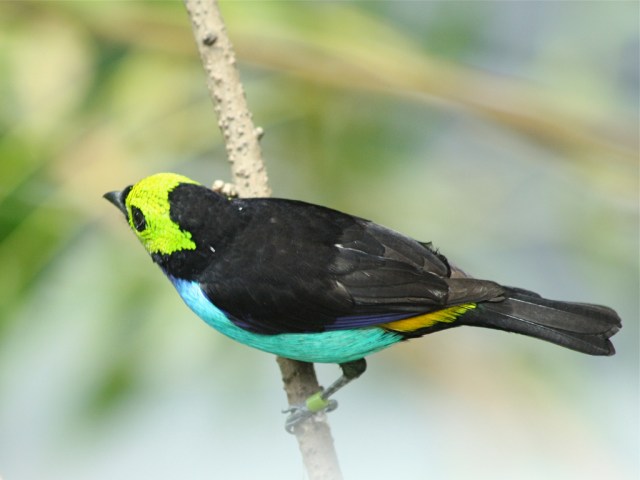
2981087747_5d4a822642_o

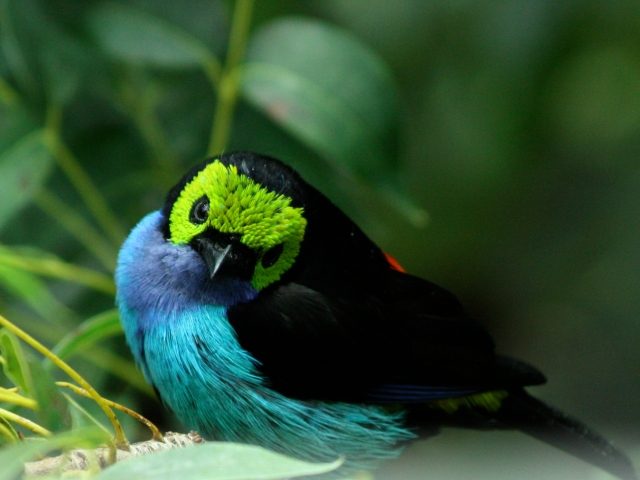
GENERAL CHARACTERISTICS: In Spanish, called “sieite colores” for its seven-colored appearance: green, yellow, scarlet, black, and three colors of blue feathers adorn this handsome bird. Monomorphic (males and females look similar). Length 13.5 to 15 cm 5.3 to 6 inches.

DISTRIBUTION/HABITAT: South America: common in Venezuela, Peru, Columbia, Ecuador, Brazil. Found in the canopy and edges of subtropical to tropical lowland humid forests, including parts of the Amazon basin and upwards to 1400 m (4500 feet). Often moves in mixed flocks.

DIET IN THE WILD: Mainly fruit, buds, leaves. Forage from middle heights to treetops. Also, like other  tanagers, picks insects from leaves or sometimes takes them in flight. Often moves and feeds in mixed flocks.

Paradise Tanager   3259028446_790c536452_b

REPRODUCTION: Female builds a cup nest where she lays two or three brown or lilac-speckled white eggs. Eggs hatch in 13–14 days; chicks fledge in additional 15–16 days. Nestlings are feed insects and fruit by both male and female..

CONSERVATION: IUCN, least concern.

Rainforest.

1-8-09, 11-11-11

flickr  http://www.flickr.com/photos/cas_docents/3259028446/in/set-72157608454346681

WordPress Shortlink  http://wp.me/p1DZ4b-15F

TAXONOMY
Kingdom: Animalia
Phylum: Chordata
Class: Aves
Order: Passeriformes
Family: Thraupidae

Genus/species: Tachyphonus phoenicius

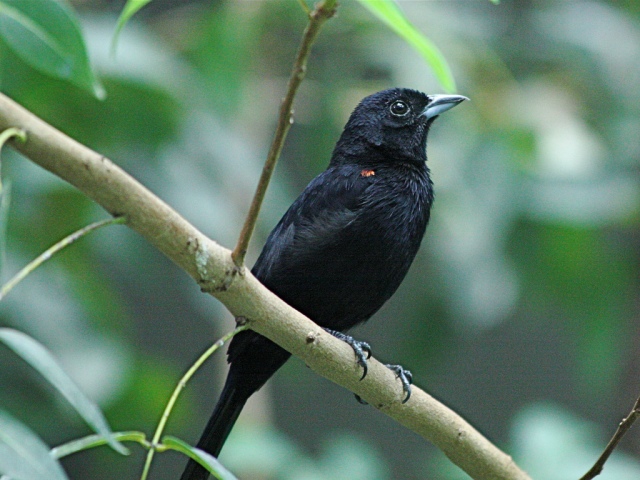
Red-shouldered Tanager (male) 3334159981_db9f81a402_b

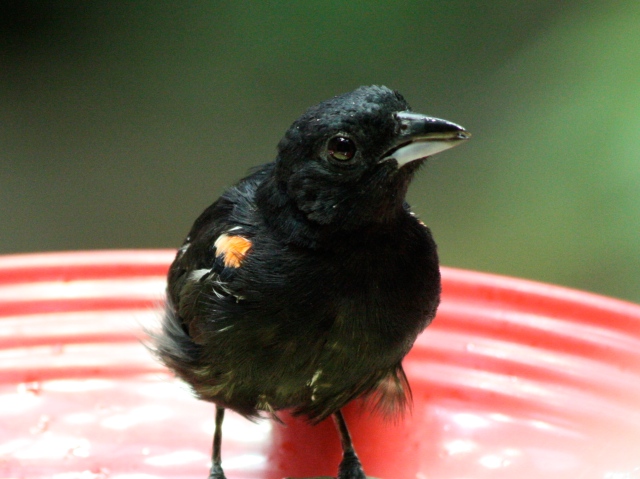
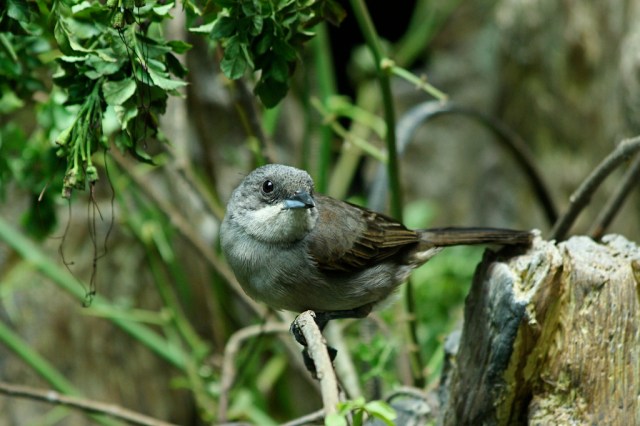
GENERAL CHARACTERISTICS: Males are basically all black, with a tiny red and white patch on the shoulder region and white underwing linings. Females, are brownish gray above, while the throat and middle abdomen are white. Pairs of Red-shouldered Tanagers usually forage in close proximity, low down, but often keeping within cover. Length 16-17 cm (6.3-6.7 inches).

Male above and below

Red-shouldered Tanager (male) 3186809464_2c975c664e_o

DISTRIBUTION/HABITAT: Bolivia, Brazil, Colombia, Ecuador, French Guiana, Guyana, Peru, Suriname, and Venezuela. Found in dry shrubland or seasonally wet or flooded lowland grassland. Also open rainforest, to 2000 m (6500 feet).

DIET IN THE WILD: Insects and fruit.

female below

Red-shouldered Tanager (female) 3105184668_a8dfdddccd_b

CONSERVATION: IUCN, least concern (population trend stable).

flickr http://www.flickr.com/photos/cas_docents/sets/72157608454346681/with/3334159981/

WordPress Shortlink  http://wp.me/p1DZ4b-15y


TAXONOMY:
Kingdom: Animalia
Phylum: Arthropoda
Class: Insecta
Order: Lepidoptera (moths and butterflies)
Family: Pieridae (Whites and Sulfurs)

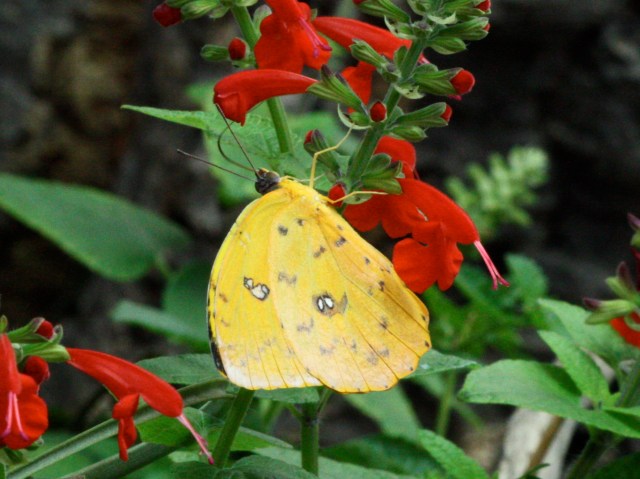
Genus/species: Phoebis philea 

3201526951_715a363cc4_o

GENERAL CHARACTERISTICS: Upperside of male bright yellow-orange; forewing has red-orange bar, hindwing with red-orange outer margin. Female much larger than male with prominent dark spots along the upper forewing. Wing Span: 2 3/4 – 4 inches.

DISTRIBUTION/HABITAT: Resident from Brazil, north through Central America to peninsular Florida. Migrants appear sometimes along the Gulf States, in eastern Arizona and in New Mexico along the border. During dry years, some migrate to the Northeast. P. philea has been considered a transient resident of Southern California. Found in open lowland sites along forest edges. Also frequents gardens, parks, and road edges.

Orange Barr Sulphur 3128915093_cd28b8bf32_o

DIET IN THE WILD: Caterpillar: Cassia species in the pea family; adult: nectar from various flowers.

REPRODUCTION: Females lay single eggs on leaves and flowers of host plants during the wet season. Caterpillars feed preferentially on the flowers.

REMARKS: These swift, high flyers have been reported as rare migrants as far north as Canada.

flickr http://www.flickr.com/photos/cas_docents/sets/72157608449327886/with/3201526951/

WordPress Shortlink  http://wp.me/p1DZ4b-14i

TAXONOMY
Kingdom: Animalia
Phylum: Arthropoda
Class: Insecta
Order: Lepidoptera (moths and butterflies)
Family: Nymphalidae (Brush-footed Butterflies)

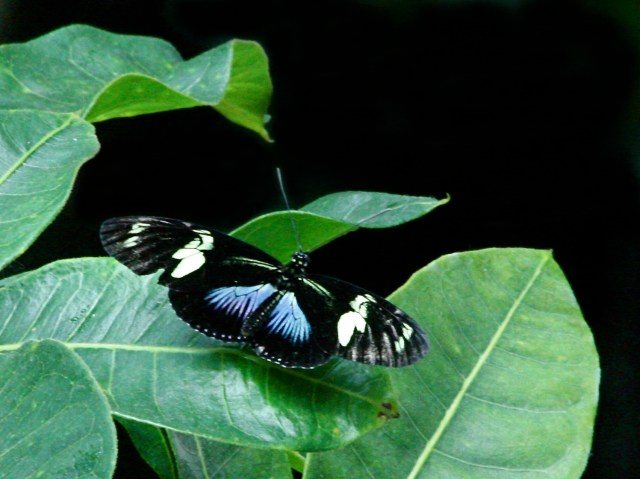
Genus/species: Heliconius doris

Blue morph

Doris Longwing (blue morph)  3267097210_300ac83016_o

GENERAL CHARACTERISTICS: Appears in several color morphs; hindwing markings may be red-orange, blue, or green. Two white markings on forewing.

Doris Longwing red morph Heliconius doris light sm text

DISTRIBUTION/HABITAT: Central America to northwestern Amazonia. Found from sea level to 1,800 m (5,900 feet) in forest clearings. Fly and feed mostly in the mid-story.

DIET IN THE WILD: Nectar and pollen.

Wing underside

Doris Longwing 4747129049_3c7123e657_b

PREDATORS: Eaten by birds.

REMARKS: Heliconians are unique. Unlike other butterflies, they not only sip nectar, but also use their proboscises to collect and absorb the protein from pollen. This amino acid-rich diet allows them to function and live longer than most other butterflies. Adults can live for up to 9 months.

flickr http://www.flickr.com/photos/cas_docents/sets/72157608449327886/

WordPress Shortlink   http://wp.me/p1DZ4b-13s

TAXONOMY
Kingdom: Animalia
Phylum: Chordata
Class: Actinopterygii (ray-finned fishes)
Order: Perciformes (Perch-likes)
Family: Cichlidae (Cichlids)

Genus/species: Tilapia buttikoferi

Hornet Tilapia 4562623192_2331f3feaf_b-2

GENERAL CHARACTERISTICS: Length to 12 inches. Color is yellowish-grey, with 7-8 broad, oblique brownish-black bars, broader than the light spaces

DISTRIBUTION/HABITAT: Native to Western Africa. Found in coastal rivers and streams.

DIET IN THE WILD: A voracious omnivore, T. buttikoferi feeds on fish and crustaceans and vegetable matter.

CONSERVATION: IUCN least concern.

Hornet Tilapia 9260875598_b14d228439_o

REMARKS: After salmonids and carps, tilapia are fast growing and easily bred. Tilapia are the most important fishes in aquaculture by the gross weight of production. They have imported and bred throughout the world for both aquatic and nutritious purposes and are legal in Texas and Florida.

Swamp Cichlids SW02

flickr  http://www.flickr.com/photos/cas_docents/sets/72157627952093337/with/4562623192/

WordPress Shortlink  http://wp.me/p1DZ4b-12j

TAXONOMY
Class: Actinopterygii (ray-finned fishes)
Order: Perciformes (Perch-likes)
Family: Percidae (Perches)

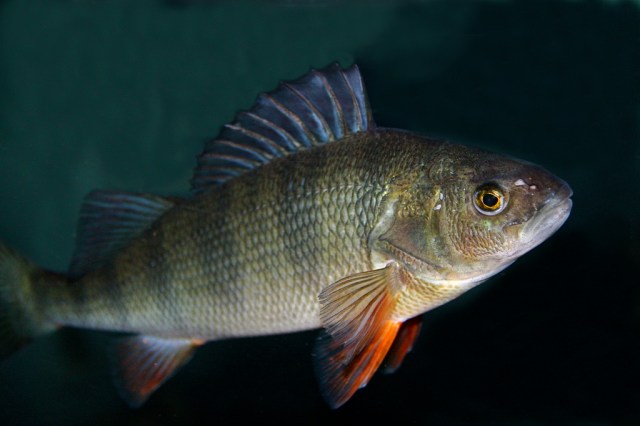
Genus/species:  Perca flavescens 

Yellow Perch 3270754327_18c03d6f85_b

GENERAL CHARACTERISTICS: Background color yellowish
overlaid by 6–8 dark vertical bars on the sides. Sexual dimorphism: females grow faster and become larger than males. Max. size: ~50 cm (20 inches), common length 19 cm (7.5 inches).

DISTRIBUTION/HABITAT: West central Canada and the Hudson Bay area east to New Brunswick, south to South Carolina, and west to Kansas. Also found in the Atlantic, Arctic, and Great Lakes. Found in freshwater lakes as well as impoundments of larger rivers, also smaller ponds and rivers. Known in both brackish water and salt lakes. Prefers clear water, though can tolerate low oxygen levels.

DIET IN THE WILD: P. flavescens have small backward slanting teeth lining the jaws and gill rakers that strain out small pelagic food sources from the water such as insects, larger invertebrates, fishes and fish eggs. Diurnal feeder.

PREDATORS: Fishes and birds.

LONGEVITY: To 12 years.

CONSERVATION: IUCN Not listed but fishing has been restricted in some Great kale states do to fluctuating populations.

REMARKS: Marketed as a common food fish with a commercial fishery in Lake Michigan, Lake Erie, and Lake Huron.

Water Planet, Water Temperature (perch under ice) WP10

flickr  http://www.flickr.com/photos/cas_docents/sets/72157608608528651/with/3270754327/

WordPress Shortlink http://wp.me/p1DZ4b-120

TAXONOMY
Kingdom: Animalia
Phylum: Chordata
Class: Actinopterygii (ray-finned fishes)
Order: Perciformes (Perch-likes)
Family: Cichlidae (Cichlids)

Genus/species: Herichthys cyanoguttatus

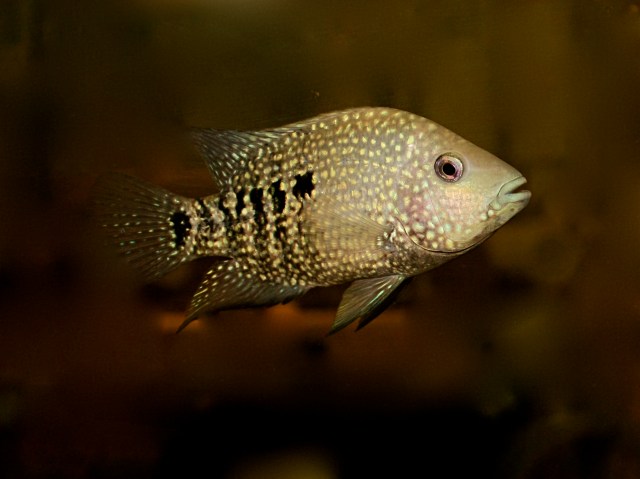
Texas Cichlid aka Rio Grande Cichlid  2999113747_5988dd62cb_o

GENERAL CHARACTERISTICS: Light grey with many small turquoise to white dots over the body. A single black spot on central side and second spot on the caudal peduncle; three black bars behind central spot. Max. length: 30 cm (12 inches), common length : 11.3 cm (4.5 inches)

DISTRIBUTION/HABITAT: Originally restricted to the lower Rio Grande drainage in Texas and south to northeastern Mexico. Introduced to central Texas and central Florida. Found in pools and open runs of rivers; prefers warm water and areas with vegetation.

DIET IN THE WILDt: Worms, crustaceans, insects, and plant matter. Sorts through mouthfuls of gravel, eats the small animals, and spits out the rest.

2999122499_4e5fd3ed0b_o

REMARKS: Considered a game fish in Texas and Mexico. This species is the only cichlid native to the U.S.

Swamp, SW08 Alligator Gars

flickr  http://www.flickr.com/photos/cas_docents/sets/72157608608528651/with/2999113747/

WordPress Shortlink http://wp.me/p1DZ4b-11T