Latest Entries »

TAXONOMY
Kingdom: Animalia
Phylum: Chordata
Class: Amphibia
Order: Anura
Family: Hyperoliidae

Genus/species: Heterixalus alboguttatus
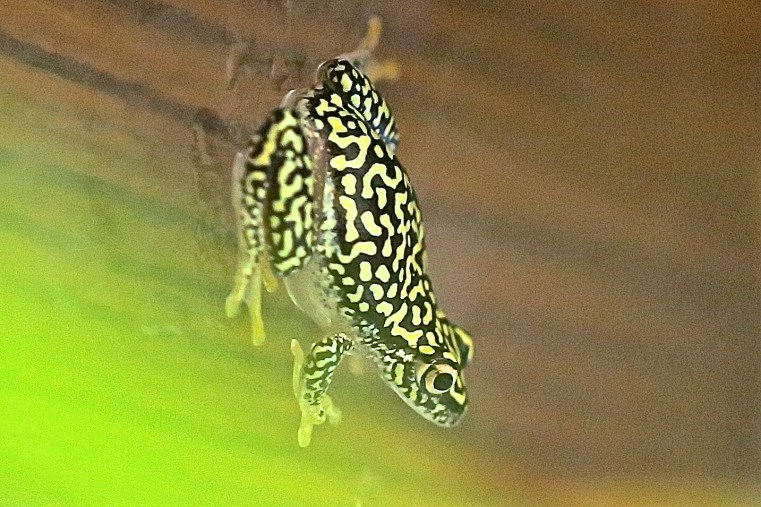
Starry Night Reed Frog IMG_7439

GENERAL CHARACTERISTICS:  Back or dark grey, with orange spots in the shade and whitish with yellow spots (bordered with black) in the sun. Thighs, ventral surface of limbs, and hands and feet are orange.  Length females to 33 mm (1.3 inches).

DISTRIBUTION/HABITAT:  Southeastern lowlands of Madagascar from sea level up to at least 800m (2600 feet).  It is a species of open areas, including savannahs, degraded habitats, agricultural areas, grasslands, and rice fields. They inhabit riparian zones, where a body of water (mainly a pond) meets the land. Among emergent vegetation, reed frogs spend the day sleeping on the underside of leaves.

DIET IN THE WILD: Insects.
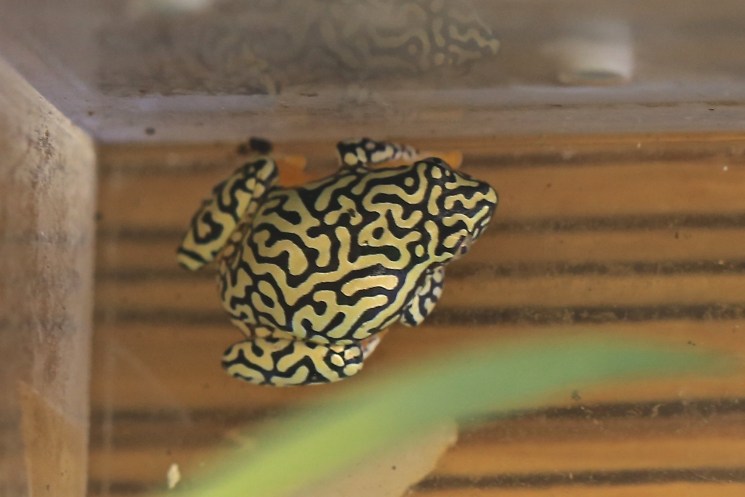
Heterixalus alboguttatus14224581291_df17a8b4da_o

REPRODUCTION: H. alboguttatus breeds in a wide variety of temporary and permanent water bodies, including rice fields. They are very easy to breed in captivity.

CONSERVATION: IUCN Least Concern (LC)
Has a wide distribution, tolerance of a broad range of habitats and presumed large population. Starry night reed frogs have been imported directly from Madagascar several times over the past decade. These imports are the foundation of the captive population of H. alboguttatus in the United States today.

Madagascar MA12

References

IUCN Red List  www.iucnredlist.org/details/56096/0

Amphibiaweb  amphibiaweb.org/cgi/amphib_query?where-genus=Heterixalus&…

Josh’s Frogs  www.joshsfrogs.com/starry-night-reed-frog-sexed-trio.html

Ron’s flickr https://www.flickr.com/photos/cas_docents/14224581291/in/album-72157620708610230/

Ron’s WordPress Shortlink http://wp.me/p1DZ4b-119
TAXONOMY
Kingdom: Animalia
Phylum: Chordata
Class: Amphibia
Order: Anura
Family: Microhylidae

Genus/species: Dyscophus antongilli


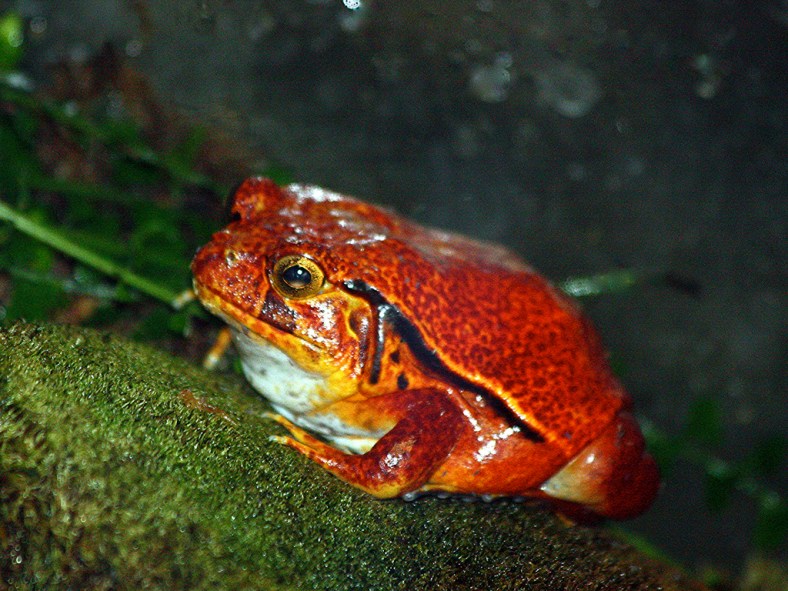
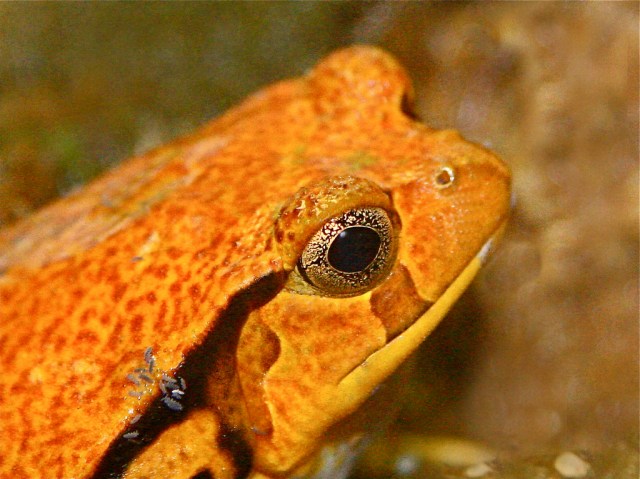
GENERAL CHARACTERISTICS: Female is larger with vivid orange-red body (looking not unlike a rather oddly shaped ripe tomato); male less brightly colored. Flat head. Length to 12 cm (4.6 inches).

Very similar and possibly conspecific to D. guineti which differs by color pattern.

 3284963093_d90c68f8ef_b

DISTRIBUTION/HABITAT: Northeast Madagascar primarily terrestrial in lowland habitats.It appears to be localized to sandy ground near the coast, and breeds in ditches, flooded areas, swamps, and temporary and permanent still or very slowly flowing water. Buries itself in soil during the day; feeds nocturnally. Found at sea level to elevations of around 200 meters (650 feet).

3192744135_d56b668f32_b

DIET IN THE WILD: Insects.

REPRODUCTION: Breeds in pools and ditches after heavy rainfall. Lays eggs in water during the rainy season. Fertilized eggs hatch into free-swimming tadpoles.

MORTALITY: Estimated to live ~10 years in the wild.

 3185775107_caaf927397_b

CONSERVATION: IUCN Red List Nearly Threatened (NT) CITES Appendix I

Pollution of water bodies is a potential threat, and in the past this species was subject to collection for international trade, although this is now largely under control and restricted.

The Baltimore Zoo is actively involved in several other tomato frog conservation projects.

REMARKS: When alarmed, secretes a very sticky goo onto its skin, a defense against predators which also may substance may produce allergic reactions in humans. When threatened, these frogs can inflate themselves, giving the appearance of greater size.

Madagascar MA08

References

EOL  eol.org/pages/333037/details

IUCN Red List www.iucnredlist.org/details/6937/0

University of Michigan www.umich.edu/~esupdate/library/97.09-10/wisnieski.html

AmphibiaWeb  amphibiaweb.org/cgi/amphib_query?where-genus=Dyscophus&am…

ARKive www.arkive.org/tomato-frog/dyscophus-antongilii/image-G11...

Ron’s flickr  https://www.flickr.com/photos/cas_docents/3284963093/in/set-72157620708610230/

Ron’s WordPress shortlink  http://wp.me/p1DZ4b-1si


TAXONOMY
Kingdom: Animalia
Phylum:  Chordata
Class: Amphibia
Order: Anura
Family: Mantellidae

Genus/species: Mantella viridis

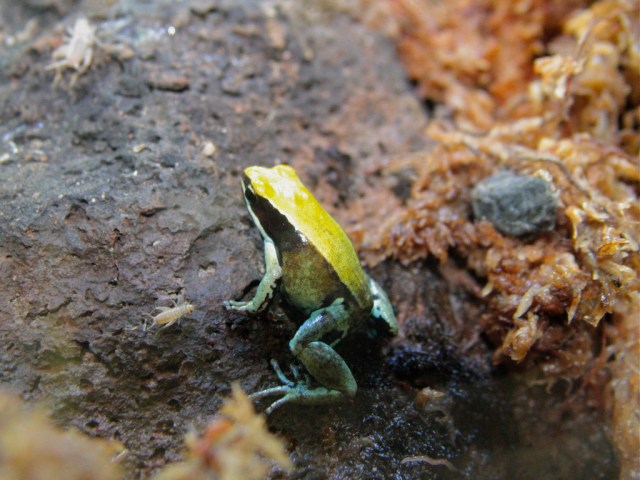
GENERAL CHARACTERISTICS: The back and sides are yellow-green; ventral parts are black with blue spots. The toes are not webbed. A light stripe runs along the upper lip. M. viridis is one of the biggest of the Madagascar mantella frogs; max length: 3.5 cm (1.37 inches).

3407271755_080ecf20e7_b

DISTRIBUTION/HABITAT: Endemic to Madagascar. Inhabits deciduous forests. Usually found around temporary streams. Also lives in degraded mango plantations.

DIET IN THE WILD: Diurnal predators, eating mainly insects, ants, and termites. May also eat fruit that has fallen to the ground.

REPRODUCTION: Between 15 and 60 greenish-yellow eggs are laid in cavities under rocks and in the trunks of dead trees. They hatch into tadpoles during heavy rainfall, which washes them into small pools of water (

CONSERVATION: IUCN Red List Endangered (EN)
The main threat is habitat loss, due to the impacts of fires, logging and livestock grazing. It is also affected by the drying out of smaller streams following forest loss. It has been recorded in the pet trade in relatively large numbers, although this is now greatly reduced.

REMARKS: Many species of tropical frogs sequester toxins in their skins. In most cases these toxins come from eating toxic arthropods such as ants. During the past 30 years, over 400
alkaloids of over 20 structural classes have been detected. The skin of Mantella viridis has been shown to contain such toxins.

3708490144_dd425c4260_b

Rainforest Madagascar Exhibit MA10

References

ARKive  www.arkive.org/green-mantella/mantella-viridis/

IUCN Red List: www.iucnredlist.org/details/57451/0

flickr  http://www.flickr.com/photos/cas_docents/sets/72157608456457315/with/3708490144/

WordPress Shortlink  http://wp.me/p1DZ4b-Na

TAXONOMY
Kingdom: Animalia
Phylum: Chordata
Class: Reptilia (snakes, worm lizards, lizards, alligators, caimans, crocodiles, tortoises, turtles, and tuataras)
Order: Squamata (scaled reptiles, all lizards and snakes)
Family: Gekkonidae
Subfamily: Gekkoninae (Geckos)

Genus/species: Phelsuma grandis

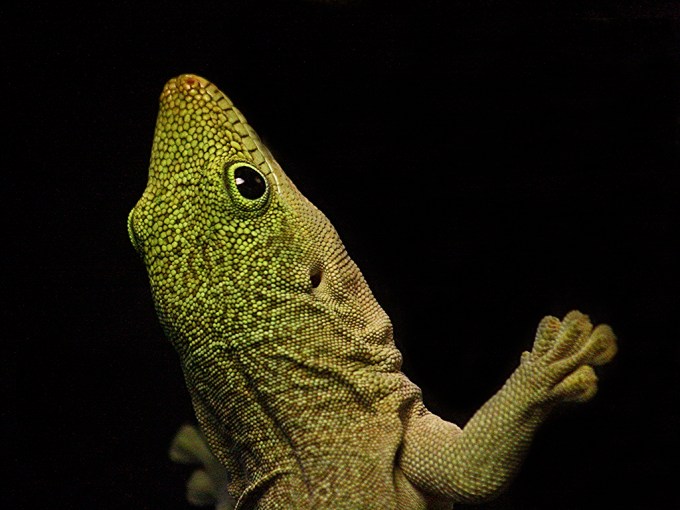
GENERAL CHARACTERISTICS: Largest species of the genus Phelsuma, 23–27 cm (9-10.6 in). They are bright green, with granular red spots on the body and a red line running from the eye to the tip of the nose. Eye color is much like the skin color. blending into their heads and surroundings. The eyes are surrounded by blue rings, have round pupils, indicative of a diurnal life style.

16492091872_3510b6b6b2_o

DISTRIBUTION/HABITAT: Northern Madagascar, Seychelles, and smaller islands close to Madagascar. Found in the canopy of tropical rain forests and on the walls of buildings in towns and villages.

DIET IN THE WILD: Mostly insects and other invertebrates; also soft sweet fruit, nectar, and pollen.

REPRODUCTION: Breeding season is between November and the first weeks of May. During this period, the females lay up to 6 pairs of eggs which hatch after approximately two months.

MORTALITY AND LONGEVITY: They live up to 10 years in captivity.

15639828877_f1c7063e96_h

CONSERVATION: Widespread in northern common and tolerant of disturbance within its known range. There are no known major threats.

REMARKS Many geckos can make sounds to attract mates, to advertise their territories, to warn off unwanted intruders or to frighten predators. Geckos do not have eyelids. Instead the lids have fused, and the eye is covered with a large transparent scale. Geckos keep their eyes clean by licking them with their broad flat tongues.

Madagascar MA08

References

California Academy of Sciences Docent Rainforest Training Manual 2014

IUCN Red List Least Concern (LC) www.iucnredlist.org/details/193490/0

Encyclopedia of Life  eol.org/pages/2448279/details

Ron’s WordPress shortlink http://wp.me/p1DZ4b-U7

Ron’s flickr https://www.flickr.com/photos/cas_docents/16492091872/in/set-72157620708610230/

TAXONOMY
Kingdom: Animalia
Phylum: Chordata
Class: Reptilia (snakes, worm lizards, lizards, alligators, caimans, crocodiles, tortoises, turtles, and tuataras)
Order: Squamata (Lizards and Snakes)
Suborder Sauria (Lizards)
Family: Gekkonidae (Geckos)

Genus/species: Uroplatus henkeli

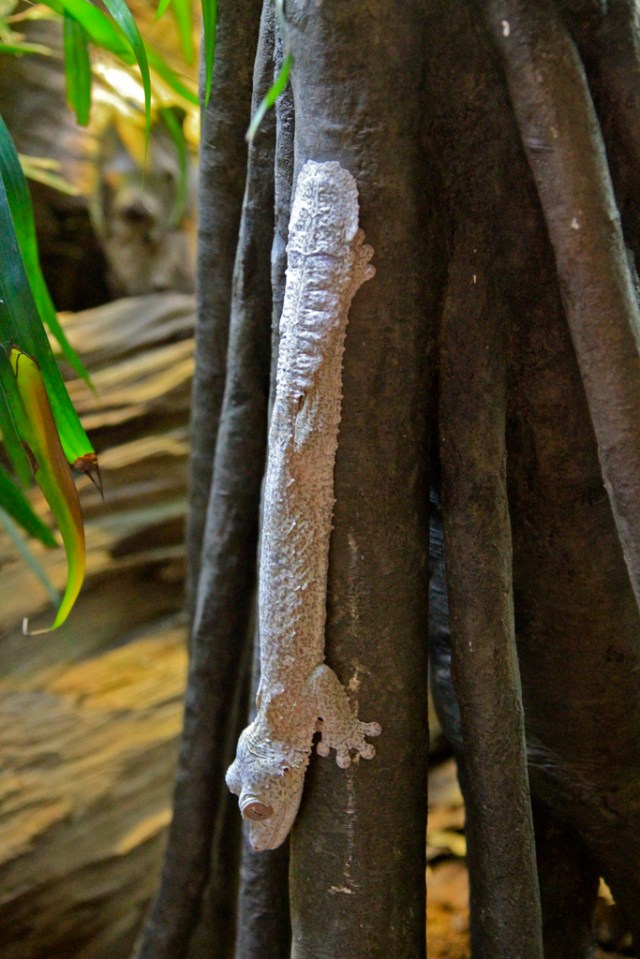
Henkel's Leaf-tailed Gecko 4226839485_62145bf20d_b

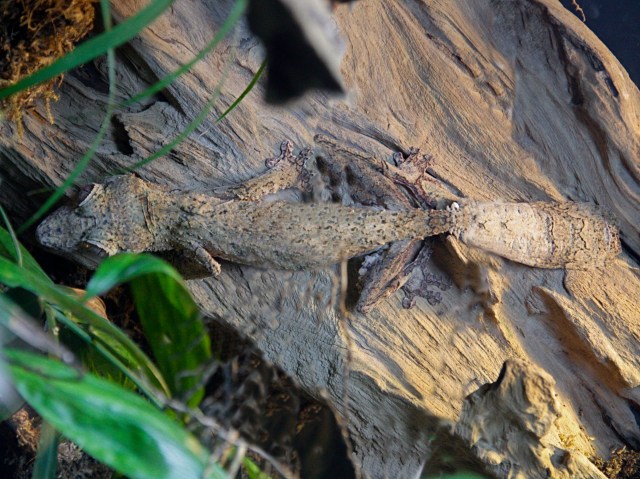
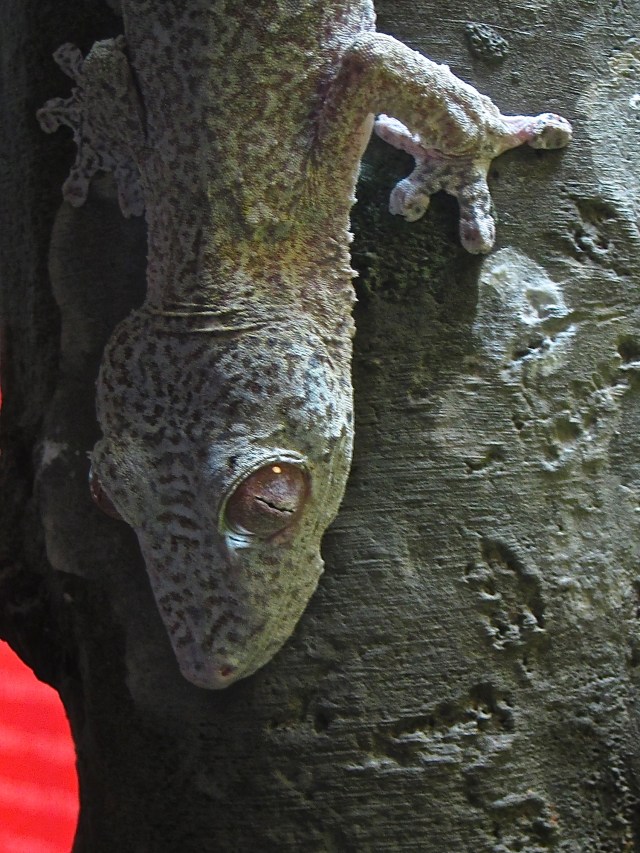
GENERAL CHARACTERISTICS A master of camouflage: its grey-brown skin blends in with the colors of tree bark. The fringes of skin along its head and body mask shadows by breaking up the. outlines of its body. The charcoal/light grey patterns on some individuals’ bodies look like lichen. The short flat tail, for which the genus was named (uro – “flat,” platus – “tail”), looks like a dead leaf. The bulging eyes on its flat triangular head have pupils with vertical slits, an indication of a nocturnal life style. Size to 255 mm (10 inches).

DISTRIBUTION/HABITAT Madagascar rainforest vegetation just a few metres off the ground

DIET IN THE WILD Nocturnal predator, eats mainly insects.

Henkel's leaf-tailed  Gecko  Uroplatus henkeli IMG_0394

REPRODUCTION: Eggs are deposited on the forest floor hidden under fallen leaves, beneath pieces of wood, or among dead leaves still attached to a plant. Juveniles hatch following a three-month incubation period.

MORTALITY Life span in the wild believed to be 3–5 years. Species has lived up to 15 years in captivity.

CONSERVATION IUCN Vulnerable from continued destruction of Madagascar forests. 

Listed in Appendix II of CITES.


REMARKS: To help escape predators. Like most lizard species, geckos can shed their tails. A new, shorter tail composed of cartilage will grow back. It can also frighten enemies by opening its mouth wide revealing a bright red interior. Also some geckos, including this one, have vocal cords, the only lizards that do. Its defensive behavior is often accompanied by loud distress calls.

Henkel's Leaf-tailed Gecko IMG_0742

Madagascar MAO7

References

California Academy of Sciences  Docent Rainforest Training Manual 2014

Encyclopedia of Life  eol.org/pages/961880/details

IUCN Red List:  www.iucnredlist.org/details/178653/0

Ron’s WordPress shortlink  http://wp.me/p1DZ4b-Uo

Ron’s flickr  http://www.flickr.com/photos/cas_docents/sets/72157608449603666/with/4226839485/

TAXONOMY
Kingdom:Animalia
Phylum: Chordata
Class: Reptilia
Order: Squamata (scaled reptiles, all lizards and snakes)
Family: Gekkonidae (Geckos)

Genus/species: Phelsuma standingi

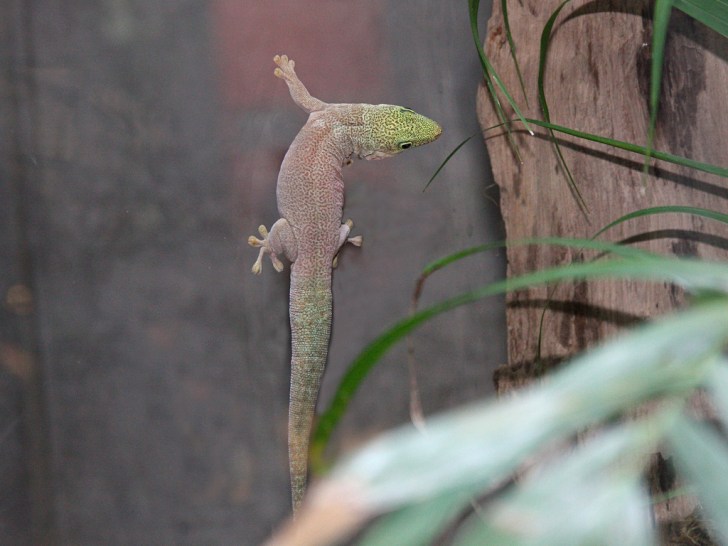
GENERAL CHARACTERISTICS: Base color is usually light gray or brown with darker fine reticulations. If inactive, the coloration of this day gecko is often duller, giving it an overall grey appearance. When cool it takes on darker colors to help absorb light and heat and when hot it turns pale. Hatchlings have a yellowish-green head and typical light bands and bars on their backs. Large for a gecko, to 30 cm (11.75 inches) in length.

 3268112303_e60d08c407_b

DISTRIBUTION/HABITAT: They have a limited range within southwest Madagascar, preferring dry thorn forests and arid to semi-arid regions where vegetation consists of thorny succulent plants and baobab trees.    

DIET IN THE WILD: Diurnal; feeds on insects, fruit, nectar and possibly other lizards. 


3496930709_f260501cc1_b


REPRODUCTION: Established adult pairs will tolerate juveniles until they reach sexual maturity. Eggs are most often laid in pairs that are “glued” to each other. As in many reptile species, sex of newborns is temperature dependent.

LONGEVITY: Captivity to 12 years, wild 5 years.

PREDATORS: Snakes and birds of prey.

CONSERVATION: IUCN Red list: Vulnerable (VU) 

Populations numbers are thought to have declined in the 1990s due to heavy collecting for the pet trade.

Color of Life: Madagascar geckos are often either green or brownish, providing concealment in the rainforest.

References

California Academy of Sciences Docent Rainforest Training Manual 2014

ARKive  www.arkive.org/banded-day-gecko/phelsuma-standingi/

Encyclopedia of Life  eol.org/pages/791137/details

IUCN Red List  www.iucnredlist.org/details/16947/0

Ron’s flickr  www.flickr.com/photos/cas_docents/3268112303/in/set-72157…

https://www.flickr.com/photos/cas_docents/3779080187/in/album-72157652559028013/

Ron’s WordPress shortlink  wp.me/p1DZ4b-1s3


TAXONOMY
Kingdom: Animalia
Phylum: Chordata
Class: Actinopterygii (ray-finned fishes)
Order: Cyprinodontiformes (Rivulines, killifishes and live bearers)
Family: Aplocheilidae (Killifishes)

Genius/species: Pachypanchax patriciae

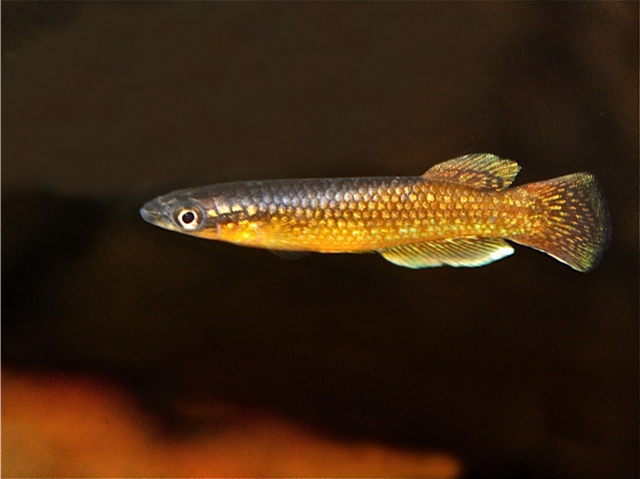
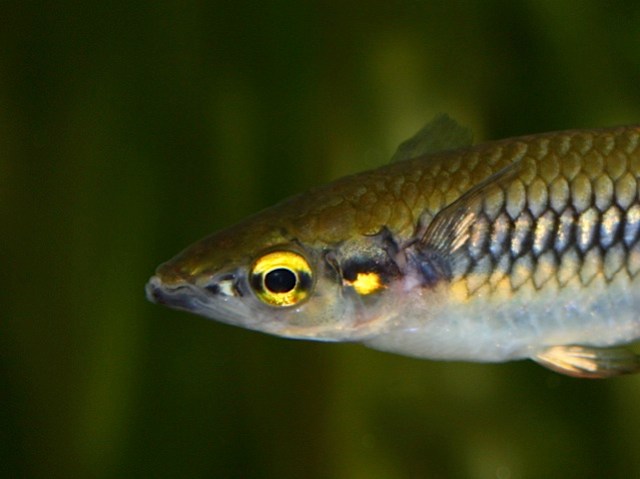
GENERAL CHARACTERISTICS: Dark longitudinal stripe, ca. one scale row deep, extending from posterior margin of eye to origin of pectorals. Males display two color morphs: red and blue. Red males become less common and disappear completely as one moves from north to south. Length to 5.2 cm (2 inches)

DISTRIBUTION/HABITAT: Madagascar small tropical rivers and streams. Tolerates conditions from water deficient in dissolved substances to water with high concentrations of dissolved minerals, pH values from acidic to slightly alkaline. Bottom dweller.

DIET IN THE WILD: Terrestrial and aquatic insects

PREDATORS: Mostly by birds, dragonfly nymphs and other predatory insects as well as piscivorous fishes.


CONSERVATION: IUCN AND CITES Not Evaluated

LOCATIONRainforest Madagascar MA05

References

fishbase  www.fishbase.us/summary/63019

arkive  www.arkive.org/pachypanchax/pachypanchax-patriciae/image-…

EOL  eol.org/pages/993340/details

Ron’s flickr http://www.flickr.com/photos/cas_docents/sets/72157627949403670/

Ron’s WordPress shortlink  http://wp.me/p1DZ4b-z6

TAXONOMY
Kingdom: Animalia
Phylum: Chordata
Class: Actinopterygii (ray-finned fishes)
Order: Atheriniformes (Silversides)
Family: Bedotiidae (Madagascar rainbowfishes)

Genus/species: Bedotia madagascarensis

GENERAL CHARACTERISTICS: Second dorsal fin is golden-yellow basally, with a dark red margin and broad black submarginal band. Anal fin similarly colored, but a golden-yellow zone is sandwiched between a narrow black basal and a broader black submarginal band. Males are conspicuously more colorful than females with more distinct markings and redder tails. Length to 9 cm (3.5in).


DISTRIBUTION/HABITAT: Endemic to Madagascar’s coastal rivers. Found in well-shaded slow-flowing streams at altitudes up to 30 meters (100 feet) above sea level.

DIET IN THE WILD: Insects and their larvae, crustaceans and other small invertebrates.

REPRODUCTION: Sexes are separate. Fertilization is external. Eggs are broadcast in open water and not guarded.
Mortality/Longevity: Lifespan about 5 years.

CONSERVATION: IUCN Red List Near Threatened (NT)
Limited range, habitat degradation and exotic predators such as (Gambusia holbrooki) and competitors (Xiphophorus spp.).

Sexes are separate. Fertilization is external. Eggs are broadcast in open water and not guarded.
Mortality/Longevity: Lifespan about 5 years.

LOCATION: Rainbowfish of  Madagascar  MD05

References

Encyclopedia of Life  eol.org/pages/343730/details

arkive  www.arkive.org/zono/bedotia-madagascariensis/image-G52355…

fishbase www.fishbase.org/summary/Bedotia-madagascariensis.html

IUCN  www.iucnredlist.org/details/2721/0

Ron’s flickr http://www.flickr.com/photos/cas_docents/sets/72157627949403670/

Ron’s WordPress shortlink  http://wp.me/p1DZ4b-yY


TAXONOMY
Kingdom: Animalia
Phylum: Chordata
Class: Reptilia
Order: Squamata
Family: Gekkonidae (Geckos)

Genus/species: Phelsuma klemmeri

IMG_0913

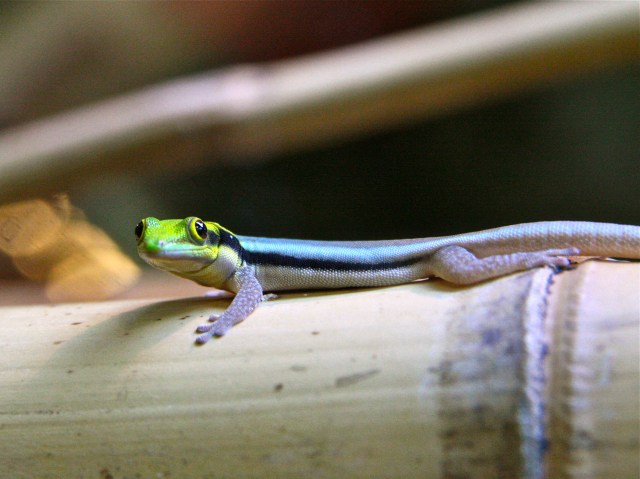
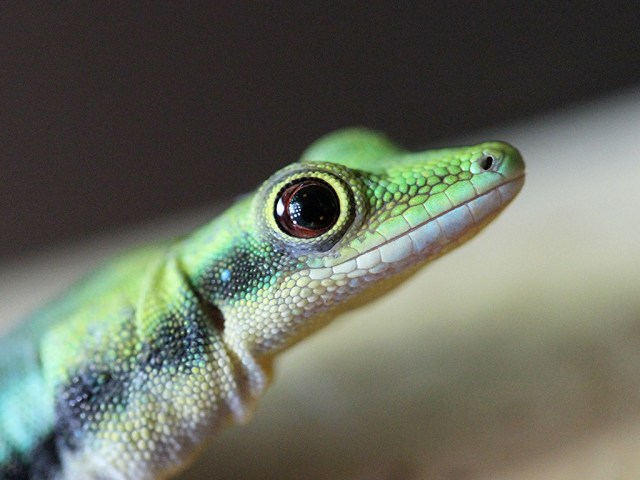
GENERAL CHARACTERISTICS: Dorsal color is brown to turquoise with turquoise bands. A black lateral line runs from the eyes to the hind legs. The head and neck are yellow. The ventral surface is whitish; scales are small and smooth. Adults are about 9 cm (3.5 in) long.

DISTRIBUTION/HABITAT: Found only in northwest Madagascar among medium-sized bamboo in fragmented “bamboo islands.” When disturbed they hide in the cracks in older dead bamboo.

Phelsuma klemmeri 4813861605_40e1c52a37_b

DIET IN THE WILD: Insects, other invertebrates and soft sweet fruit, pollen and nectar. In the wild, they avoid the hotter part of the day and usually hunt and forage in the early morning, late afternoon, or right after a shower.

DIET IN CAPTIVITY: A variety of insects, including crickets and fruit flies, but will also eat fruit baby foods. They also eat fruits such as guava, papaya, and peaches.

REPRODUCTION: Females lay eggs every 3 to 5 weeks. Like most geckos, she usually lay two eggs at a time, often inside a hollow piece of bamboo. The babies are iridescent and look like tiny copies of the adults. Newborns weigh a mere 0.1 g at birth.

CONSERVATION: IUCN Endangered (EN)
it is known from only two locations and occurs as a severely fragmented population, and there is a continuing decline in the extent and quality of forest habitat within its range.

REMARKS: First described in 1990.

Geckos have very special feet that contain millions of hairs capable of producing electrical forces, probably van der Waals forces. These forces, which are molecular and not caused by a sticky substance, allow the gecko to attract any surface, even polished glass.

Rainforest Madagascar with Madagascar Tree Boa MA06

References

California Academy of Sciences Docent Rainforest Training Manual 2014

IUCN Red List  www.iucnredlist.org/details/172981/0

phelsumania www.phelsumania.com/public/systematics/species/phelsuma_k…

Ron’s WordPress shortlink http://wp.me/p1DZ4b-TM

Ron’s flickr https://www.flickr.com/photos/cas_docents/3707689563/in/set-72157620708610230

TAXONOMY
Kingdom: Animalia
Phylum: Chordata
Class: Amphibia
Order: Anura
Family: Mantellidae

Genus/species: Mantella baroni

4708448392_717d47ae1f_b

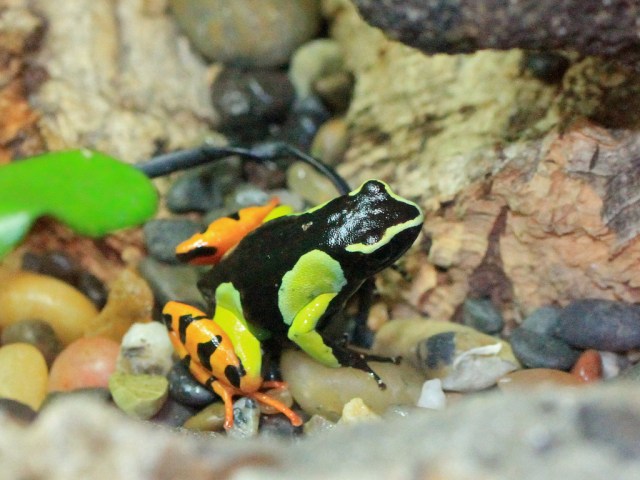
GENERAL CHARACTERISTICS: Has vibrant warning colors of black, orange, and yellow or green. The eye iris is black. Unlike many other frogs, mantella frogs move through trees and on the jungle floor, thus they do not have a need for webbed feet. 2.5-3.2 cm (1.0-1.3 inches) in length.

DISTRIBUTION/HABITAT: Widely distributed throughout east-central Madagascar. It is terrestrial found in forest and in slash-and-burn areas, often at considerable distance from forest. Males can be found calling loudly during the day, exposed near the sides of streams and surrounding forests.

DIET IN THE WILD: Insects including termites, fruit flies, and ants due to the fact that their meals provide them with alkaloid toxins.

REPRODUCTION: Eggs are laid on land, and the larvae are washed by rain into streams, where they develop.

CONSERVATION: IUCN: Red List; Least Concern (LC)
Has a wide distribution and is tolerant to habitat modification.

REMARKS: Secretes allopumiliotoxin 267A, which is one of the most toxic compounds but not strong enough to kill other predators. Their poison can make dangerous creatures sick. In captivity, the frog loses its toxicity as a result of an altered diet.

Painted Mantella

Rainforest Madagascar MA06

REFERENCES

Encyclopedia of Life  eol.org/pages/329310/details

IUCN www.iucnredlist.org/details/57438/0

Ron’s http://www.flickr.com/photos/cas_docents/sets/72157608456457315/

Ron’s WordPress shortlink  http://wp.me/p1DZ4b-Lt

Frogs cc  frogs.cc/mantella-frog-baroni/