Category: TROPICAL MARINE


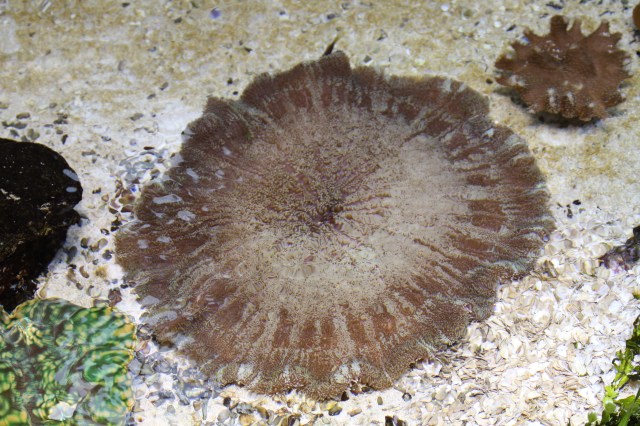
1-5-12 Haddon’s Carpet Anemone from Ron’s Anemone Series

Stichodactyla haddoni    (Stichodactylidae).
DISTRIBUTION:  Indo Pacific and Red Sea.  

HABITAT: Outside of the reef it resides in soft muddy or sandy substrate.  

APPEARANCE: Identified by its thick central column with large pedal disc, very short, stubby tentacles and tentacle-free oral area, and attains a diameter of about 60 cm.  Can be distinguished from their close relatives Stichodactyla gigantea and Stichodactyla mertensii by the lack of any coloration, spots or markings on the underside of the anemone and down its column

DIET: It consumes any and all animal matter that comes in contact with its tentacles. 

REMARKS: serves as a host for many types of Clownfish in the wild including: Amphiprion clarkii shown here.   S. haddoni has a very potent venomous sting and may harm corals, other anemones and fish.   Most animals that come in contact with the tentacles of Haddon’s anemone will stick to the anemone and be killed by its nematocysts in a few seconds to a few minutes.  May bury itself in sand if threatened.

LOCATION PR03  Seagrass shallows

WORDPRESS SHORTLINK  http://wp.me/p1DZ4b-kJ


flickr site  http://www.flickr.com/photos/cas_docents/sets/72157623903687834/

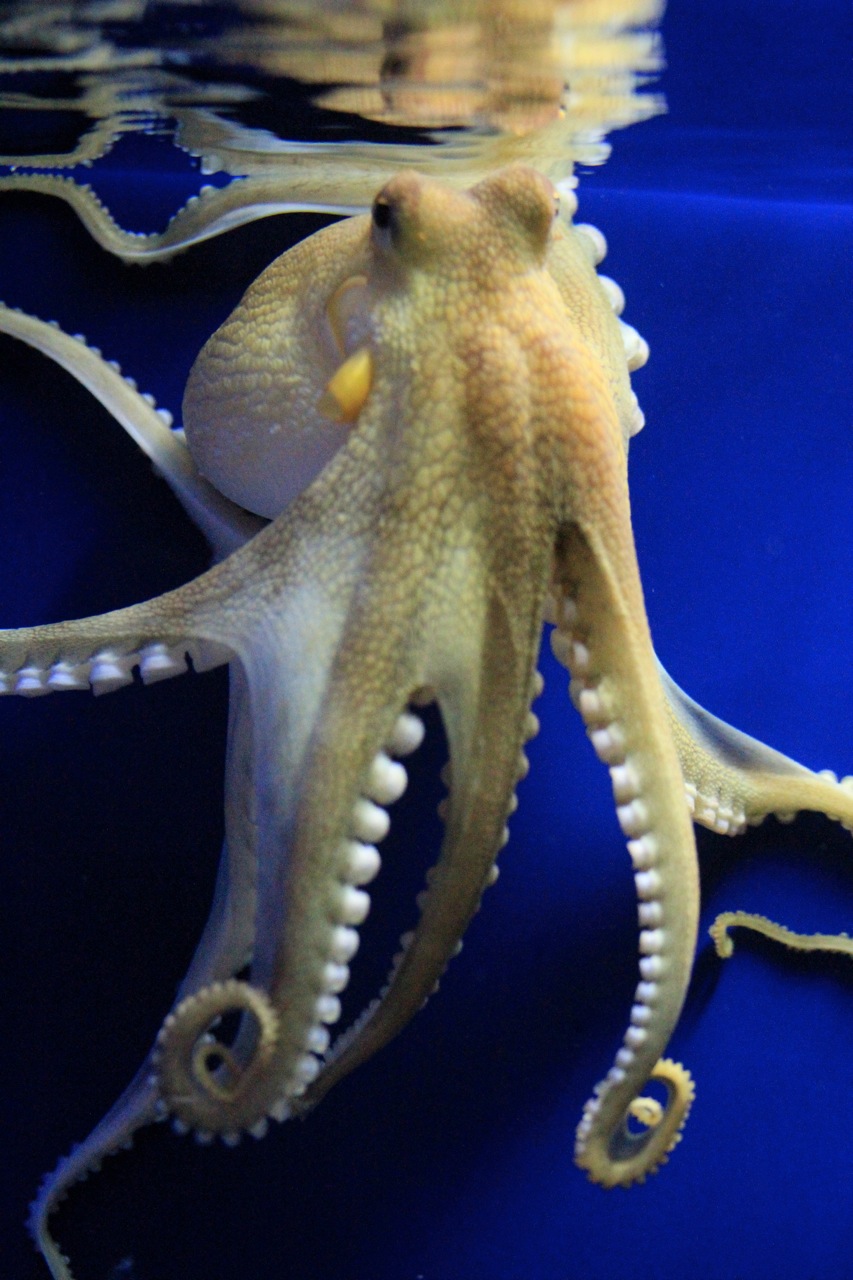
Amphioctopus marginatus

Kingdom: Animalia, Phylum: Mollusca. Class: Cephalopoda, Order: Octopoda, Family: Octopodidae                                        

DISTRIBUTION: Tropical waters of the western of the western Pacific Ocean.

HABITAT: Sandy bottoms in bays or lagoons.

APPEARANCE: The main body of the octopus is typically around 8 centimeters (3 in) in size, and, with arms, approximately 15 centimeters (6 in) long. The octopus displays a typical color pattern with dark divergent lines similar to veins, usually with a yellow siphon The arms are usually dark in color, with contrasting white suckers. In many color displays, a lighter trapezoidal area can be seen immediately below the eye.

DIET: Shrimp, clams and crabs.

REMARKS: A. marginatus  is one of only two octopus species known to display such behavior, the other being Abdopus aculeatus.   A. marginatus  has been observed using discarded coconut shells as a shelter.

LINK  to National Geographic video  http://www.indiesquidkid.com/tag/amphioctopus/

 LOCATION: STAFF PICK  SP04

 WORDPRESS SHORTLINK  http://wp.me/p1DZ4b-aU

TAXONOMY

KINGDOM   Animalia 

PHYLUM   Mollusca 

CLASS  Cephalopoda 

ORDER   Sepiida 

FAMILY  Sepiidae   

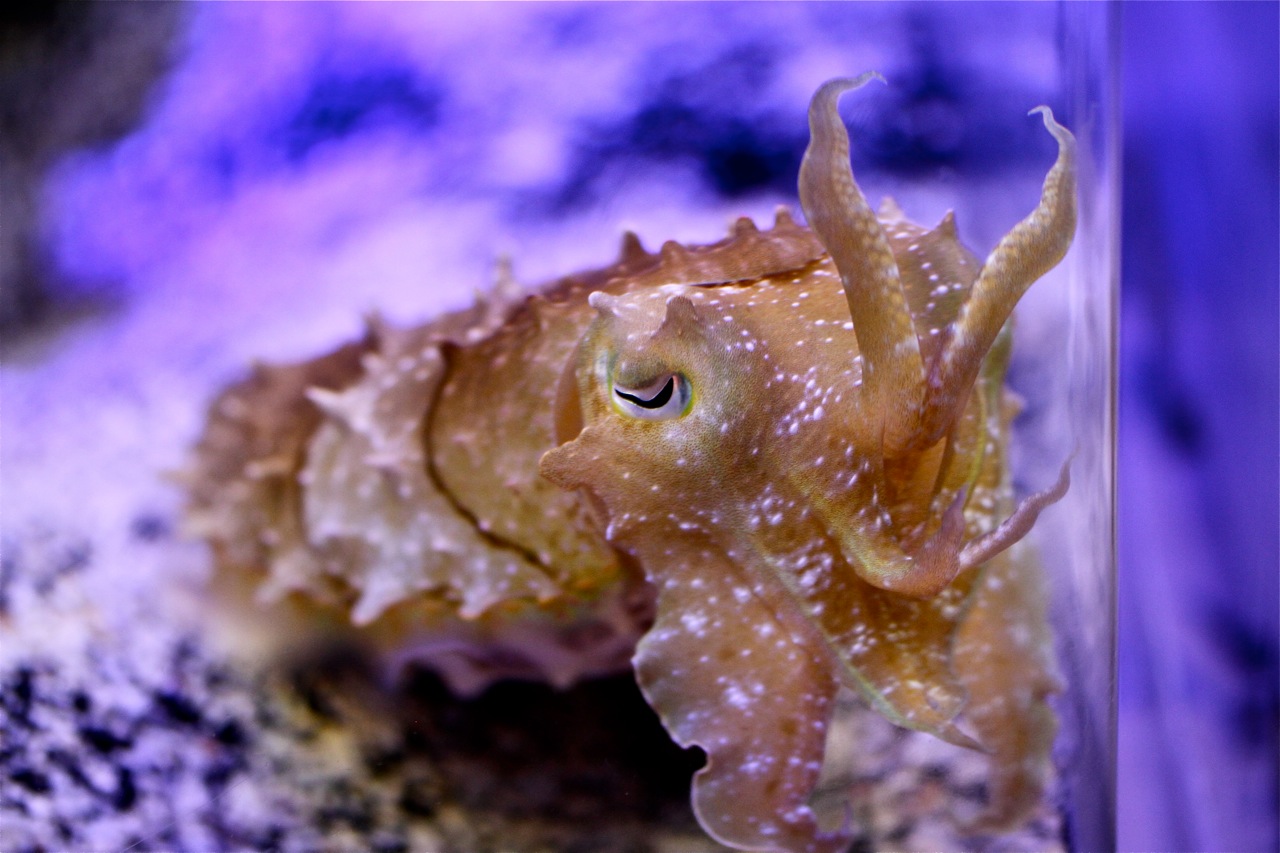
GENUS/SPECIES   Sepia latimanus 


DISTRIBUTION/HABITAT

Indo-Pacific

 They are found in waters up to 30 m near tropical coral reefs.

APPEARANCE

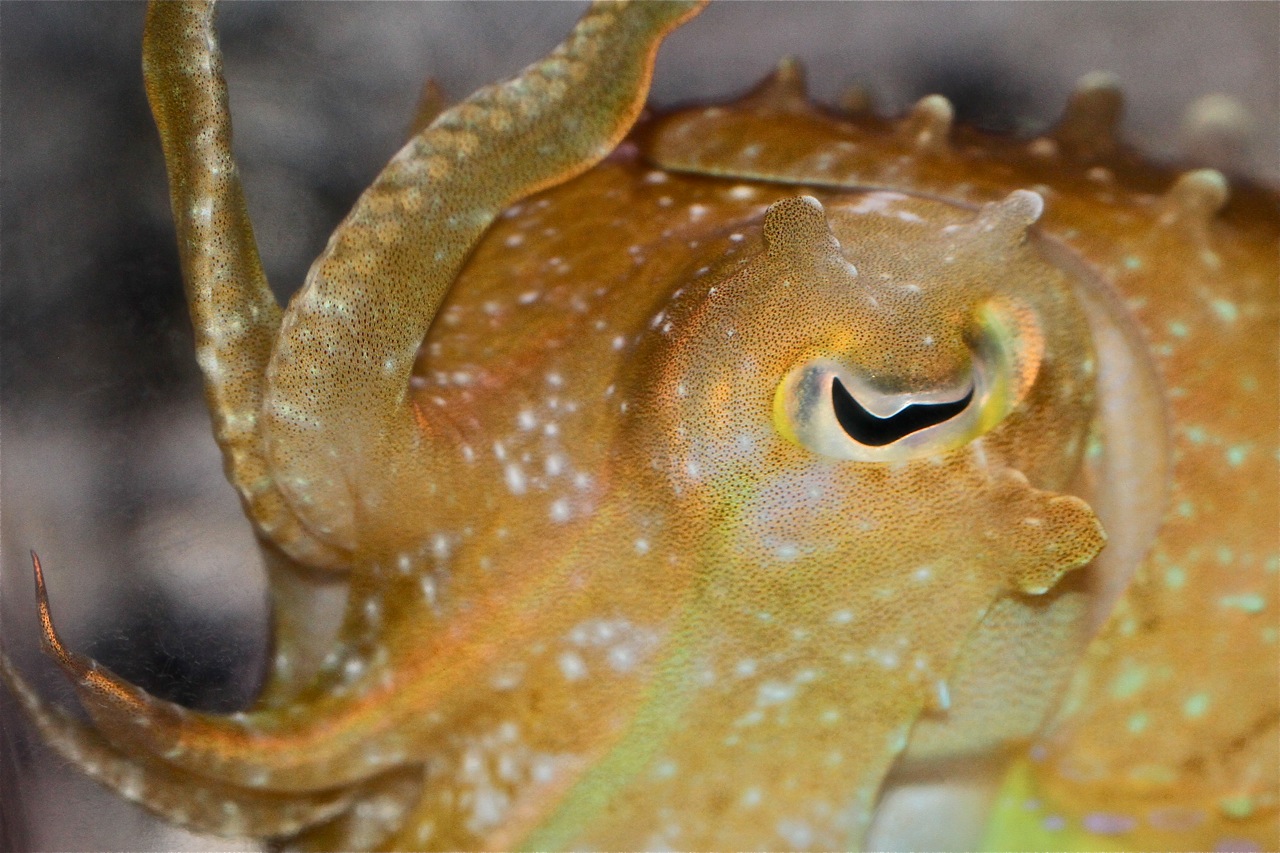
Large fascinating cephalopods with oval mantles  and crescent-shaped clubs .  This species can reach up to 50 cm in mantle length and weigh up to 10 kg. Like many cephalopods, broadclub cuttlefishes can be seen displaying a range of colors and textures. Commonly they are light brown or yellowish with white mottled markings. Males are sometimes dark brown, particularly during courtship and mating. Their arms have longitudinal white bands that appear as broad white blotches when extended. Some of their arms have longitudinal brown bands that extend to their heads. Their dorsal (upper) mantle can sometimes be seen with a saddle mark with small white and brown spots. Their dorsal mantle also has narrow brown transverse bands, and bold, white, transverse stripes and spots. Their eyes are yellow around the ventral (lower) margins and their fins are pale with white, transverse stripes extending onto their mantle and narrow, white bands along their outer margins.

Sepia latimanus  has a variety of different sucker sizes, some that are significantly larger than others. Their cuttlebone is bluntly rounded on either end, with a convex dorsal (curved upper) surface that flattens at the anterior (front) end. Their dorsal mantle is also covered with numerous large papillae and elongate papillae along the sides adjacent to base of each fin.

DIET IN THE WILD

Hunt during the day and appear to mesmerize prey with its rhythmic colored bands. They feed on small fishes and crustaceans.

REMARKS

 Sepia latimanus  is an important species to fisheries throughout their range and are taken by trawls, hand lines, and spears. They are also caught as bycatch in southeast Asian trawl fisheries.


 LOCATION: Not currently on exhibit 7-12-12

WORDPRESS SHORTLINK:    http://wp.me/p1DZ4b-8J

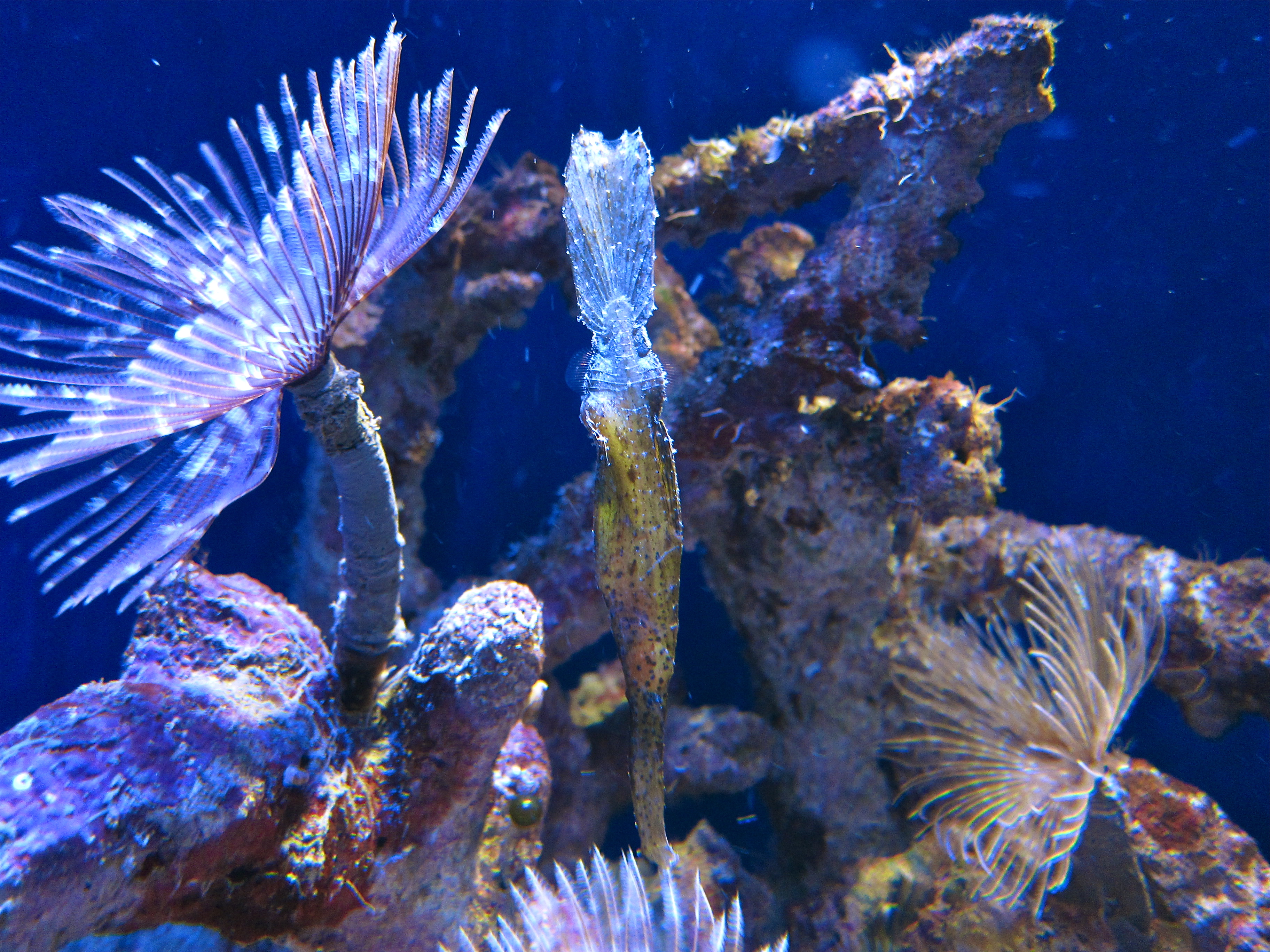
Solenostomus cyanopterus                                     Solenostomidae 

Distribution: Indo-Pacific: Red Sea and East Africa to Fiji, north to southern Japan, south to Australia.

Habitat:  Mostly pelagic until it settles on the substrate for breeding.  Uncommon species found in coastal reefs and weedy areas.

Appearance:  Color variable (from brown to pink or yellow) with small black and white spots; 2 elongate black spots between first 3 dorsal spines.

Diet: Small crustaceans. 

Reproduction: Monogamous, always in pairs.  Females carry the eggs in their pelvic fins that are modified to form a brood pouch.