Category: RAINFOREST BORNEO


TAXONOMY
Animalia (animals)
Phylum (Arthopoda)
Subphylum: Hexapoda
Class: Insecta
• Three body parts – head, thorax, abdomen
• Three pairs of legs attached to thorax
• Usually one or two pairs of wings
Order: Hymenoptera (ants)
Family: Formicidae

Genus/species: Atta cephalotes
4471989519_93ab359108_o

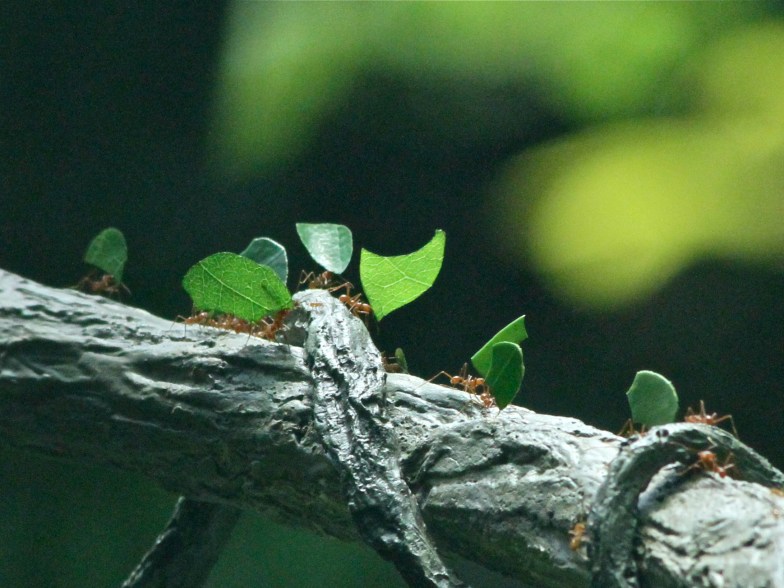
GENERAL CHARACTERISTICS: Rust colored with lighter colored legs, members of the genus Atta are among the largest, most socially complex leafcutters. The huge queen is up to 1.5 cm (0.5 inches) in length, an egg laying machine capable of building a colony of several million individuals. A. cephalotes is noted for its especially large head (hence the name). Workers take many forms and sizes, from large soldiers and major workers with their impressive mandibles. A soldier may be 10 times longer and weigh several hundred times more than the smallest worker.

DISTRIBUTION/HABITAT: Fungus growing ants, or gardening ants, number about 200 species, all in the tribe Attini, and are found only in the New World, in every mainland country except Canada and Chile. Most leaf cutter ant species are native to tropical Central and South America, though a few species occur in the southwestern United States. Atta cephalotes ranges from southern Mexico to Bolivia and Brazil.

Found throughout the tropical rain forest, tropical deciduous forest, and tropical scrub forest. Nests are underground to a depth of 6 m (20 ft). Some have up to 3000 chambers.
3003360666_7be42e475a_b

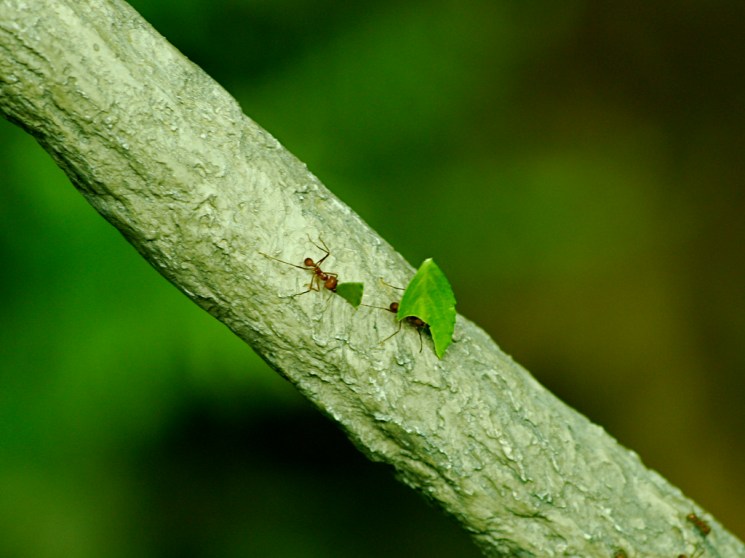
DIET IN THE WILD: They grow their own food by cutting leaves, mostly during the evening and nighttime, and carrying them back to the nest, where smaller workers then process them further and take them to underground “garden” chambers. All along the way, the leaves are fertilized by their handlers with anal secretions. Fungi then grow on the decaying vegetation, and the ants feed exclusively on the fungus, not the leaves. Each ant species grows a specific fungus.

REPRODUCTION: A. cephalotes swarm in mating flights at the onset of the rainy season. The queen mates with multiple males. The founding female has a pocket in her mouth cavity for storage of fungus spores to start her new nest. After she digs the first chamber for the garden, she deposits the spores, gathers appropriate leaves, and begins laying about 1,000 eggs each day. The first group of workers to develop takes over for the queen in caring for eggs, larvae, and pupae. The queen has only one job then—to lay the eggs that will build the colony.
The queen lives up to 10 years on average, but some have lived up to 14 years.

REMARKS: Fungus and ants are mutually dependent for survival. Obviously, the fungus provides the ants with food, but equally important, the fungus receives a warm, moist home and is supplied with fresh, fertilized nutrients. A large colony harvests the same amount of plant material that a cow consumes in a single day. Like most insects, are a good source of protein; they are eaten by people in parts of Mexico and in many places in South America. They also circulate nutrients and aerate huge quantities of soil.

Negative impacts of A. cephalotes include undermining building foundations, causing structural damage and destroying crops.

FOREST FLOOR BO14

References

Ron’s flickr  https://www.flickr.com/photos/cas_docents/4471989519/in/set-72157620567930293/

For Video ARKive  www.arkive.org/leaf-cutter-ant/atta-cephalotes/video-08.html

 Encyclopedia of Life  eol.org/pages/53197/overview

 Rainforest of the World docent training manual of the California Academy of Sciences 2014

Ron’s WordPress shortlink  wp.me/p1DZ4b-1pv

TAXONOMY
Kingdom: Animalia
Phylum: Chordata
Class: Actinopterygii
Order: Cypriniformes
Family: Cyprinidae (carps, true minnows, and their relatives (as the barbs and barbels).

Genus/species: Trigonostigma heteromorpha

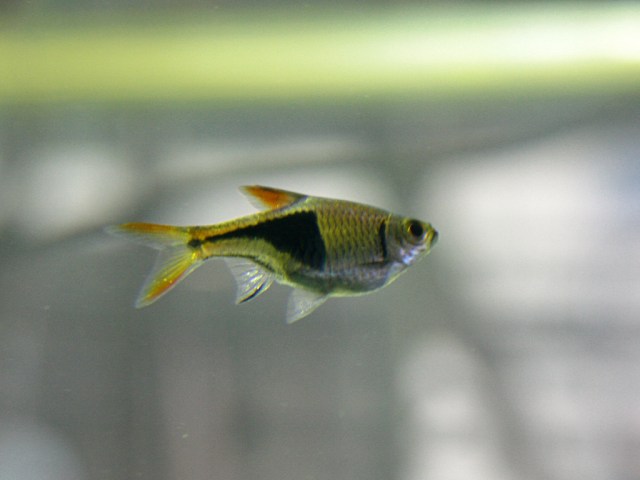
Harlequin Rasbora  5170276087_941e511e05_b-2

GENERAL CHARACTERISTICS: Length to 5 cm (2 inches). Color pattern reddish, pinkish or orange body with a conspicuous black stripe from below dorsal-fin origin to middle of caudal fin base and usually broadened anteriorly so as to have a triangular or hatchet shape.

DISTRIBUTION/HABITAT: Thailand to Sumatra, Indonesia in forest streams.

DIET IN THE WILD: Micropredator feeding on small insects, worms, crustaceans and other zooplankton.

CONSERVATION: IUCN: Least concern.

Harlequin Rasbora 3505693009_e11af4c62b_b

Rainforest Borneo Exhibit, Southeast Asia Community display BO09

flickr  http://www.flickr.com/photos/cas_docents/sets/72157627795872023/

WordPress shortlink  http://wp.me/p1DZ4b-16O

TAXONOMY
Kingdom: Animalia
Phylum: Chordata
Class: Reptilia
Order: Squamata
Suborder: Sauria
Family: Gekkonidae (Geckos)

Genus/species: Ptychozoon kuhlii

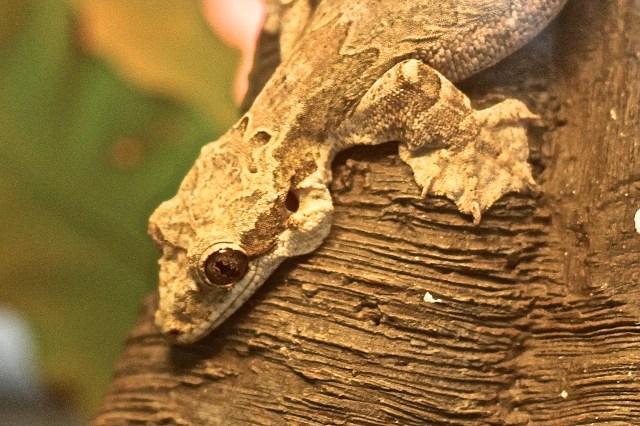
Kuhl's Flying Gecko IMG_9599

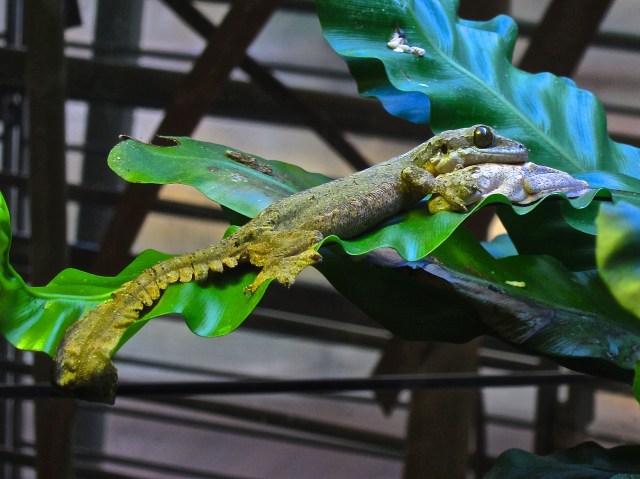
GENERAL CHARACTERISTICS Weird looking with big heads, bulging lidless eyes, and elaborate webbed feet. Gliding apparatus is composed of a large flap of skin along the flank. These flaps remain rolled across the belly until the lizard jumps off a tree. Then the flaps open passively in the air, acting as a parachute during descent. Additional flaps lie along the sides of the head, neck, and tail. These geckos are nocturnal and cryptic, and often go unnoticed in their natural habitat.

DISTRIBUTION/HABITAT Southeast Asia, including southern Thailand, Malaysia, Borneo, Indonesia, and Singapore. Nocturnal arboreal animals, found in lowland and mid-level rainforests.

Kuhl's Flying Gecko IMG_9650

DIET IN THE WILD Insects and arthropods.

MORTALITY Can live up to 7–9 years.

REPRODUCTION In captivity, breeding occurs when the animals are exposed to about 12 hours of daylight. The female will lay two eggs about once a month. She can lay five or six clutches per season. Eggs will hatch in 2–3 months.

Kuhl's Flying Gecko

Rainforest Borneo BO11

WordPress Shortlink  http://wp.me/p1DZ4b-UA

flickr  http://www.flickr.com/photos/cas_docents/sets/72157620567930293/

TAXONOMY
Kingdom:  Animalia
Phylum:  Chordata
Subphylum:  Vertebrata
Class:  Amphibia
Order:  Anura
Family:  Megophryidae

Genus/species: Megophrys nasuta

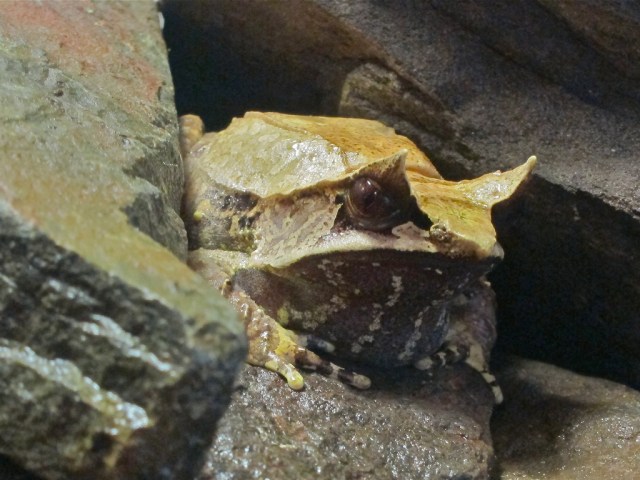
4427840755_184d36bab6_b

GENERAL CHARACTERISTICS: Have projections above each eye and nasal area, hence the name Horned Frog. Designed for camouflage; back is gray, tan, russet, or brown and darkens toward the side making the frog almost invisible among the forest leaf litter. The smooth skin resembles dead leaves.

4329887255_429231e129_b

DISTRIBUTION/HABITAT: Borneo, Malay Peninsula, Sumatra. Lives in relatively cool damp environs. Optimal temperature is between 22–24° C. Found on the rainforest floors, usually near small streams.

DIET IN THE WILD: Crabs and scorpions are their main food; also take arachnids, nestling rodents, lizards and other frogs that live on the forest floor.5536565600_f6c87f37ec_b-1


REMARKS: Call is unmistakable: a loud, resonating, metallic honk or henk, somewhat reminiscent of an air horn. The Jahai, an aboriginal group from northern Peninsular Malaysia, call this frog “Kengkang,” onomatopoeic after its call.

Rainforest Borneo  BO08

flickr  http://www.flickr.com/photos/cas_docents/sets/72157608456457315/with/4427840755/

WordPress Shortlink  http://wp.me/p1DZ4b-Mb


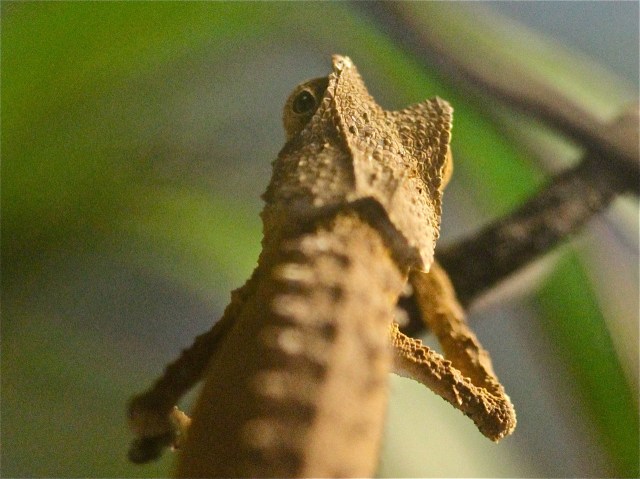
Brookesia stumpffi 

Class Reptilia,  Order Squamata,  Suborder Iguania,  Family: Chamaeleonidae

DISTRIBUTION: Northern Madagascar

HABITAT: Rainforest floor.

DIET: Small insects.

REMARKS: Can rapidly change colors to blend with the forest leaf litter to avoid predators.  When disturbed will play dead in an effort to resemble a fallen leaf. 

Text Ref. California Academy of Sciences Marco Schmidt

LOCATION: Madagascar MA14

WORDPRESS SHORTLINK http://wp.me/p1DZ4b-dt

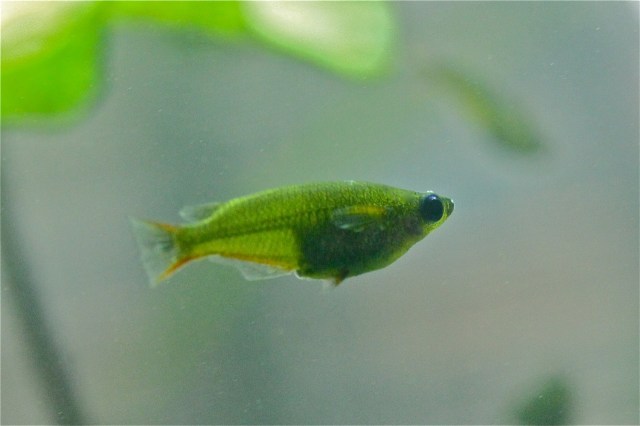
Oryzias woworae   Actinopterygii (Ray-finned fishes), Beloniformes (Needle fishes),  Adrianichthyidae (Ricefishes) 

DISTRIBUTION: Daisy’s ricefish was collected from a freshwater stream on Muna Island, off the southeastern coast of Sulawesi in Indonesia in 2007.

HABITAT:  fresh and brackish waters.

APPEARANCE: about an inch long, steel blue body (in males), highlighted with brilliant red stripes on its abdomen, pectoral fins and caudal fins. O. woworae  also have striking,  blue eyes

REMARKS:  many species are found in Japanese rice paddies gives this group of fishes its common name

LOCATION: Rainforest Borneo Exhibit  Southeast Asia Community tank  BO09 

REFERENCE; California Academy Rainforest Blog 3-27-11 and fishbase

WORDPRESS SHORTLINK  http://wp.me/p1DZ4b-dh