Category: FRESH WATER FISHES


Actinopterygii (Ray-finned fishes) > Characiformes (Characins) > Lebiasinidae (Pencilfishes)

Copella arnoldi
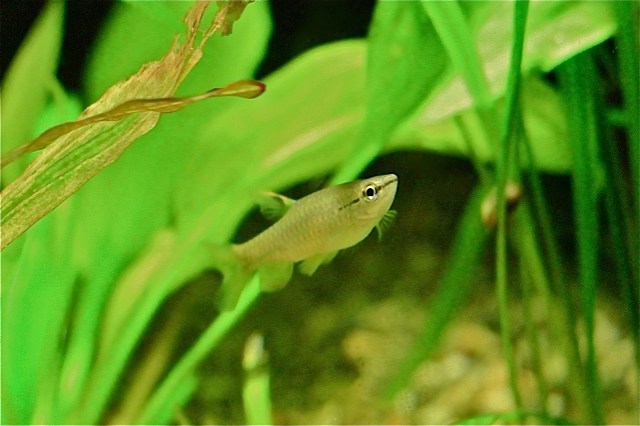
 DISTRIBUTION: Amazon Basin.

 HABITAT: Slow-moving fresh water.

 APPEARANCE: Males tend to be larger and more colorful than females and have more elaborate fins. Max. length: 3.4 cm. 

 DIET: Worms, insects, and crustaceans.

 REPRODUCTION/DEVELOPMENT: The unusual behavior of the splashing tetra provides a unique strategy that keeps aquatic predators away from progeny: The male and female will leap out of the water as a pair, both remaining together while the female attaches her eggs to the leaves of plants at the water’s edge and the male then immediately fertilizes them. This procedure is repeated several times until 50 to 200 eggs have been laid. After attachment, the male, now in the water, faithfully flicks his tail every few minutes, shedding droplets of water onto the eggs to keep them moist. After 2 to 3 days the eggs hatch and the fry fall into the water below. The male’s attention then abates and the young tetras are on their own.

MORTALITY/LONGEVITY: Life span: about 3 years.

 REMARKS: In spite of their common name, they are not closely related to true tetras of the family Characidae found in a variety of other Steinhart exhibits.

Flickr http://www.flickr.com/photos/cas_docents/6939753715/in/set-72157629304397467

WORDPRESS SHORTLINK   http://wp.me/p1DZ4b-pP

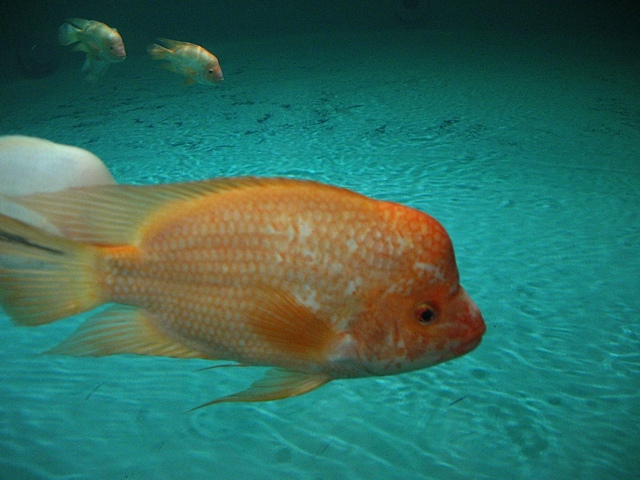
Actinopterygii (ray-finned fishes),  Perciformes (Perch-likes), Cichlidae (Cichlids)

Amphilophus labiatus

FEMALE WITH BROOD BELOW

DISTRIBUTION: Atlantic slope of Mexico and Nicaragua; in Lakes Nicaragua and Managua.

HABITAT: Lakes; rarely enters streams or rivers.

APPEARANCE: The body of the Red Devil is robust and stocky. It has a great deal of variability in its structure and coloration. Some are bright red while others are white or yellow.  Males will develop an impressive nuchal hump as they grow. Length to 24 cm or approximately 10 in.

DIET: Small fishes, snails, insect larvae, worms and other bottom-dwelling organisms.

REPRODUCTION/DEVELOPMENT: Fertilization is external.  A. labiatus a substrate spawner prefers to spawn on flat surfaces.  Female lays 600–700 eggs and guards the clutch. The larvae hatch after about 3 days. After another 5-7 days they become free swimming.

MALE BELOW

flickr http://www.flickr.com/photos/cas_docents/6885205471/in/set-72157627952093337

WORDPRESS SHORTLINK http://wp.me/p1DZ4b-oC

Ref. Fishbase and Animal World

TAXONOMY

KINGDOM Animalia
PHYLUM Chordata
CLASS  Actinopterygii (ray-finned fishes)
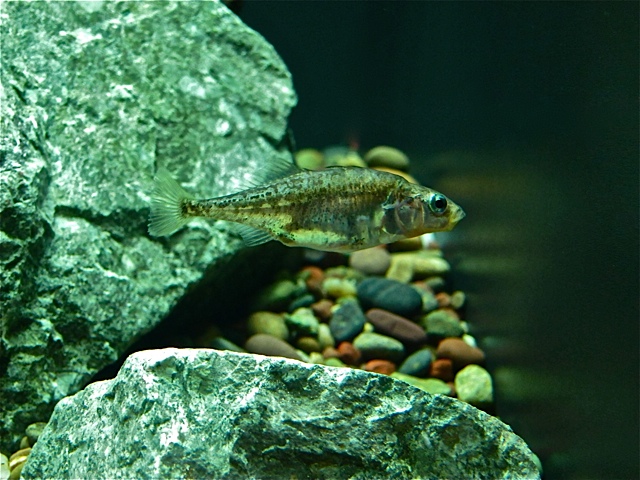
ORDER Gasterosteiformes (Sticklebacks and seamoths)
FAMILY Gasterosteidae (Sticklebacks and tubesnouts)
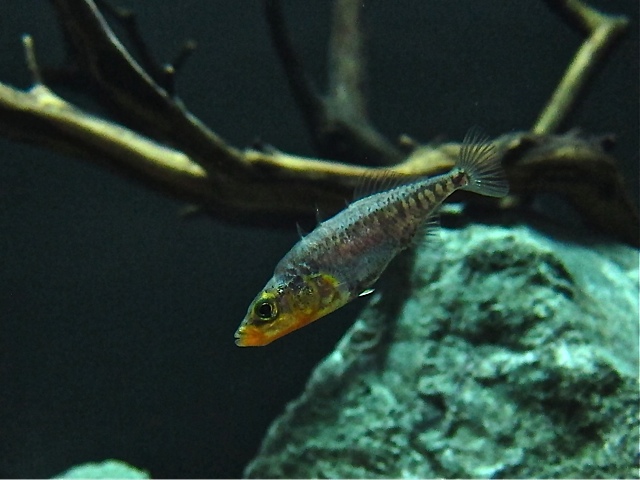
GENUS/SPECIES  Gasterosteus aculeatus


GENERAL CHARACTERISTICS

Common length : 5.1 cm or 2 in.  Identified by the 3 to 4 sharp, free spines before the dorsal fin, the pelvic fin reduced to a sharp spine and a small ray, the series of plates along the sides of the body and are usually mottled brown or greenish.


DISTRIBUTION/HABITAT 

 Coastal oceans in northern Europe, Asia and North America

 Freshwater streams, estuaries


DIET: worms, aquatic insects, fish eggs and fry


REPRODUCTION:  Red means ready.  At mating time, the chin and belly of male sticklebacks turn red. The brighter the red, the more enticing they are to the females they’re courting. Male sticklebacks weave rounded nests of algae, leaves and pebbles.   The neater the nest, the more likely a male is to woo a mate to lay her eggs inside. Once she does, he drives her out, guards and aerates the eggs until the hatch.

LOCATION

Salt Marsh Pop_up CC03
Animal Attractions


flickr http://www.flickr.com/photos/cas_docents/6870766417/in/set-72157629304397467

WORDPRESS SHORTLINK  http://wp.me/p1DZ4b-oa

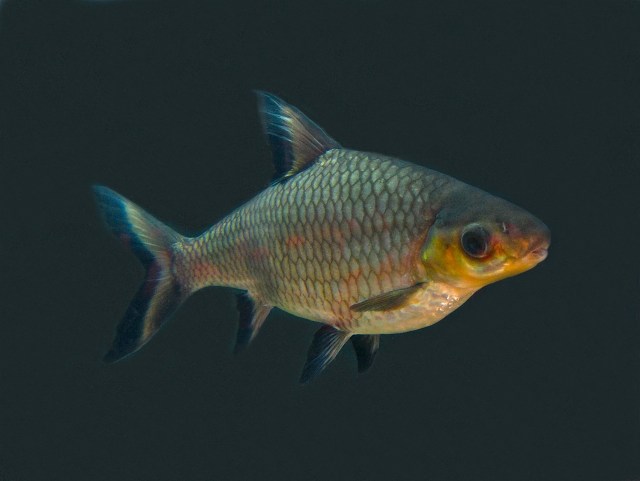
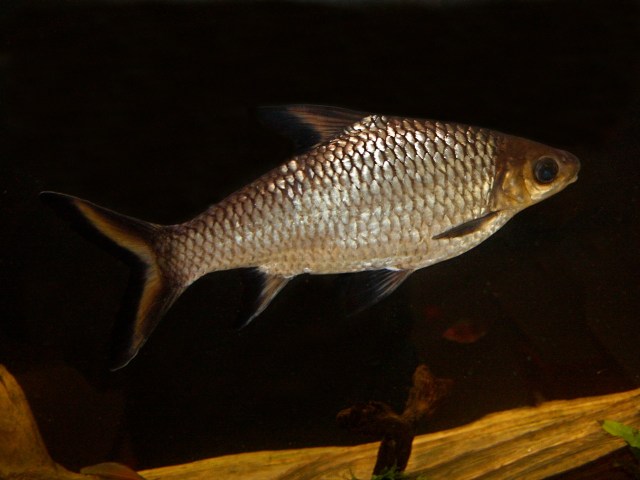
Balantiocheilos melanopterus      

Class: Actinopterygii,  Order: Cypriniformes,  Family: Cyprinidae Minnows or Carps

DISTRIBUTION: Mekong and Chao Phraya River basins, Malay Peninsula, Sumatra, and Borneo.

HABITAT: Midwater depth in large and medium sized rivers and lakes.

APPEARANCE: Elongated silver body up to 35 cm in length; black margins on dorsal, caudal, anal and pelvic fins; large, prominent eyes.

DIET: Phytoplankton, small crustaceans, rotifers, insects and their larvae. 

REPRODUCTION and DEVELOPMENT: External  fertilization.

REMARKS:  The shark portion of the name Tricolor Sharkminnow refers to their torpedo shaped bodies and long fins, not that they are sharks. They belong to the family Cyprinidae, from the Ancient Greek kyprînos, consisting of the carps, the true minnows, and their relatives (for example, the barbs and barbels). Cyprinids are stomachless fish with toothless jaws. Even so, food can be effectively chewed by the gill rakers of the specialized last gill bow.  Commonly called the carp family or the minnow family, its members are also known as cyprinids. It is the largest family of fresh-water fish, with over 2,400 species in about 220 genera.

LOCATION: AC01 Academy Cafe 

WORDPRESS SHORTLINK  http://wp.me/p1DZ4b-j9

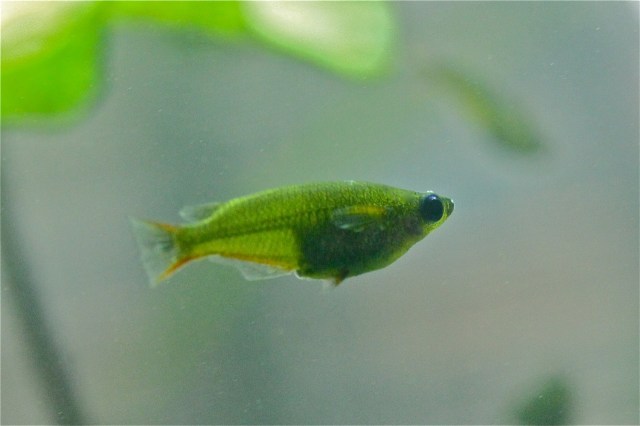
Oryzias woworae   Actinopterygii (Ray-finned fishes), Beloniformes (Needle fishes),  Adrianichthyidae (Ricefishes) 

DISTRIBUTION: Daisy’s ricefish was collected from a freshwater stream on Muna Island, off the southeastern coast of Sulawesi in Indonesia in 2007.

HABITAT:  fresh and brackish waters.

APPEARANCE: about an inch long, steel blue body (in males), highlighted with brilliant red stripes on its abdomen, pectoral fins and caudal fins. O. woworae  also have striking,  blue eyes

REMARKS:  many species are found in Japanese rice paddies gives this group of fishes its common name

LOCATION: Rainforest Borneo Exhibit  Southeast Asia Community tank  BO09 

REFERENCE; California Academy Rainforest Blog 3-27-11 and fishbase

WORDPRESS SHORTLINK  http://wp.me/p1DZ4b-dh

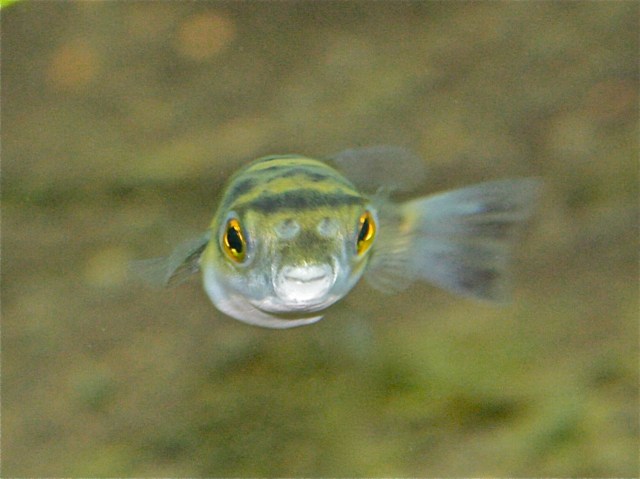
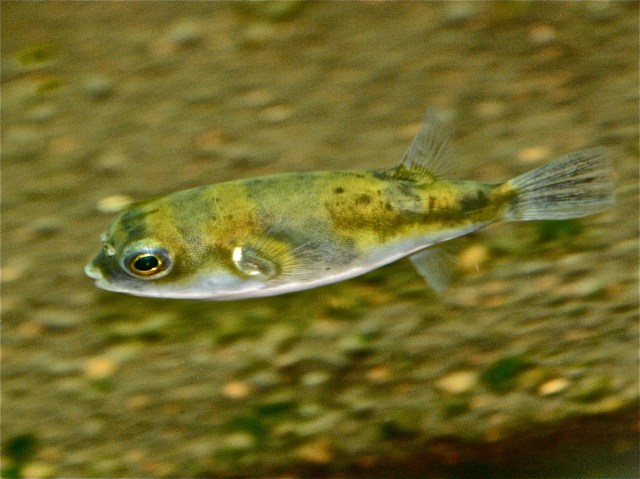
Colomesus asellus (Tetradontidae) Pufferfish

DISTRIBUTION: Peru, Colombia, Brazil. The Amazon Basin.

HABITAT: Mostly warm freshwater and coastal streams.

APPEARANCE: Max size: 7.5 cm, green above, white below, and patterned with black transverse bands across the dorsal surface.

DIET: An active carnivore, especially of snails.

REPRODUCTION: Pairs breed during the wet season, spawning in rivers. Small eggs are scattered on the substrate and hatched larvae are carried downstream.

MORTALITY and LONGEVITY: Life span: 10+ years.

REMARKS: Continuous growth of teeth keeps these fish ready for their crunchy and abrasive diet of crustaceans and snails. In captivity, these puffers should have a daily dose of snails to prevent beak overgrowth.

Like other puffers, can inflate themselves when threatened, presenting a much larger and spineladen body to suddenly disheartened predators.

Flooded Amazon Cardinal Tetra Exhibit.  AM14

WORDPRESS SHORTLINK   http://wp.me/p1DZ4b-d7

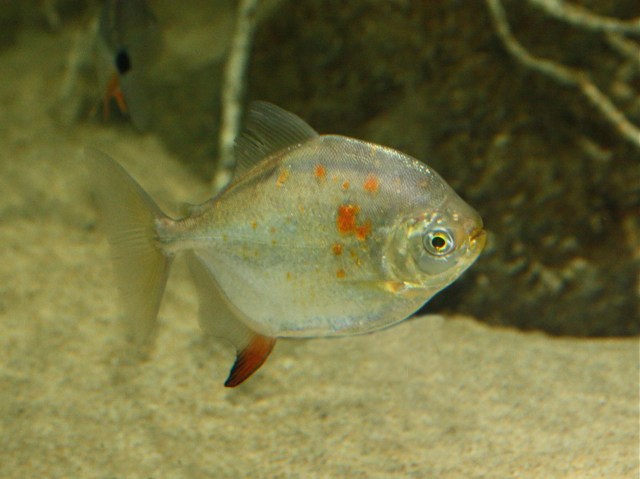
Metynnis sp. (Characidae) Characins

DISTRIBUTION: Tropical South America primarily Amazon and Orinoco basins.

HABITAT: Calm river reaches overhung by foliage.

APPEARANCE: Almost circular in profile; juveniles may be spotted or striped; adults solidly silver with anal and caudal fins edged in red or orange; grows to length of 30 cm (12 in) in wild.

DIET: Generally herbivorous, eating leaves of river plants; occasionally eats worms and small insects.

REPRODUCTION and DEVELOPMENT: Females release up to 2000 eggs; juveniles hatch in a few days.

REMARKS: A schooling species related to piranhas.  

LOCATION: Anaconda exhibit, AM3

WORDPRESS SHORTLINK  http://wp.me/p1DZ4b-ca


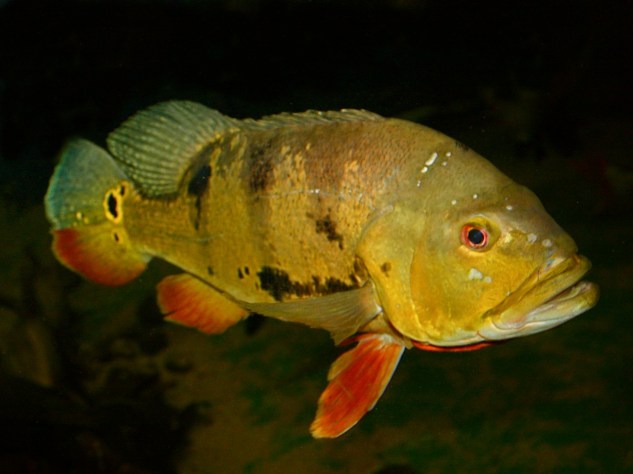
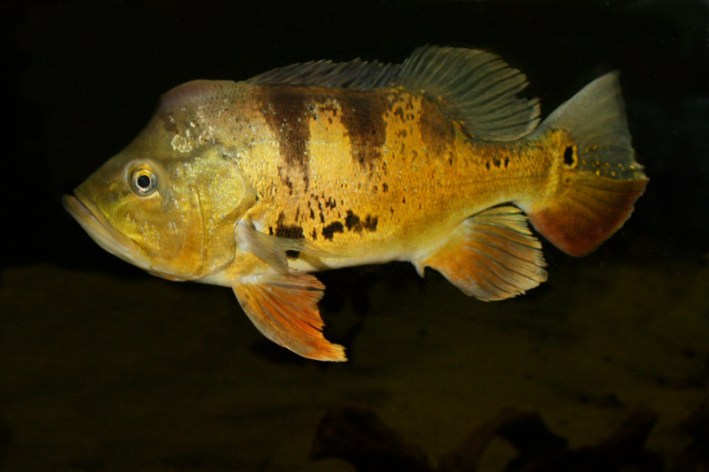
Cichla ocellaris (Cichlidae)  Cichlid

Female below.

DISTRIBUTION: Amazon, Orinoco, and La Plata basins in South America. Currently established in southern Florida.

HABITAT: Warm freshwater.

APPEARANCE: Elongate body with deeply notched dorsal fin, large mouth with projecting lower jaw. Color: olive-green fading ventrally to yellow-white, with three dark vertical bars on sides and series of dark spots in between. A large black spot encircled by silver adorns the caudal fin. Max. length: 60 cm. Male has a lump no top of the skull.

DIET: Diurnal feeders on other fishes. High speed pursuit predators.

REPRODUCTION and DEVELOPMENT: Substrate spawner. Both parents guard their clutch for about 9 weeks. Like most cichlids, breeding pairs are highly territorial and aggressive.

REMARKS: Legally introduced to Florida. Are considered a prized sport and food fish.

LOCATION: Flooded amazon tunnel, AM11

WORDPRESS SHORTLINK  http://wp.me/p1DZ4b-b9

Male below; note lump on top of the skull.

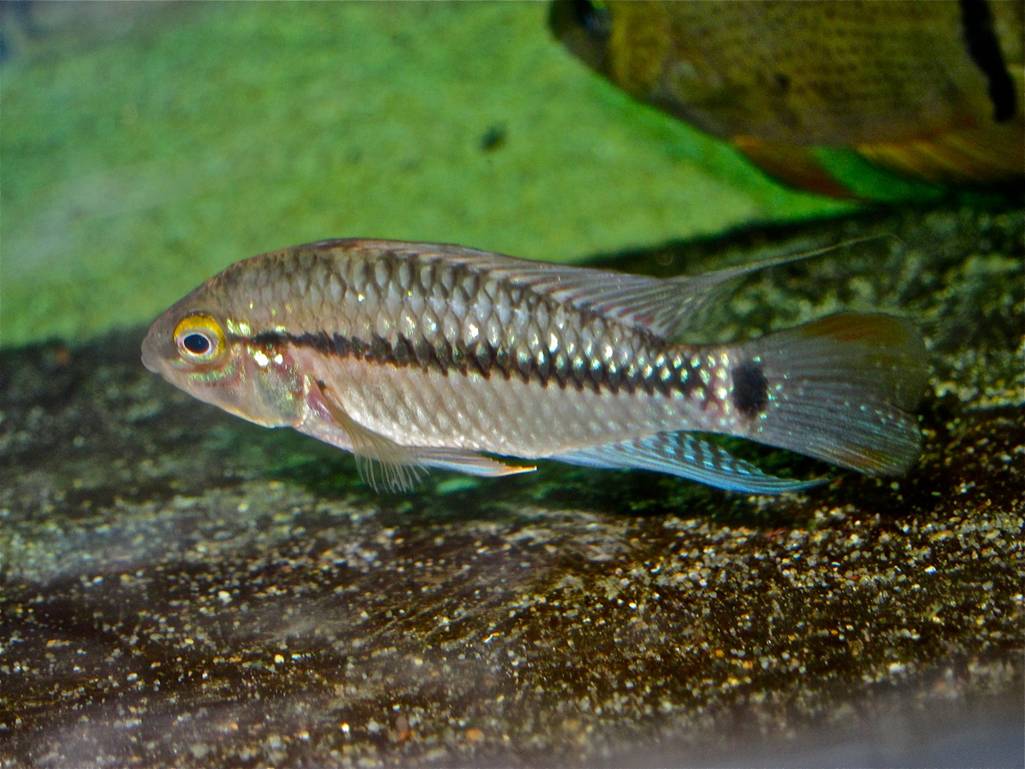
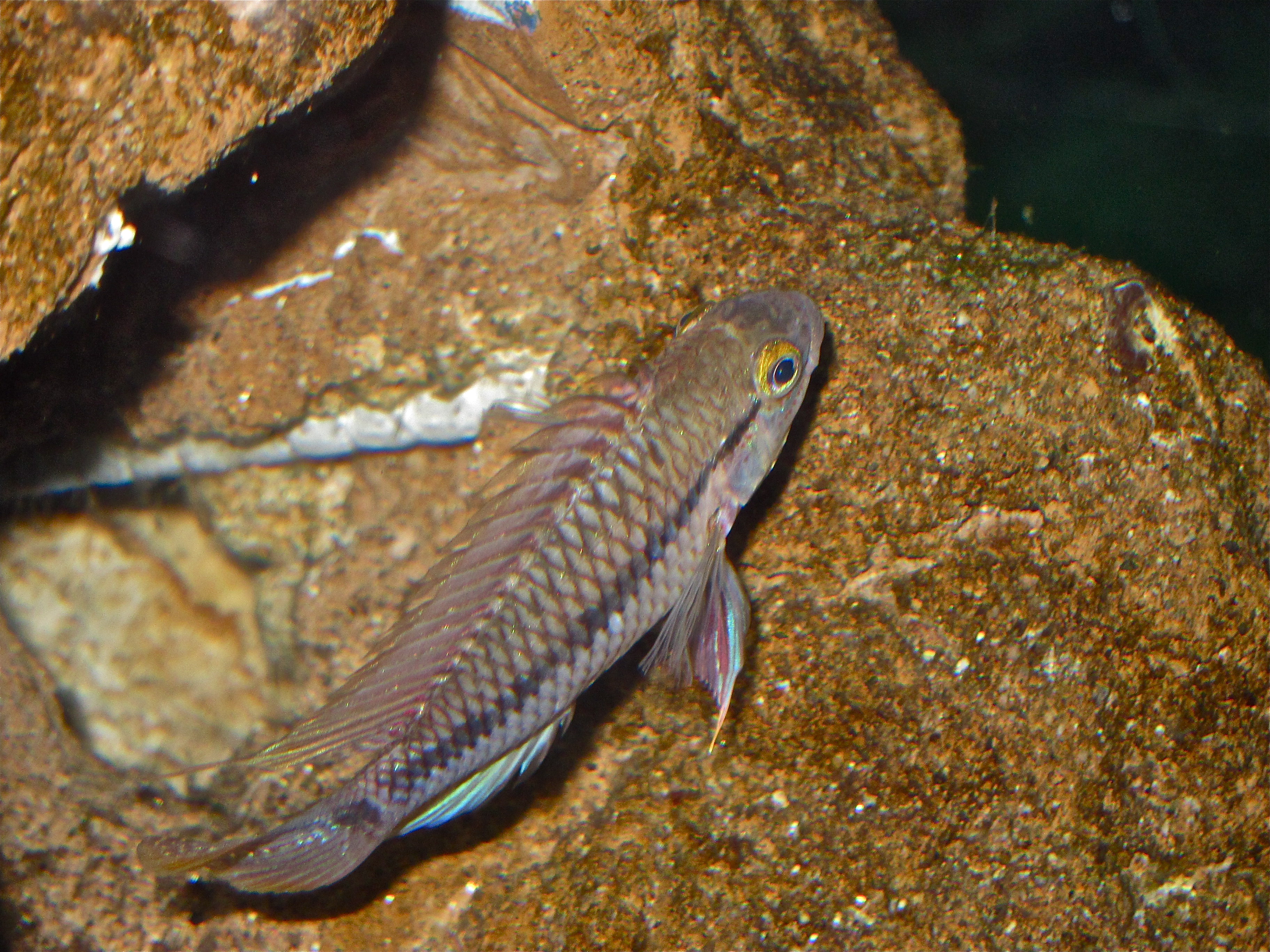
Apistogramma eunotus       Actinopterygii (Ray-finned fishes),Perciformes (Perch-likes) , Cichlidae (Cichlids)

DISTRIBUTION: Native to the western Amazon basin in the area around the Peruvian/Brazilian border. It’s found in the tributary systems of several rivers, including the Rio Ucayali, Rio Yavarí, Rio Japurá and the Amazon itself.

HABITAT: Slow-moving streams, creeks and tributaries, as well as smaller rivers.

APPEARANCE: Maximum length 3.5″ (male) 3″ (female).  The male is the larger fish and has much more prominent coloring, especially the blue markings around the gill area that give this fish its common name. The male also has elongated dorsal and anal fins.

DIET: A. eunotus is a micropredator. Their main prey items consist of insect larvae, fry of other fishes and other invertebrates

REMARKS:  Apistogramma is a genus of approximately a hundred species of fish from the family Cichlidae found in tropical areas of the Amazon basin and Venezuela. Apistogramma literally means “irregular lateral line” referring to a common trait of the species under this taxon. Most species are strongly sexually dimorphic.

Location: Flooded Amazon Tunnel, AM11

WORDPRESS SHORTLINK:  http://wp.me/p1DZ4b-ad

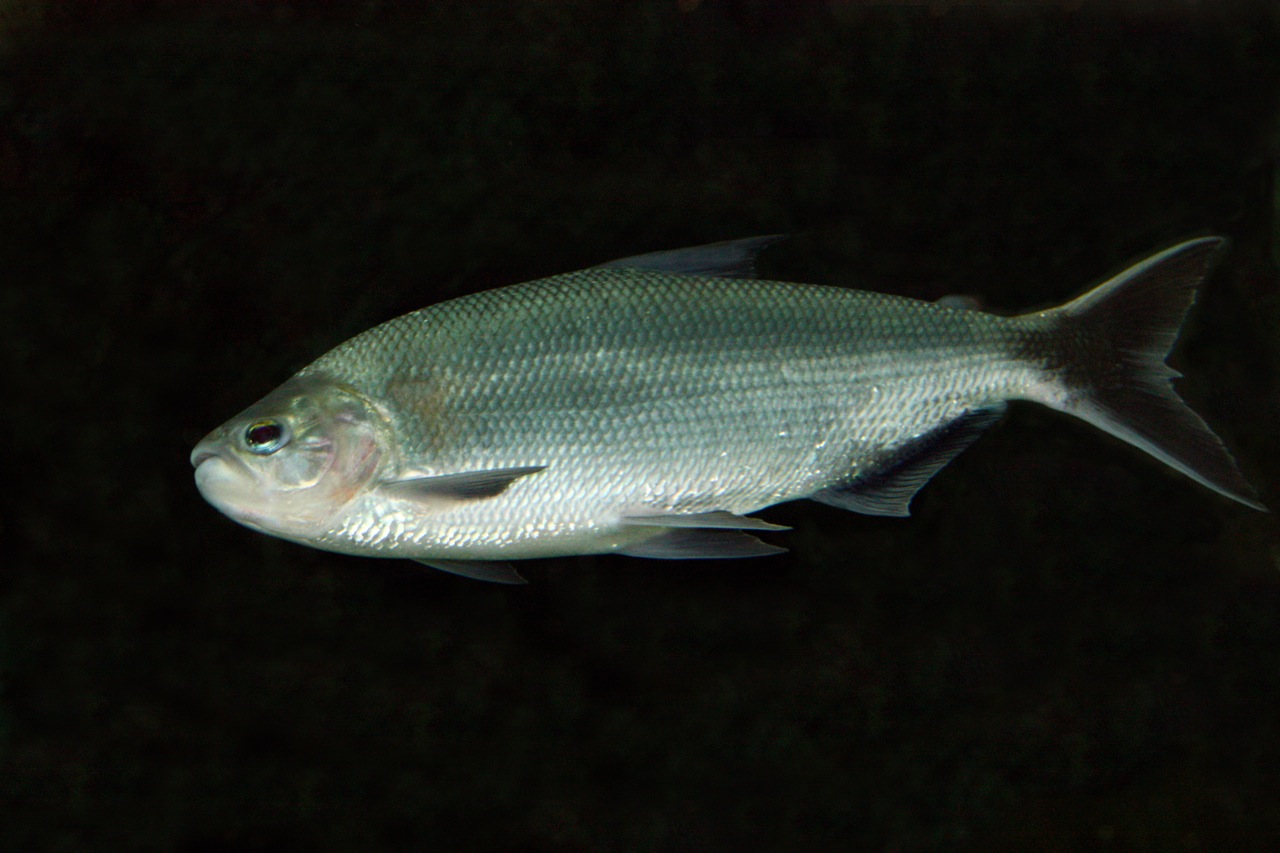
Brycon rubricauda

Little information available currently.  The following data were taken from Fishbase.

Actinopterygii (Ray-finned fishes) > Characiformes (Characins) > Characidae (Characins) > Bryconinae

DISTRIBUTION: South America: native to Magdalena river Basin in Columbia.

HABITAT: Tropical, Benthopelagic; freshwater

APPEARANCE: Maximum length 35 cm, (aprox. 3 feet). Maximum published   weight 725g. (1.6 pounds).

LOCATION: Amazon Flooded Tunnel, AM11

WordPress Shortlink  http://wp.me/p1DZ4b-9p