Category: FRESH WATER FISHES


TAXONOMY
Kingdom: Animalia
Phylum: Chordata
Class: Actinopterygii (ray-finned fishes)
Order: Characiformes (Characins)
Family: Characidae (Characins)

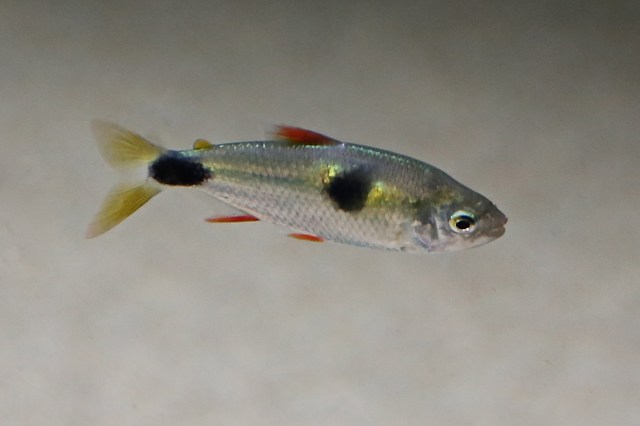
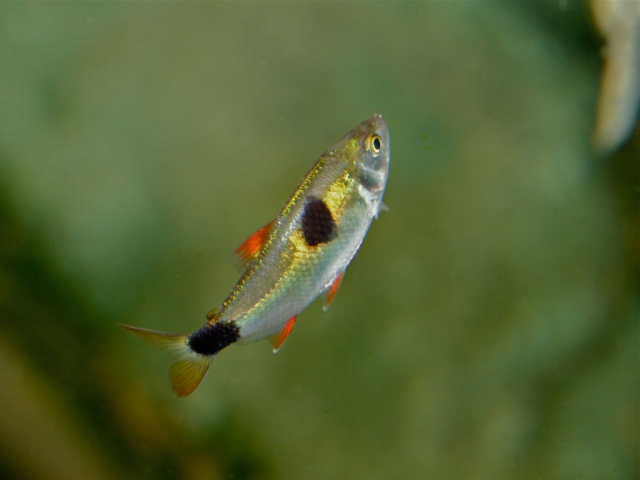
Genus/species: Exodon paradoxus

GENERAL CHARACTERISTICS: Light tan with two distinct black spots (one before the tail and another on the flank.) Common name comes from the large protruding teeth. Length : 4 inches (10 cm) to 6 inches (15 cm) .

Bucktooth Tetra  8353979147_bb878d0337_o

DISTRIBUTION/HABITAT: South America: Amazon and Tocantins River basins with sandy bottoms. Also found in Guyana.

DIET IN THE WILD: Insects and the scales of other fish.

REMARKS: Eating scales of other fishes (lepidophage) is a behavior common to a variety of species. (Some species of Piranha eat only scales) Scales are nutritional, offering a source of calcium carbonate and other minerals, as well as a layer of protein-rich mucus. A reliable resource, scales are plentiful, available year round, and readily regrown.

Bucktooth Tetra  5230993504_efa63ce423_b

Flooded Amazon, electric eel exhibit. AM11

Ref. fishbase, EOL, Seriously Fish

flickr http://www.flickr.com/photos/cas_docents/8353979147/in/set-72157608614099673/

WordPress Shortlink  http://wp.me/p1DZ4b-18j

TAXONOMY
Kingdom: Animalia
Phylum:Chordata
Class: Actinopterygii (ray-finned fishes)
Order: Perciformes  (Perch-likes)
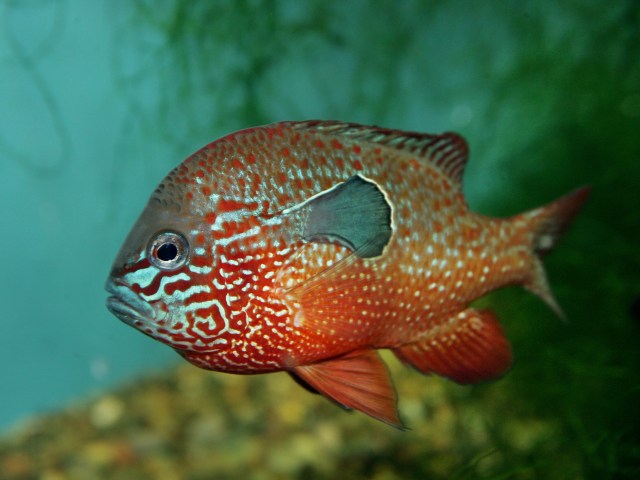
Family: Cichlidae  (Cichlids)Genus/species: Geophagus altifrons

Earth eating cichlid 2975336785_c7f6e17516_o

GENERAL CHARACTERISTICS: Protruding mouth. Head has red weblike markings. Spiky fins.

DISTRIBUTION/HABITAT: South America: Amazon basin in freshwater rivers.

DIET IN THE WILD: Common name derived from this fish’s almost constant digging in the sand for prey.

REPRODUCTION: Fish in this genus are mouth brooders. The parents take turns brooding and spit the fry into the partner’s mouth when their shift is over.

CONSERVATION: Not evaluated.

REMARKS: Genus name translates as “eartheater.” This common name applies to many species. A small, but popular food fish.

Flooded Amazon

flickr http://www.flickr.com/photos/cas_docents/2975336785/in/set-72157608614099673/

WordPress shortlink  http://wp.me/p1DZ4b-17X

TAXONOMY
Kingdom: Animalia
Phylum: Chordata
Class: Actinopterygii
Order: Cypriniformes
Family: Cyprinidae (carps, true minnows, and their relatives (as the barbs and barbels).

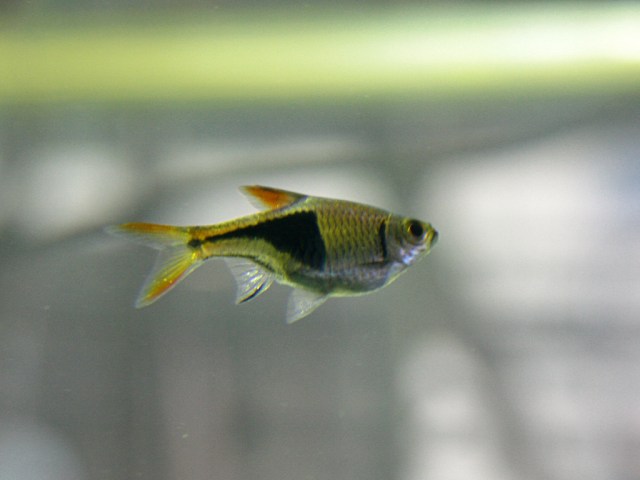
Genus/species: Trigonostigma heteromorpha

Harlequin Rasbora  5170276087_941e511e05_b-2

GENERAL CHARACTERISTICS: Length to 5 cm (2 inches). Color pattern reddish, pinkish or orange body with a conspicuous black stripe from below dorsal-fin origin to middle of caudal fin base and usually broadened anteriorly so as to have a triangular or hatchet shape.

DISTRIBUTION/HABITAT: Thailand to Sumatra, Indonesia in forest streams.

DIET IN THE WILD: Micropredator feeding on small insects, worms, crustaceans and other zooplankton.

CONSERVATION: IUCN: Least concern.

Harlequin Rasbora 3505693009_e11af4c62b_b

Rainforest Borneo Exhibit, Southeast Asia Community display BO09

flickr  http://www.flickr.com/photos/cas_docents/sets/72157627795872023/

WordPress shortlink  http://wp.me/p1DZ4b-16O

TAXONOMY
Kingdom: Animalia
Phylum: Chordata
Class: Actinopterygii
Order: Cypriniformes
Family: Cyprinidae (carps, true minnows, and their relatives (as the barbs and barbels).

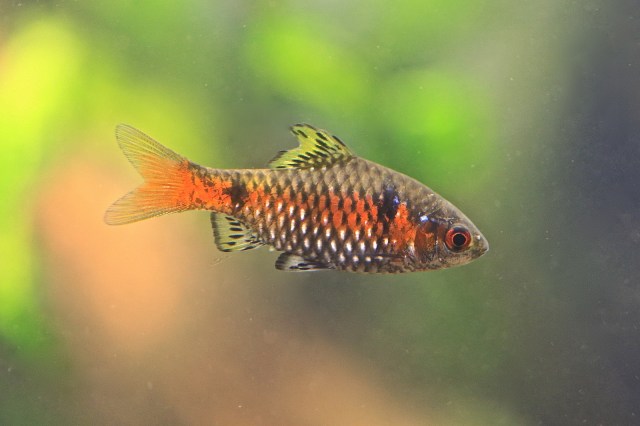
Genus/species: Pethia padamya

9830844836_c473e373de_b

GENERAL CHARACTERISTICS: This species exhibits sexual dimorphism. The male has a beige to light brown background with a bright red stripe running the length of the body. The dorsal, anal, and pelvic fins of the male are yellowish-green in color with contrasting black spots.
The female is light beige with a silvery sheen on the scales. The fins are a light yellowish-green; however, only the dorsal fin contains the contrasting black spots, which are fainter than those of the male. Both sexes have a black and prominent spot in the dorsal area, as well as a smaller spot in the caudal area.
Average length is 4.5cm (about 2 inches).

Odessa Barb 9830830994_eb9d56b36b_h

DISTRIBUTION/HABITAT: Central Myanmar in one pond and one river.

DIET IN THE WILD: Not well-studied, omnivores. Cyprinids are stomachless fish with toothless jaws. Even so, food can be effectively chewed by the pharyngeal teeth the gill rakers of the specialized last gill bow.

REMARKS: Named “Odessa barb” because it was said to have first appeared in pet enthusiast’s circles in Odessa, Ukraine in the early 1970s.

flickr  http://www.flickr.com/photos/cas_docents/9830830994/in/set-72157608614099673

WordPress shortlink http://wp.me/p1DZ4b-16w

TAXONOMY
Kingdom: Animalia
Phylum: Chordata
Class: Actinopterygii (ray-finned fishes)
Order: Perciformes (Perch-likes)
Family: Cichlidae (Cichlids)

Genus/species: Tilapia buttikoferi

Hornet Tilapia 4562623192_2331f3feaf_b-2

GENERAL CHARACTERISTICS: Length to 12 inches. Color is yellowish-grey, with 7-8 broad, oblique brownish-black bars, broader than the light spaces

DISTRIBUTION/HABITAT: Native to Western Africa. Found in coastal rivers and streams.

DIET IN THE WILD: A voracious omnivore, T. buttikoferi feeds on fish and crustaceans and vegetable matter.

CONSERVATION: IUCN least concern.

Hornet Tilapia 9260875598_b14d228439_o

REMARKS: After salmonids and carps, tilapia are fast growing and easily bred. Tilapia are the most important fishes in aquaculture by the gross weight of production. They have imported and bred throughout the world for both aquatic and nutritious purposes and are legal in Texas and Florida.

Swamp Cichlids SW02

flickr  http://www.flickr.com/photos/cas_docents/sets/72157627952093337/with/4562623192/

WordPress Shortlink  http://wp.me/p1DZ4b-12j

TAXONOMY
Kingdom: Animalia
Phylum: Chordata
Class: Actinopterygii (ray-finned fishes)
Order: Perciformes (Perch-likes)
Family: Cichlidae (Cichlids)

Genus/species: Herichthys cyanoguttatus

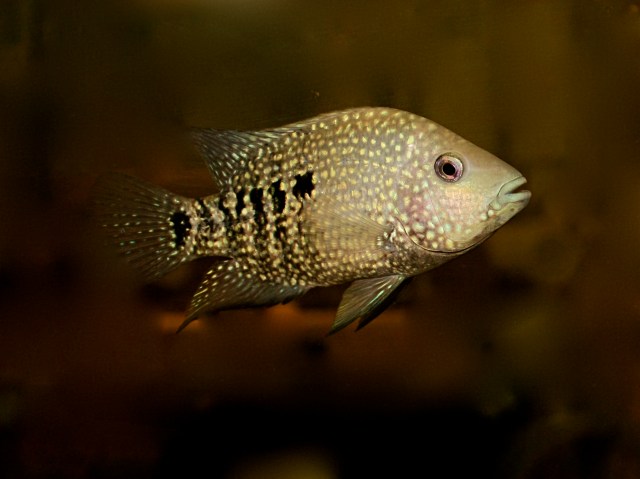
Texas Cichlid aka Rio Grande Cichlid  2999113747_5988dd62cb_o

GENERAL CHARACTERISTICS: Light grey with many small turquoise to white dots over the body. A single black spot on central side and second spot on the caudal peduncle; three black bars behind central spot. Max. length: 30 cm (12 inches), common length : 11.3 cm (4.5 inches)

DISTRIBUTION/HABITAT: Originally restricted to the lower Rio Grande drainage in Texas and south to northeastern Mexico. Introduced to central Texas and central Florida. Found in pools and open runs of rivers; prefers warm water and areas with vegetation.

DIET IN THE WILDt: Worms, crustaceans, insects, and plant matter. Sorts through mouthfuls of gravel, eats the small animals, and spits out the rest.

2999122499_4e5fd3ed0b_o

REMARKS: Considered a game fish in Texas and Mexico. This species is the only cichlid native to the U.S.

Swamp, SW08 Alligator Gars

flickr  http://www.flickr.com/photos/cas_docents/sets/72157608608528651/with/2999113747/

WordPress Shortlink http://wp.me/p1DZ4b-11T

TAXONOMY
Kingdom: Animalia (animals)
Phylum; chordata (chordates)
Subphylum: Vertebrata (vertebrates)
Superclass: Osteichthyes (bony fishes)
Class: Actinopterygii (ray-finned fishes)
Order: Siluriformes (Catfish)
Family: Ictaluridae (North American freshwater catfishes)

Genus/species: Ictalurus punctatus 

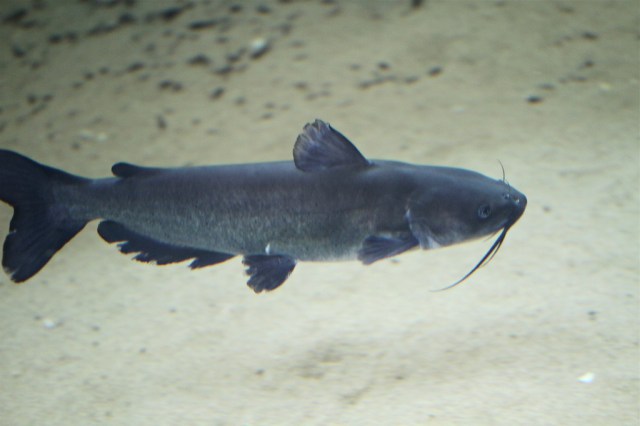
Channel Catfish 4814480548_07a4554eb4_b

GENERAL CHARACTERISTICS: Color varies from blue, black, olive; speckled above, lighter below, with males generally darker than females. Like all catfish, are scaleless. Two barbels in upper jaw,four below, keel like adipose fin and a forked tail. Size to 24 inches and weight to 13 kg (28.6 lbs).

DISTRIBUTION/HABITAT: North America: Central drainages of the United States to southern Canada and northern Mexico. Found in rivers and streams, ponds and reservoirs, especially on sand or gravel bottom near rocks or logs where they hide during the day.

DIET IN THE WILD: Olfactory sensors on barbels and the body. Omnivorous eating small fish, crayfish, clams and snails; also feed on aquatic insects and small mammals.

REPRODUCTION: Monogamous. Mate once a year, males guard nest. Farmed world-wide as a food source.

REMARKS: Albino form common in the aquarium trade.
Farmed world-wide as a food source.

Waterplanet Feeding Cluster and Swamp SW02

flickr  http://www.flickr.com/photos/cas_docents/sets/72157608608528651/with/4814480548/

WordPress Shortlink  http://wp.me/p1DZ4b-110

6-25-13

TAXONOMY
Kingdom: Animalia
Phylum: Chordata
Class: Actinopterygii (ray-finned fishes)
Order: Perciformes (Perch-likes)
Family: Centrarchidae (Sunfishes)

GENUS: Lepomis sp. 

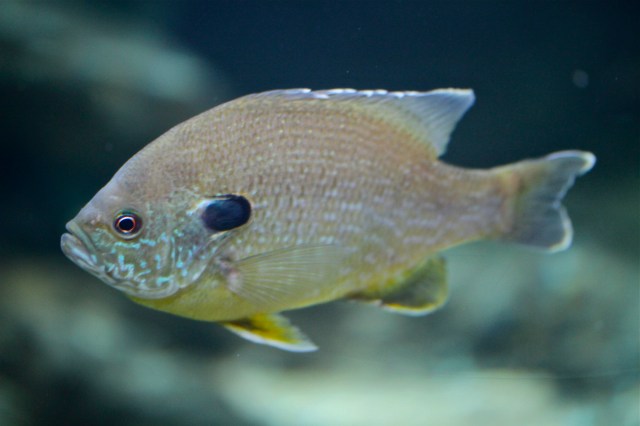
Sunfish description to append

GENERAL CHARACTERISTICS: Shape is perch like. In direct sunlight sunfish have a brilliant sheen. A black extension of the upper gill cover is the “ear.” Spinous dorsal fins. Length to 24 cm (9.5 inches) and a maximum weight of 1.7 pounds.

DISTRIBUTION/HABITAT: North America from northeastern Mexico to the north to the Great Lakes in shallow water, with dense vegetation in small lakes, ponds and slow-moving rivers and streams

DIET IN THE WILD: Carnivorous, tend to be generalists: aquatic insects, snails, crustaceans and small fishes.

REPRODUCTION: Male makes the nest and defends it.

Sunfish description to append

REMARKS: A popular game fish with anglers.

Swamp SW02 and Water planet Feeding Cluster WP31

 flickr  http://www.flickr.com/photos/cas_docents/sets/72157608608528651/with/4533132487/

WordPress Shortlink

http://wp.me/p1DZ4b-10P

TAXONOMY
Kingdom: Animalia
Phylum: Chordata
Class: Actinopterygii (ray-finned fishes)
Order: Cypriniformes (Carps)
Family: Catostomidae (Suckers)

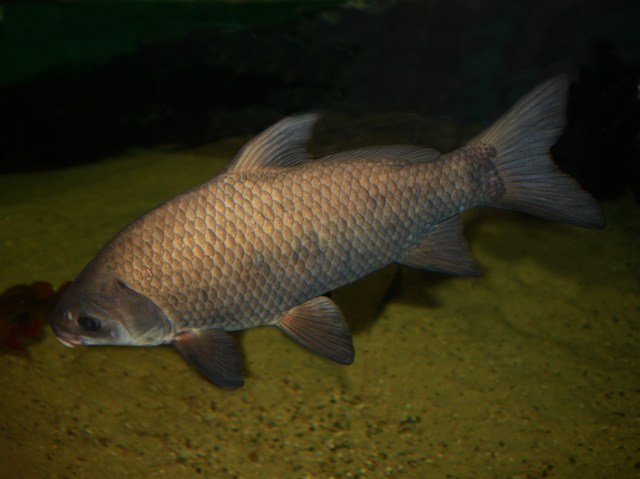
GENUS/SPECIES: Ictiobus bubalus

Smallmouth Buffalo Fish  Ictiobus bubalus (Catostomidae) (Suckers) 3000398478:

GENERAL CHARACTERISTICS: Common length : 58.5 cm (2 feet), max. weight: 37 kg (81 pounds). Stocky with a dorsal hump. Color varies from gray to brown and coppery green dorsally and pale yellow to white ventrally.

DISTRIBUTION/HABITAT: Lake Michigan drainage and Mississippi River basin from Pennsylvania and Michigan to Montana, and south to the Gulf of Mexico and Mexico. Inhabits pools, backwaters and main channels of small to large rivers. Also in lakes and reservoirs.

DIET IN THE WILD: Feeds on benthic crustaceans, mollusks; also algae. Grinds prey with the bony plates in its throat.

Smallmouth Buffalo Fish  Ictiobus bubalus (Catostomidae) (Suckers)IMG_2505

REPRODUCTION: Spawns in spring and summer with the female depositing tens of thousands of eggs which adhere to vegetation and gravel to keep from flowing away.

MORTALITY: Lives to 15 years.

REMARKS: Somewhat boney but a desirable food fish. These fishes are caught in commercial fishing gear including hoop and wing nets, drag seines, and trammel and gill nets in the midwest. (Rarely taken by hook-and-line fishing).

Water planet Feeding Cluster WP31

flickr http://www.flickr.com/photos/cas_docents/sets/72157608608528651/with/3000398478/

WordPress Shortlink http://wp.me/p1DZ4b-10H

TAXONOMY
Class: Actinopterygii (ray-finned fishes)
Order: Acipenseriformes (Sturgeons and paddlefishes)
Family:Polyodontidae Paddlefishes (Paddlefishes)

Genus/species: Polyodon spathula
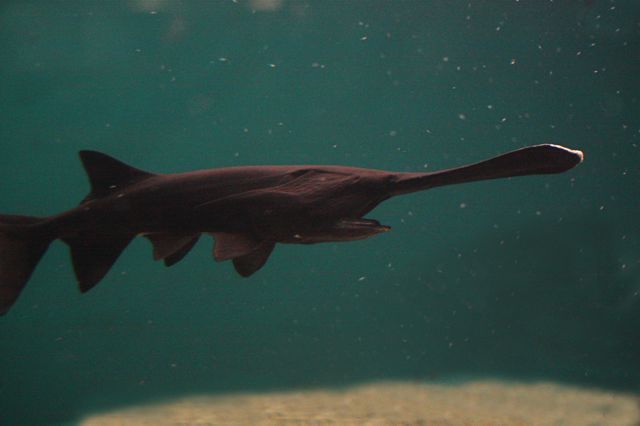
GENERAL CHARACTERISTICS: Gray, shark-like body with a deeply forked tail and huge toothless mouth when feeding. Extended upper jaw (rostrum) flattened into paddleshape, accounts for 1/3 of total body length. Fins stiffer than those of teleost fishes. Heterocercal tail. Skeleton cartilaginous, skin tough, scales lacking. Max length 221 cm (87 inches); max weight 90.7 kg (200 pounds), average weight considerably less.

DISTRIBUTION/HABITAT: Rivers of central United States, especially Mississippi River and its tributaries. Prefers deep pools in large rivers where the current is slow; is highly mobile and has been known to travel more than 2,000 miles.
8440810977_b3ddc58544_b

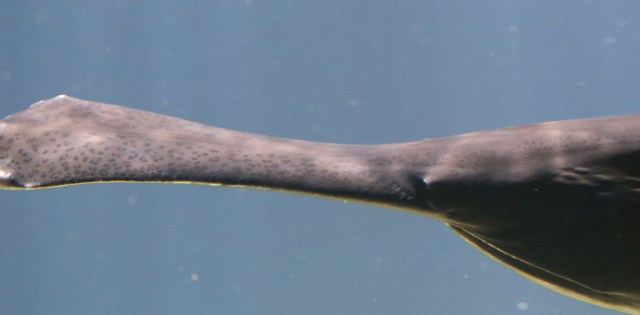
DIET IN THE WILD: Zooplankton, the majority being water fleas, also tiny crustaceans and larvae. To feed, the fish swims with its huge mouth wide open. As the water passes over its gills food is filtered out by special filaments called gill rakers. Also, the paddle is covered with pores that extend over the head and along the gill covers. These pores are electroreceptors capable of detecting as little as 1/100 of 1-millionth volt per cm, enough to sense the presence of plankton, a valuable tool, especially since vision, hearing and smell are poor.
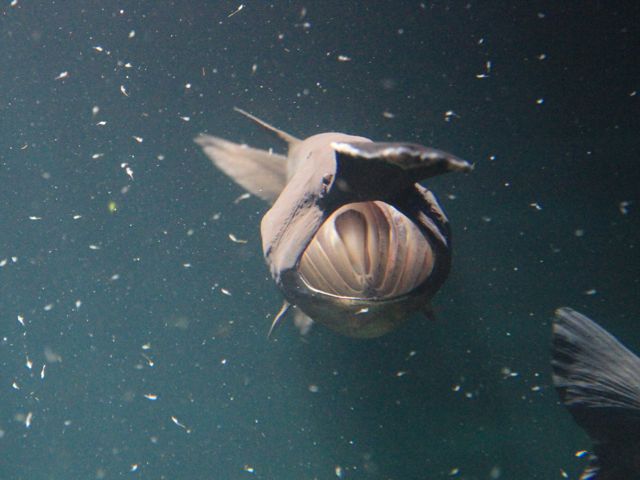

REPRODUCTION and DEVELOPMENT: Female spawn only once every 4 to 7 years starting when they are 6-12 years old swimming up river to lay 2 eggs at a time. Egg cases rounded. Eggs hatch in 7 days; young are swept downstream to permanent home.

MORTALITY: Live up to 30 years.

PREDATORS: Only man.

CONSERVATION STATUS: IUCN: vulnerable. Threatened by overfishing throughout much of its range, particularly for its eggs since the ban on imported caviar. Dams prevent fish from reaching spawning grounds, sedimentation and river modifications destroy habitat.
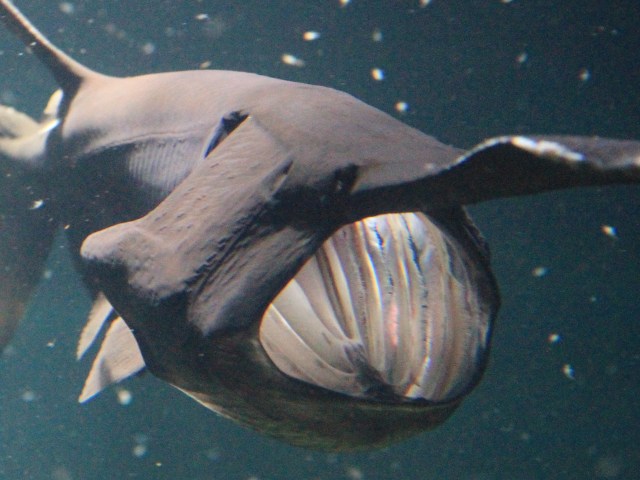
Mississippi paddlefish   (Polyodon spathula)  IMG_2499 - Version 2

REMARKS: The paddle is covered with pores that extend over the head and along the gill covers. These pores are electroreceptors capable of detecting as little as 1/100 of 1-millionth volt per cm, enough to sense the presence of plankton, a valuable tool, especially since vision, hearing and smell are poor.

Both paddlefish and sharks have skeletons made of cartilage, not bone. Paddlefish have no scales.

Paddlefish are the oldest surviving animal species in North America. Fossil records indicate that they date back 300 million years.

Water Planet Feeding Cluster WP31

Ron’s flickr  http://www.flickr.com/photos/cas_docents/sets/72157625017923579/with/3186623140/

Ron’s WordPress shortlink  http://wp.me/p1DZ4b-lb