Archive for October, 2013


TAXONOMY
Kingdom:Animalia
Phylum: Chordata
Class: Actinopterygii (ray-finned fishes)
Order: Perciformes (Perch-likes)
Family: Pomacentridae (Damselfishes)

Genus/species Pomacentrus auriventris

GENERAL CHARACTERISTICS: Neon-blue head and upper body, yellow lower and rear body, anal and tail fins. Length to 5.5 cm ( 2 inches).
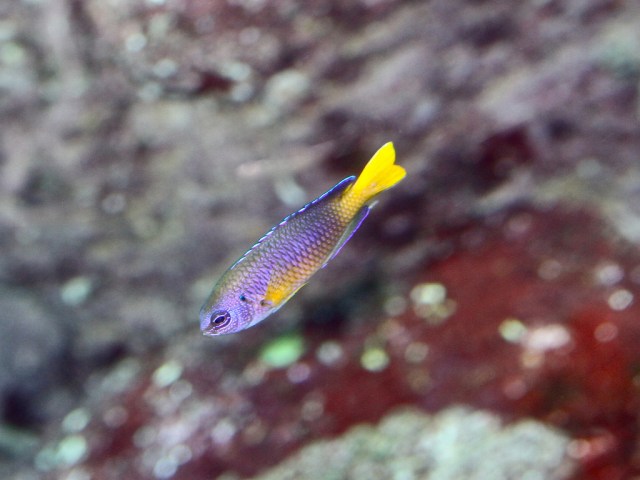
Goldbelly Damselfish 4770698270_7ccdac2124_b

DISTRIBUTION/HABITAT: Western Central Pacific: Found on inner coral reef slopes with mixed rubble, coral and algae. depth range 6 – 35 feet (2 – 11 m).

DIET IN THE WILD: Omnivore.

REPRODUCTION: Oviparous, distinct pairing during breeding. Eggs are demersal (just above the sea bed) and adhere to the substrate.. Males guard and aerate the eggs

CONSERVATION: Not evaluated.

Ref. fishbase, EOL. Reef Fish Identification, Tropical Pacific, Allen et at.2003.

Philippine Coral Reef PR04

flickr http://www.flickr.com/photos/cas_docents/4770698270/in/set-72157608339622313

WordPress Shortlink http://wp.me/p1DZ4b-19p

TAXONOMY
Kingdom: Animalia
Phylum: Chordata
Class: Actinopterygii (ray-finned fishes)
Order: Perciformes (Perch-likes)
Family: Pomacentridae (Damselfish)

Genus/species: Chrysiptera parasema

GENERAL APPEARANCES:: Small, blue-bodied fish with a yellow tail; 7–9 cm (2.75 – 3.5 inches) long. Colors become less contrasting with age.

Yellow-tail Blue Damselfish 4533756786_58d0151ab2_o

DISTRIBUTION/HABITAT: Western Pacific in coral-rich areas of sheltered lagoon and inshore coral reefs. Inhabits rubble beds on lagoon reefs to 16 meters (52 feet) deep. Occurs in small groups on Acropora patches.

DIET IN THE WILD: Omnivore.

REPRODUCTION: Oviparous, distinct pairing during breeding. Eggs are demersal and adhere to the substrate.

Ref: fishbase, EOL, Reef Fish Identification, Tropical pacific, Allen et al. 2003

Philippine Coral Reef PR04

flickr http://www.flickr.com/photos/cas_docents/sets/72157608339622313/with/4533756786/

WordPress Shortlink  http://wp.me/p1DZ4b-19h

TAXONOMY
Kingdom: Animalia
Phylum: Chordata
Class: Actinopterygii (ray-finned fishes)
Order: Characiformes (Characins)
Family: Lebiasinidae (Pencilfishes)

Genus/species: Nannostomus eques

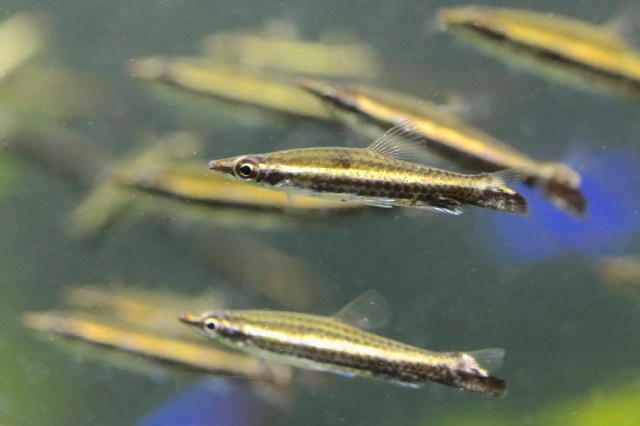
Diptail Pencilfish aka Brown Pencilfish 10286393965_fe0600ac47_b

GENERAL CHARACTERISTICS: Small elongate fish with a brown lateral stripe extending from snout to caudal-fin base. Above the dark brown stripe a silver-grey stripe. A dark brown spot on each body scale except those forming part of the silver stripe. . Latin, nannus = small + Greek, stoma = mouth. Adult males have an enlarged anal fin. Max Length 5 cm

DISTRIBUTION/HABITAT: South America: central and upper Amazon. Found in sluggish tributaries, small rivers, and swampy zones, ofter where vegetation grows densely with submerged woody structures and leaf litter.

DIET IN THE WILD: Micropredator feeding on worms, crustaceans, insects and zooplankton.

REPRODUCTION: Oviparous.

REMARKS: Has an interesting oblique swimming-style.

Flooded Amazon, Cardinal tetra exhibit

flickr  http://www.flickr.com/photos/cas_docents/10286393965/in/set-72157625825649576/

WordPress shortlink  http://wp.me/p1DZ4b-18A

Ref. Fishbase, Seriouslyfish.com

TAXONOMY 
Kingdom: Animalia
Phylum: Chordata
Class: Actinopterygii (ray-finned fishes)
Order: Perciformes (Perch-likes)
Family: Cichlidae (Cichlids)
Subfamily: Cichlasomatinae

Genus/species: Pterophyllum altum

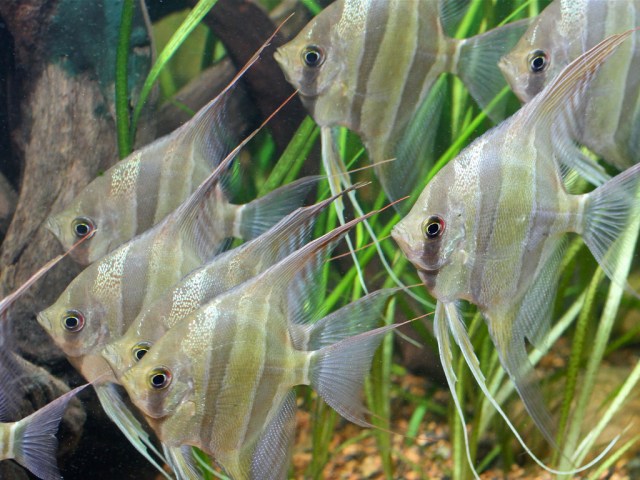
Altum Angelfish 4689972848_189e460e8f_b

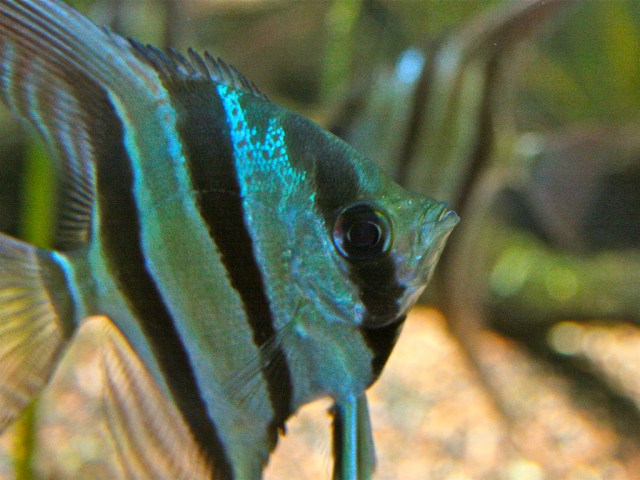
GENERAL CHARACTERISTICS: Extremely compressed silvery body with two broad dark vertical bands. Remarkably long trailing pelvic fins. Altum refers to the dramatic height of their dorsal and anal fins. Length to 18 cm (7 inches). Max height 20 cm (7.87 inches). Orbital indentation differentiates from Pterophyllum scalare.

DISTRIBUTION/HABITAT: South America: Amazon basin, in the upper Rio Negro drainage; Orinoco River basin.

DIET IN THE WILD: Carnivore

REPRODUCTION and DEVELOPMENT: External fertilization. Monogamous; pairs persist until partner dies or is separated. Clutch-tending guarders.

Altum Angelfish 3787890518_a572b4929f_b

MORTALITY/LONGEVITY: Preyed upon by other fishes. Subject to bacterial diseases and protozoan, fungal and worm infestations.

CONSERVATION: IUCN: Not evaluated.

Flooded Amazon AM05

Ref. fishbase, EOL

flickr http://www.flickr.com/photos/cas_docents/4689972848/in/set-72157608376694453/

WordPress shortlink http://wp.me/p1DZ4b-18q

TAXONOMY
Kingdom: Animalia
Phylum: Chordata
Class: Actinopterygii (ray-finned fishes)
Order: Characiformes (Characins)
Family: Characidae (Characins)

Genus/species: Exodon paradoxus

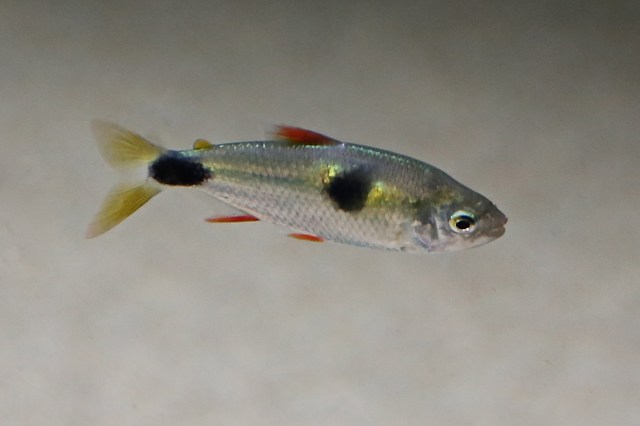
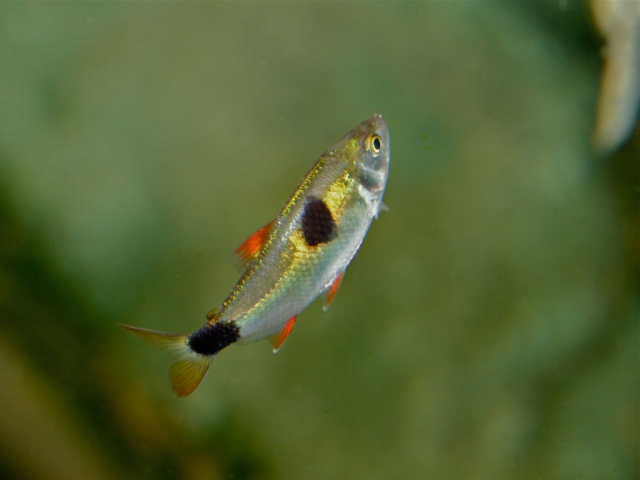
GENERAL CHARACTERISTICS: Light tan with two distinct black spots (one before the tail and another on the flank.) Common name comes from the large protruding teeth. Length : 4 inches (10 cm) to 6 inches (15 cm) .

Bucktooth Tetra  8353979147_bb878d0337_o

DISTRIBUTION/HABITAT: South America: Amazon and Tocantins River basins with sandy bottoms. Also found in Guyana.

DIET IN THE WILD: Insects and the scales of other fish.

REMARKS: Eating scales of other fishes (lepidophage) is a behavior common to a variety of species. (Some species of Piranha eat only scales) Scales are nutritional, offering a source of calcium carbonate and other minerals, as well as a layer of protein-rich mucus. A reliable resource, scales are plentiful, available year round, and readily regrown.

Bucktooth Tetra  5230993504_efa63ce423_b

Flooded Amazon, electric eel exhibit. AM11

Ref. fishbase, EOL, Seriously Fish

flickr http://www.flickr.com/photos/cas_docents/8353979147/in/set-72157608614099673/

WordPress Shortlink  http://wp.me/p1DZ4b-18j

TAXONOMY
Kingdom: Animalia
Phylum:Chordata
Class: Actinopterygii (ray-finned fishes)
Order: Perciformes  (Perch-likes)
Family: Cichlidae  (Cichlids)Genus/species: Geophagus altifrons

Earth eating cichlid 2975336785_c7f6e17516_o

GENERAL CHARACTERISTICS: Protruding mouth. Head has red weblike markings. Spiky fins.

DISTRIBUTION/HABITAT: South America: Amazon basin in freshwater rivers.

DIET IN THE WILD: Common name derived from this fish’s almost constant digging in the sand for prey.

REPRODUCTION: Fish in this genus are mouth brooders. The parents take turns brooding and spit the fry into the partner’s mouth when their shift is over.

CONSERVATION: Not evaluated.

REMARKS: Genus name translates as “eartheater.” This common name applies to many species. A small, but popular food fish.

Flooded Amazon

flickr http://www.flickr.com/photos/cas_docents/2975336785/in/set-72157608614099673/

WordPress shortlink  http://wp.me/p1DZ4b-17X