Tag Archive: Flooded Amazon


TAXONOMY
Kingdom: Animalia
Phylum: Chordata
Class: Reptilia
Order: Testudines
Suborder: Pleurodira (side-necked turtles)
Family: Chelidae (“snake-necked turtles”)

Genus/species: Chelus fimbriata

GENERAL CHARACTERISTICS: Color is faded yellow, washed out browns, oranges, and greys. The carapace has three lengthwise knobby keels with algae covering much of the carapace resembling a piece of bark, camouflaging it from possible predators. The head is widely triangular with large lateral flaps of skin and three barbels on the chin and four additional filamentous barbels at the upper jaw, The snout is a long protuberance used as a snorkel.  Carapace length to up to 45 cm (18 inches). Weight to 15 kg (33 lb).

DISTRIBUTION/HABITAT: Tropical. Amazon Basin, South America. Found near the bottom of turbid waterways in lakes, ponds and sluggish creeks. Rarely leaves the water.

DIET IN THE WILD: Carnivore. A “lay-in-wait” predator. Fishes and aquatic invertebrates are captured with the “gape and suck” technique. The opening of its mouth creates a vacuum to draw in prey with the mouth snaping shut, expelling the water and the fish swallowed whole.


REPRODUCTION: Fertilization is internal. They excavate their nests in decaying vegetation at the forest edge laying 12 to 28 eggs with an incubation periods of around 200 days.

LIFESPAN: To 15 years in captivity.

CONSERVATION: IUCN and CITES No special status.
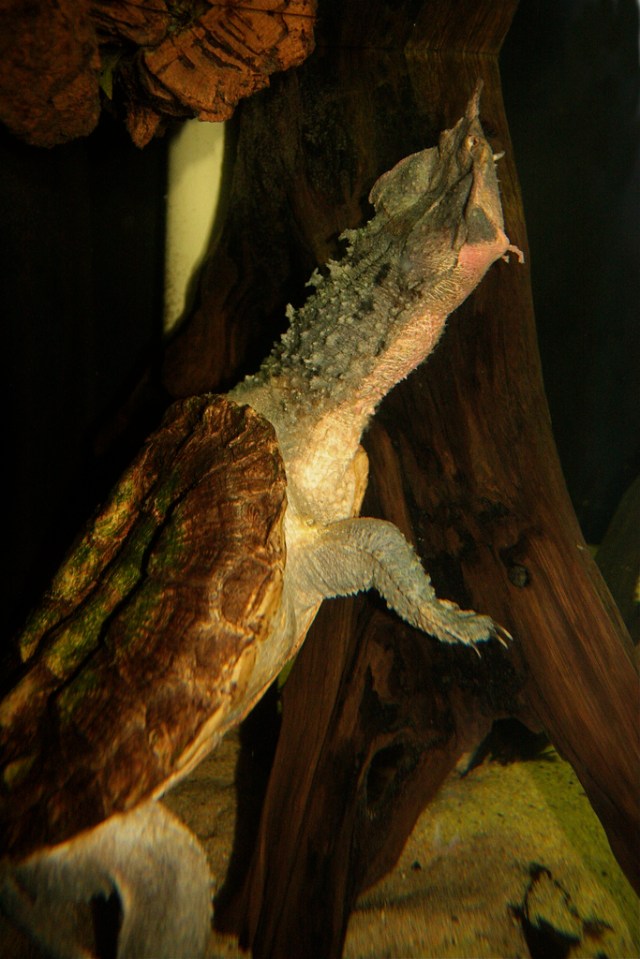


3449612144_afdc85b508_b

REMARKS: The common name “matamata” is said to have the meaning “I kill” in one of the South American native languages.
C.fimbriatus has extremely poor eyesight. It can sense sound through a well developed tympanum on both sides of the head.

References

Ron’s WordPress shortlink  http://wp.me/p1DZ4b-bJ 

 U. of Michigan ADW animaldiversity.ummz.umich.edu/accounts/Chelus_fimbriatus/

Encyclopedia of Life  eol.org/pages/795410/details

Ron’s flickr  http://www.flickr.com/photos/cas_docents/sets/72157608449490716/


TAXONOMY
Kingdom: Animalia
Phylum: Chordata
Class: Amphibia
Order: Anura (frogs)
Family: Hylidae (“tree frogs and their allies”)

Genus/species: Trachycephalus resinifictrix

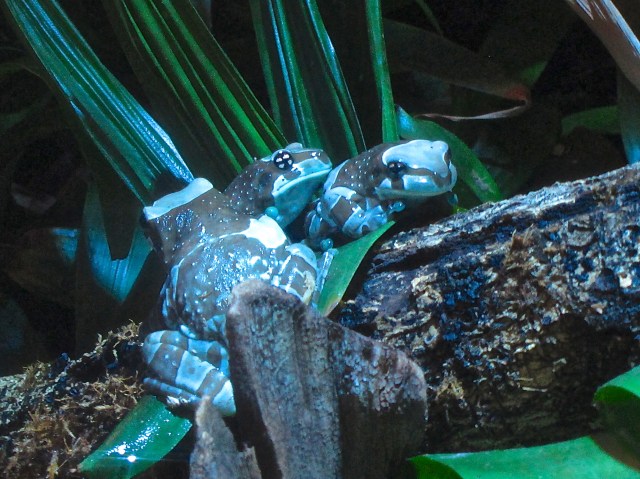
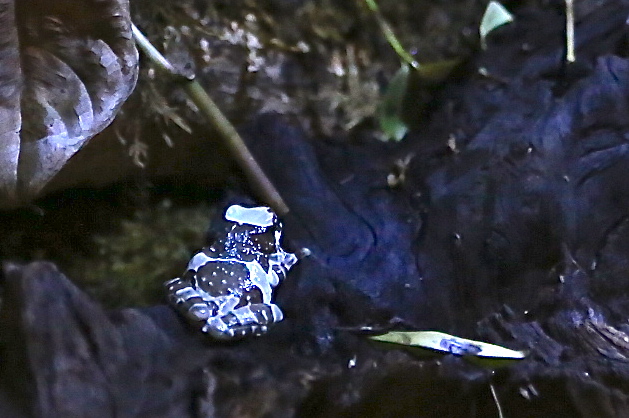
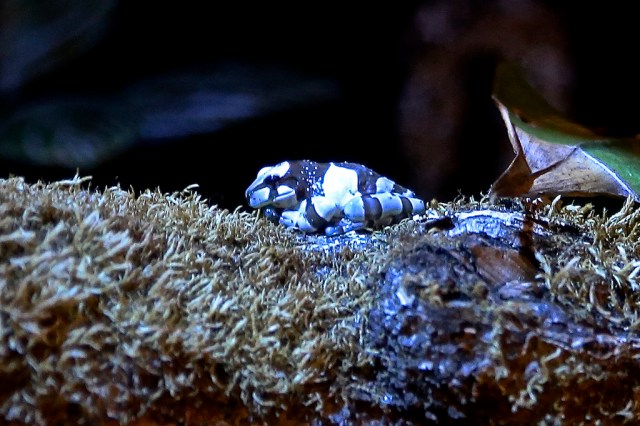
GENERAL CHARACTERISTICS: Light grey in color with brown or black banding,  Older frogs develop a slightly bumpy texture. The iris is golden with a black Maltese cross centered on the pupil. There is a vocal sac on each side of the head.  Reach 2.5 to 4 inches in length.

9830839556_f67b20a3fe_o

GENERAL CHARACTERISTICS: Light grey in color with brown or black banding, Older frogs develop a slightly bumpy texture. Reach 2.5 to 4 inches in length.

DISTRIBUTION/HABITAT:  Bolivia, Brazil, Colombia, Ecuador, French Guiana, Suriname, Venezuela.  Found in the canopy of tropical primary humid rainforests. They often inhabit vegetation which extends over permanent, slow-moving water.

IMG_0243

DIET IN THE WILD: Insectivorous

REPRODUCTION: Mainly in the rainy season between November and May. Clutches of about 2500 eggs form a gelatinous mass that floats near the surface of water or adheres to the inner wall of the tree holes. Tadpoles feed on conspecific eggs and vegetable detritus until metamorphosis in the tree holes.

IMG_4424

LIFESPAN Up to 25 years.

CONSERVATION: IUCN Red List; Least concern.

8353978767_29b24b4235_b

 REMARKS: The “milk” in the name comes from the poisonous milky-coloured fluid these frogs excrete when stressed.

References

Ron’s flickr  http://www.flickr.com/photos/cas_docents/8353978767/sizes/l/in/set-72157608456457315/

Ron’s WordPress Shortlink  http://wp.me/p1DZ4b-Mo

eol  eol.org/pages/1025259/details

Connecticut Beardsely Zoo  beardsleyzoo.org/amazonmilkfrog-fk1

TAXONOMY
Kingdom: Animalia
Phylum:Chordata
Class: Actinopterygii (ray-finned fishes)
Order: Perciformes  (Perch-likes)
Family: Cichlidae  (Cichlids)Genus/species: Geophagus altifrons

Earth eating cichlid 2975336785_c7f6e17516_o

GENERAL CHARACTERISTICS: Protruding mouth. Head has red weblike markings. Spiky fins.

DISTRIBUTION/HABITAT: South America: Amazon basin in freshwater rivers.

DIET IN THE WILD: Common name derived from this fish’s almost constant digging in the sand for prey.

REPRODUCTION: Fish in this genus are mouth brooders. The parents take turns brooding and spit the fry into the partner’s mouth when their shift is over.

CONSERVATION: Not evaluated.

REMARKS: Genus name translates as “eartheater.” This common name applies to many species. A small, but popular food fish.

Flooded Amazon

flickr http://www.flickr.com/photos/cas_docents/2975336785/in/set-72157608614099673/

WordPress shortlink  http://wp.me/p1DZ4b-17X

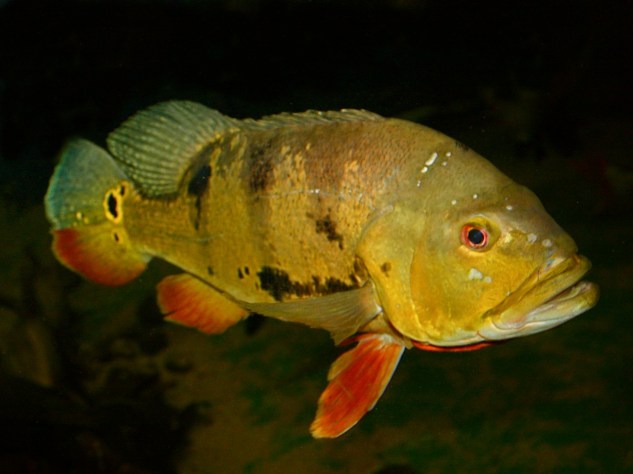
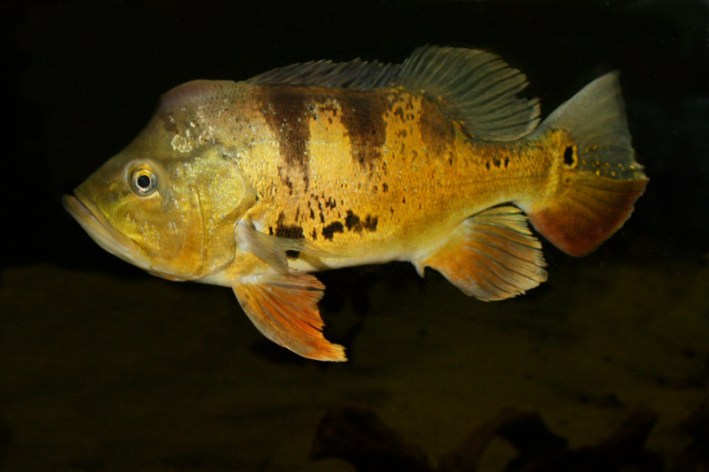
Cichla ocellaris (Cichlidae)  Cichlid

Female below.

DISTRIBUTION: Amazon, Orinoco, and La Plata basins in South America. Currently established in southern Florida.

HABITAT: Warm freshwater.

APPEARANCE: Elongate body with deeply notched dorsal fin, large mouth with projecting lower jaw. Color: olive-green fading ventrally to yellow-white, with three dark vertical bars on sides and series of dark spots in between. A large black spot encircled by silver adorns the caudal fin. Max. length: 60 cm. Male has a lump no top of the skull.

DIET: Diurnal feeders on other fishes. High speed pursuit predators.

REPRODUCTION and DEVELOPMENT: Substrate spawner. Both parents guard their clutch for about 9 weeks. Like most cichlids, breeding pairs are highly territorial and aggressive.

REMARKS: Legally introduced to Florida. Are considered a prized sport and food fish.

LOCATION: Flooded amazon tunnel, AM11

WORDPRESS SHORTLINK  http://wp.me/p1DZ4b-b9

Male below; note lump on top of the skull.