
Class Actinopterygii (ray-finned fishes), Order Perciformes (Perch-likes), Family Chaetodontidae (Butterflyfishes)
Chaetodon striatus
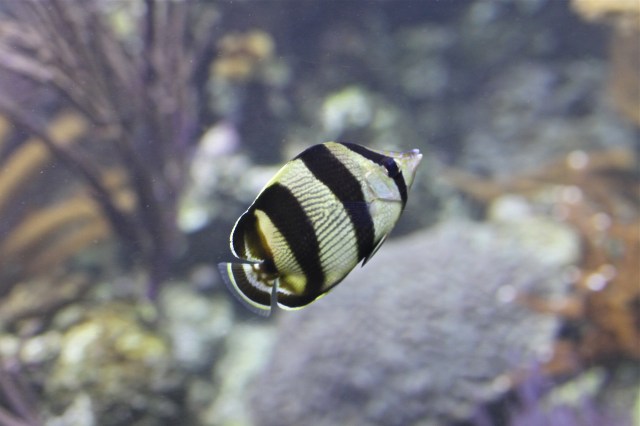
DISTRIBUTION: Western Atlantic: Massachusetts, USA to Santa Catarina, Brazil including the Gulf of Mexico and Caribbean Sea.
HABITAT: shallow waters around coral reefs.
APPEARANCE: Length: 6 inches (15cm). Two broad black bars on side of body and a third bar basally in soft portion of dorsal fin which extends onto caudal peduncle; broad black submarginal bands in the median fins; pelvic fins black except for the spine.
DIET: Feed on polychaete worms, coral polyps, crustaceans and mollusk eggs.
REPRODUCTION: Oviparous and monogamous forming pairs during breeding.
MORTALITY: Diurnal species, active during the day and sleeping at night. At the end of the day it seeks shelter since it is highly vulnerable to such night predators as moray eels, sharks, and other large reef fishes.
REMARKS: The small, protractile mouth has comb-like teeth arranged in narrow rows in the jaws. “Chaetodontidae” is actually derived from ancient Greek (“Chaeto” = bristle and “donte” = teeth). The bristle nature of its teeth allows the butterfly to scrape at the invertebrates that make up its diet.

LOCATION: Caribbean reef PR36
flickr http://www.flickr.com/photos/cas_docents/sets/72157625119200613/
WORDPRESS SHORTLINK http://wp.me/p1DZ4b-uz


 Ron's Critter of the Day