Tag Archive: butterflies


TAXONOMY
Kingdom: Animalia
Phylum: Arthropoda
Class: Insecta
Order: Lepidoptera
Family: Papilionidae

Genus/species: Papilio palinurus

GENERAL CHARACTERISTICS: The topsides of the wings are covered by a powder of green scales and the background varies from dark greenish to black, with broad bright emerald-green metallic bands. The undersides are black with orange, white and blue spots along the edges of hind wings, that show extended tails at the end. This species has rapid flight resulting in a flash of green as it flies past. The iridescent green sheen of the bands of this butterfly is not produced by pigments, but is structural coloration produced by the microstructure of the wing scales. They refract the light and give rise to blue and yellow visible reflections, producing the perception of green colour when additively mixed.
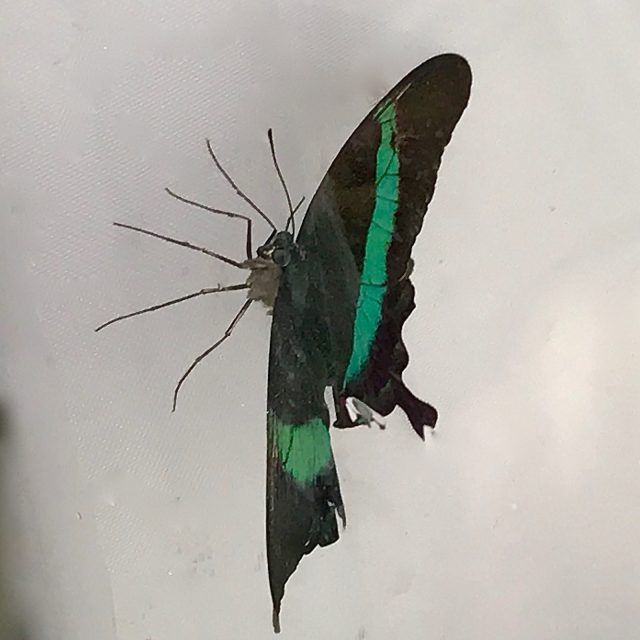
Wingspan: 8–10 centimetres (3.1–3.9 in).

DISTRIBUTION/HABITAT: Burma, Thailand and Peninsular Malaysia (Other subspecies in Neomalaya, Palawan and the Philippines). P. palinurus lives in Asian primary forests.

References

California Academy of Sciences Rainforest 2017

Ron’s flickr https://www.flickr.com/photos/cas_docents/33656616340/in/album-72157608449327886/

Samuibutterflies www.samuibutterflies.com/insects/butterflies/papilionidae…

IOPScience web.mit.edu/viveks/www/Publications_files/CrneSharma_Papi…

Ron’s WordPress Shortlink http://wp.me/p1DZ4b-1Ob
TAXONOMY
Kingdom: Animalia
Phylum: Arthropoda
Class: Insecta
Order: Lepidoptera
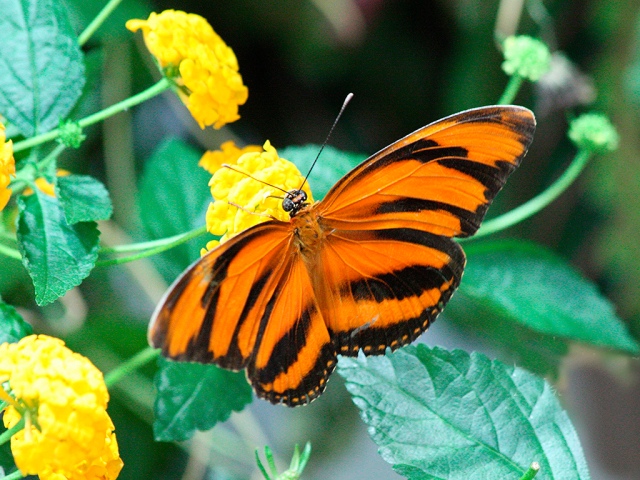
Family: Nymphalidae (Brush-footed or four-footed butterflies) The first pair of legs are small or reduced, giving the family the other names of four-footed or brush-footed butterflies.
Subfamily: Heliconiinae (passion-vine butterflies)

Genus/species: Dryadula phaetusa

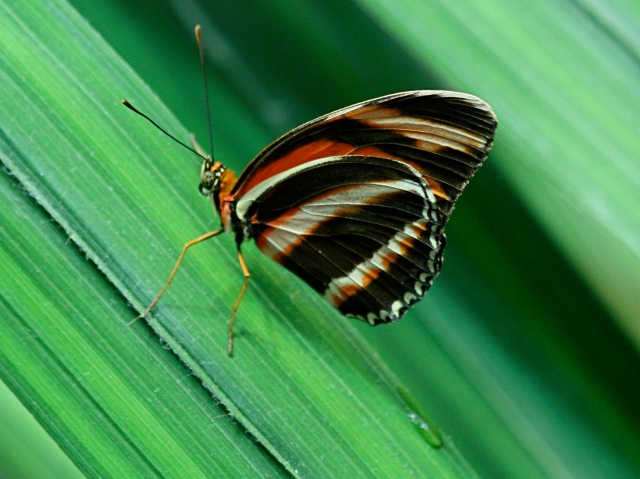
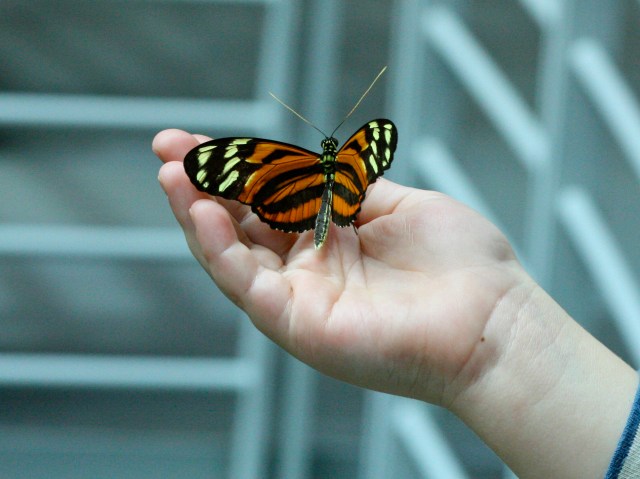
GENERAL CHARACTERISTICS: Males are bright orange with heavy black stripes dorsally (above); striking and quite different brown, orange, and white pattern below. Females somewhat duller with blurred black stripes.

Dryadula phaetusa 3129818320_9e962aa397_b

DISTRIBUTION/HABITAT: The Banded Orange Heliconian is native throughout the continental Neotropics, from central Mexico to Brazil; summer migrant in U.S. north to Kansas. It is usually found in disturbed lowland areas. Adults roost in small groups on grass.

DIET IN THE WILD: Caterpillars feed on various host passion-flower vine species; adults feed primarily on nectar and bird droppings.

REPRODUCTION: Eggs are laid singly on stems and leaves of host plants. Larvae of all heliconiines are spiny, have two spines on the head capsule. The inactive pupae are suspended with the body held either horizontal or vertical to the substrate and metamorphose into adults.

MORTALITY/LONGEVITY: They are long lived for butterflies. Heliconius spp. are among the Methuselahs of the butterfly world. Most butterflies live only days; some Heliconians in the adult (butterfly) stage, including the Heliconius melpomene, live for as long as 8 months. 

Banded Orange Heliconian aka Orange Tiger (wing bottom)Dryadula phaetusa Dryadula phaetusa

REMARKS: The Banded Orange is the sole member of its genus. The genus is distinguished by having shorter, broader wings and shorter antennae than others in the heliconiine subfamily.

References

Ron’s flickr http://www.flickr.com/photos/cas_docents/sets/72157608449327886/with/3129818320/

Ron’s WordPress Shortlink http://wp.me/p1DZ4b-12q

Butterflies and Moths of North America www.butterfliesandmoths.org/species/Dryadula-phaetusa

Smithsonian Tropical Research Institute biogeodb.stri.si.edu/bocas_database/search/species/1110

Tree of Life tolweb.org/Heliconiini/

TAXONOMY
Kingdom: Animalia
Phylum: Arthropoda
Class: Insecta
Order: Lepidoptera (moths and butterflies)
Family: Nymphalidae (Brush-footed Butterflies)

Genus/species: Siproeta stelenes

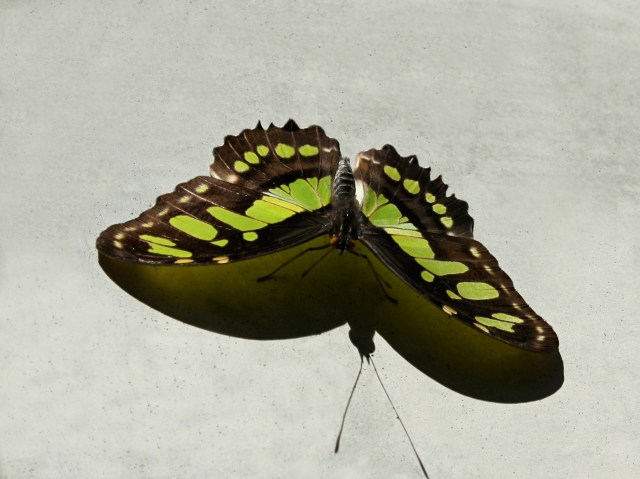
Malachite (wing top)Siproeta stelenes

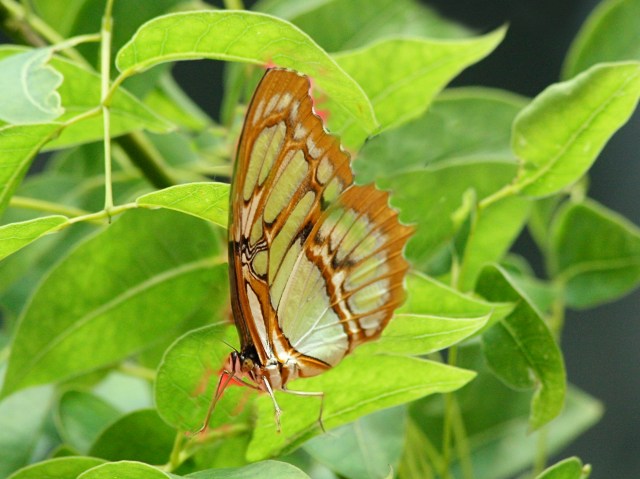
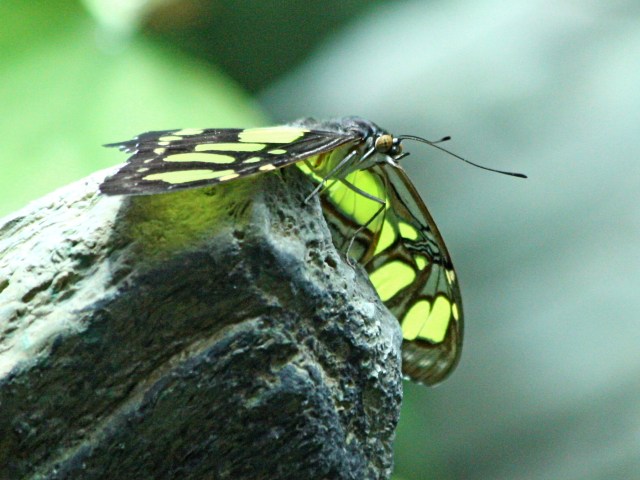
GENERAL CHARACTERISTICS: Upperside dark black-brown with translucent yellow to lime–green patches. Underside orange-brown with greenish patches.

Wing Span: 8.3 – 10.1 cm (3.3 – 3.9 in)

Wing bottom or ventral surface

Malichite (wing bottom) on leaves_

DISTRIBUTION/HABITAT: Common resident throughout Central and northern South America. In U.S., found in southern Texas and south Florida. Found in subtropical evergreen and semi-deciduous forests as well as fruit orchards in Florida.

DIET IN THE WILD: Caterpillars: host plants of the family Acanthaceae. Adults: rotting fruit; occasionally bird droppings and nectar.

REPRODUCTION: Eggs laid singly on host plant leaves. In warmest climates, up to four broods per year.

Malachite 3179150180_90dc2d417b_o_2

REMARKS: Named for the mineral malachite, reminiscent of the bright green of the wings. Adults roost together under the leaves of low shrubs. Green and black coloration provides excellent camouflage.

References

flickr http://www.flickr.com/photos/cas_docents/sets/72157608449327886/

California Academy of Sciences Rainforest 2017

flickr http://www.flickr.com/photos/cas_docents/sets/72157608449327886/

WordPress Shortlink  wp.me/p1DZ4b-146

butterflies and moths of North America  www.butterfliesandmoths.org/species/siproeta-stelenes

Iowa State University Bug Guide  bugguide.net/node/view/2767

EOL eol.org/pages/4068082/details

TAXONOMY
Kingdom: Animalia
Phylum: Arthropoda (Jointed Legged Animals)
Class: Insecta  (head, usually with two antennae. The thorax, has six legs and usually four wings. The abdomen, is used for breathing and reproduction.)
Order: Lepidoptera (most butterflies and moths)
Family: Nymphalidae (Brush-footed Butterflies)

Genus/species: Caligo eurilochus

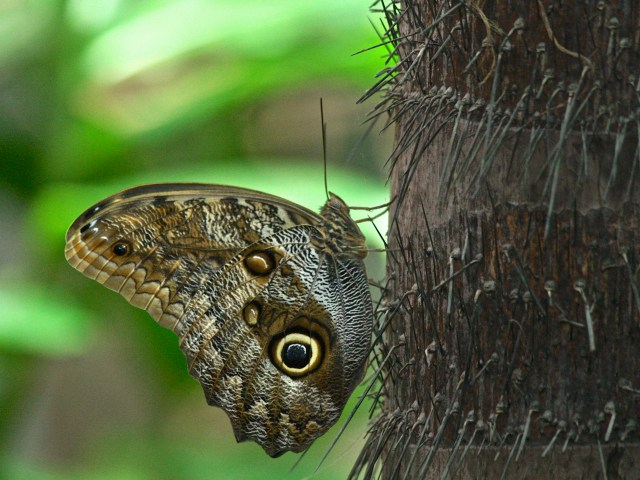
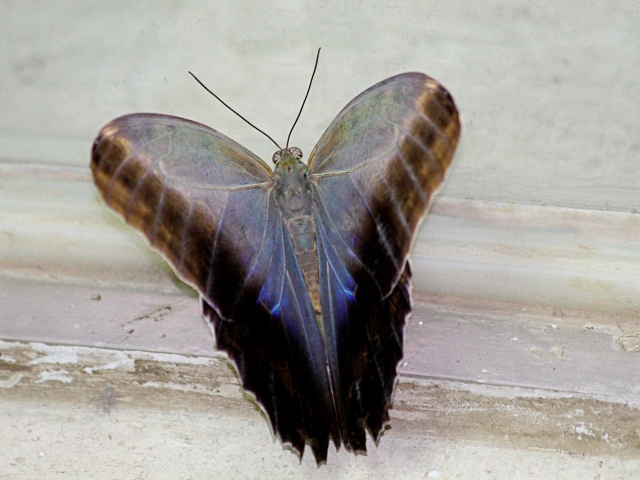
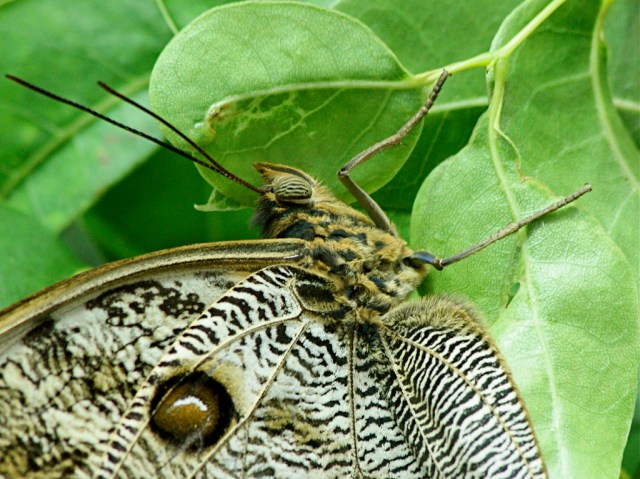
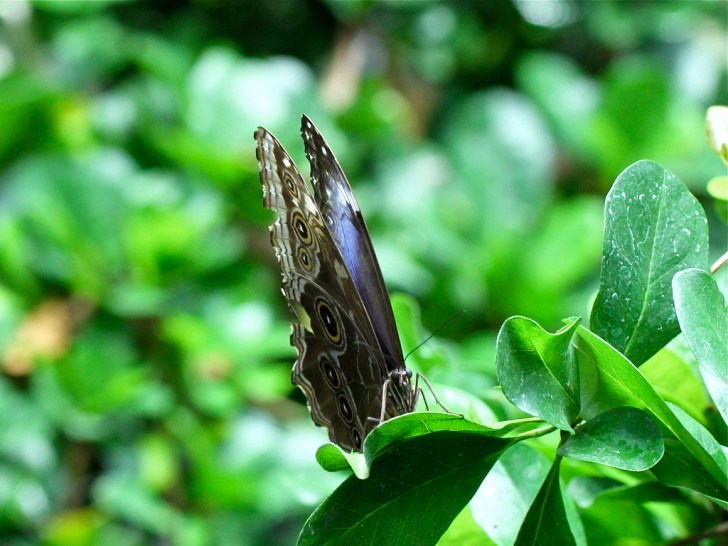
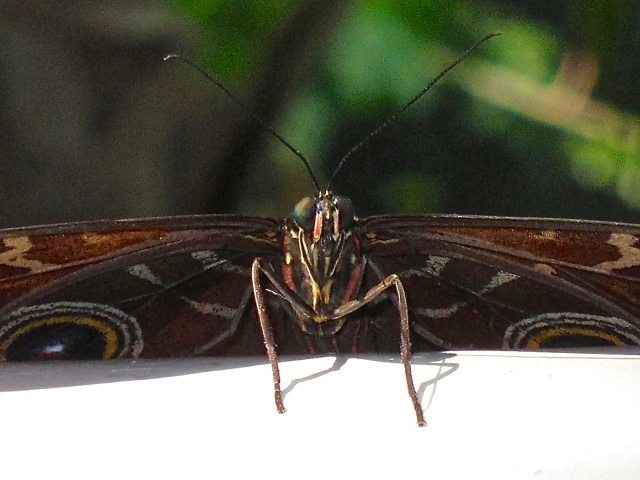
GENERAL CHARACTERISTICS: The color of the top (dorsal) wings is blue-gray.   Its ventral (bottom) wing surface is brown and tan with many lines and two large eye spots.

Wingspan up to 12.5 cm (5 inches). 

Wing bottom

Giant Owl Butterfly Caligo sp.

DISTRIBUTION/HABITAT: Mexico south to Amazonia in rainforests and secondary forests.

DIET IN THE WILD: Adults feed on rotting fruit, sipping liquids through their proboscis.

Wing Top

Giant Owl Butterfly IMG_0008

REPRODUCTION: The five larval instars each take a week to moult from one form to the other and the process therefore lasts about five weeks. The last instar moults to the chrysalis form which can be found hanging before the butterfly emerges at the end of five weeks

LIFESPAN: Up to seven weeks

PREDATORS: Fly at dusk to avoid avian predators.

Parasitized by tiny wasps known as Trichogrammatid which are parasitoids meaning that they kill their host

Giant Owl Butterfly 3175391673_2e6880dc85_b

REMARKS: Giant owls larvae are large and voracious, and one individual can consume an entire banana leaf more than 3 feet long!

The common name is derived from the large “eyespots” on the underside of wings, thought to be deterrents to bird predators.

Rainforest butterflies

References

California Academy of Sciences Docent Rainforest Training Manual 2014.

Smithsonian Tropical Research Institute biogeodb.stri.si.edu/bocas_database/search/quick/open/?se…

Encyclopedia of Life  eol.org/pages/137994/details

Ron’s flickr http://www.flickr.com/photos/cas_docents/sets/72157608449327886/

Ron’s WordPress Shortlink  http://wp.me/p1DZ4b-12x

TAXONOMY
Kingdom: Animalia
Phylum: Arthropoda
Class: Insecta
Order: Lepidoptera
Family: Papilionidae (Swallowtail butterflies)

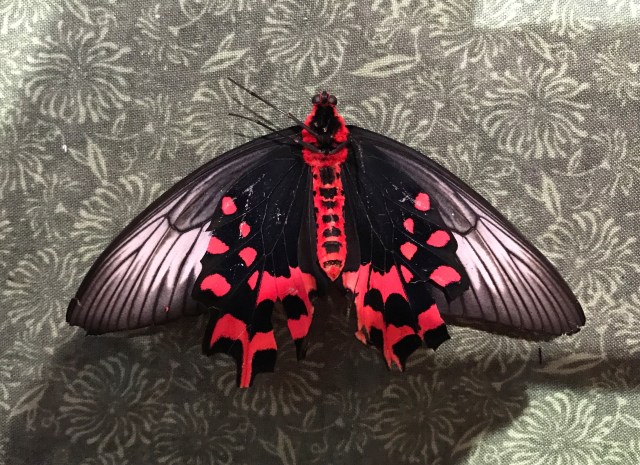
Genus/species: Atrophaneura semperi

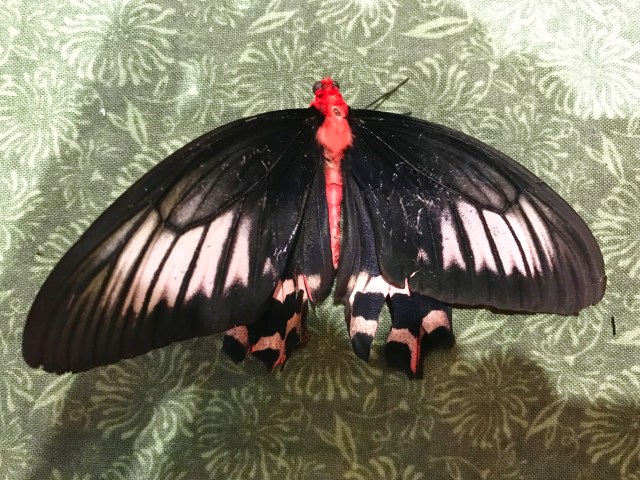
GENERAL CHARACTERISTICS: The body has red hairs with black wings. The underside of the hind wings have red markings. Females are dark-brown with light pink markings on the upperside of the wings.

Wingspan is 12–15 cm (4.6-6 in)

DISTRIBUTION/HABITAT: Indonesia, Malaysia, and the Philippines. The Bat Wing Butterfly is found in primary rain forest habitats, but occasionally also in advanced secondary forest during rainy season.
References

California Academy of Science Rainforest 201

Ron’s WordPress Shortlink http://wp.me/p1DZ4b-1NL

Ron’s flickr https://www.flickr.com/photos/cas_docents/33485856001/in/album-72157608449327886/

EOL eol.org/pages/131251/details

Animal Diversity Web
 animaldiversity.org/accounts/Atrophaneura_semperi/classif…


TAXONOMY
Kingdom: Animalia
Phylum: Arthropoda
Class: Insecta
Order: Lepidoptera (moths and butterflies)
Family: Nymphalidae (Brush-footed Butterflies)
Tribe: Heliconiini

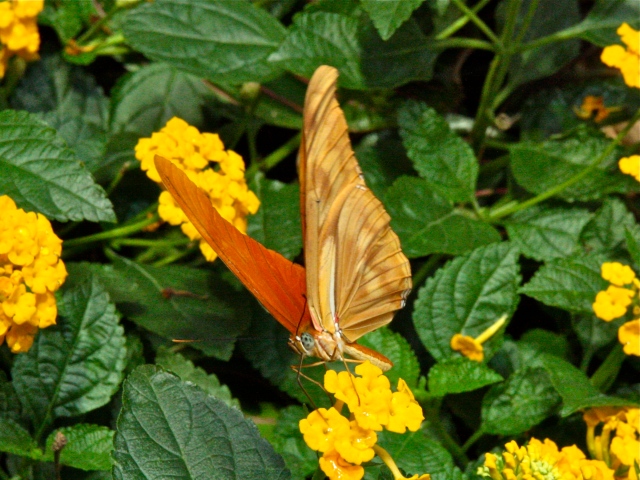
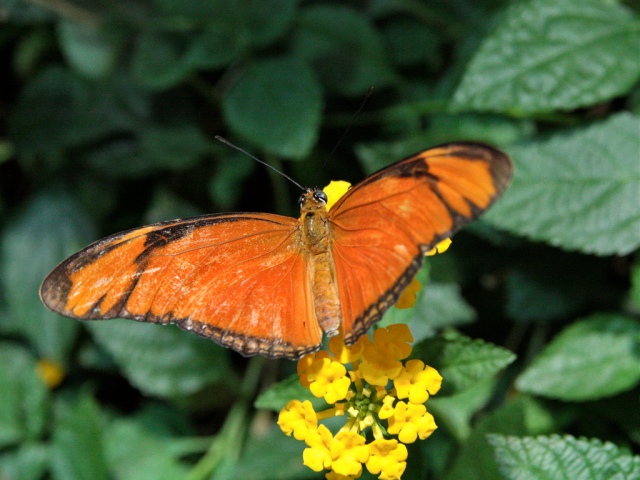
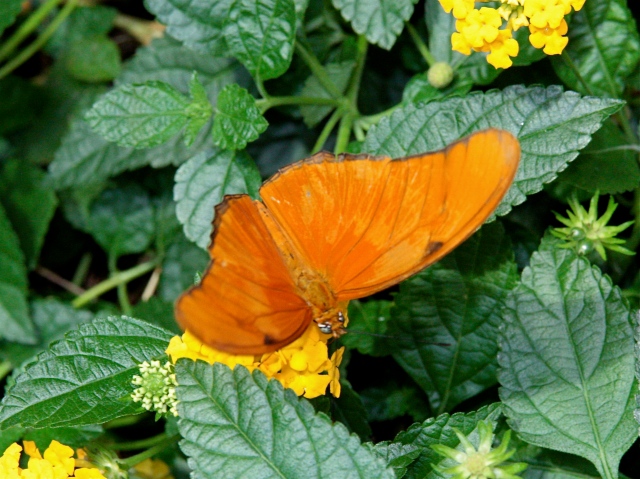
Genus/species: Dryas julia

Female below

Julia Longwingbutterfly female 3779880432_9f39949f0e_b

GENERAL CHARACTERISTICS: Elongate forewings, thus the common name Males bright orange above and below; upper side of hindwing has narrow black border on outer margin. Female duller, with more pronounced black markings above.

Wing Span: 3 1/4 – 3 5/8 inches.

Male below

Julia Longwingbutterfly Male 3506886372_2a38133601_o

DISTRIBUTION/HABITAT: Brazil north through Central America, Mexico, West Indies, peninsular Florida, and South Texas. Strays as far north as eastern Nebraska. Found in subtropical forest openings and edges, and nearby fields.

DIET IN THE WILD: Caterpillars feed on passion vines; adults on nectar from flowers.

DIET IN CAPTIVITY: Butterflies in the Academy Rainforest thrive on nectar provided by biologists and by the many flowers in the exhibit. The also take up juices and pulp from soft fruits at feeding stations.

Male below

Julia Longwingbutterfly Male IMG_0422

REPRODUCTION: Like all species in the subfamily Heliconiinae, also known as heliconians or longwings, adults lay eggs only on select host plants of the genus Passiflora, commonly called passion vines or passion flowers. D. julia eggs are laid singly on new growth; caterpillars feed on leaves.

References

California Academy of Sciences Docent Rainforest Training Manual 2014

Ron’s flickr  http://www.flickr.com/photos/cas_docents/sets/72157608449327886/with/3506886372/

Lewis Ginter Botanical Garden www.lewisginter.org/sexually-dimorphic-butterflies/

Butterflies and Moths  www.butterfliesandmoths.org/species/Dryas-iulia

Tree of Life  tolweb.org/Dryas_iulia/70435

Encyclopedia of Life eol.org/pages/158533/details

Ron’s WordPress Shortlink http://wp.me/p1DZ4b-133

TAXONOMY
Kingdom: Animalia
Phylum: Arthropoda
Class: Insecta
Order: Lepidoptera (moths and butterflies)
Family: Nymphalidae (Brush-footed Butterflies)
Subfamily: Heliconiinae

Genus/species: Eueides isabella

Isabella’s Longwing 3142851869_bae440d7fe_b

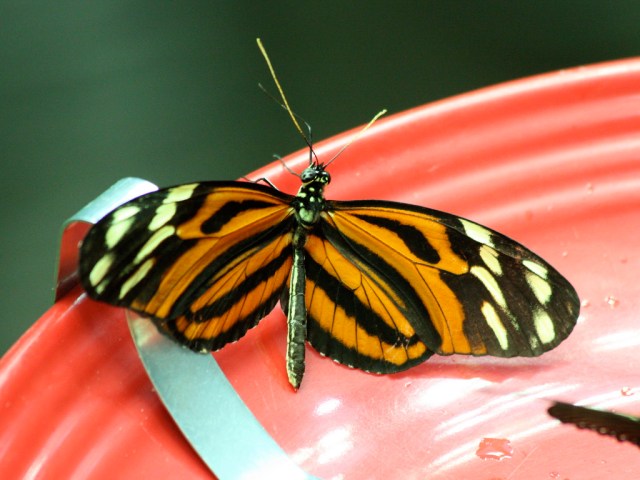
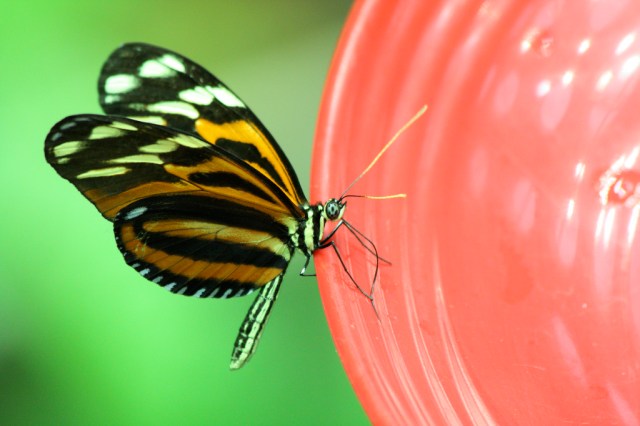
GENERAL CHARACTERISTICS: The forewing is elongated with a rounded apex. Wings are similar above and below. Apical half of forewing is black with yellow areas and the basal half is orange with a black stripe. E, isabellas hindwing is orange with 2 black stripes with white dots along the black outer margin.

Wing span 7.8 – 9 cm (3 1/16 – 3 1/2 in.in)

wing bottom

Isabella’s Longwing 3142838083_ea56d1fbc3_b

DISTRIBUTION/HABITAT: Isabella’s Longwing is widely distributed in Central America and throughout northern South America south through Brazil. They occasionally migrate to the southern U.S., especially Texas. Found from sea level to 1,500 m (4,900 feet) in canopy of the tropical forests.

Isabella’s Longwing IMG_2621

DIET IN THE WILD: Caterpillars: host passion vine leaves; adults: nectar and pollen.

REPRODUCTION: Males mate with receptive females, which may breed more than once. Not a pupal mater. (See Zebra Longwing). Eggs are laid singly on underside of host plant.

Isabella’s Longwing 4747789342_133268328d_o

MORTALITY: Like all Heliconians, they are long-lived.

References

California Academy of Sciences Rainforest 2017 

Butterflies and Moths of North America  www.butterfliesandmoths.org/species/eueides-isabella

EOL eol.org/pages/155267/details

Ron’s WordPress Shortlink  http://wp.me/p1DZ4b-13d

Ron’s flickr https://www.flickr.com/photos/cas_docents/3142851869/in/album-72157608449327886/

TAXONOMY
Kingdom: Animalia
Phylum: Arthropoda
Class: Insecta
Order: Lepidoptera (moths and butterflies)
Family: Nymphalidae (Brush-footed Butterflies)

Genus/species: Morpho peleides

Top-side (dorsal)

Blue Morpho 3175390675_70bdc9fe60_o

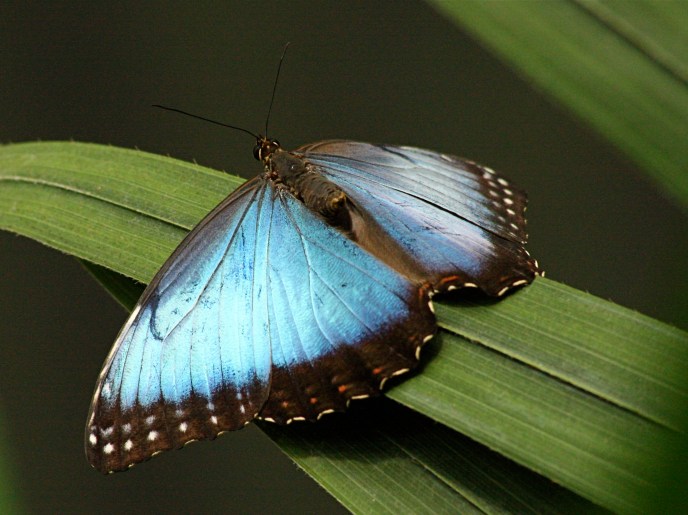
GENERAL CHARACTERISTICS: Among the largest butterflies in the world, wing span from five to eight inches.

Color of Life notation: Color Sources, structural color, iridescence.
Wing tops are an iridescent blue, edged with black, caused not by a true color, such as the pigment dye of blue jeans, but by structural coloration resulting from tiny, overlapping scales that cover their wings. Because of the precise angle of the ridges they form, the scales which reflect blue light back to our eyes. The contrasting underside of the wing is brown with a confusion of eyespots that can startle a potential predator, thereby allowing the butterfly to escape predators. This is called deistic behavior.
Females less brilliantly colored.

Ref. California Academy of Sciences Color of Life Exhibit, May 2015

underside and topside

Blue Morpho Butterfly 4330619902_ec31e9c058_b

DISTRIBUTION/HABITAT: Tropics of Latin America from Mexico to Colombia. Feeds and sleeps on or near the forest floor, but when mating, they fly throughout forest layers.

DIET IN THE WILD: Caterpillar, it chews leaves but adults can’t chew so they drinks juices of rotting plants and animals, tree sap, and wet mud, sipping all with its straw-like proboscis.

Underside (ventral)

REPRODUCTION: Like most butterflies, males release pheromones to attract females. Fertilized eggs hatch in about 9 days. The caterpillar of  M. peleides is red-brown with patches of bright green.

Blue Morpho Butterfly 8677456846_7df05acbb0_oLONGEVITY: Total lifespan: egg to adult, about 4.5 months; adults (butterflies): about 1 month.
PREDATORS: Birds (jacamar and flycatcher) and large insects.

CONSERVATION: IUCN Not Evaluated, but under some pressure as trophies for collectors and deforestation of tropical forests..

REMARKS:  M. peleides brilliant reflection is so intense that pilots report seeing their flash of color as the butterflies warm themselves above the treetops. Different angles of view (and so different angles of reflecting ridges) produce variations in the shades of blue perceived.

References

California Academy of Sciences Rainforest 2017

California Academy of Sciences Color of Life Exhibit 2015

Ron’s flickr  http://www.flickr.com/photos/cas_docents/sets/72157608449327886/with/3175390675/

Ron’s WordPress shortlink  http://wp.me/p1DZ4b-12J

Encyclopedia of Life eol.org/pages/139904/details

WAZA  www.waza.org/en/zoo/choose-a-species/invertebrates/insect…

TAXONOMY
Kingdom: Animalia
Phylum: Arthropoda
Class: Insecta
Order: Lepidoptera (moths and butterflies)
Family: Papilionidae (Swallowtail butterflies)

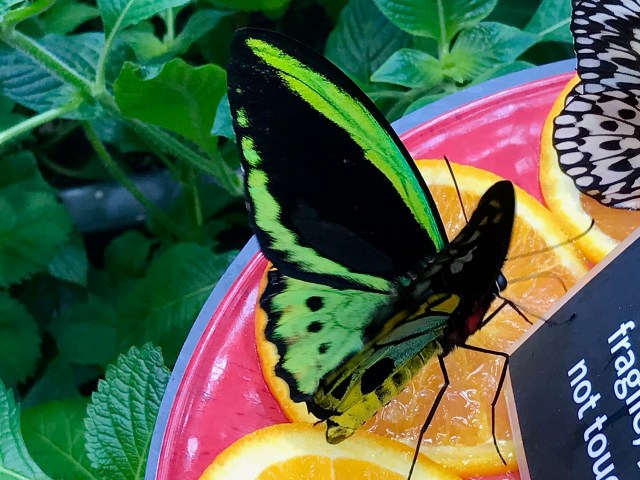
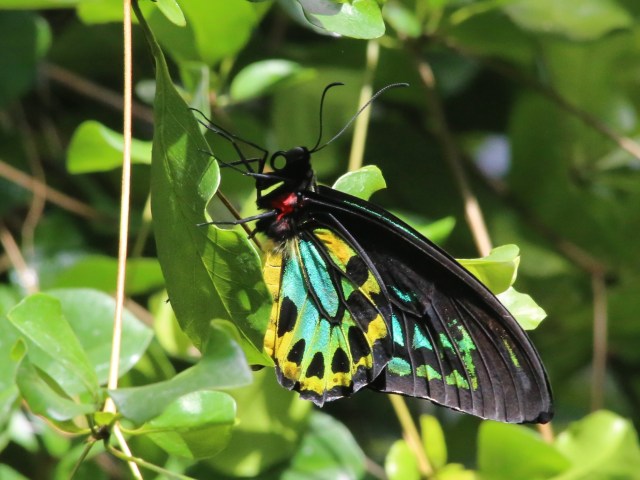
Genus/ species: Ornithoptera priamus

GENERAL CHARACTERISTICS: Variable between numerous subspecies.
The top of the forewing is velvety black with a green subcostal and marginal stripe. The bottom of the forewing is black with a chain of bluish or green postdiscal spots.
The hindwings are green. At the wing’s leading edge there are yellow-gold spots with a postdiscal chain of black spots. The edge of the hindwing is black. The underside is dark green or bluish. The yellow-golden spots are transparent. The veins are partly black and the marginal edge of the wing is black. At the outer edge there is a postdiscal chain of black spots.

The body (abdomen) is yellow. Head and thorax are black. The underside of thorax has a red hair coat.
Wingspan: 5 in. (12.7 cm.)  Male below Topwing (dorsal)

Male bottom side (ventral)

 O. priamus is sexually dimorphic. The basic color of the female is dark-brown with a chain of white postdiscal spots on the forewings and a chain of larger white postdiscal spots with dark centres on the hindwing. The underside is very similar to the upper.

The female is larger than the male and in the upper range of the wing-span.

Female below top wing (dorsal)

Female bottom wing (ventral)


DISTRIBUTION/HABITAT: Found in the Australasia / Indomalaya (Australia) ecozone.

References

California Academy of Sciences Rainforest 2017 Vetting Tim Wong

Ron’s WordPress Shortlink  http://wp.me/p1DZ4b-1Mz

Ron’s flickr  https://www.flickr.com/photos/cas_docents/33116609042/in/album-72157608449327886/

EOL eol.org/pages/130749/overview

www.nagypal.net/images/zzpriamu.htm

 Lewis Ginter Botanical Garden www.lewisginter.org/sexually-dimorphic-butterflies/

butterflycorner.net en.butterflycorner.net/Ornithoptera-priamus.952.0.html

insecta.pro  insecta.pro/taxonomy/15076


TAXONOMY
Kingdom: Animalia
Phylum: Arthropoda
Class: Insecta
Order: Lepidoptera (moths and butterflies)
Family: Nymphalidae (Brush-footed Butterflies)

Genus/species: Heliconius hewitsoni

GENERAL CHARACTERISTICS: A distinctive black butterfly with yellow transverse bands on fore- and hindwings. H. hewitsoni is very similar in general appearance to its Müllerian mimic H.pachinus. (Species with strong defences evolve to resemble one another and deter predation).


DISTRIBUTION/HABITAT: Found in the province of Chiriqui (Panama) and the Pacific slopes of Costa Rica. Usually individuals fly rapidly and in the canopy.

REMARKS: Heliconius are recognized by their large eyes, long antennae, characteristic elongate wing-shape, teardrop-shaped hindwing discal (disc-like) cell, and distinctive color patterns.

Adult butterflies systematically collect pollen from flowers, which they masticate on the proboscis to dissolve out amino acids. This allows caterpillars to develop relatively rapidly (since they do not need to store nutrients for egg and sperm production), and allows adults to have a greatly extended lifespan – up to 8 months – in the wild.

A second unusual trait found in some Heliconius species is a unique mating behaviour known as pupal-mating. Males of certain species search larval food plants for female pupae. The males then sit on the pupae a day before emergence, and mating occurs the next morning, before the female has completely closed (insect emerging from the pupa stage.)

References

California Academy of Sciences Rainforest 2017 Photo vetted Tim Wong

EOL eol.org/pages/18499/details

tolweb.org/Heliconius_hewitsoni/72941

www.insectlifeforms.com/6050205531__236/Bow_Wings__Helico...

Ron’s flickr  https://www.flickr.com/photos/cas_docents/32471538194/in/album-72157608449327886/

Ron’s WordPress Shortlink http://wp.me/p1DZ4b-1N3