Latest Entries »

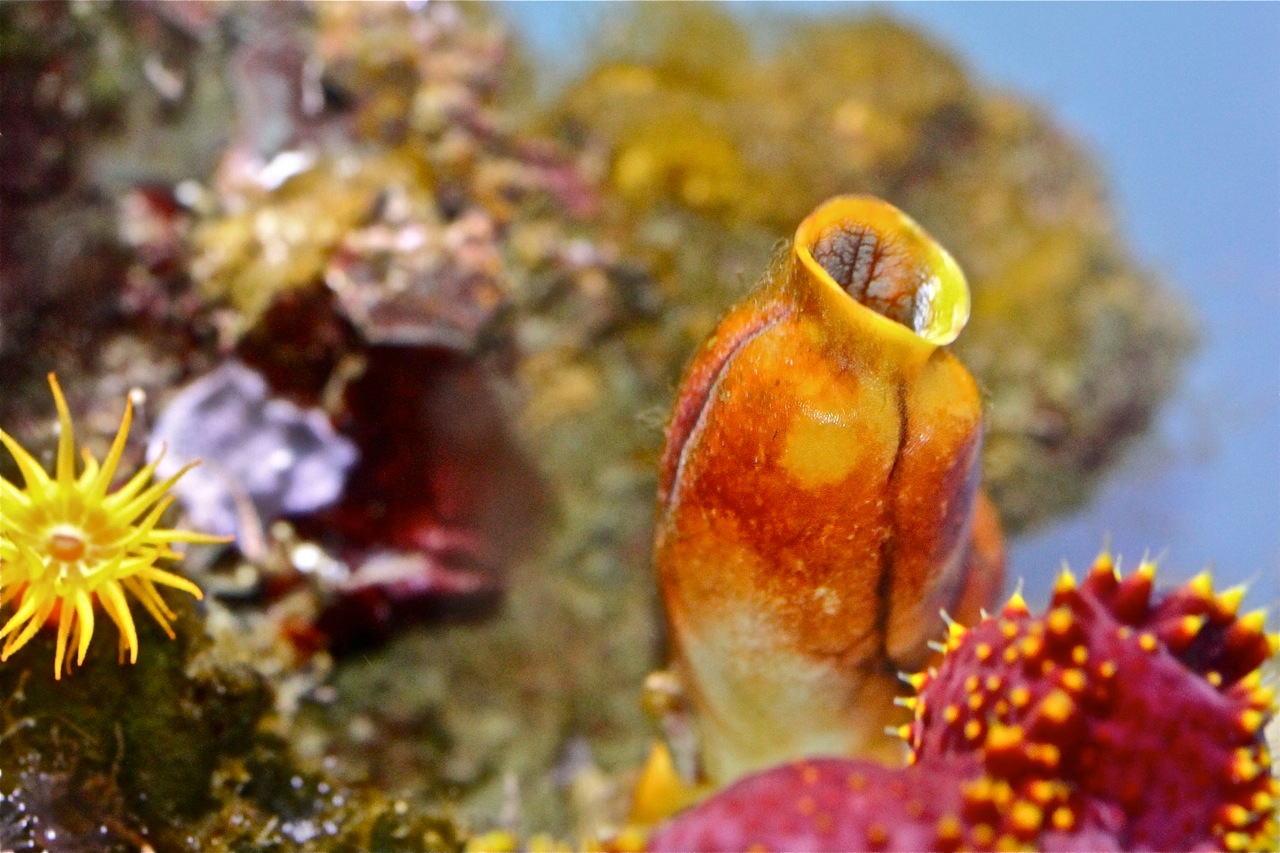
Polycarpa aurata

PHYLUM CHORDATA, CLASS ASCIDIACEA, ORDER STOLIDOBRANCHIA, FAMILY STTYELIDAE.

DISTRUBITION: Western Pacific

HABITAT: All tunicates are marine. It attaches itself to rocky surfaces or exposed dead coral under ledges between 10-20 meters.  

APPEARANCE: Sessile barrel-shaped with a mature size 5 in.  It is usually bright yellow or yellow-orange, and is smooth and leather-like to the touch. Tunicate bodies are covered by a complex skin, properly called a tunic, which is the source for their name. Most tunicates have two main openings, one to “inhale” water and the other to “exhale”.

DIET:  Filter feeder on plankton and detritis. A single tunicate can filter thousands of gallons a day.

REPRODUCTION AND DEVELOPMENT: Tunicates use broadcast spawning to reproduce sexually, and most are hermaphroditic. They have a seemingly backwards maturation process as one of the few invertebrate chordates. They lose their dorsal nerve and notochord as they become adults, or zooids. Larval and zooid forms are markedly different. Larvae are free-swimming and resemble tad-poles. They have a mouth, called the incurrent siphon and an excurrent siphon and an anus. They possess internal gill structures, a muscular tail, a dorsal nerve, and a notochord. They even have a heart, a stomach, and an eye. Adult tunicates, on the other hand, are mainly sessile (attached) filter feeders. Their bodies, may even house photosynthetic bacteria called Prochloron, which helps to provide nutrition for its host. Mature sea squirts lose much of their vertebrate likenesses, by taking on a barrel-like body shape and eliminating the rudimentary spine and eye. Their siphons become much more pronounced, as does the pharynx (the filtering mechanism/stomach). Adults maintain a small nerve ganglion, grow gonads, and develop a  layer  outer tissue the tunic.

REMARKS: The tunic is strengthened by numerous structural fibers made of a unique compound called tunicin.  P. aurata is known as a “sea squirt” because most will squirt water from their openings if threatened.

LOCATION; COLOR CLUSTER  PR09

WORDPRESS SHORTLINK: http://wp.me/p1DZ4b-aK
 

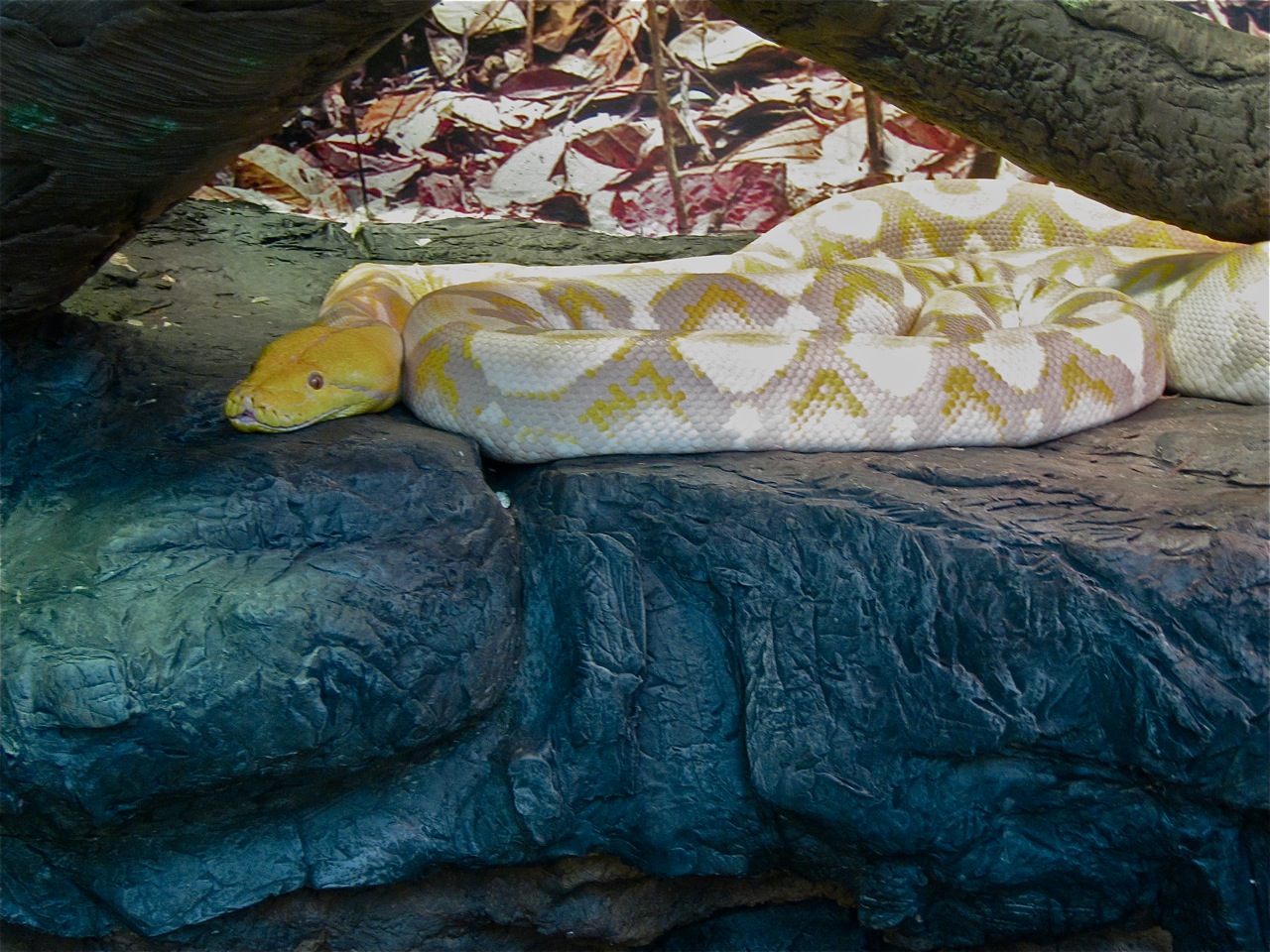
Python reticulatus:  Kingdom Animalia,  Phylum Chordata,  Subphylum Vertebrata,  Class Reptilia,  Order Squamata, Suborder Serpentes,  Family Boidae

DISTRIBUTION:  Reticulated pythons can be found throughout Southeast Asia. Their range includes the Nicobar Islands, Burma through Indochina, and Borneo, Sulawesi, Ceram and Timor in the Malay archipelago. 

HABITAT:  Steamy tropical rainforests  near small rivers or ponds in tropical environments.

APPEARANCE: Normally colored reticulated pythons have several pigments: melanin (blacks), and xanthins (yellows) amongst other more subtle colors. Lemondrop is a “lavender albino” which is the same thing as a “tyrosinase positive albino” (t-positive) which have the inability to complete the synthesis of melanin but can produce other melanin related pigments such as various shades of brown, grey and red resulting the “lavender” color. A “normal albino” (t-negative) reticulated python is yellow and white with pink/red eyes. Melanin and other melanin pigments areas are pure white but non-melanin pigments are present giving alternate colors (xanthines produce yellows). To make matters more complicated different albino snakes may have mutations giving them additional color morphs.

DIET:  P. reticulatus is strictly carnivorous swallowing their food whole with backward curved teeth (which are replaced if lost) preventing escape of a bitten prey.  It typically feedis on birds and mammals but can extend to dogs, large deer, pigs and very rarely humans. They are usually ambush predators, waiting in trees for unsuspecting prey.  P. reticulatus  does not crush their prey but squeezes more tightly each time the prey exhales suffocating it or causing the heart to stop.

REPRODUCTION: Lays 25-80 eggs and guards nest but not hatched young. 

REMARKS: Non-venomous.  They are heavily sold for their skin and meat.  Also tourists visiting these areas often buy materials made from these snakes. This specimen is a male, 14.5 ft long 60 lbs, 6 yrs old.  Level one.  9-30-11

WORDPRESS SHORTLINK    http://wp.me/p1DZ4b-aE 


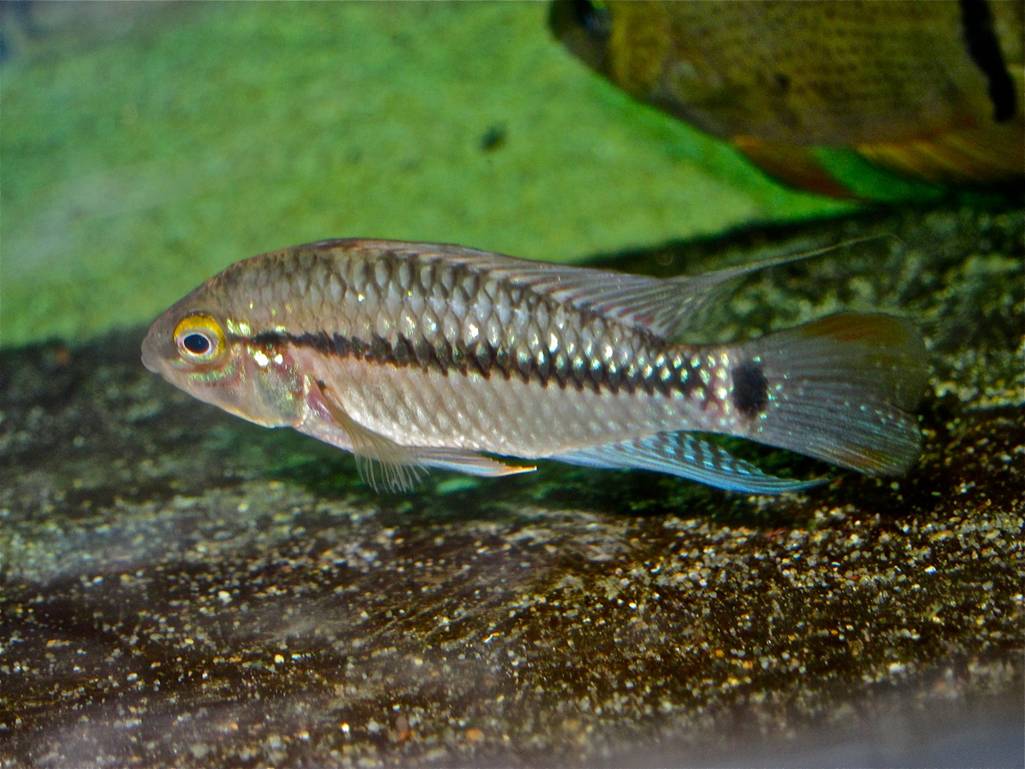
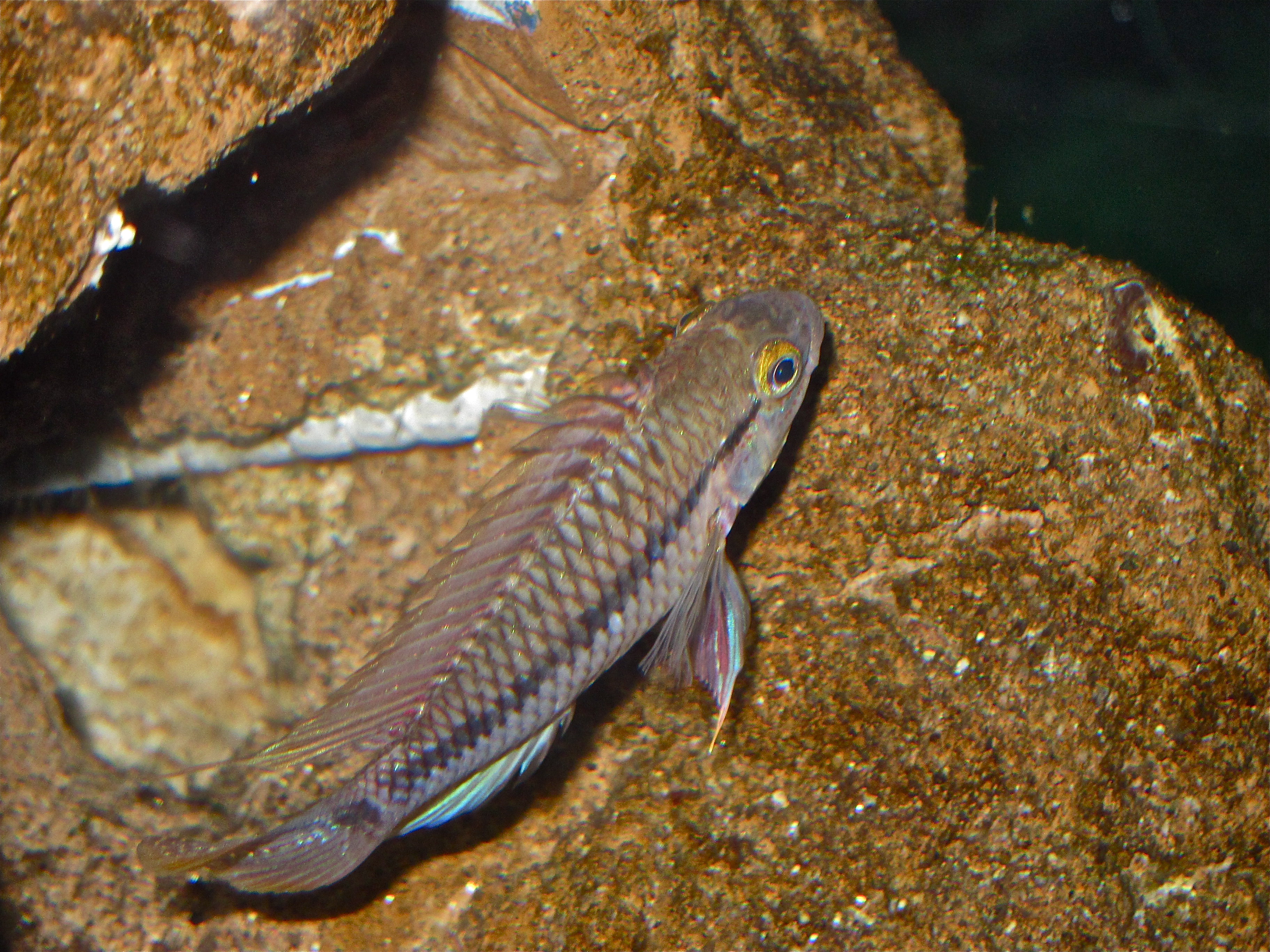
Apistogramma eunotus       Actinopterygii (Ray-finned fishes),Perciformes (Perch-likes) , Cichlidae (Cichlids)

DISTRIBUTION: Native to the western Amazon basin in the area around the Peruvian/Brazilian border. It’s found in the tributary systems of several rivers, including the Rio Ucayali, Rio Yavarí, Rio Japurá and the Amazon itself.

HABITAT: Slow-moving streams, creeks and tributaries, as well as smaller rivers.

APPEARANCE: Maximum length 3.5″ (male) 3″ (female).  The male is the larger fish and has much more prominent coloring, especially the blue markings around the gill area that give this fish its common name. The male also has elongated dorsal and anal fins.

DIET: A. eunotus is a micropredator. Their main prey items consist of insect larvae, fry of other fishes and other invertebrates

REMARKS:  Apistogramma is a genus of approximately a hundred species of fish from the family Cichlidae found in tropical areas of the Amazon basin and Venezuela. Apistogramma literally means “irregular lateral line” referring to a common trait of the species under this taxon. Most species are strongly sexually dimorphic.

Location: Flooded Amazon Tunnel, AM11

WORDPRESS SHORTLINK:  http://wp.me/p1DZ4b-ad

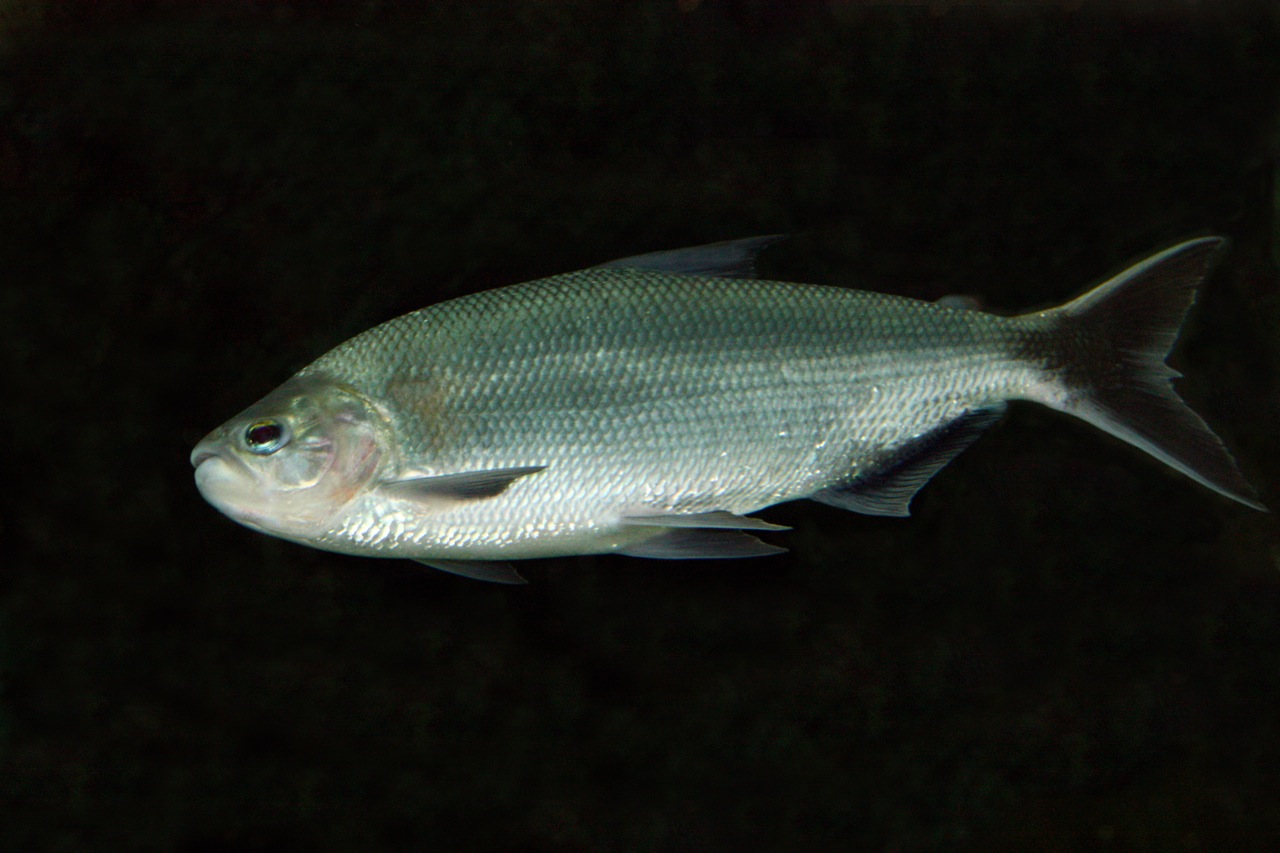
Brycon rubricauda

Little information available currently.  The following data were taken from Fishbase.

Actinopterygii (Ray-finned fishes) > Characiformes (Characins) > Characidae (Characins) > Bryconinae

DISTRIBUTION: South America: native to Magdalena river Basin in Columbia.

HABITAT: Tropical, Benthopelagic; freshwater

APPEARANCE: Maximum length 35 cm, (aprox. 3 feet). Maximum published   weight 725g. (1.6 pounds).

LOCATION: Amazon Flooded Tunnel, AM11

WordPress Shortlink  http://wp.me/p1DZ4b-9p

Pseudoplatystoma fasciatum

Actinopterygii (Ray-finned fishes) > Siluriformes (Catfish) > Pimelodidae (Long-whiskered catfishes)

DISTRIBUTION: South America: Amazon and Orinoco basins.

HABITAT: Riverbeds, shady streams, flooded forest areas.

APPEARANCE: Elongated, streamlined body with long snout; large mouth with three pairs of long barbels. Black spots and stripes on body and fins in irregular pattern; the pattern is banded, thus the common name. Usually silver to brown above; white to silver below.  Can grow to 90 cm or more in captivity.

DIET: Nocturnal hunter; feeds on fish and crabs.

REPRODUCTION and DEVELOPMENT: Separate sexes, external fertilization. Does not guard eggs.

REMARKS: Venomous spines.

Prized as food and game fish, and often found in South American food markets. Flesh is succulent.

WORDPRESS SHORTLINK: http://wp.me/p1DZ4b-8W

LOCATION; Flooded Amazon Tunnel


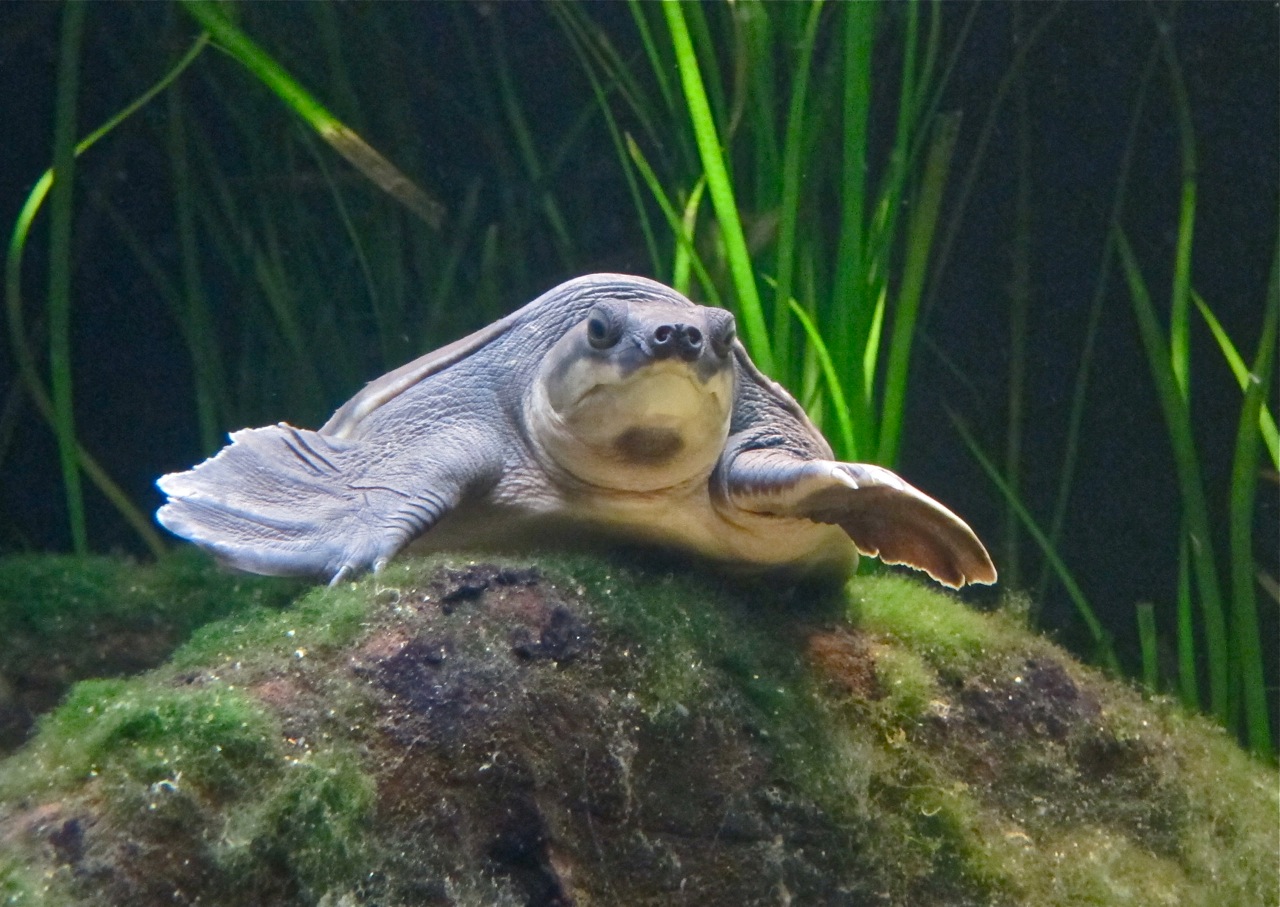
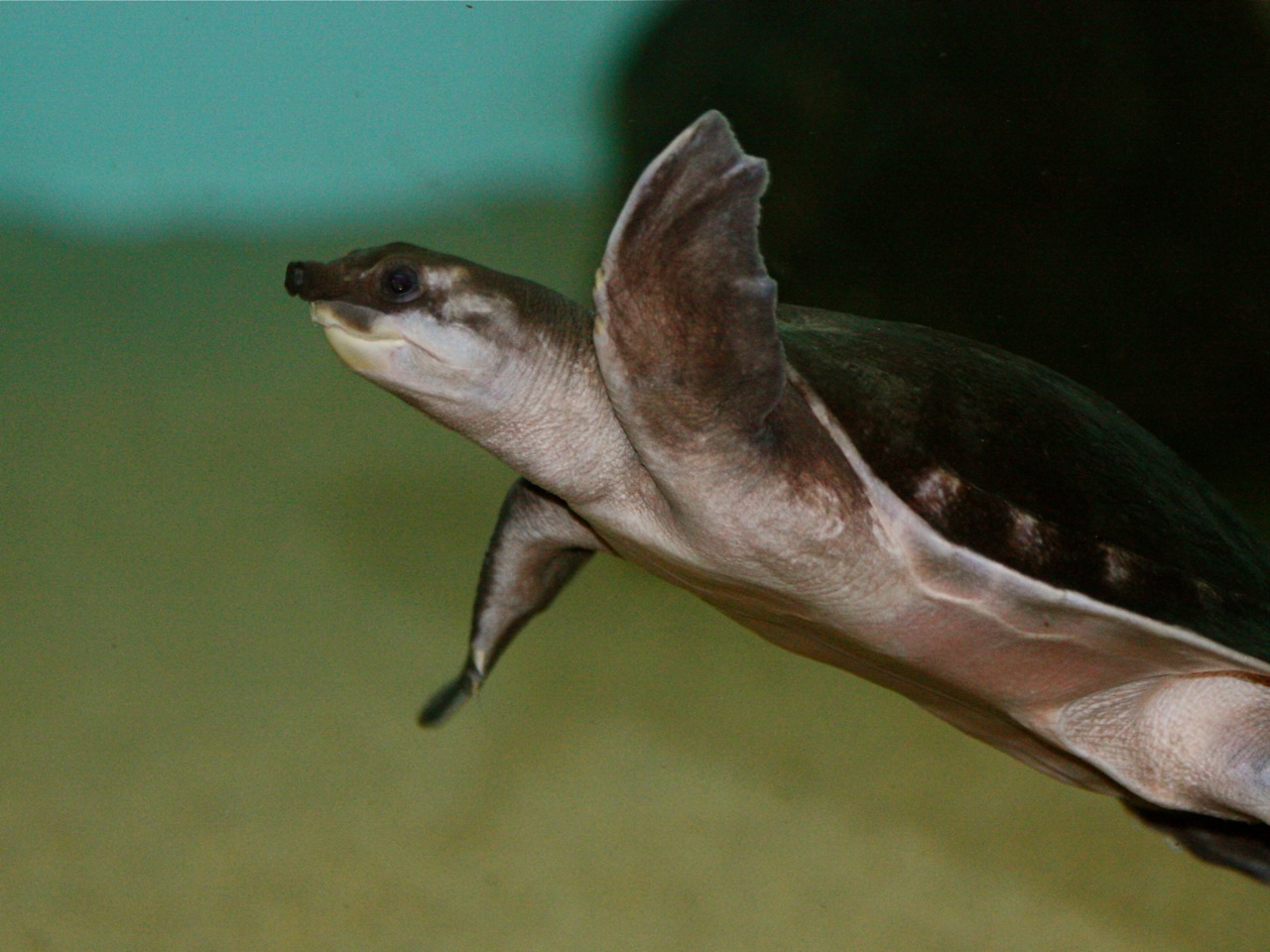
Carettochelys insculpta  Family Carettochelyidae,  Pig-nose Turtles

DISTRIBUTION: Southern New Guinea and Kimberly Plateau of Australia.

HABITAT: Shallow, slow-moving rivers, lagoons, lakes and swamps with sandy or silty bottoms. Also in estuaries. Active nocturnally. Emerge from water only in order to nest.

APPEARANCE: Length to 75 cm. Pitted, leathery, gray-green carapace and a white plastron. Limbs are clawed and paddlelike. Short head terminates in a broad, tubular, “piglike” snout. Carapaces of juveniles have serrated perimeters and a central keel.

DIET: Opportunistic omnivores. Principal food is the fruits of shoreline trees. Eat other plant material: leaves, flowers that fall into river from banks, and aquatic algae. Also take insect larvae, mollusks and crustaceans. Scavenge fishes and mammals as carrion.

REMARKS; Australian populations were not discovered by biologists until 1969. Species first described from the Fly River of New Guinea in the 1800s. Secretive animals. Use forelimbs to burrow by scooping sand substrate over their carapace. Adults may thermoregulate underwater by lying over small thermal springs.

Only extant species in its family.

LOCATION: Waterplanet with Australian lungfish.

flickr LINK  http://www.flickr.com/photos/cas_docents/sets/72157608449490716/

WORDPRESS SHORTLINK  http://wp.me/p1DZ4b-8Q

TAXONOMY

KINGDOM   Animalia 

PHYLUM   Mollusca 

CLASS  Cephalopoda 

ORDER   Sepiida 

FAMILY  Sepiidae   

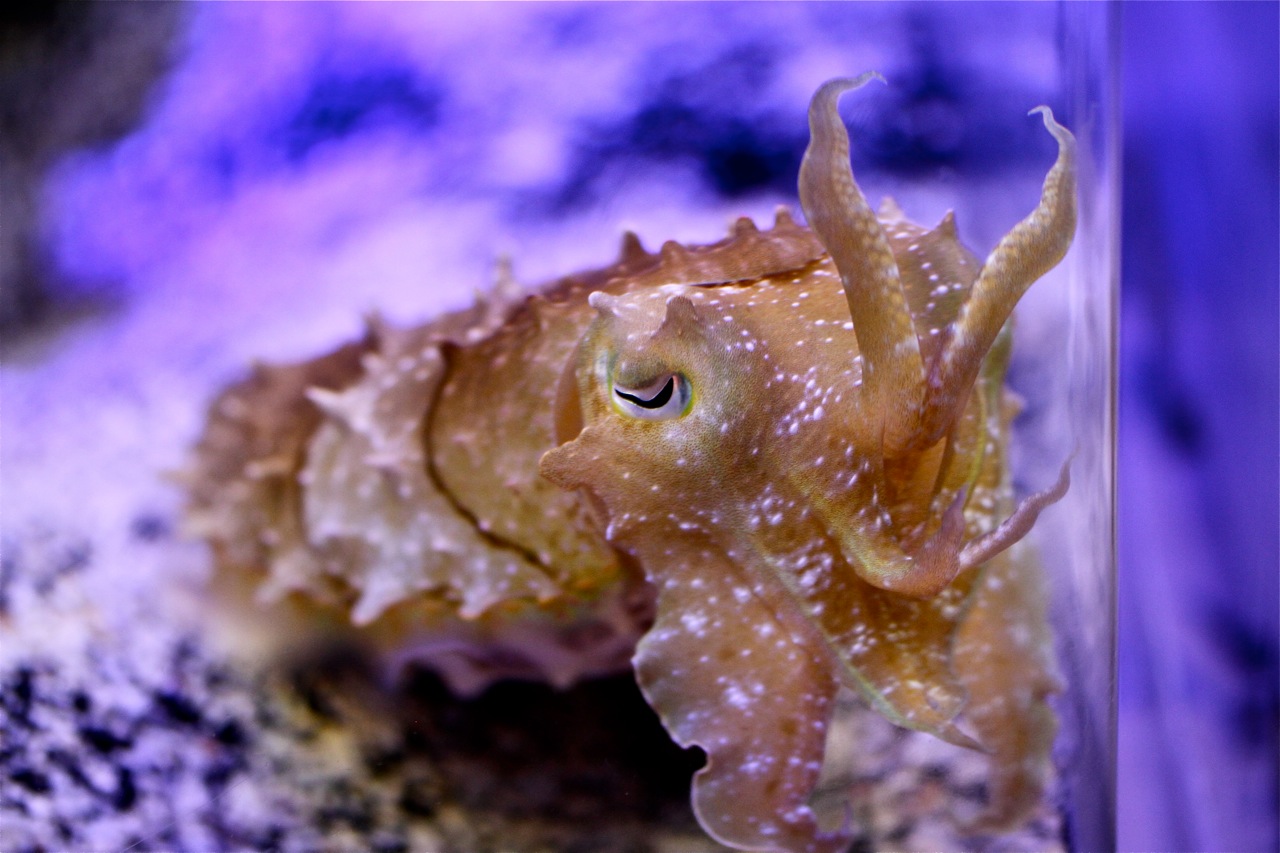
GENUS/SPECIES   Sepia latimanus 


DISTRIBUTION/HABITAT

Indo-Pacific

 They are found in waters up to 30 m near tropical coral reefs.

APPEARANCE

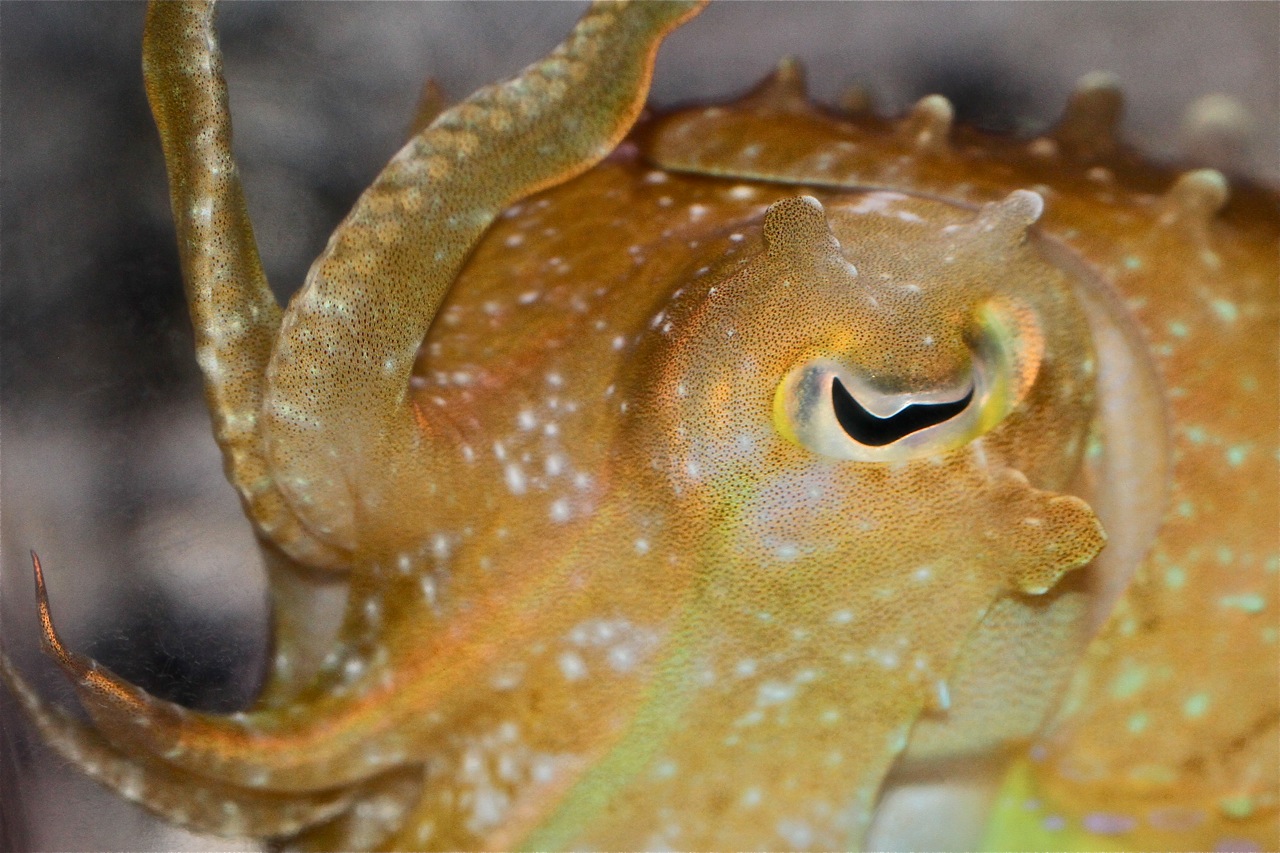
Large fascinating cephalopods with oval mantles  and crescent-shaped clubs .  This species can reach up to 50 cm in mantle length and weigh up to 10 kg. Like many cephalopods, broadclub cuttlefishes can be seen displaying a range of colors and textures. Commonly they are light brown or yellowish with white mottled markings. Males are sometimes dark brown, particularly during courtship and mating. Their arms have longitudinal white bands that appear as broad white blotches when extended. Some of their arms have longitudinal brown bands that extend to their heads. Their dorsal (upper) mantle can sometimes be seen with a saddle mark with small white and brown spots. Their dorsal mantle also has narrow brown transverse bands, and bold, white, transverse stripes and spots. Their eyes are yellow around the ventral (lower) margins and their fins are pale with white, transverse stripes extending onto their mantle and narrow, white bands along their outer margins.

Sepia latimanus  has a variety of different sucker sizes, some that are significantly larger than others. Their cuttlebone is bluntly rounded on either end, with a convex dorsal (curved upper) surface that flattens at the anterior (front) end. Their dorsal mantle is also covered with numerous large papillae and elongate papillae along the sides adjacent to base of each fin.

DIET IN THE WILD

Hunt during the day and appear to mesmerize prey with its rhythmic colored bands. They feed on small fishes and crustaceans.

REMARKS

 Sepia latimanus  is an important species to fisheries throughout their range and are taken by trawls, hand lines, and spears. They are also caught as bycatch in southeast Asian trawl fisheries.


 LOCATION: Not currently on exhibit 7-12-12

WORDPRESS SHORTLINK:    http://wp.me/p1DZ4b-8J

Pygocentrus nattereri

Actinopterygii (Ray-finned fishes) > Characiformes (Characins) > Characidae (Characins)

DISTRIBUTION: Amazon, Paraguay-Paraná and Essequibo basins.

HABITAT: Freshwater creeks and interconnected pools.

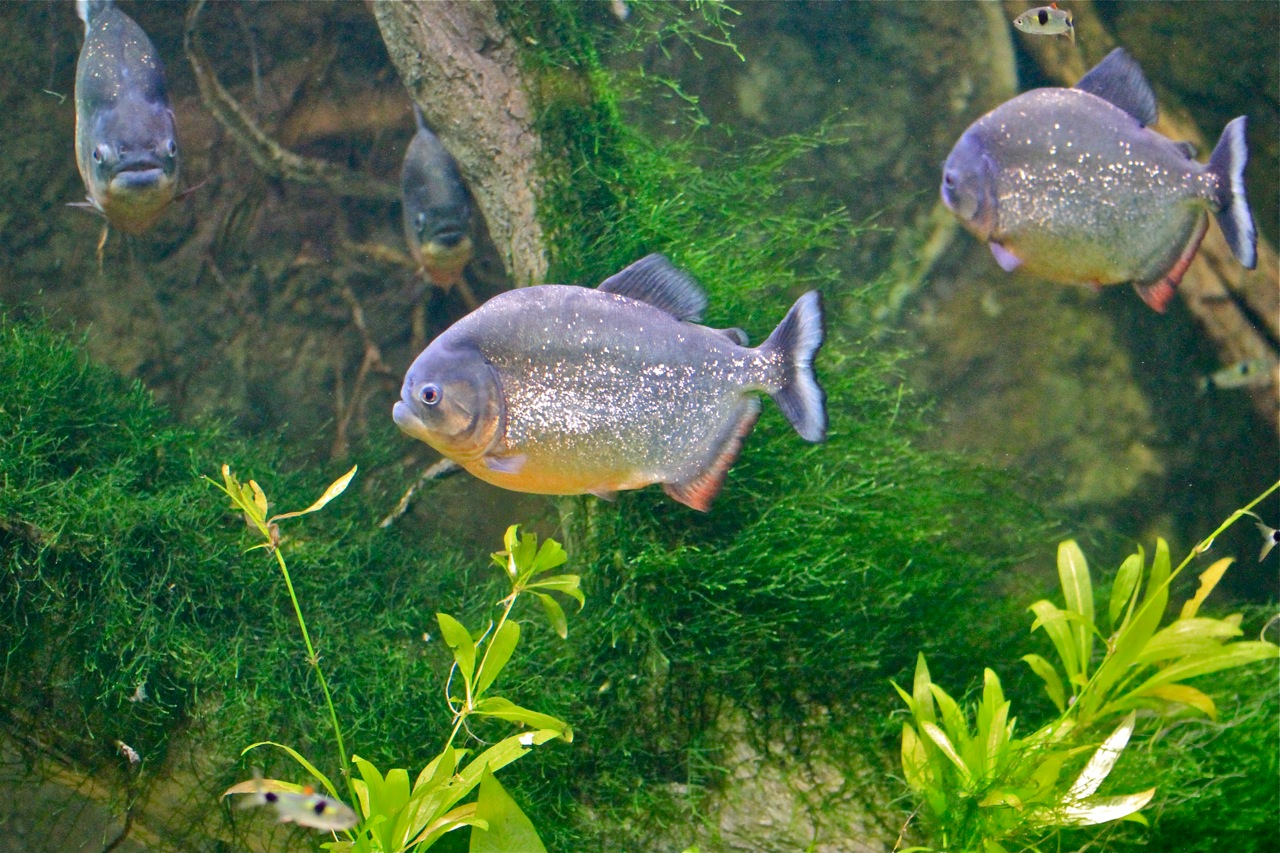
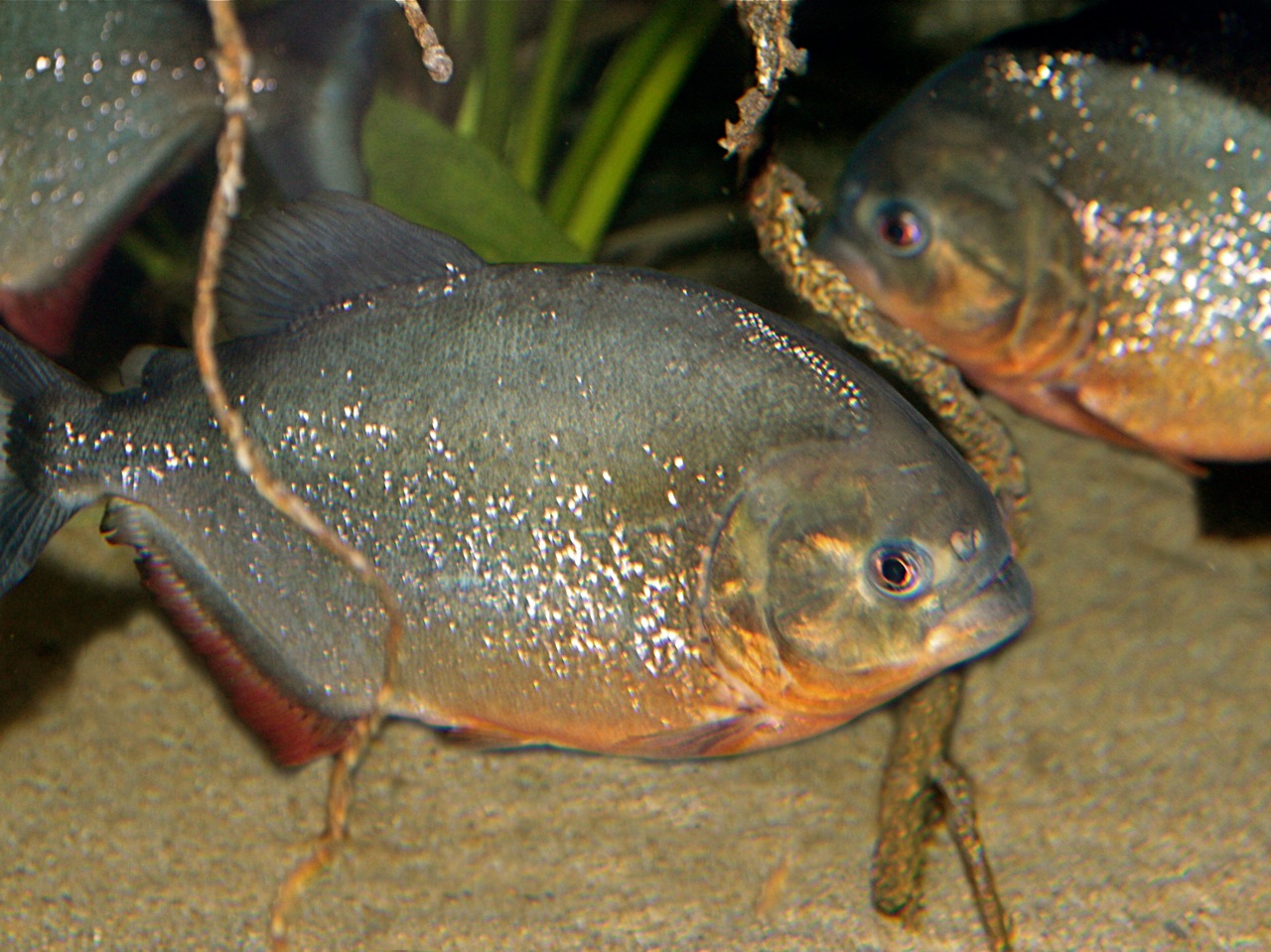
APPEARANCE: Length to 33 cm. Weight to 3.8 kg. Laterally compressed. Primarily dark scales with silvery glitter highlights. Chin and belly reddish.

DIET: Prey primarily on wounded and diseased fish. Feed communally in groups of 20–30 individuals who wait in vegetation for the opportunity to ambush prey. Once prey is attacked a feeding frenzy ensues. Adults forage at dusk and dawn, medium-sized fish most active at dawn, late afternoon and at night; small fish feed by day.

REPRODUCTION:  Spawn after an elaborate courtship ritual where the mating pair swim in circles. Female deposits layers of eggs on aquatic plants; male fertilizes. Male defends and turns eggs. Masses hatch in 9 or 10 days.

MORTALITY: Preyed upon by other fishes including large catfish, crocodilians, birds and larger mammals including jaguar.

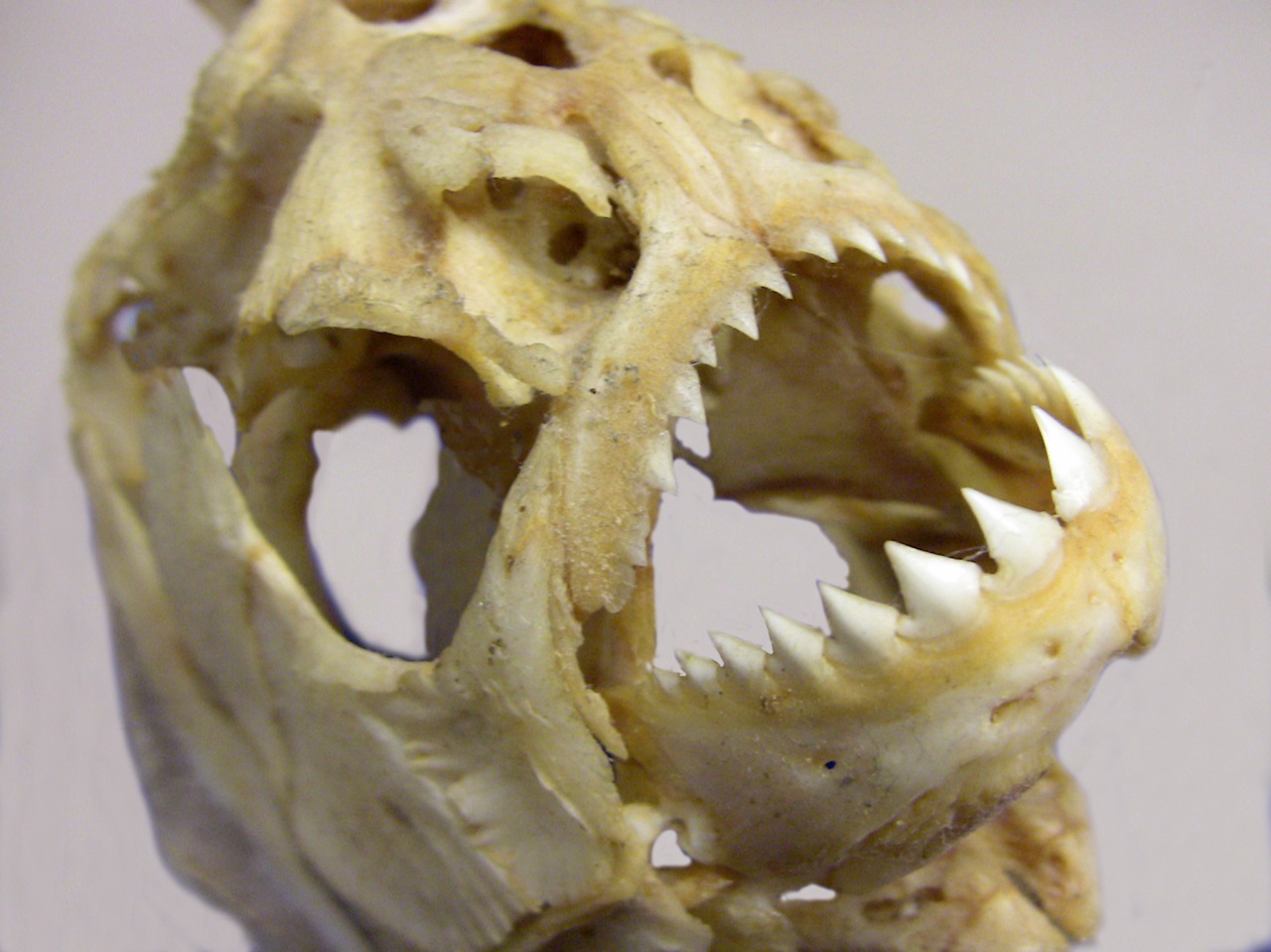
REMARKS:  Piranhas’ reputation to be voracious human-eaters is highly exaggerated. Can inflict a serious bite to humans.  Weak individuals in captivity are cannibalized.  Maintain a vicious bite by regularly replacing teeth on alternate sides of jaw.

Of the 20 or so species of piranha, 12 do not attack in schools. Rather they take a quick bites of the fins or scales of passing fish, causing little damage as these parts grow back. Amazonian Indians use the sharp teeth as knives. They also coat the teeth with curare and attach them to the end of blow darts. AM8

WORDPRESS SHORTLINK  http://wp.me/p1DZ4b-8i

Potamotrygon sp.    Elasmobranchii (Sharks and rays) > Rajiformes (Skates and rays) > Potamotrygonidae (River stingrays) 

DISTRIBUTION: Collected in the Rio Tapajos River, Brazil.

HABITAT: The shallows of major rivers and slow-moving tributaries with substrates of mud or sand.   Lost ability to retain urea decreasing osmolarity for fresh water unlike salt water relatives.

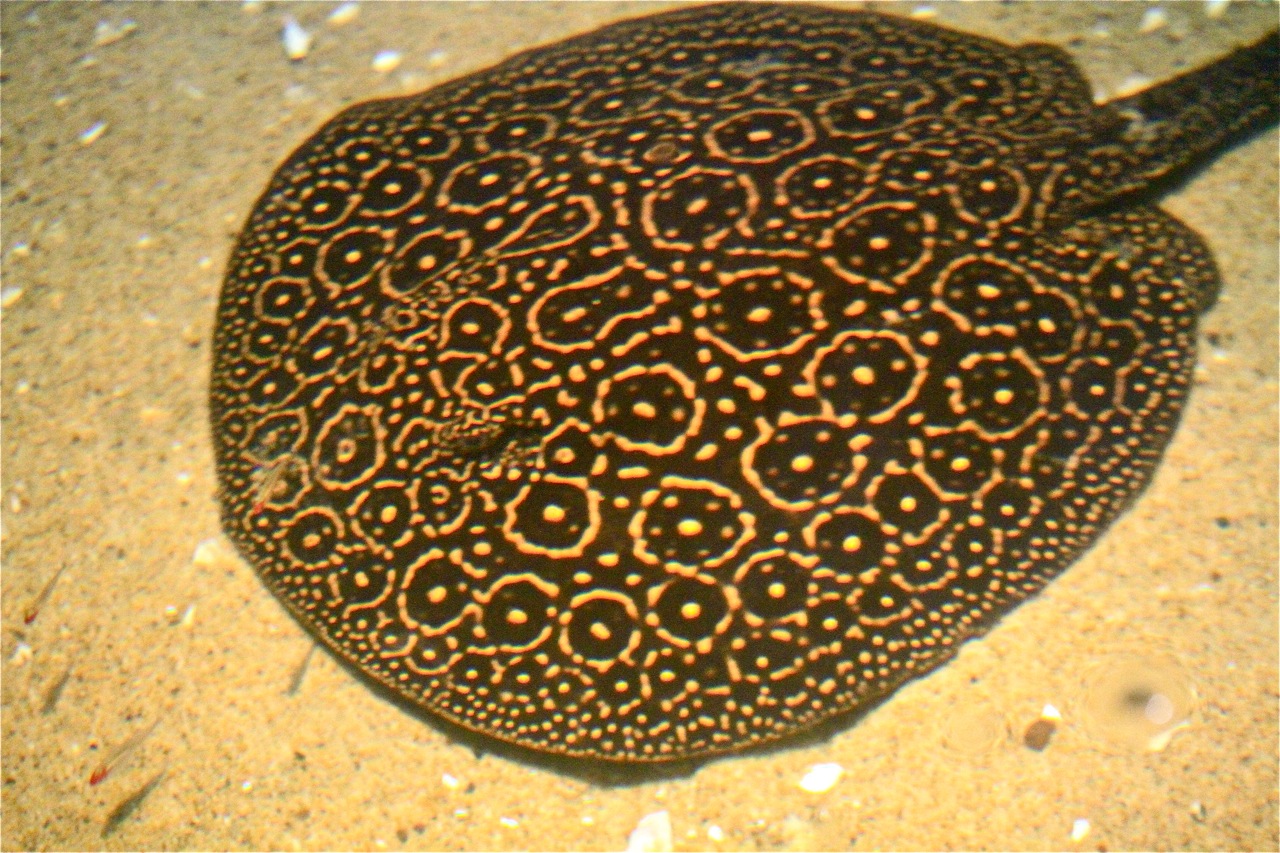
APPEARANCE: The patterning of this “species” is highly variable, with no two examples appearing the same. Some have golden markings, while others are almost white. Similarly, the amount of darker pigmentation can also vary in both shade and coverage.

REMARKS: Consumed by native tribes of the Amazon.

Potamotrygon sp. Have a venomous barb which can cause a serious and painful wound usually in the lower leg.  (Walking with a shuffling gate in water will encourage the ray to move out of the way.)  In severe wounds symptoms may include nausea, vomiting, fainting, salivation, muscle cramps, diarrhea, seizures, shock and rarely death.  Initial treatment uses hot water to help inactivate the venom and transfer to a medical facility to clean the wound and treat symptoms.

WordPress Shortlink  http://wp.me/p1DZ4b-8i


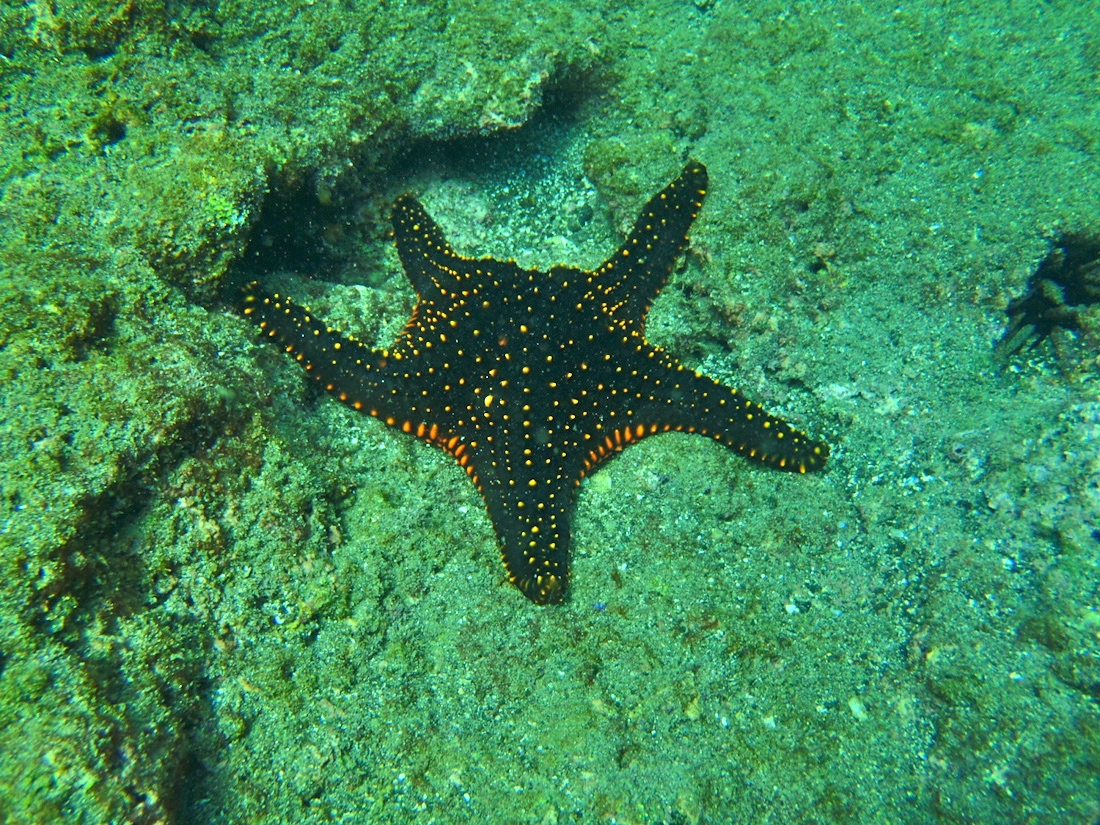
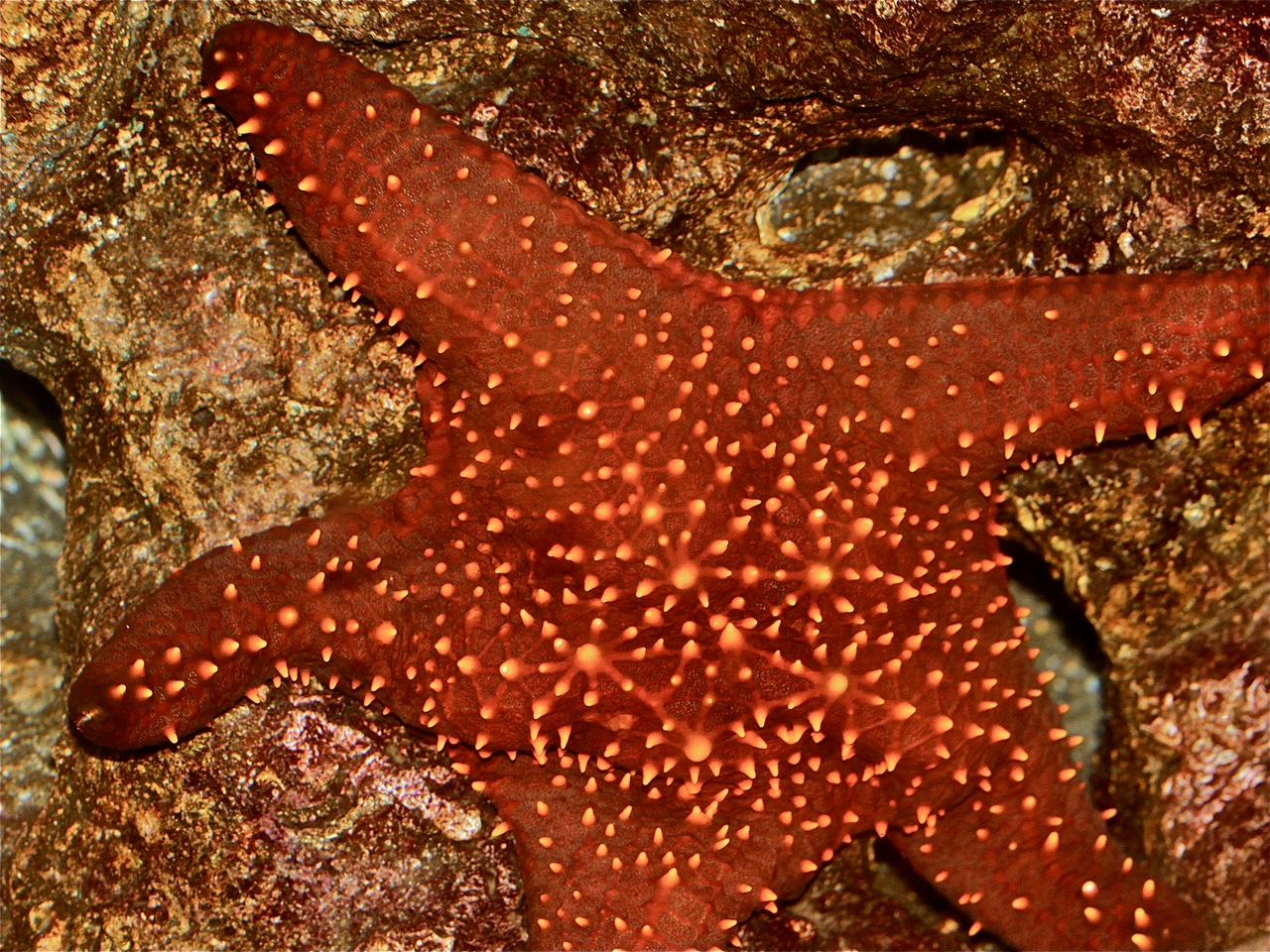
Pentaceraster cumingi  (Oreasteridae)  

DISTRIBUTION: Mexico along the Pacific side of Baja California south of Magdalena Bay, throughout the Sea of Cortez, and along the coast of the Mexican mainland south to Guatemala and the Galápagos Islands. 

HABITAT:  found over sandy bottoms to 500 feet.

APPEARANCE: red, orange to blue green body with wide red spines reaching a maximum of just over 1 foot in size.

DIET: Micro-fauna in the substrate, benthic algae, and other echinoderms.  

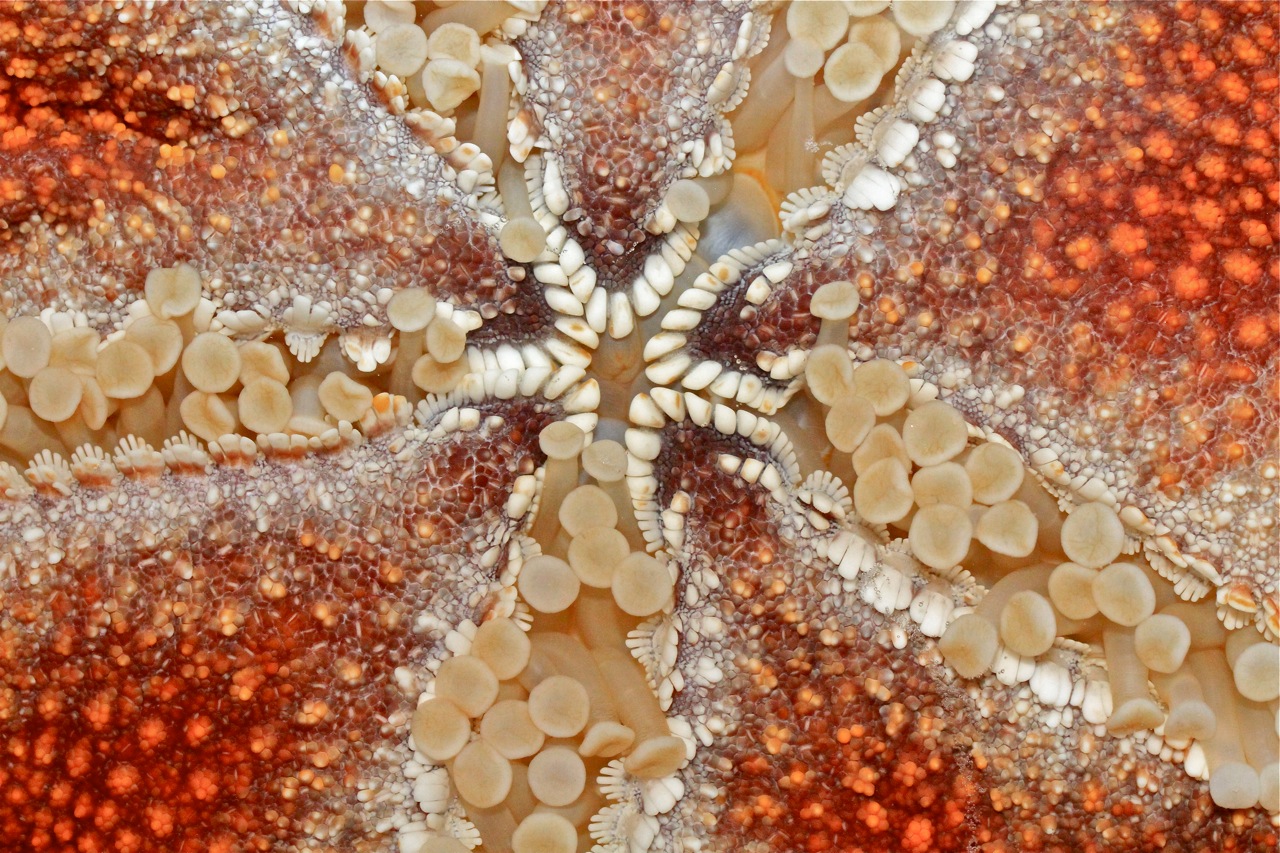
Mouth and tube feet on ventral surface (photo below).

 WORDPRESS SHORTLINK  http://wp.me/p1DZ4b-8b