Latest Entries »

Kingdom: Animalia
Phylum: Chordata
Class: Aves
Order: Passeriformes
Family: Thraupidae

Genus/species: Tersina viridis

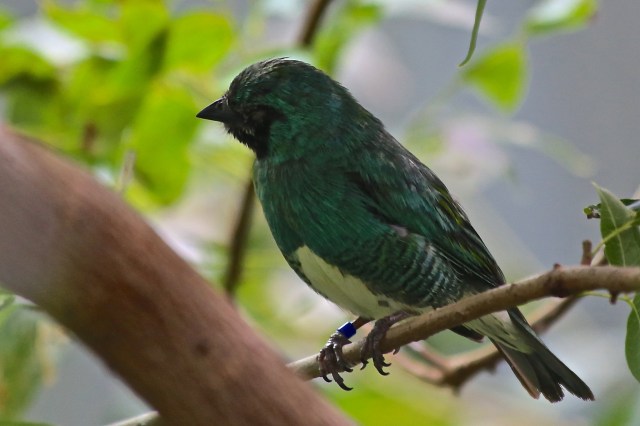
 GENERAL CHARACTERISTICS: Female Swallow Tanagers are a dull green overall with buffy yellow underparts. The male is light emerald-green, with a small deep black face and upper throat patch.  Length about 15 cm (6 inches).

Female below

Female Swallow Tanager15964984390_dcf5ecf5ad_k

DISTRIBUTION/HABITAT: South America, south to southern Brazil. Found in the humid forest edge and second-growth forest.

Male below

Male Swallow Tanager15529954514_08efef15f5_k

DIET IN THE WILD: Fruit and insects (insects are captured in sallying flight).

REPRODUCTION: Nest singly or in loose colonies in burrows in dirt banks, or in cavities in buildings.

CONSERVATION: IUCN: Least Concern (LC)

References: 

Cornell Lab of Ornithology neotropical.birds.cornell.edu/portal/species/overview?p_p…

Encyclopedia of life  eol.org/pages/1052941/details

Ron’s flickr  https://www.flickr.com/photos/cas_docents/15964984390/in/photostream/

Ron’s WordPress shortlink http://wp.me/p1DZ4b-1qj

TAXONOMY
Kingdom: Animalia
Phylum: Arthropoda
Subphylum: Hexapoda
Class: Insecta
Order Orthoptera (grasshoppers, locusts, crickets, katydids, and their relatives)
Family: Tettigoniidae

Genus/species: Copiphora rhinoceros

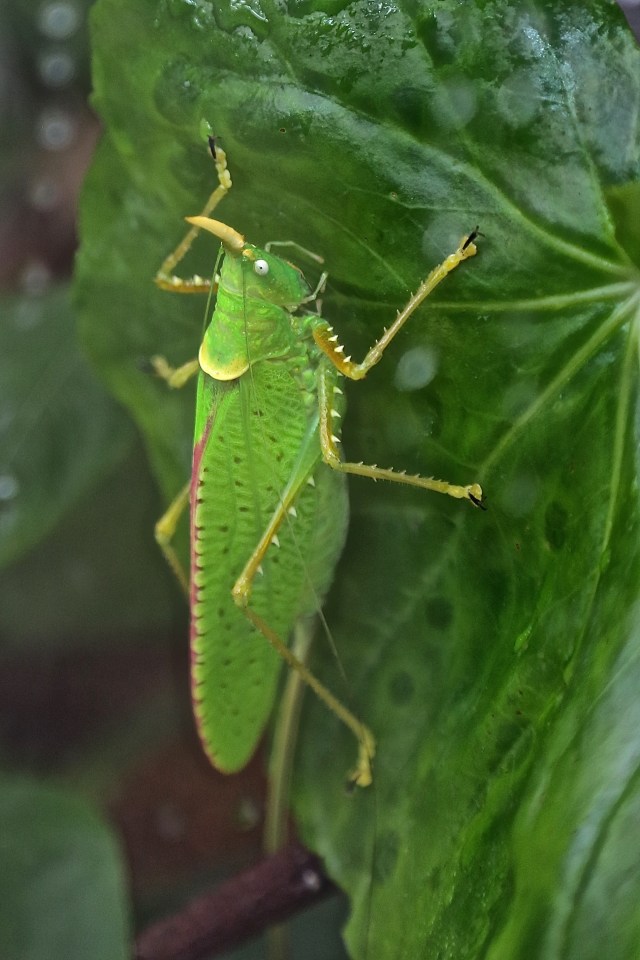
GENERAL CHARACTERISTICS OF KATYDIDS: They are usually green and have a thick body, usually taller than it is wide, and long thin legs. The head has chewing mouthparts and long thin antennae that reach back at least to the abdomen of the insect. The front wings have special structures that can be rubbed together to make sounds. They hear these sounds with flat patches on their legs that act as ears.

Tettigoniids may be distinguished from grasshoppers by the length of their filamentous antennae, which may exceed their own body length, while grasshoppers’ antennae are always relatively short and thickened.

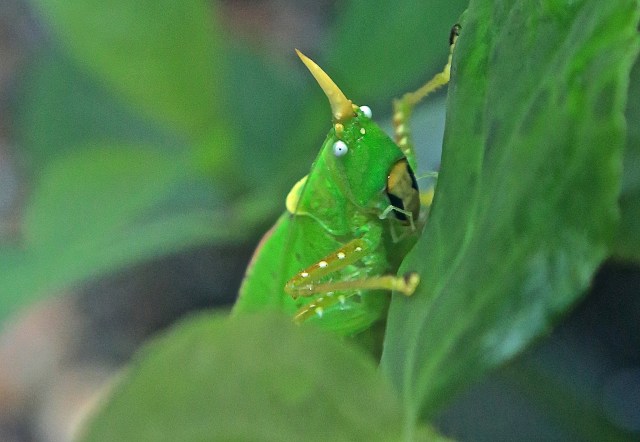
C. rhinoceros uses the horn like projection on their head for protection from hungry bats.

15762449040_a647afb916_o

DISTRIBUTION/HABITAT: Central, North and South America. Found in the forest canopy.

DIET IN THE WILD: They use their powerful jaws to subdue prey such as small invertebrates and consume plant material.

REMARKS Use sound to communicate across distances. Sometimes nearby males will all call together, trying to attract females. They also use their antennae to touch and smell each other.

Copiphora rhinoceros15949749665_c2933568be_k


References

Encyclopedia of life  eol.org/pages/972/details

Animal Diversity Web animaldiversity.org/accounts/Copiphora_rhinoceros/classif…

California Academy of Sciences Exhibit. San Francisco CA

Ron’s flickr  https://www.flickr.com/photos/cas_docents/15762449040/in/photostream/

WordPress shortlink  http://wp.me/p1DZ4b-1qb

TAXONOMY
Kingdom: Animalia
Phylum: Chordata
Class: Amphibia
Order: Anura (frogs and toads)
Family: Rhacophoridae (shrub frogs including Asian flying frogs)

Genus/species: Polypedates otilophus

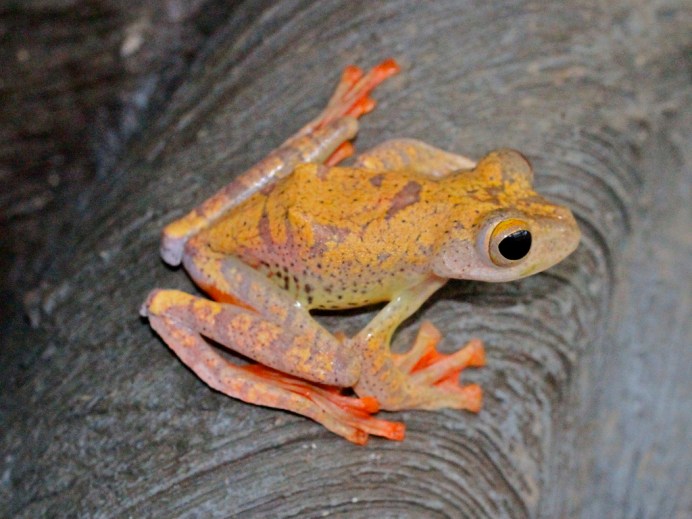
IMG_0389

GENERAL CHARACTERISTICS: Dorsal color light brown to gray to yellowish brown or bright yellow. Head triangular and longer than broad; serrated bony ridge behind the eye. Pupils are horizontal, with yellowish gray irises. Thin black stripes run from the head down the back; thighs marked by black bars. Finger and toe tips expanded into large discs; toes webbed. Length from snout to vent: 6–8 cm (2.4- 3 inches) female 10 cm (4 inches).

Reinwardt's flying frog (Rhacophorus reinwardtii) MG_0098_2

DISTRIBUTION/HABITAT: Islands of Borneo and Sumatra in lowland rainforest up to elevations of around 400 m (1300 feet). Found in trees, bushes and freshwater ponds.

DIET IN THE WILD: Insects, crickets and spiders .

REPRODUCTION: When ready to mate the male calls loudly then the pair builds a foam nest overhanging water which the tadpoles eventually drop into.

CONSERVATION: IUCN least concern. Though populations are declining somewhat, this frog’s wide distribution and ability to thrive under conditions modified by humans suggest a strong survivability quotient.

IMG_0231

REMARKS: Has a has an unpleasant musty smell, which people find irritating.

Borneo, B011

References

Encyclopedia of life  eol.org/pages/1048298/details

AmphibiaWeb  http://amphibiaweb.org/cgi/amphib_query?where-genus=Polypedates&where-species=otilophus

flickr  http://www.flickr.com/photos/cas_docents/sets/72157608456457315/with/3766068513/

WordPress Shortlink http://wp.me/p1DZ4b-11k

TAXONOMY
Kingdom:Animalia
Phylum: Chordata
Class: Amphibia
Order: Anura
Family: Rhacophoridae

Genus/species: Rhacophorus pardalis

GENERAL CHARACTERISTICS: Fingers webbed and bear expanded discs, outer edge of hand and forearm have wide flap of skin – all adaptations for gliding. Bright red hand and foot webbing make this frog easy to identify. Dorsal side tan to reddish-brown, often with spots. Flanks yellowish with black spots. Size: Snout to vent males to 5.0 cm (2 inches) females, to 7.0cm (2.75 inches).


5170277207_42b048bdfe_b

DISTRIBUTION/HABITAT: Known from peninsular Malaysia, Sumatra, Borneo, and the Philippines. Found in subtropical primary forest, secondary forest and freshwater marshes from sea level to 1,000 m (3,281 feet). 

5170277417_17153bc773_b

REPRODUCTION: R. pardalis breeds at swampy forest pools.

CONSERVATION: IUCN Red List; Least Concern (LC) 

The most important threat to this species is logging.

Borneo Gliding Herps BO11

References

Encyclopedia of Life  eol.org/pages/1025363/details

IUCN Red List  www.iucnredlist.org/details/full/59012/0

Ron’s WordPress shortlink  http://wp.me/p1DZ4b-1q1

Ron’s flickr  https://www.flickr.com/photos/cas_docents/5170877230/in/set-72157620567930293

TAXONOMY
KINGDOM: Animalia
Phylum: Chordata
Class: Amphibia
Order: Anura
Family: Rhacophoridae

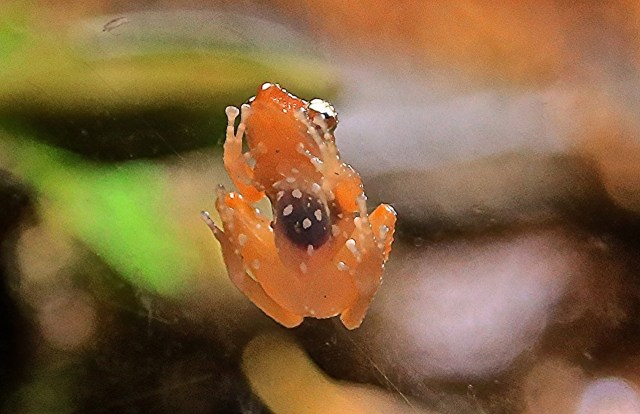
Genus/species: Nyctixalus pictus

DISTRIBUTION/HABITAT: Southern Southeast Asia. Found in shrub and lower tree strata in primary and secondary forests.

 Nyctixalus pictus15762349568_83118c678d_k

REPRODUCTION: Breeds by larval development in arboreal water-filled cavities and in rotting logs.

15923978406_3abc22c9b1_o

CONSERVATION: ICUN Redlist Near Threatened (NT)    The extent and quality of its habitat is declining very rapidly due to widespread forest loss within its range.

www.iucnredlist.org/details/58806/0

Borneo Nursery BO08

References  

Ron’s flickr https://www.flickr.com/photos/cas_docents/15762349568/in/set-72157608456457315/

Ron’s WordPress shortlink  http://wp.me/p1DZ4b-1pS


TAXONOMY
Kingdom: Animalia
Phylum: Chordata
Class: Reptilia
Order: Squamata (scaled reptiles)
Family: Colubridae (Colubrids)

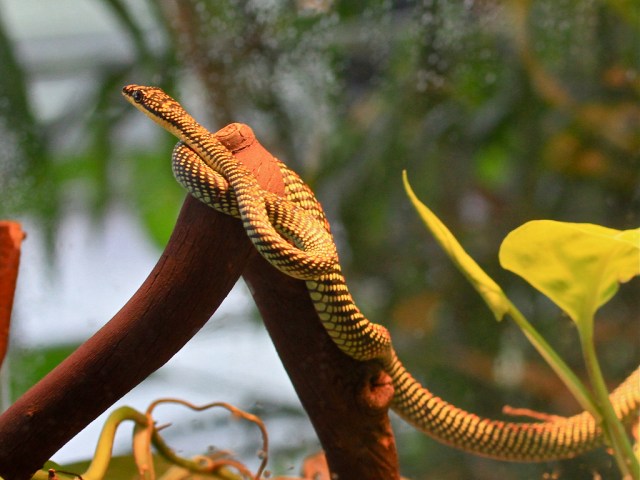
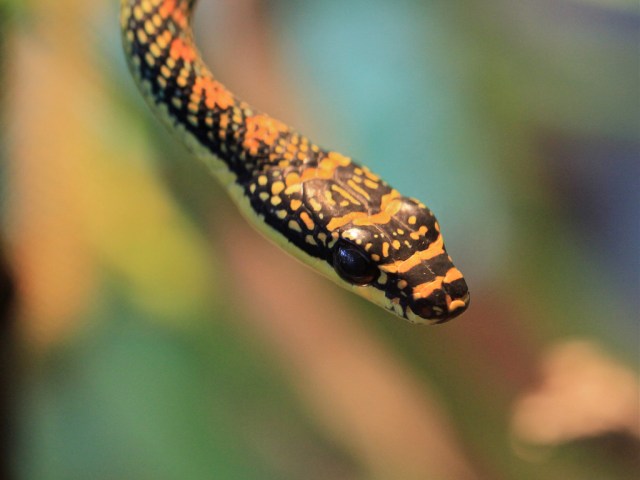
Genus/species: Chrysopelea paradisi 

4495384997_561475b31b_b

GENERAL CHARACTERISTICS  Long slender black body is covered from head to tail with a yellow spotting pattern that may form a somewhat stripped pattern with red or orange splotches starting at the base of the head and extends down to the tail. The head of the snake is distinguished by the 5 yellow, or sometimes orange, bars that span its width. Length: to 3 feet. 

DISTRIBUTION/HABITAT  Southern Thailand, Malaysia, Singapore, Indonesia and the Philippines. Habitat: Arboreal. Lives in a fairly diverse habitat, ranging from tropical evergreen rainforests with relatively sparse undergrowth to deciduous forests with undergrowth of shrubs and grasses.

DIET IN THE WILD  Carnivorous and, like all snakes, swallows its food whole. Prefers lizard species but will eat frogs, bats, small birds and small rodents. They are mildly venomous with rear fangs and also can constrict its prey, which consists of mostly lizards and bats.

PREDATORS: Preyed upon by predatory birds and large mammals.

REPRODUCTION: Oviparous, with internal fertilization, the female lays clutches of 5 to 11 eggs. Offspring are brightly colored like adults.

CONSERVATION: IUCN Red List; Least Concern

The species is fairly common throughout its range.

4495385953_49b8be668f_b-1

REMARKS  The genus Chrysopelea usually posses the ability to “fly.” They slither out to the end of a branch, and dangle in a “J” shape. Using the lower half of their body they form into an S. They then stretch out their ribs, flattening their bodies to double the original width. The belly region of the snake becomes concave, a shape that acts as a parachute as the snake glides on air drafts from a higher branch to a lower one. They can undulate their bodies to change directions and can glide up to 300 feet.

Borneo Rainforest BO13

References

Encyclopedia of Life: http://eol.org/pages/795382/details

California Academy docent rainforest training class 2014

WordPress Shortlink  http://wp.me/p1DZ4b-UM

flickr  http://www.flickr.com/photos/cas_docents/sets/72157608449603666/

TAXONOMY
Kingdom: Animalia
Phylum: Chordata
Class: Reptilia ( turtles, crocodilians, snakes, lizards and tuatara)
Order: Squamata (scaled reptiles, all lizards and snakes)
Suborder: Serpentes (snakes are elongated, legless, carnivorous reptiles)
Family: Colubridae Colubrids

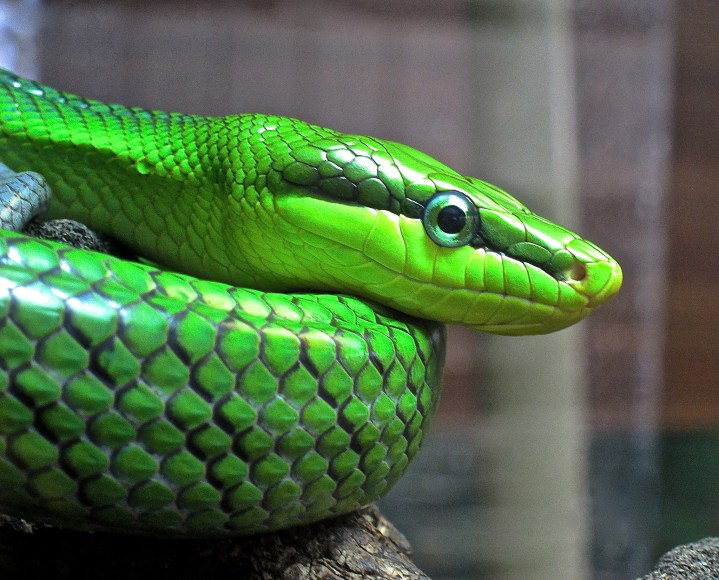
Genus/species: Gonyosoma oxycephala

GENERAL CHARACTERISTICS: Typically bright green but may also be grey with a dark line horizontally across its eye. The top of the head maybe dark green, yellow-green or yellow in color. Length of up to 2.4 m (almost 8 feet).

Gonyosoma oxycephala4185275536_412f9a05fa_o

DISTRIBUTION/HABITAT: Southeast Asia. Found in primary rainforests. Predominantly arboreal (tree-dwelling).

DIET IN THE WILD: Primarily birds, eggs and bats. Will also eat frogs, lizards, bats, and other small mammals. They are fast hunters, and can capture bats in flight. Prey is killed by constriction, rather than venom.

In captivity they are usually eat mice. 

REPRODUCTION: Oviparous, laying clutches of between 5 and 12 eggs

LONGEVITY: 15.1 years (captivity)

 Gonyosoma oxycephala8599840952_eb8bad64f1_k

CONSERVATION: IUCN Red List; Least Concern LC

Common in Borneo

References

Encyclopedia of Life eol.org/pages/456476/details

Ron’s flickr https://www.flickr.com/photos/cas_docents/4185275536/in/set-72157620567930293

Ron’s WordPress shortlink http://wp.me/p1DZ4b-1pJ

TAXONOMY
Kingdom: Animalia
Phylum: Chordata
Subphylum: Vertebrata
Class: Reptilia  (turtles, snakes, lizards, and relatives)
Order: Squamata
Suborder: Serpentes
Family: Viperidae (Vipers)

Genus/species: Tropidolaemus wagleri

GENERAL CHARACTERISTICS: Males are green in color. Females have 4 color phases. In the Malaysian phase seen here, the snake has a black background with yellow bars across it’s back, a yellow belly and green spots, one on each scale. Length to 4 ft. 

Wagler's Pit Viper 8324403992_9febc37327_b

DISTRIBUTION/HABITAT: They are arboreal living in the lowland tropical rainforests of Southeast Asia, including southern Thailand, Malaysia, Singapore, Borneo, Sumatra, Sulawesi and southern Philippines.

DIET IN THE WILD: Ambush nocturnal predator. Like all pit vipers, T. wagleri has heat-sensing organs (called loreal pits) on its head below and in front of their eyes which are used to sense prey, even when they can’t see it. Juveniles and adult males prefer lizards, especially geckos. Females eat a more varied diet, including rats, birds, frogs and lizards, Needs only 3 meals a month.

REPRODUCTION: Viviparous (bears young alive). Litters contain 6-50 young.

PREDATORS: King Cobra.

Wagler's Pit Viper  3506502014_96d97cbdb9_b

CONSERVATION: IUCN Red list; Least Concern (LC)

REMARKS: They have hemotoxic, venom, preventing blood from clotting. Bites can cause local pain, swelling, bruising, and bleeding but bites are rarely fatal to humans.

The Temple of the Azure Cloud in Penang Island, Malaysia is known as Snake Temple. It was once filled with hundreds of Wagler’s pit vipers. Tourists would be photographed with the snakes. Locals collected the snakes, and, fortunately, the ones used for photography had their fangs removed.

Borneo Cave Cluster B005

References

Encyclopedia of Life  eol.org/pages/790394/details

Ron’s flickr https://www.flickr.com/photos/cas_docents/8324403992/in/set-72157620567930293

California Academy of Sciences Docent Rainforest Training class 2014

Ron’s WordPress shortlink http://wp.me/p1DZ4b-Vu

 Borneo Cave Cluster B005


TAXONOMY
Kingdom: Animalia
Phylum: Chordata
Class: Reptilia
Order: Squamata
Family: Colubridae

Genus/species: Elaphe taeniura ridleyi aka Orthriophis taeniurus ridleyi

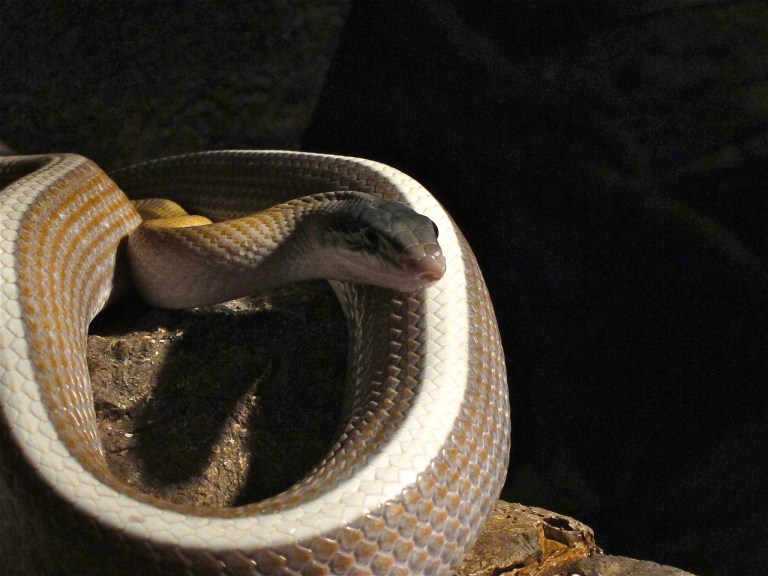
GENERAL CHARACTERISTICS: Color: yellow to beige background color that darkens to a grey-black towards the tail. A white to cream mid-dorsal stripe starts about half of the way down the body and continues to the tip of tail. Both sides of the head are marked just behind the eye with a black stripe surrounded by blue.

Cave Rat Snake aka Bat Eating Snake4496227660_4d83a12687_o

DISTRIBUTION/HABITAT: Southeast Asia including Borneo. Found hanging from the walls and ceilings within caves.

DIET IN THE WILD: Mainly of bats, also rodents and birds.

Cave Rat Snake aka Bat Eating Snake7687438440_3272f123dc_k

REMARKS: Its color is paler than forest racers due to its life in limestone caves.

Borneo Cave Cluster BO03 

References

Encyclopedia of Life  eol.org/pages/794893/details

Ron’s flickr https://www.flickr.com/photos/cas_docents/5252793782/in/set-72157620567930293/

Ron’s WordPress  http://wp.me/p1DZ4b-1pB


TAXONOMY
Kingdom: Animalia
Phylum: Chordata
Class: Reptilia
Order: Squamata
Family: Varanidae

Genus/species: Varanus salvator (melanistic color form)

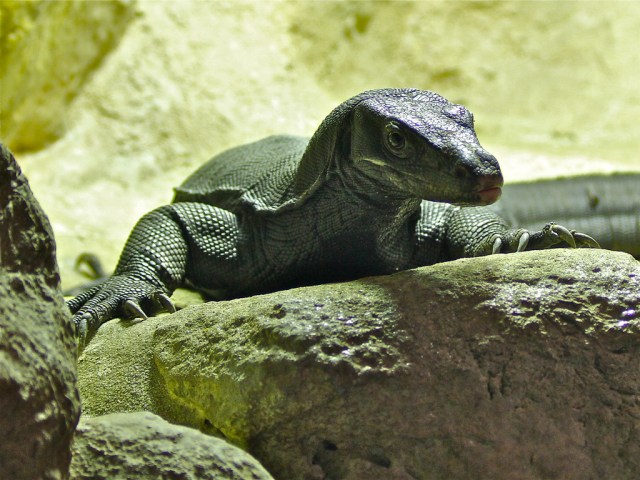
GENERAL CHARACTERISTICS: Color is usually dark brown or blackish.  The neck is  long with an elongated snout and the nostrils close to the end of the nose. The tail is laterally compressed and has a dorsal keel. Scales on the top of the head are relatively large, while those on the back are smaller in size and are keeled. Length to 2 meters (6.6 ft), but most adults are 1.5 meters (4.9 ft) long. Average weight is 19.5 kg (43 lb). As of 2014 the Academy Water Monitor is aprox. 7 years old and 4 feet long (California Academy of Sciences, Eric Hupperts, Biologist)

Water Monitor


DISTRIBUTION/HABITAT: Found throughout much of southern Asia, from India in the west to the Philippines and the Indo-Australian islands in the east. They are semi-aquatic and has a wide range of habitats. Also found on flat land, a typical burrow is in a river bank. The entrance starts on a downward slope but then increases forming a shallow pool of water.

DIET IN THE WILD: The lizard is very fast and is an ‘open pursuit’ hunter, rather than stalking and ambushing. V. salvator is an extreme carnivore: birds, eggs, mammals, fishes, other reptiles and carrion.
Academy diet: Rodents.

REPRODUCTION: Males are normally larger than the females, usually twice as large in mass.. Eggs are usually deposited along rotting logs or stumps.

LIFESPAN: 10.6 years in captivity.

Water Monitor

CONSERVATION: IUCN Redlist: Least Concern. CITES: appendix II. It is abundant in parts of its range, despite large levels of harvesting.

REMARKS:They are excellent swimmers known to cross large stretches of water, explaining its wide distribution. Known to dig up corpses of human and devour them.

Skins of  V. salvator are used for dietary protein, ceremonies, medicine, and leather goods. Annual trade in these skins may reach more than 1 million whole skins a year, mostly in Indonesia for the leather trade. Medium-sized individual are preferred because the skin of large animals is too tough and thick to shape.

References:

Encyclopedia of Life  http://eol.org/pages/1055072/details

Animal Diversity Web animaldiversity.ummz.umich.edu/accounts/Varanus_salvator/

Ron’s WordPress Shortlink  http://wp.me/p1DZ4b-TY

Ron’s flickr http://www.flickr.com/photos/cas_docents/sets/72157625194985646/with/5492305677/