Category: TEMPERATE MARINE


TAXONOMY
Kingdom: Animalia
Phylum: Chordata
Class: Mammalia
Order: Cetacea
Family: Balaenopteridae

Genus/species: Balaenoptera musculus

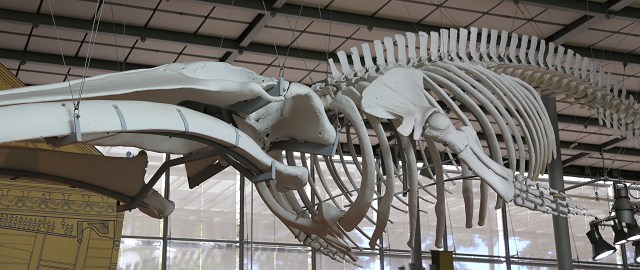
GENERAL CHARACTERISTICS: The Blue whale is the largest animal to have ever lived, (almost as big as a Boeing 737. They are actually grayish-blue, with a mottled effect that is visible in some lights and can allow individuals to be identified. 50 people could stand on the tongue, which alone weighs as much as an elephant. The heart of the blue whale is the size of a small car (Volkswagen Beetle).
Blubber can be up to 51 cm (20 inches) thick. The spout of a blue whale can be 9 m (30 ft) high.
Weigh to 203,210 kg or 200 tons (448,000 pounds), as much
as 40 elephants.
Length to nearly 110 feet (33 m (110 ft)
Blue Whale18204939131_ab0b4836d7_k

DISTRIBUTION/HABITAT: B. musculus inhabit the open ocean, where they ares found in every ocean except the Arctic, with a range that extends from the periphery of drift-ice in polar seas to the tropics, although it is absent from some seas such as the Mediterranean, Okhotsk and Bering Sea.

They inhabit the open ocean, where it is found most frequently along the continental shelf edge and near polar ice. It feeds at both the surface and to depths of at least 100 m (300 feet).

DIET: Feeds mainly on shrimp-like krill, which are filtered through the baleen plates. Large volumes of water and food can be taken into the mouth because the pleated grooves in the throat expand. As the mouth closes, water is expelled through the baleen plates, which trap the food on the inside to be swallowed. During the summer months, one blue whale can eat more than 4,082 kg (9,000 lbs) of krill every day (up to 40 million krill a day).

REPRODUCTION: Reaches sexual maturity at 7 to 10 years of age, A calf is produced after 10 to 11 months of gestation which is 7 m (23 ft) long and weighs about 27,215 kg (30 tons or 60,000 pounds) and consumes around 190 liters (50 gallons) of the mother’s fat rich-milk resulting in a daily weight gain of about 90 kg (200 pounds).
Weaning occurs at the summer feeding grounds at about seven months old.

B. musculus produces louder calls than any other animal on earth. It appears to have functions in sensing the environment, prey detection and communication with male display.

CONSERVATION: IUCN Red List Endangered (EN).
No Blue whales have been deliberately caught since 1978. Today, there are an estimated 10,000 to 25,000 Blue whales surviving worldwide, which represents around 2 to 11 percent of the total pre-commercial exploitation population.

California Blue whale numbers are rising, and are possibly close to carrying capacity, according to a new study in Marine Mammal Science. The B. musculus whale population is estimated at about 2,200, or 97 percent of the estimated historical level. t’s a conservation success story. (Approximately 3,400 California Blue whales were caught between 1905 and 1971.)

Primary threats
1. vessel strikes
2. fisheries interactions

Additional threats
1. anthropogenic noise
2. habitat degradation
3. pollution
4. vessel disturbance
5. long-term changes in climate

REMARKS: They can dive 150 m (500 ft) below the surface and remain underwater for 30 minutes.

The Blue whale produces louder calls than any other animal on earth. It appears to have functions in sensing the environment, prey detection and communication with male display.

The California Academy’s Blue whale is an 26.5 m (87-ft) long male that weighed about 80 tons with a 6 m (20-ft) long skull. It was captured for its oil off the coast of Vancouver Island in 1908. It gave 60 barrels of oil and 181 kg (400 lbs) of baleen, the latter used for corsets, buggy whips, and other light-weight yet durable products. The Academy acquired the bones in 1915, and they were buried in the Shakespeare Garden in Golden Gate Park until they were ready for mounting, which was completed in 1917 in an open shed.

References

West Coast Blue Whales journals.plos.org/plosone/article?id=10.1371/journal.pone…

California Academy of Sciences www.calacademy.org/explore-science/blue-whale-survival

California Academy of Sciences  www.calacademy.org/explore-science/blue-whale-population-…

IUCN Red List (March, 2011)  www.iucnredlist.org

NOAA Fisheries Office of Protected Resources – Blue whale www.fisheries.noaa.gov/pr/species/mammals/whales/blue-wha…

ARKive www.arkive.org/blue-whale/balaenoptera-musculus/

Shirihai, H & Jarrett (2006) Whales Dolphins and Other Marine Mammals of the World Princeton University Press.

Evans, P & Weinrich, M (2002) Whales Dolphins and Porpoises D K London New York Munich Melbourne and Delhi.

Reeves, R, R, et al (2002) Guide to Marine Mammals of the World   Chanticleer Press, Inc.

Ron’s WordPress Shortlink https://fishoncomputer.wordpress.com/wp-admin/post.php?post=5843&action=edit


TAXONOMY
Kingdom: Animalia
Phylum: Chordata
Class: Mammalia
Order: Cetacea
Family: Delphinidae (Killer whales are the largest of the dolphin family)

Genus/species: Oricnus orca

GENERAL CHARACTERISTICS: Black on top with white undersides and white patches near their eyes; highly variable gray or white saddle behind the dorsal fins. They have the second heaviest brain among marine mammals (only the sperm whale which has the heaviest brain of any animal is heavier.

For photos in the wild see reference links below.

18016037680_d13b8f30a2_o

Males: Up to 10 m (32 ft) in length and can weigh up to 10,000 kg (22,000 pounds).
Females; Up to 8.5 m (28 ft) in length and can weigh up to 7,500 kg (16,500 pounds).

18177805802_d8bd1e3610_k

DISTRIBUTION/HABITAT: The most widely distributed marine mammals. Ten ectotypes are found in all parts of the oceans; most abundant in colder waters, including Antarctica, the North Atlantic and Pacific Oceans.

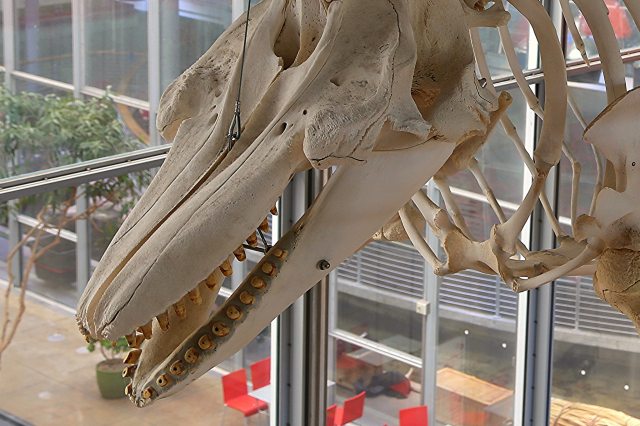
DIET: They swim in groups, like wolf packs and may reach speed bursts of 55 Kilometers (34 miles) per hour while hunting fish, marine mammals and sharks. Off Shore Orcas’ teeth are worn down from eating small sharks (generally dogfish), which have rough skin. See the teeth offshore Orca 0139 above. Orca depend heavily on underwater sound for orientation, feeding, and communication.
Some Orcas work together to ‘herd’ fish, before stunning the prey with strikes from the tail flukes, or join together in coordinated attacks on large whales.

18182342801_0f152dce77_k

REPRODUCTION: O. orca reach sexual maturity when they grow to about 4.6 m-5.4 m (15-18 ft) long, There is no distinct calving season. Newborns are up to 2.4 m (8 ft) long and weighing about 180 kg (400 pounds).
They are nursed for at least a year, and may be weaned between 1-2 years old. It is thought that females give birth about every 5 years for an average period of 25 years.

PREDATORS: None.  Killer whales are marine apex predators.

LONGEVITY: 60-80 years.

CONSERVATION: IUCN Redlist: data deficient (DD).
All marine mammals, including Killer whales, are protected in the United States. Global population at a minimum of about 50,000 animals.

Threats: Orca are also sometimes seen as competitors by fishermen and are often shot as a result. In addition, the orca may occasionally be caught accidentally in trawl and driftnet fisheries and overfishing can reduce its food supply.
Toxin accumulations that settle in their fatty tissue, such as PCBs, PBDEs and brominated fire retardants, are other hazards.

REMARKS: Highly social matriarchal societies; relying on underwater sound for orientation, feeding, and communication. They have relatively stable social groups that often range in size from 2 to 15 animals. Groups as large as several hundred individuals are rare.

Three types of Killer whales differ in morphology, ecology, behavior, and genetics. Resident, Transient, and Offshore.

Resident Orca remain in one general area, in small family groups, and prefer salmon as their main prey item. In the U.S. North Pacific.

Transient Orca are found throughout the eastern North Pacific, and have primarily been studied in coastal waters. Their geographic range overlaps that of the resident and offshore Killer whales. They often eat marine mammals, and migrating gray whale calves.

Offshores Orca have the largest geographic range of any Killer whale community in the northeastern Pacific and often occur 15 km (9 miles) or more offshore. They also are found in coastal waters and occasionally enter protected inshore waters congregating in groups of 20-75 animals with occasional sightings of larger groups up to 200 animals.

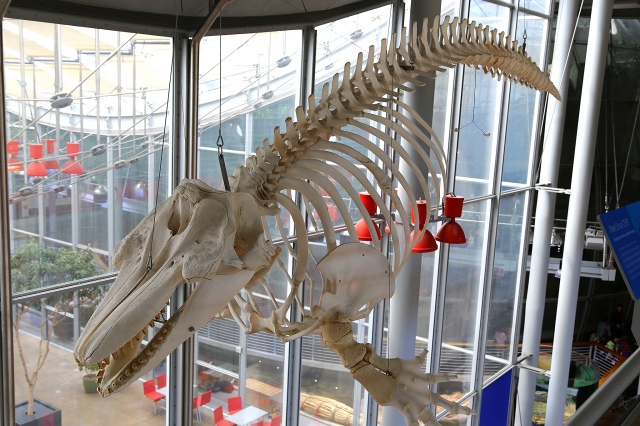
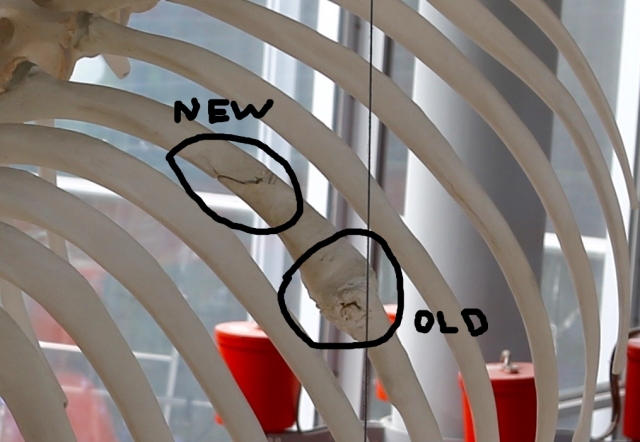
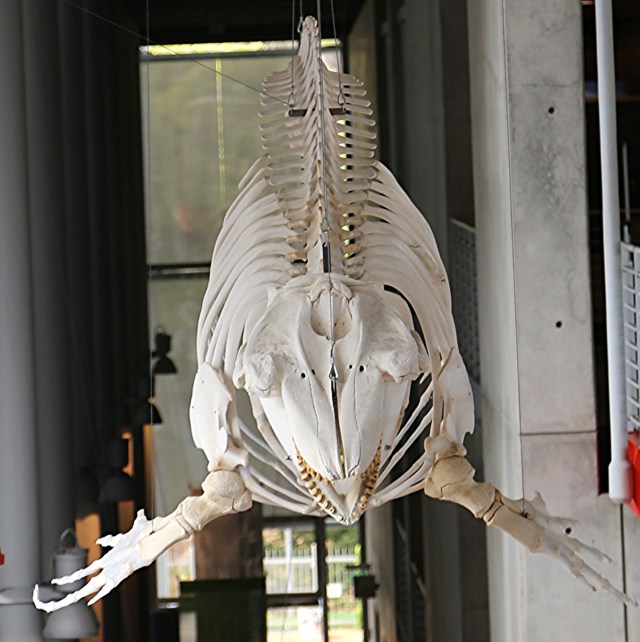
SPECIAL NOTE: This Offshore Orca was known to scientists before it died. It was last seen near Vancouver Island in Sept. 2011. This 5.5 m (18 ft) Killer Whale was discovered washed up on a beach Point Reyes, California Nov., 2011. Orca 0139 was collected and examined and was noted to have a broken rib which was the likely cause of death.  The ID was was confirmed by photos of his dorsal fin and saddle patch. It has been on display at the California Academy of Sciences since 2013. Alive, he weighed between 1360 kg – 1,800 kg (3000 and 4000 pounds), and was about 5.4 m (18 ft) long. His head alone weighed 91 kg (200 pounds).

Off Shore Orca 0139 has been on display at the California Academy of Sciences since 2013.

Version 2

References

California Academy of Sciences Docent program Whale information information March 2015

Ron’s flickr https://www.flickr.com/photos/cas_docents/18016037680/in/album-72157652727235908/

Ron’s WordPress Shortlink  https://fishoncomputer.wordpress.com/wp-admin/post.php?post=5834&action=edit&postpost=v2

 ARKive  www.arkive.org/orca/orcinus-orca/

 IUCN Red list:  www.iucnredlist.org/details/15421/0

 National Oceanic and Atmospheric Administration www.nmfs.noaa.gov/pr/species/mammals/whales/killer-whale….

 Shirihai, H & Jarrett (2006) Whales Dolphins and Other Marine Mammals of the World Princeton University Press.

 Evans, P & Weinrich, M (2002) Whales Dolphins and Porpoises D K London New York Munich Melbourne and Delhi.

 Reeves, R, R, et al (2002) Guide to Marine Mammals of the World Chanticleer Press, Inc.


TAXONOMY
Kingdom: Animalia
Phylum: Chordata
Class: Mammalia
Subclass: Eutheria
Order: Cetartiodactyla (whales and even-toed ungulates)
Family: Balaenopteridae

Genus/species: Megaptera novaeangliae

Humpback whale

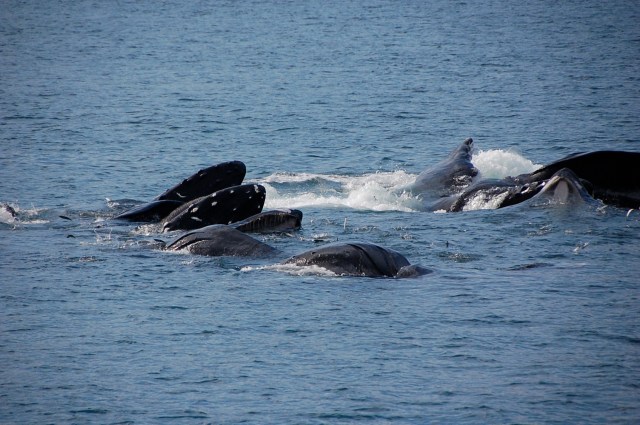
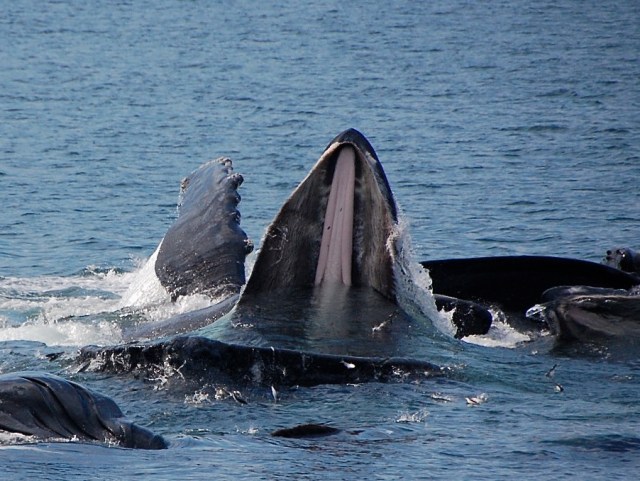
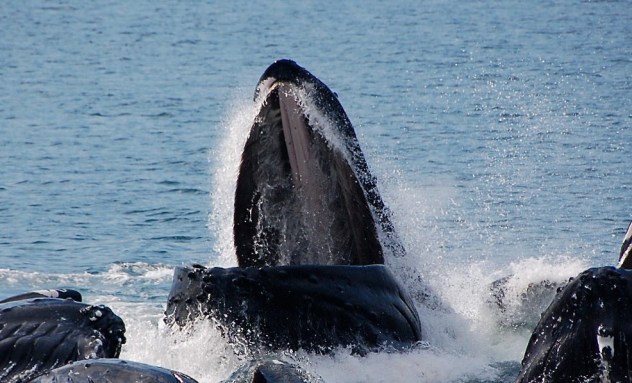
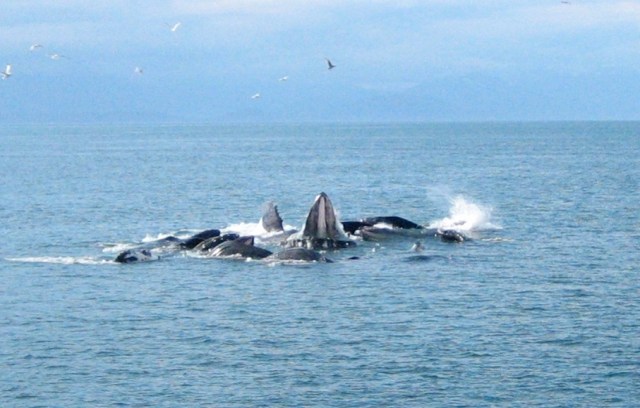
 A group of Humpback whales will locate a large group of small fishes and then blow bubbles from their blowholes as they circle toward the surface. The ring of bubbles forms a “bubble-net” which the fishes and or krill perceive as solid.  The fishes are compressed and the multiple whales then rise in unison to the surface inside the “bubble net” with their mouths open and their pleats expanded for a maxium catch of herring, caplin or sandlance.

All together now coming up

DSC_0332

Big gulp

DSC_0333_2

The water is expelled through their comb-like baleen (made of keratin) while their tongue sweeps the fishes down their throat.

17846092055_cdfe22e838_b


17660114570_c04b2af9ec_o

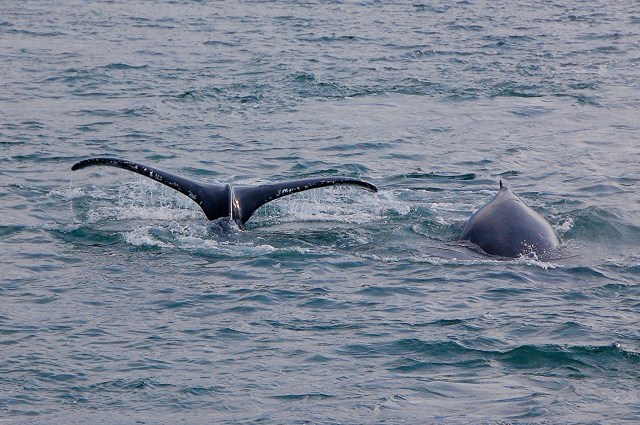
Waving good-bye with their flukes elevated and preparing a new bubble-net.

17661380019_4f748b80f4_b

Note: Flippering:  When a Humpback raises one or both flippers out of the water and slaps them against the water (see above).

Kickfeeding: The Humpback raises and slams his rear flukes against the water surface to stun fishes and then dives and surfaces to engulf the stunned fishes.

REMARKS Individual Humpbacks may lunge into schools of fishes or krill under water.

References

WordPress link:    https://fishoncomputer.wordpress.com/wp-admin/post.php?post=5820&action=edit
Ron’s flickr www.flickr.com/photos/cas_docents/17227254903/in/album-72…

Oxford Journals Integrative & Comparative Biology icb.oxfordjournals.org/content/51/1/203.full

IUCN red list 2008  www.iucnredlist.org/details/13006/0

IUCN Red List (July, 2009) www.iucnredlist.org

Monterey bay aquarium  www.montereybayaquarium.org/animal-guide/marine-mammals/h…

National Geographic animals.nationalgeographic.com/animals/mammals/humpback-w…

ARKive  www.arkive.org/humpback-whale/megaptera-novaeangliae/vide…

Shirihai, H & Jarrett (2006) Whales Dolphins and Other Marine Mammals of the World Princeton University Press.

Evans, P & Weinrich, M (2002) Whales Dolphins and Porpoises D K London New York Munich Melbourne and Delhi.

Reeves, R, R, et al (2002) Guide to Marine Mammals of the World   Chanticleer Press, Inc.

Buffington K, et al (1992) Whales Scholastic Professional Books


TAXONOMY
Kingdom: Animalia
Phylum: Chordata
Class: Mammalia
Subclass: Eutheria
Order: Cetartiodactyla (whales and even-toed ungulates)
Family: Balaenopteridae

Genus/species: Megaptera novaeangliae

GENERAL CHARACTERISTICS: Named for its stocky body with a distinctive hump formed by its black back when about to take a long dive. On the underside of the mouth are 12 to 36 throat pleats or grooves, which can expand when filtering water during feeding. Baleen is mostly black. Humpback whale 

M. novaeangliae  have knobbly heads, covered in many raised lumps (‘tubercles’) and barnacles. There are two blowholes. Unusually long pectoral fins with a characteristic serrated leading edge are adapted for high maneuverability associated with the whale’s unique feeding behavior. Fin color varies from all black to white. The expiration blow is bushy and highly visible 2.5-3 m ( 2.5-9.8 ft). Body length to 19 m (62 feet), weight to 48,100 kg (53 tons).

humpback whales17819773296_37dcacd696_o

about to dive

17227254903_ba7267992a_b

DISTRIBUTION/HABITAT: All Oceans in open waters.
The wintering grounds of these are:
A (Southwest Atlantic): coast of Brazil
B (Southeast Atlantic): the coast of West Africa from the Gulf of Guinea down to South Africa
C (southwestern Indian Ocean): coasts of eastern South Africa, Mozambique, Madagascar (southern, western and eastern coasts), Mayotte, the Comoros and other western Indian Ocean island groups;
D (southeastern Indian Ocean): northwestern Australia
E (southwest Pacific) northeastern Australia, New Caledonia, Tonga and Fiji.
F (central South Pacific): Cook Islands and French Polynesia
G (southeast Pacific): Ecuador, Galápagos, Colombia, Panama and Costa Rica.www.iucnredlist.org/details/13006/0

early dive

17843769572_0be6ff37c5_k

DIET: Feed only in summer, in polar waters on plankton, krill and small fishes. A group of Humpback whales will locate a large group of small fishes and then blow bubbles from their blowholes as they circle toward the surface. The ring of bubbles forms a “bubble-net” which the fishes and or krill perceive as solid. The fishes are compressed and the multiple whales then rise in unison to the surface inside the “bubble net” with their mouths open and their pleats expanded for a maxium catch of herring, caplin or sandlance. The water is expelled through their comb-like baleen (made of keratin) while their tongue sweeps the fishes down their throat. 

diving

DSC_0381_2 (1)

REPRODUCTION: Sales sing complex songs, with each group having its own dialect lasting hours, and can be heard for over 18 miles (30 km). Females nurse their calves for almost a year. Calves do not stop growing until they are ten years old. Annual tropical to cool water migration 2,300-3,600 km (1,400-2,200 miles)

net scars

17661379439_ceb41a7f1d_o

CONSERVATION: IUCN Redlist 2008 Least Concern (LC)
History:
1996–Vulnerable
1994–Vulnerable (Groombridge 1994)
1990–Vulnerable (IUCN 1990)
1988–Endangered (IUCN Conservation Monitoring Centre 1988)
1986–Endangered (IUCN Conservation Monitoring Centre 1986)
www.iucnredlist.org/details/13006/0

The Arabian Sea subpopulation and the Oceania subpopulation are classified as Endangered (EN) on the IUCN Red List (July, 2009) www.iucnredlist.org

REMARKS: Individual may be identified by the distinctive markings on their flukes, or tails.

References

Ron’s flickr https://www.flickr.com/photos/cas_docents/17227254903/in/album-72157652727235908/

Ron’s WordPress  https://fishoncomputer.wordpress.com/wp-admin/post.php?post=5808&action=edit&postpost=v2

Oxford Journals Integrative & Comparative Biology icb.oxfordjournals.org/content/51/1/203.full

IUCN Red List 2008 www.iucnredlist.org/details/13006/0

IUCN Red List (July, 2009) www.iucnredlist.org

Monterey bay aquarium  www.montereybayaquarium.org/animal-guide/marine-mammals/h…

National Geographic animals.nationalgeographic.com/animals/mammals/humpback-w…

ARKive   www.arkive.org/humpback-whale/megaptera-novaeangliae/vide…

Shirihai, H & Jarrett (2006) Whales Dolphins and Other Marine Mammals of the World,  Princeton University Press.

Evans, P & Weinrich, M (2002) Whales Dolphins and Porpoises,  D K London New York Munich Melbourne and Delhi.

Reeves, R, R, et al (2002) Guide to Marine Mammals of the World
Chanticleer Press, Inc.

Buffington K, et al (1992) Whales,  Scholastic Professional Books

TAXONOMY
Kingdom: Animalia
Phylum: Chordata
Class: Reptilia
Order: Squamata
Family: Gerrhosauridae

Genus: Zonosaurus maximus

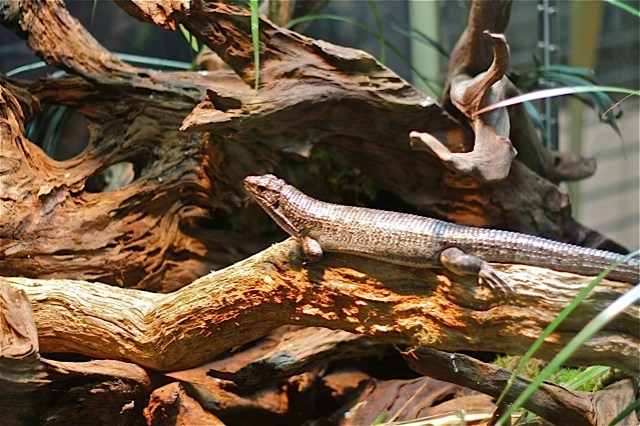
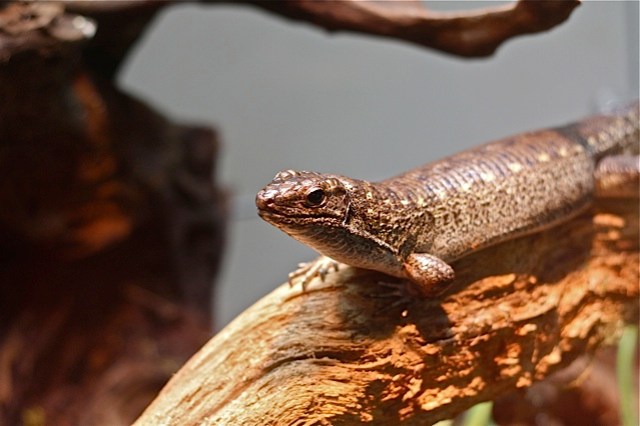
 GENERAL CHARACTERISTICS: Relatively flattened body with a long, pointed snout. The body is covered with heavy armor of large, bony, keeled scales, especially on the dorsal surface. The scaleless area along the sides functions as expansion joints for gravid females that allow distention after feeding. Length is up to 70 cm (28 inches).


DISTRIBUTION/HABITAT: Endemic to Madagascar, this species is found in lowland humid forest associated with rivers and streams as well as non-forested riparian areas where it builds dens close to water. When disturbed, it seeks shelter in water and can stay submerged for several minutes.

DIET IN THE WILD: Plant matter, invertebrates, small rodents, other reptiles.

PREDATORS: Predators are primarily snakes.

REPRODUCTION: Oviparous. Life span: about 20 years.


CONSERVATION: IUCN Red List Vulnerable (VU)
Populations are severely fragmented and declining because of the reduced size and quality of habitat due to agricultural activities. Mature animals may also be over-collected for the pet trade. Some sites where this plated lizard occurs are fortunately under conservation management, including newly protected areas.

LOCATION:  Madagascar Rainforest  MA13

References

California Academy of Sciences, Docent Rainforest Training Manuel 2014

Encyclopedia of Life eol.org/pages/462210/details

IUCN Red List www.iucnredlist.org/details/172865/0

Ron’s flickr  https://www.flickr.com/photos/cas_docents/7423084566/in/set-72157620708610230/

Ron’s WordPress Shortlink  http://wp.me/p1DZ4b-xI


TAXONOMY
Kingdom: Animalia
Phylum: Chordata
Class: Actinopterygii
Order: Perciformes
Family: Chaenopsidae

Genus/species: Neoclinus blanchardi

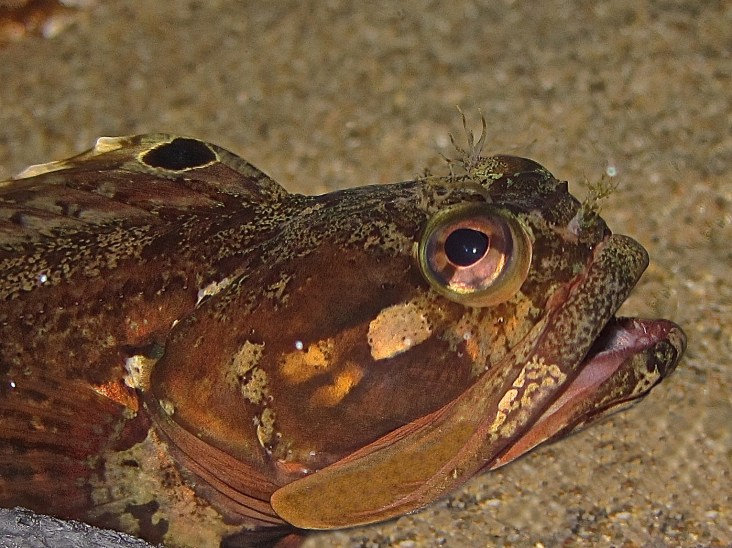
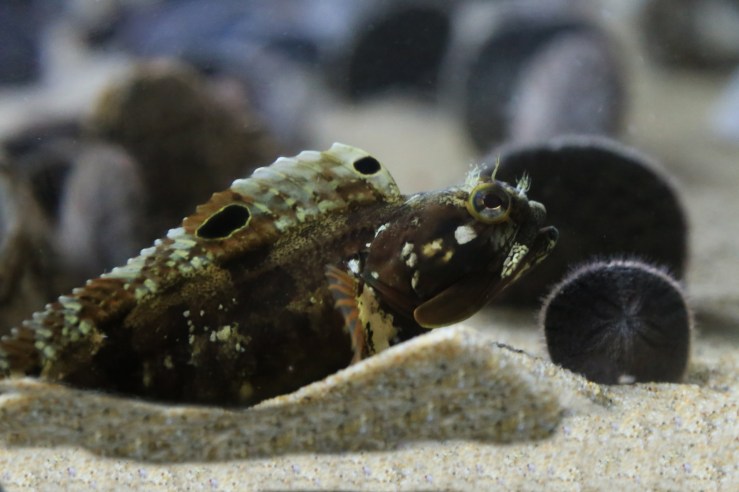
GENERAL CHARACTERISTICS: Generally brownish-gray and typically mottled with either red or green patches with extremely large mouths. The dorsal spines possess two ocelli, one between the first and second spines, and the other between the fifth and ninth spines which are generally blue and outlined by a yellow ring. Largest of all fringeheads can growing up to 30.0 cm (11.8 inches) in length.

SarcasticFringhead

DISTRIBUTION/HABITAT: Pacific Coast from San Francisco, California to central Baja California, Mexico.   Demersal, ( live and feed on or near the bottom of seas or lakes) marine environment. They occupy empty shells, abandoned holes and crevices In some areas they even take up residence in old cans and bottles. In fact, in the beer bottle field of Santa Monica Bay, nearly every bottle is a home to a fringehead. 

DIET IN THE WILD: omnivores. 

 Sarcastic FringheadLong

REPRODUCTION:he The female lays her eggs routinely in an abandoned burrow and the male to guards the nest.

CONSERVATION: IUCN Red List; No special status.

REMARKS: N. blanchardi are fiercely territorial at rest in their homes with only their heads protruding. However, upon the first sign of danger, they will employ their enormous mouths and needle like teeth for defense. Initially, they emit only a warning accomplished by the flexing and snapping of their jaws.

LOCATION: Sand dollar exhibit

Referencs

Animal Diversity Web animaldiversity.org/accounts/Neoclinus_blanchardi/

Eschmeyer, W., O. Herald, H. Hammann, J. Gnagy. 1983. A Field Guide to Pacific Coast Fishes of North America. Boston: Houghton Mifflin Company.

fishbase www.fishbase.org/summary/Neoclinus-blanchardi.html

Ron’s flickr  https://www.flickr.com/photos/cas_docents/16123153465/in/set-72157608359804936/

WordPress shortlink http://wp.me/p1DZ4b-1qx

TAXONOMY
Kingdom: Animalia
Phylum: Arthropoda (Invertebrate animal having an exoskeleton (external skeleton), a segmented body, and jointed appendages). Includes the insects, arachnids, myriapods, and crustaceans.
Subphylum: Crustacea ( crabs, lobsters, crayfish, shrimp, krill and barnacles.)
Class: Malacostraca (Body plan comprises 20 body segments (rarely 21), and divided into a head, thorax, and abdomen). Crabs, lobsters, crayfish, shrimp, krill, woodlice, scuds (Amphipoda)mantis shrimp.
Order: Decapoda (“ten-footed”) crayfish, crabs, lobsters, prawns and shrimp
Family: Palinuridae (langouste or rock lobsters)

Genus/species: Panulirus interruptus

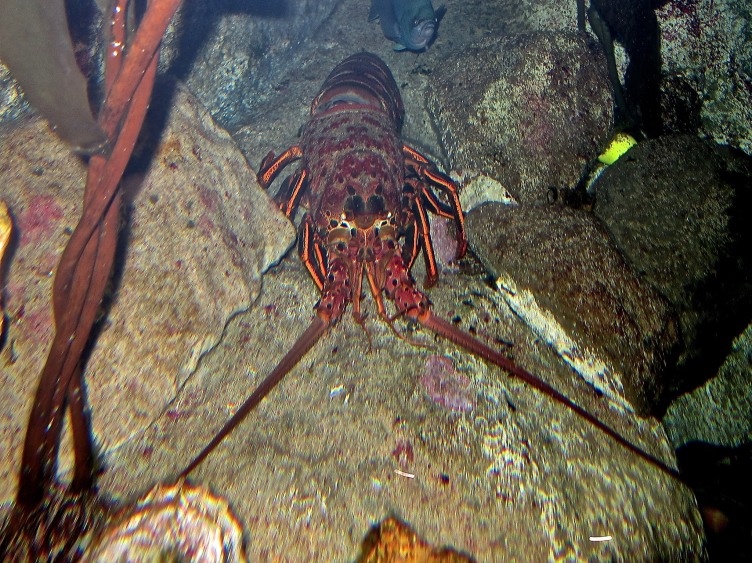
GENERAL CHARACTERISTICS: One of the largest spiny lobster species. The exoskeleton is generally red to orange in color with black markings. Spiny projections are located on the carapace (upper shell) and sides of the abdomen. Their two primary antennae may equal the length of their body. Panulirus interruptus lacks the large pinching claws of their Maine lobster relatives. Average mass is 908 g (32.00 oz) ranging from 454 to 2270 g (16.00 to 80.00 oz). On average, they are 30 cm (11.81 in) long, though they can measure as large as 90 cm (35.43 in) in length.

15790212682_b1f9460bd4_k

DISTRIBUTION/HABITAT: Monterey Bay, California to Baja California, Mexico. Found in rocky reefs in caves and rocky crevices. Maximum depth 240 feet.

DIET IN THE WILD: Nocturnal scavenging on sea urchins, small clams, mussels, algae and worms.

REPRODUCTION: Breed once a year during warmer months. Males attach sperm packets to females where she can produce up to 800,000 eggs which hatch into tiny young after 10 weeks. They reach legal size for harvest at 7-11 years of age.

LIFESPAN: In captivity 8 to 25 years.

PREDATORS: Giant Sea Bass, California Sheephead, cabezon, horn sharks, Leopard Sharks, octopus, sea otters and humans.

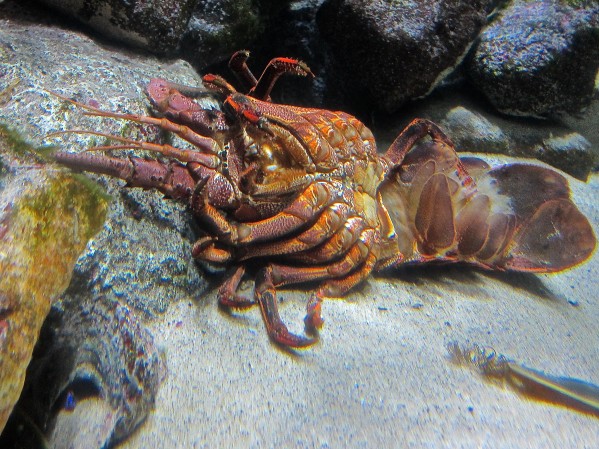
The photo below is a recent Moult ( shedding of the exoskeleton  typically to let the organism grow).

CA Spiny Lobster Molt15837588685_55717b70aa_k

CONSERVATION: IUCN Red List and CITES No special status. California fish and game regulates taking of lobster which requires a sport fishing license. In 2003 over 270 metric tons were harvested.

REMARKS: For defense P. interruptus has sharp spines on the body, tail and antennae. It also can use its powerful flexing tail to flee predators.

Southern California Coastal Marine

References

Animal Diversity Web ADW, animaldiversity.ummz.umich.edu/accounts/Panulirus_interru…

California department of fish and game nrm.dfg.ca.gov/FileHandler.ashx?DocumentID=36321&inli…

Ron’s flickr https://www.flickr.com/photos/cas_docents/15790212682/in/set-72157608602469734/

WordPress shortlink http://wp.me/p1DZ4b-1pi

TAXONOMY
Kingdom: Animalia
Phylum: Echinodermata
Class: Holothuroideaia
Order: Aspidochirotida
Family: Stichopodidae

Genus/species: Parastichopus parvimensis

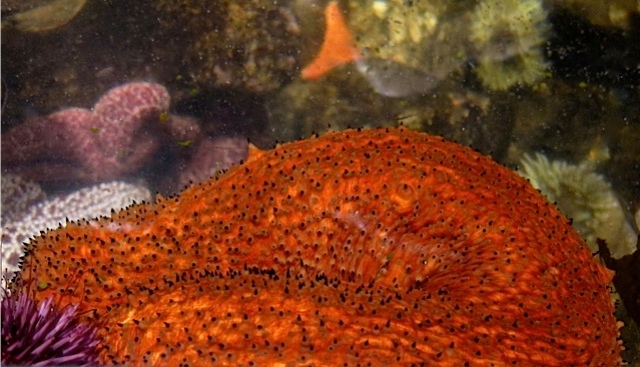
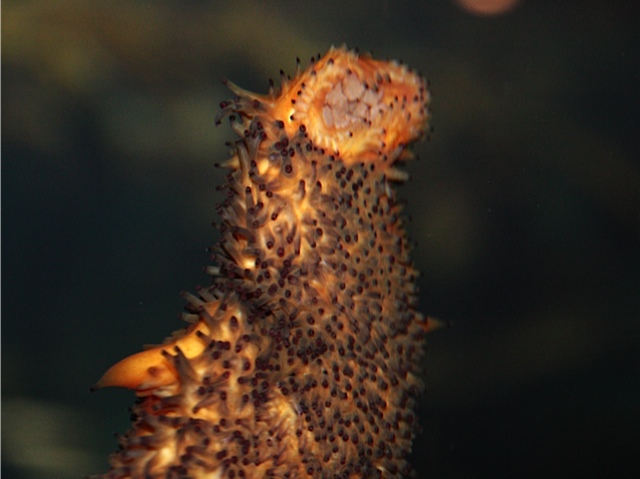
GENERAL CHARACTERISTICS: Colored brown above, lighter below. Conical black-tipped papillae on the dorsal side provide the common name. The mouth and anus are on opposite ends of their cylindrical bodies. Tube feet aide in gathering food as well as ambulating.Length to 25 cm (10 inches). 

DISTRIBUTION/HABITAT: Monterey Bay, California to Baja California. Found on sandy or muddy-sandy soft bottoms between rocks or in eelgrass beds. Sub tidal to 27 m (89 feet) in depth.

DIET: Digests organic detritus and small organisms in soft sediments.

REPRODUCTION?DEVELOPMENT: Have separate sexes (look-alike), and eggs are fertilized externally. Broadcast spawning usually takes place in November, and each female can produce thousands of eggs. After fertilization, a larva is formed which metamorphoses into a Sea Cucumber after a few weeks.

MORTALITY/LONGEVITY: Eaten by sea stars including the sunflower star. Sea otters and humans are also predators. Lifespan estimated to be 5-10 years in the wild.

CONSERVATION: IUCN Red list; Not Evaluated

REMARKS: Holothuroids differ from echinoderms, because they have a water vascular system full of body fluid rather than sea water.  Like other echinoderms, cucumbers have a calcareous skeleton; but in their case it is only vestigial, composed of plates and spicules of lime buried in the skin and serving merely to stiffen the body wall. Respiratory trees are the lungs of a sea cucumber. These hollow branched organs lie inside the body cavity on either side of the posterior intestine. The base of the tree connects to a muscular cavity, or cloaca. Oxygen is transferred across the thin membrane into the fluids of the body cavity. When the oxygen is depleted, the main body wall contracts to squeeze water out of the trees. 
When threatened, it can expel all its internal organs through its anus (evisceration) and grow new ones in 2-4 weeks. It can also expel sticky filaments to ensnare or confuse predators. Warty sea cucumbers and their related species are sometimes called the “earthworms of the sea,” as they cultivate the seafloor in much the same manner as earthworms cultivate the soil. Oral tube feet around the mouth are covered with a sticky mucus that traps food particles from the seafloor’s sediment and mud. In areas where overfishing has reduced the population of sea cucumbers, the seafloor hardens, thus destroying a habitat for other bottom-dwelling creatures. Can walk on tube feet if stressed up to one yard every 15 min..Humans eat a variety of sea cucumber species, including Warty sea cucumbers. The demand is greatest in Asian countries, for consumption and folk medicine applications. It is considered to be widely overfished.


Parastichopus parvimensisIMG_8852 - Version 2


References

ADW Animal Diversity Web, U. of Michigan  http://animaldiversity.ummz.umich.edu/accounts/Parastichopus_parvimensis/

Encyclopedia of Life  eol.org/pages/597920/details

Monterey Bay Aquarium  www.montereybayaquarium.org/animal-guide/invertebrates/wa…

Ron’s flickr  https://www.flickr.com/photos/cas_docents/3702926813/in/set-72157608501343477

 Ron’s WordPress Shortlink  wp.me/p1DZ4b-s6


TAXONOMY
Kingdom: Animalia
Phylum: Echinodermata (“spiny-skinned” animals including sea stars, brittle stars, sea urchins, sand dollars, and sea cucumbers)
Class: Echinoidea  (sea urchins and sand dollars)
Order: Clypeasteroida
Suborder: Scutellina
Family: Dendrasteridae

Genus/species: Dendraster excentricus

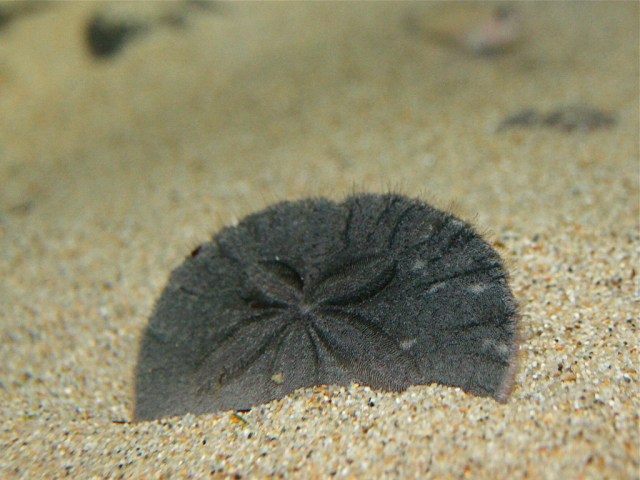
GENERAL CHARACTERISTICS: Closely related to sea urchins, except for a more flattened, silver-dollar skeleton (test).
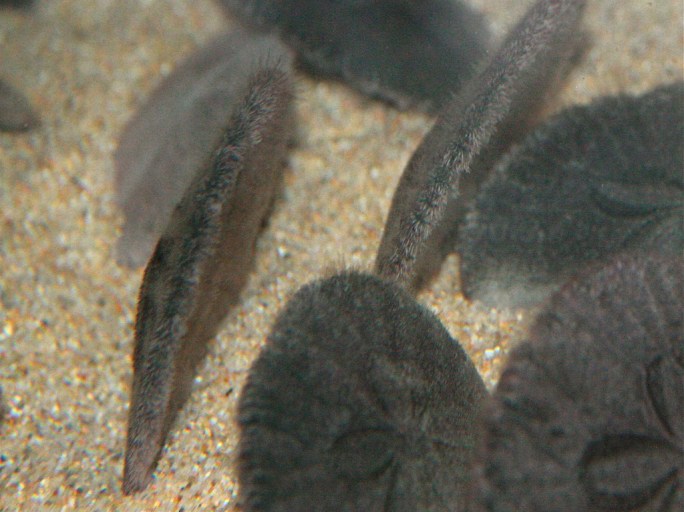
The tube feet, characteristic of echinoderms, are used for locomotion, respiration, sensing the environment, grasping and transporting food particles to the centrally located mouth on the underside of the test, and attachment to the substrate. The anus is near the edge of the test.
Very short spines which are covered with tiny hair-like cilia are closely packed together on the surface which feels like velvet.
Diameter to 8 cm (3.2 inches).

Eccentric Sand Dollar 3289660142_4458838cfd_b

DISTRIBUTION/HABITAT: Southeastern Alaska to Baja California. Found in subtidal to low intertidal zone on sandy or sandy-muddy substrates in cool water near the shore, but deep enough to avoid wave surge. Depth to 40 m (131 feet) but usually shallower.

Eccentric Sand Dollar 3427754072_18f944b159_b

DIET IN THE WILD:  They are oriented flat or more often vertical with entire bed oriented the same way to catch phytoplankton detritus, diatoms, and plankton such as crab larvae and amphipods. They are captured by mucous-covered spines and pincers (pedicillariae). Food particles are then carried to the mouth in the center of the lower body surface by cilia on spines where it is broken up by jaws of a small aristotle’s lantern. The tube feet are also used for grasping and transporting food.

REPRODUCTION: Broadcast spawner. Sperm and eggs are released from separate individuals. After fertilization, free-swimming bilateral larvae form, which eventually change to radially symmetrical individuals that settle to a sandy or muddy substrate similar to sea urchins.

Longevity: averages 10 years.

PREDATORS: Fish, sea stars, crabs, humans.

CONSERVATION: IUCN; Not evaluated.

REMARKS:  Cilia covered spines are used in wave-like motions for movement and burrowing. Tube feet away from the mouth are also used for locomotion. 
Young sand dollars ingest large sand grains that act like a diver’s weight belt to help them maintain position.
The age a sand dollar can be determined by counting the growth rings on the plates of the exoskeleton.

References

U. of Michigan (ADW) Animal Diversity Web  http://animaldiversity.ummz.umich.edu/accounts/Dendraster_excentricus/ 

Walla Walla University  http://www.wallawalla.edu/academics/departments/biology/rosario/inverts/Echinodermata/Class%20Echinoidea/Dendraster_excentricus.html 

Monterey Bay Aquarium  http://www.montereybayaquarium.org/animal-guide/invertebrates/sand-dollar

Ron’s flickr  https://www.flickr.com/photos/cas_docents/3289660142/in/set-72157608501343477

Ron’s WordPress shortlink  http://wp.me/p1DZ4b-1mA

TAXONOMY
Kingdom: Animalia
Phylum: Echinodermata
Class: Asteroidea
Order: Valvatida
Family: Goniasteridae

Genus/species: Mediaster aequalis

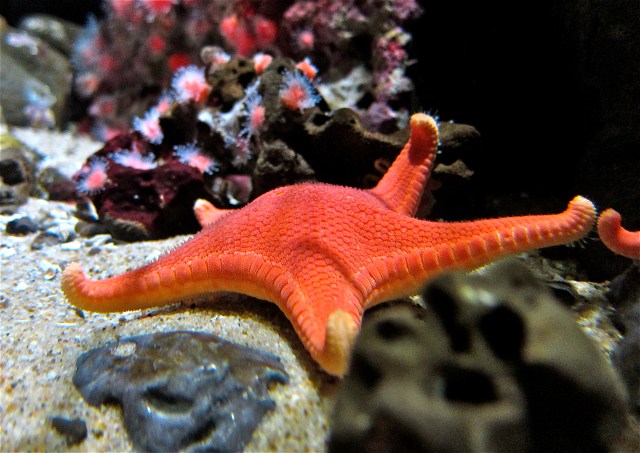
Vermillion Sea StarIMG_3431

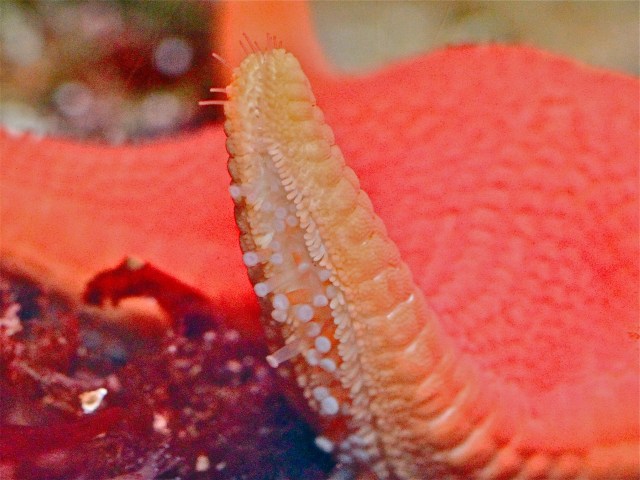
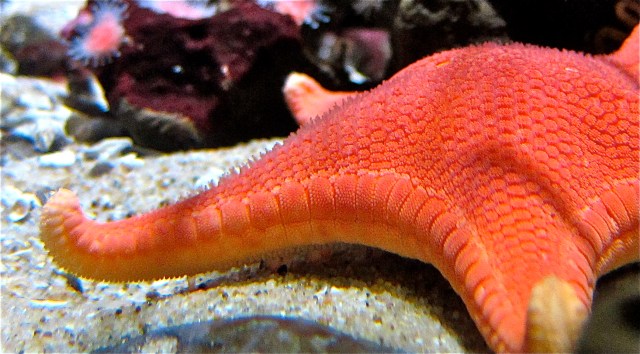
GENERAL CHARACTERISTICS: 5-rayed sea star has conspicuous marginal plates. Orange to vermillion red. Aboral surface covered with oval or flat-topped hexagonal plates (ossicles). Oral side lighter. Up to 20 cm ( 7.9 inches) diameter.

 Vermillion Sea StarIMG_5328

DISTRIBUTION/HABITAT: Alaska south to southern California. Common in subtidal waters; rarely exposed to the air. Found especially in rocky areas; occasionally on sand and gravel. Depth to 1,784 m (5,800 feet) max.

DIET IN THE WILD: Omnivorous: sponges, bryozoans, tunicates, algae, and detritus. Also known to feed on sea pens.

Vermillion Sea Star6182821598_7b9c9777d0_o

PREDATOR: Seastar Solaster dawsoni.

REMARKS: Moves more rapidly than most sea stars: up to 40 cm (16 inches) minute.

References

Encyclopedia of Life eol.org/pages/598026/details

Walla Walla University http://www.wallawalla.edu/academics/departments/biology/rosario/inverts/Echinodermata/Class%20Asteroidea/Mediaster_aequalis.html

Ron’s flickr  https://www.flickr.com/photos/cas_docents/3051541919/in/set-72157608501343477/

Ron’s WordPress shortlink  http://wp.me/p1DZ4b-1lP