Category: REPTILES


TAXONOMY
Kingdom: Animalia
Phylum: Chordata
Subphylum: Vertebrata
Class: Reptilia
Order: Squamata
Suborder: Serpentes
Family: Boidae

Genus/species: Python reticulatus
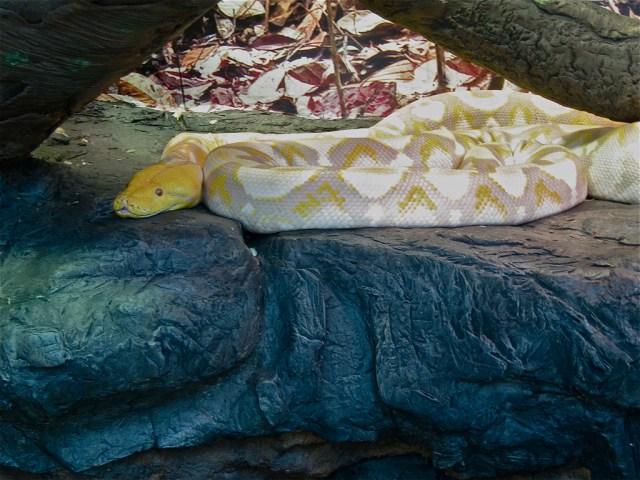

Albino Reticulated Python  6196134316_755d730e34_b

GENERAL CHARACTERISTICS: Largest species of python.  The giant South American Anaconda may grow  heavier ( 29 feet long & 550 pounds), but the longest snake in the world is the reticulated pythons (33 feet). Normally colored reticulated pythons have several pigments: melanin (blacks), and xanthins (yellows) amongst other more subtle colors. Lemondrop is a “lavender albino” which is the same thing as a “tyrosinase positive albino” (t-positive) which have the inability to complete the synthesis of melanin but can produce other melanin related pigments such as various shades of brown grey and red resulting the “lavender” color. A “normal albino” (t-negative) reticulated python is yellow and white with pink/red eyes. Melanin and other melanin pigments areas are pure white but non-melanin pigments are present giving alternate colors (xanthines produce yellows). To make matters more complicated different albino snakes may have mutations giving them additional color morphs.
Our albino American Alligator, (Claude) Alligator mississippiensis is a “normal albino” (t-negative) with no melanin or non-melanin pigments making him pure white. If you google “t-positive albino” or “tyrosinase positive albino” you can find more information on this condition. (Albino Appearance Ref. Nicole Chaney Biologist II, California Academy of Sciences for basic albino information).

DISTRIBUTION/HABITAT: Reticulated pythons can be found throughout Southeast Asia. Their range includes the Nicobar Islands, Burma through Indochina, and Borneo, Sulawesi, Ceram and Timor in the Malay archipelago. Found in steamy tropical rainforests near small rivers or ponds in tropical environments.

Albino Reticulated Python,  Python reticulatus  IMG_0184

DIET IN THE WILD   P. reticulatus is strictly carnivorous typically feeding on birds and mammals. This diet extends however to dogs, large deer, pigs and very rarely humans. Usually ambush predators, waiting in trees for unsuspecting prey.  They use their 100 curved teeth to capture their prey by biting then holding prey and they kill  by wrapping around them and squeezing them until the prey is unable to breath and its heart is unable to pump blood swallowing them whole.  The entire animal is digested in the snake’s stomach except for fur or feathers, which are passed with the snakes waste.

REPRODUCTION   Lays 25-80 eggs and guards nest but not hatched young.

REMARKS  Reticulated Pythons are heavily sold for their skin and meat. Also tourists visiting these areas often buy materials made from these snakes.
The largest P. reticulatus ever caught was 33 feet long in 1912 in Indonesia. The largest in captivity was from Thailand reaching a length of 28½ feet long with a girth of 37.5 inches and  weighed apron. 320 pounds.

This specimen below is a male, 14.5 ft long 60 lbs, 6 yrs old (6-22-12).
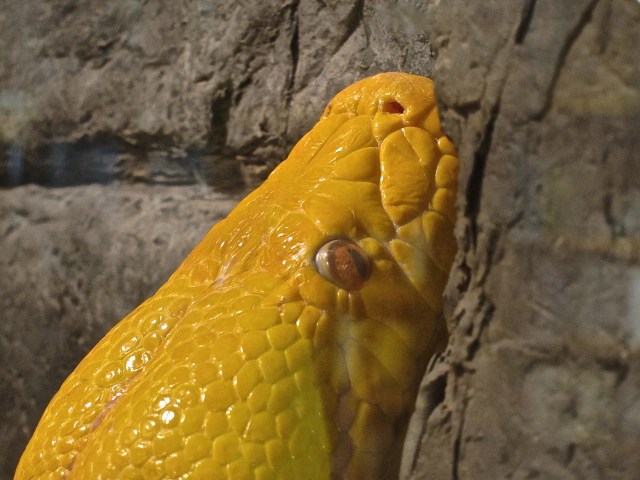
Albino Reticulated Python IMG_0182

WordPress Shortlink   http://wp.me/p1DZ4b-Vi

flickr  http://www.flickr.com/photos/cas_docents/sets/72157608449603666/

TAXONOMY
Kingdom: Animalia
Phylum: Chordata
Class: Reptilia
Order: Squamata
Suborder: Sauria
Family: Gekkonidae (Geckos)

Genus/species: Ptychozoon kuhlii

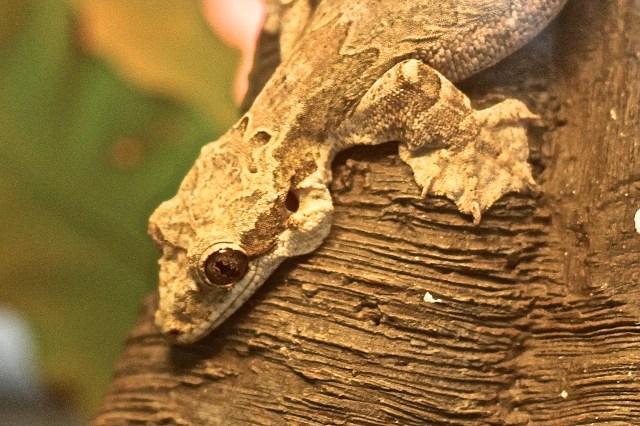
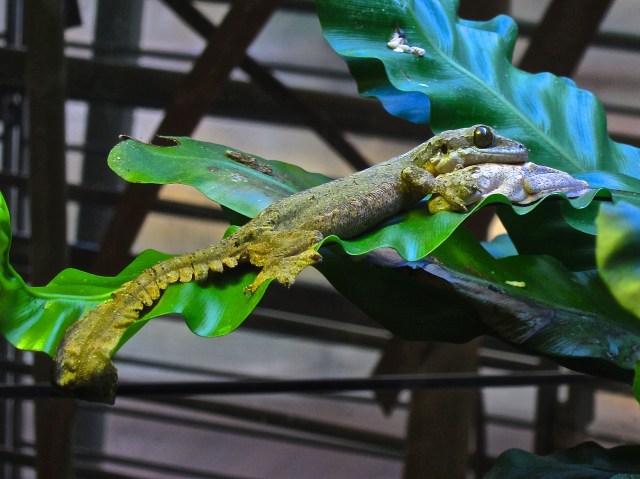
Kuhl's Flying Gecko IMG_9599

GENERAL CHARACTERISTICS Weird looking with big heads, bulging lidless eyes, and elaborate webbed feet. Gliding apparatus is composed of a large flap of skin along the flank. These flaps remain rolled across the belly until the lizard jumps off a tree. Then the flaps open passively in the air, acting as a parachute during descent. Additional flaps lie along the sides of the head, neck, and tail. These geckos are nocturnal and cryptic, and often go unnoticed in their natural habitat.

DISTRIBUTION/HABITAT Southeast Asia, including southern Thailand, Malaysia, Borneo, Indonesia, and Singapore. Nocturnal arboreal animals, found in lowland and mid-level rainforests.

Kuhl's Flying Gecko IMG_9650

DIET IN THE WILD Insects and arthropods.

MORTALITY Can live up to 7–9 years.

REPRODUCTION In captivity, breeding occurs when the animals are exposed to about 12 hours of daylight. The female will lay two eggs about once a month. She can lay five or six clutches per season. Eggs will hatch in 2–3 months.

Kuhl's Flying Gecko

Rainforest Borneo BO11

WordPress Shortlink  http://wp.me/p1DZ4b-UA

flickr  http://www.flickr.com/photos/cas_docents/sets/72157620567930293/

TAXONOMY
Kingdom: Animalia
Phylum: Chordata
Subphylum: Vertebrata
Class: Reptilia
Order: Testudines
Suborder: Cryptodira
Family: Carettochelyidae

Genus/species: Carettochelys insculpta

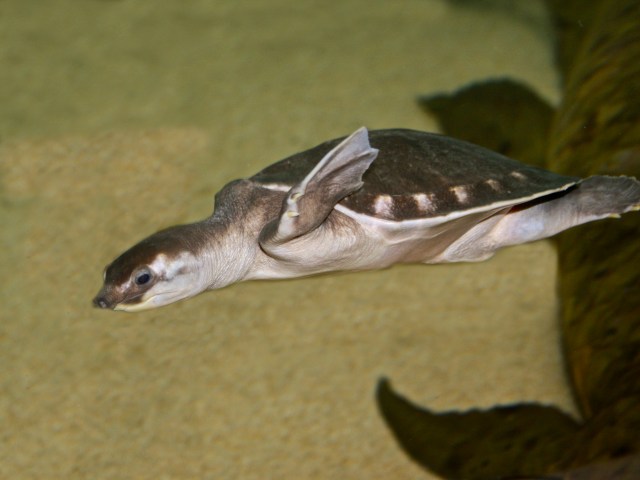
Pignose Turtle aka Fly River Turtle Carettochelys insculpta (Carettochelyidae) Pig-nose Turtles IMG_1388

GENERAL CHARACTERISTICS: Length ave. 46 cm (18 inches). Weight ave. 22 kg (49 lbs). Pitted, leathery,gray-green carapace and a white plastron. Limbs are clawed and paddlelike. Short head terminating in a broad, tubular, “piglike” snout. Carapaces of juveniles have serrated perimeters and a central keel. They have flat, broad limbs that have two claws each, with their enlarged pectoral flippers having a similar appearance to those of sea turtles.

DISTRIBUTION/HABITAT: Southern New Guinea and Kimberly Plateau of Australia in shallow, slow-moving rivers, lagoons, lakes and swamps with sandy or silty bottoms. Also in estuaries. Active nocturnally. Emerges from water only in order to nest.

DIET IN THE WILD: Opportunistic omnivores. Principal food is the fruits of shoreline trees. Eat other plant material: leaves, flowers that fall into river from banks, and aquatic algae. Also take insect larvae, mollusks and crustaceans. Scavenge fishes and mammals as carrion.

PREDATORS: Water monitors and humans. Eggs and adults taken for food by Papua New Guineans. Australian aborigines eat adults of this species. Have been reported to live 38.4 years in captivity.

REPRODUCTION: Oviparous laying two clutches of eggs, every two years. Males never come out of the water and females only come out when they are about to lay eggs. They don’t return to land until the next nesting season.

CONSERVATION: Vulnerable by the IUCN due to overharvest as a food source.

REMARKS: The only freshwater turtle to have limbs modified into flippers and swim via synchronous forelimb motions that resemble dorsoventral flapping, that evolved independently from their presence in sea turtles.

Secretive animals. Use forelimbs to burrow by scooping sand substrate over their carapace. Adults may thermoregulate underwater by lying over small thermal springs. Only extant species in its family.

 pignose-turtle-aka-fly-river-turtle- IMG_0316

Water Planet WP25

WordPress Shortlink  http://wp.me/p1DZ4b-SE

flickr http://www.flickr.com/photos/cas_docents/sets/72157608449490716/with/8547862948/