Category: GALAPAGOS ISLANDS May 2011


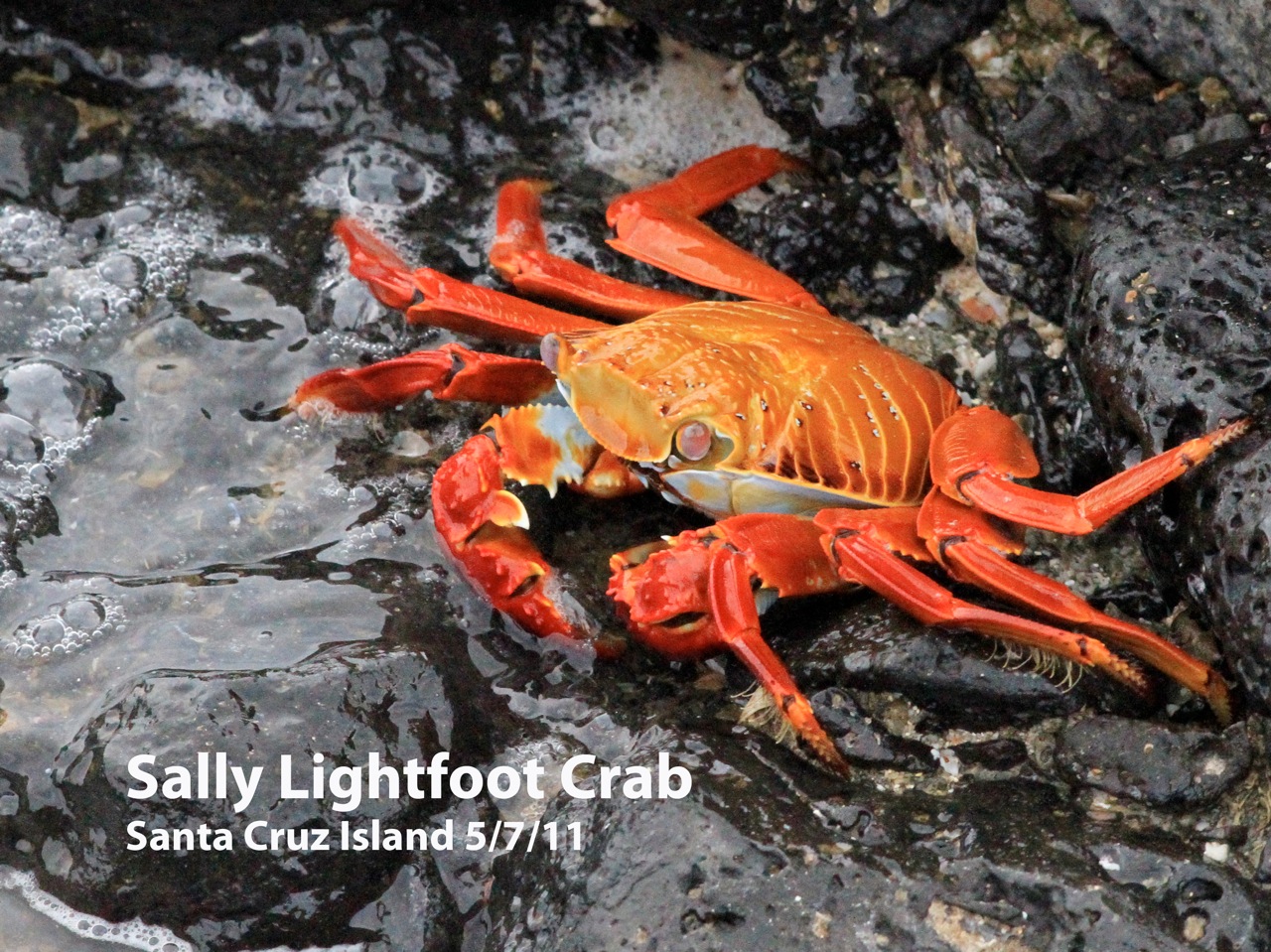
Grapsus grapsus                    Grapsidae

Distribution: Entire Pacific coast of Central America and Mexico, and nearby islands. It is one of the many charismatic species that inhabit the Galápagos Islands.

Habitat: Lives amongst the rocks at the often turbulent, windy shore, just above the limit of the sea spray.

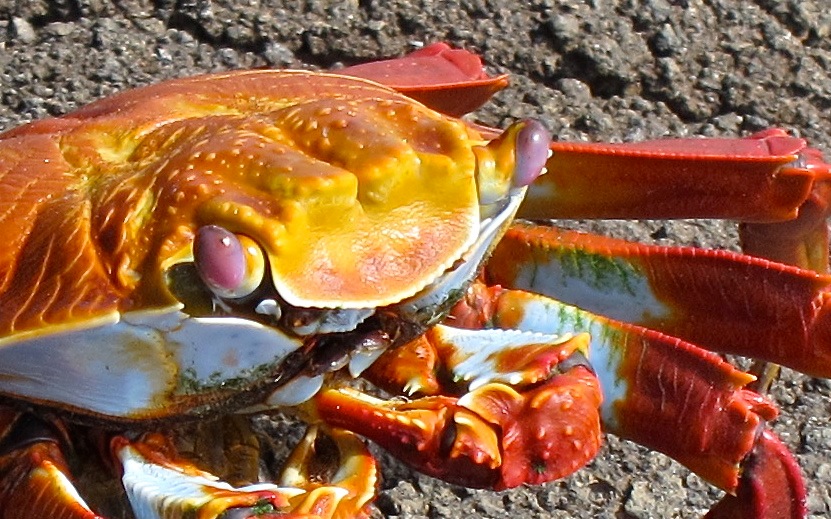
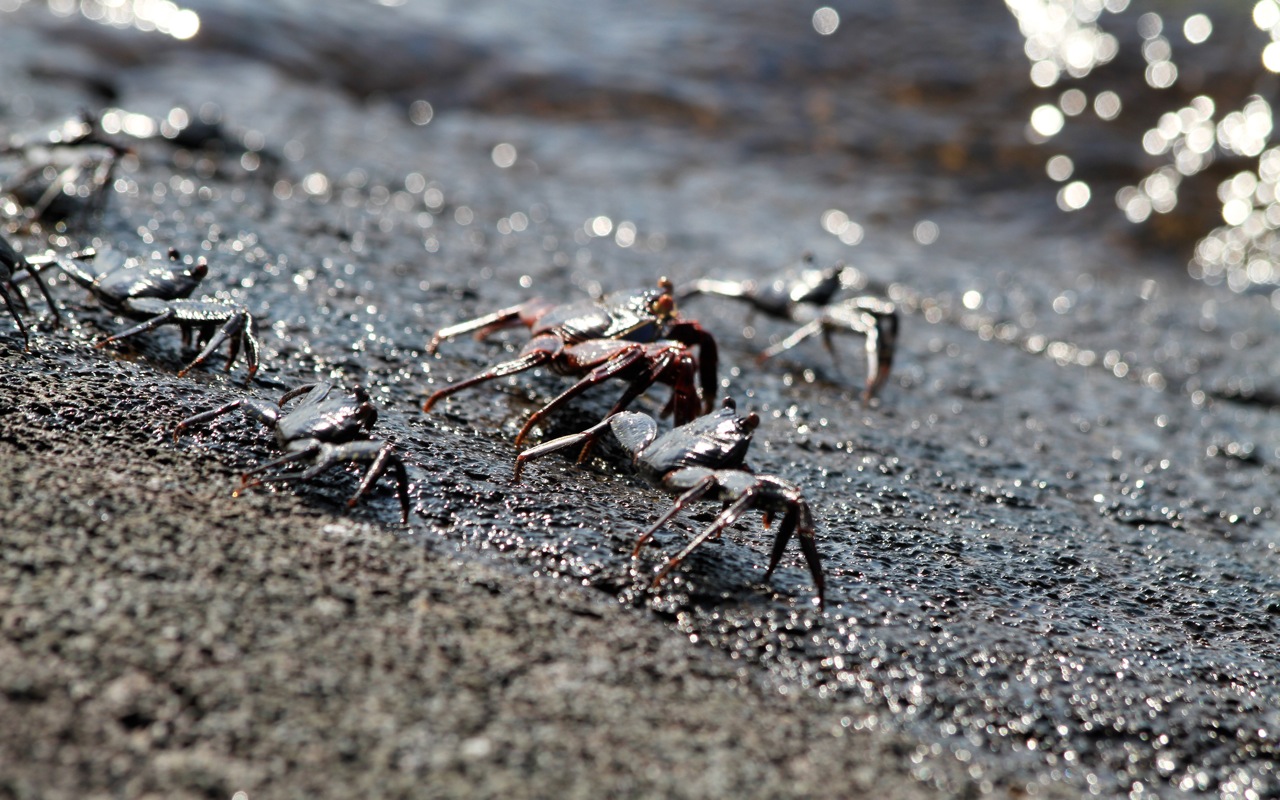
Appearence: G. grapsus is a typically shaped crab, with five pairs of legs, the front two bearing small, blocky, symmetrical chelae. The other legs are broad and flat, with only the tips touching the substrate. The crab’s round, flat carapace is just over 8 centimetres (3.1 in) in length. Young G. grapsus are black or dark brown in color and camouflage well on the black lava coasts of volcanic islands. Adults are quite variable in color. Some are muted brownish-red, some mottled or spotted brown, pink, or yellow.

Diet; Algae primarily, sometimes sampling plant matter and dead animals.

Remarks; G. grapsus is very agile and quick to avoid predators.


JUVENILE SALLY LIGHTFOOT CRABS
WORDPRESS SHORTLINK                                 http://wp.me/p1DZ4b-5y

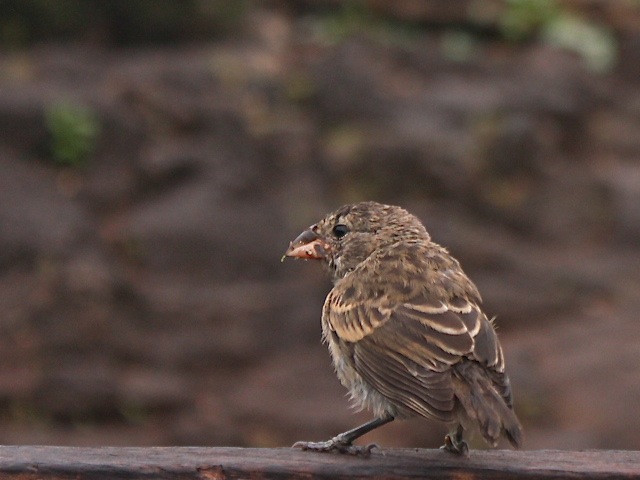
Distribution: Thirteen species within five genera occur in the Galapagos Islands. They all evolved from a single species from the Pacific coast of South America.

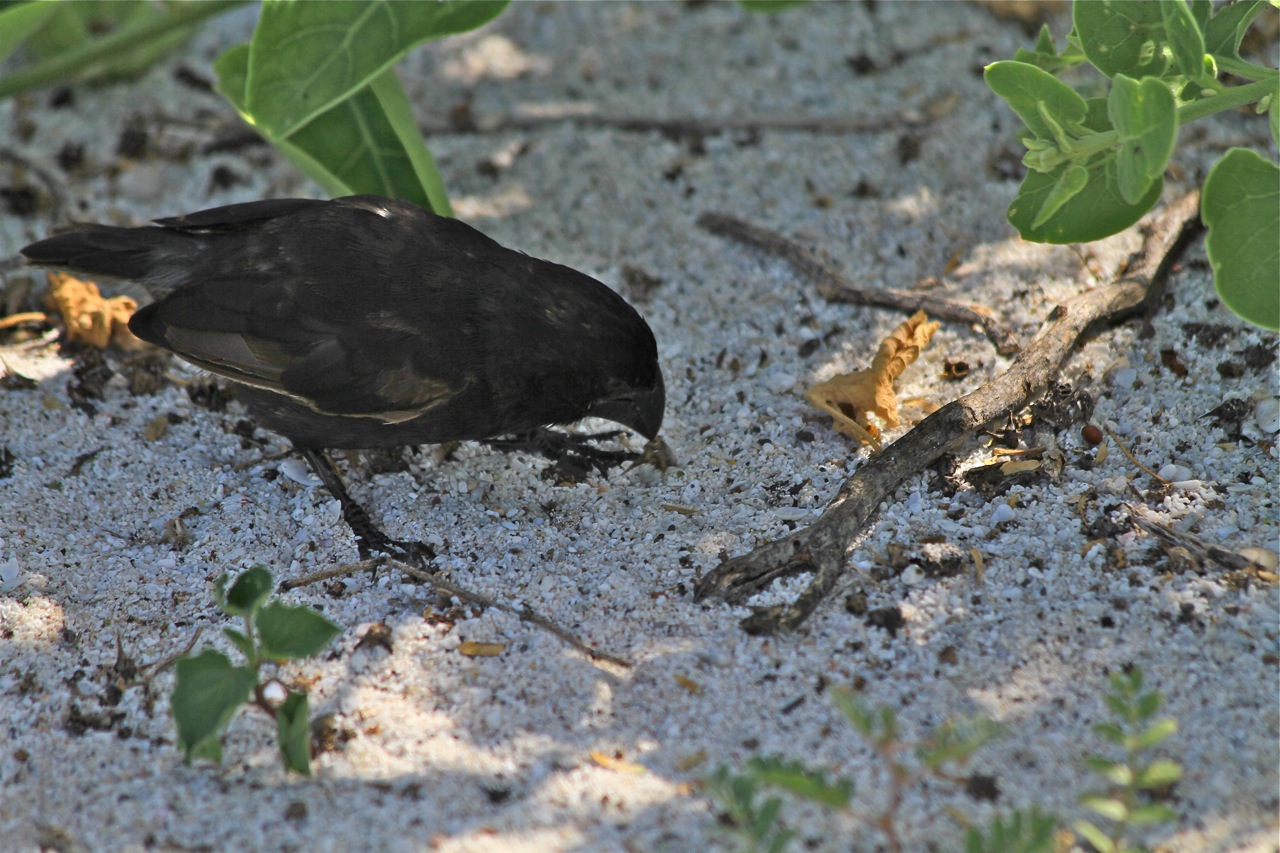
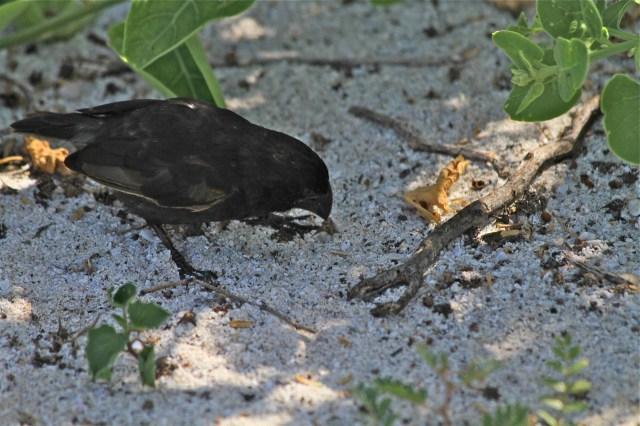
Appearance: All of Darwin’s Finches are sparrow sized and similar in appearance with grey black or olive feathers. They have short rounded wings and a rounded tail that often appears cocked to one side. Most male finches are a solid black in color while females are a drab greyish color. Exceptions include the vegetarian and tree finch where the males have a black head, neck and upper breast. Warbler, woodpecker and mangrove finch have more olive color.

Evolution and Diet: Finches adapted to their habitat and the size and shape of their bills reflect their specializations. Vegetarian finch and ground finch all have crushing bills while tree finch have a grasping bill and cactus finch, warbler finch and woodpecker finch have probing bills. The finch vary by what they eat some eating seeds and others insects. The ground finch eat ticks they remove with their crushing beaks from Galapagos Tortoises, and Galapagos Iguanas and kick eggs into rocks to feed upon their contents. On Isla Wolf the sharp beaked ground finch is known as the “vampire finch” as it jumps on the backs of masked boobies and red-footed boobies pecking at their flesh and feeding on their blood. Woodpecker and mangrove finches use small twigs and cactus spines as tools to extract larva stored in dead tree branches.

Remarks: Today studies show evolution occurring rapidly over recent bird generations with better suited populations living to reproduce more commonly. Over time these small changs can create a new species.

A good reference on the complexities of the Galápagos finches is:  Galápagos – A Natural History by John Kricher 2006 by Princeton University press.
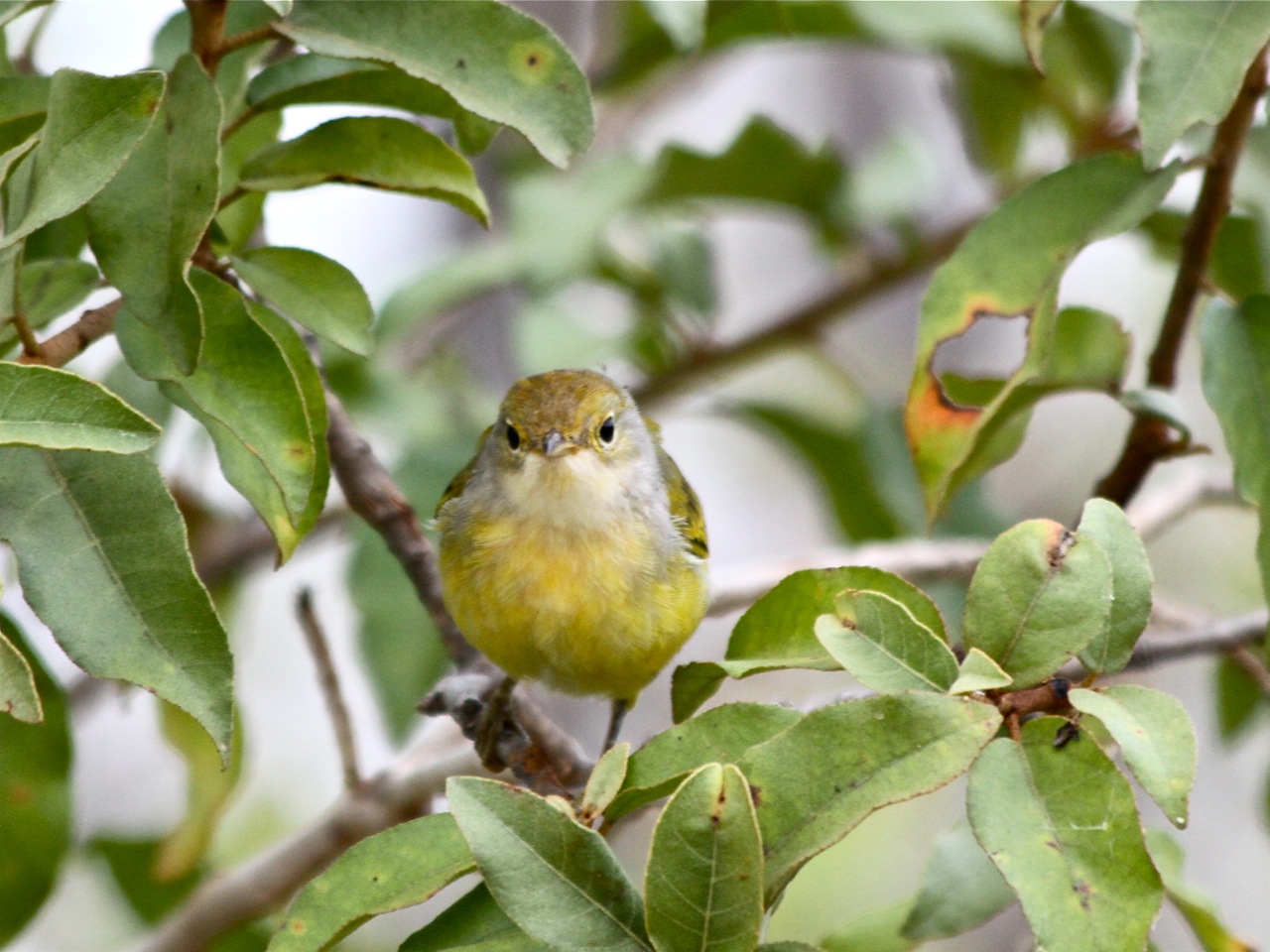
Yellow Warbler
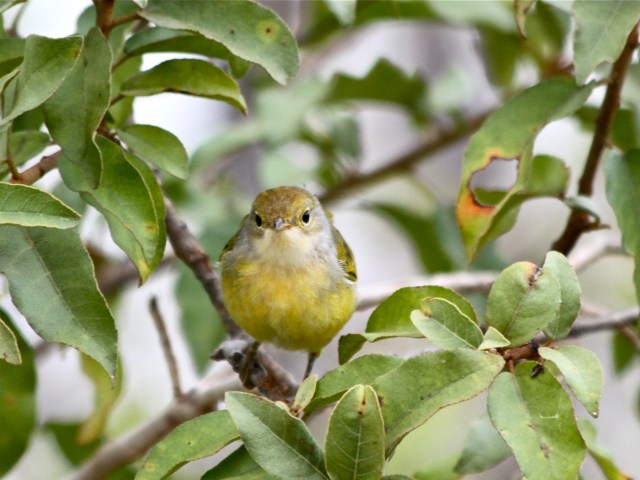
Dendroica petechia aureolla

Distribution: Alaska to Canada to Peru to the Galapagos Islands.

Habitat: On most Islands it is present from shore to mountain top.

Appearance: Male is usually brighter than the female and has chestnut-brown markings on the crown and breast. Immature are much greyer (often olive yellow) and can be confused with the warbler finch which has no yellow in its plumage.

WORDPRESS SHORTLINK             http://wp.me/p1DZ4b-5q

VIDEO LINK: Galápagos Series  http://www.youtube.com/watch v=VySe1X12gqs&hd=1

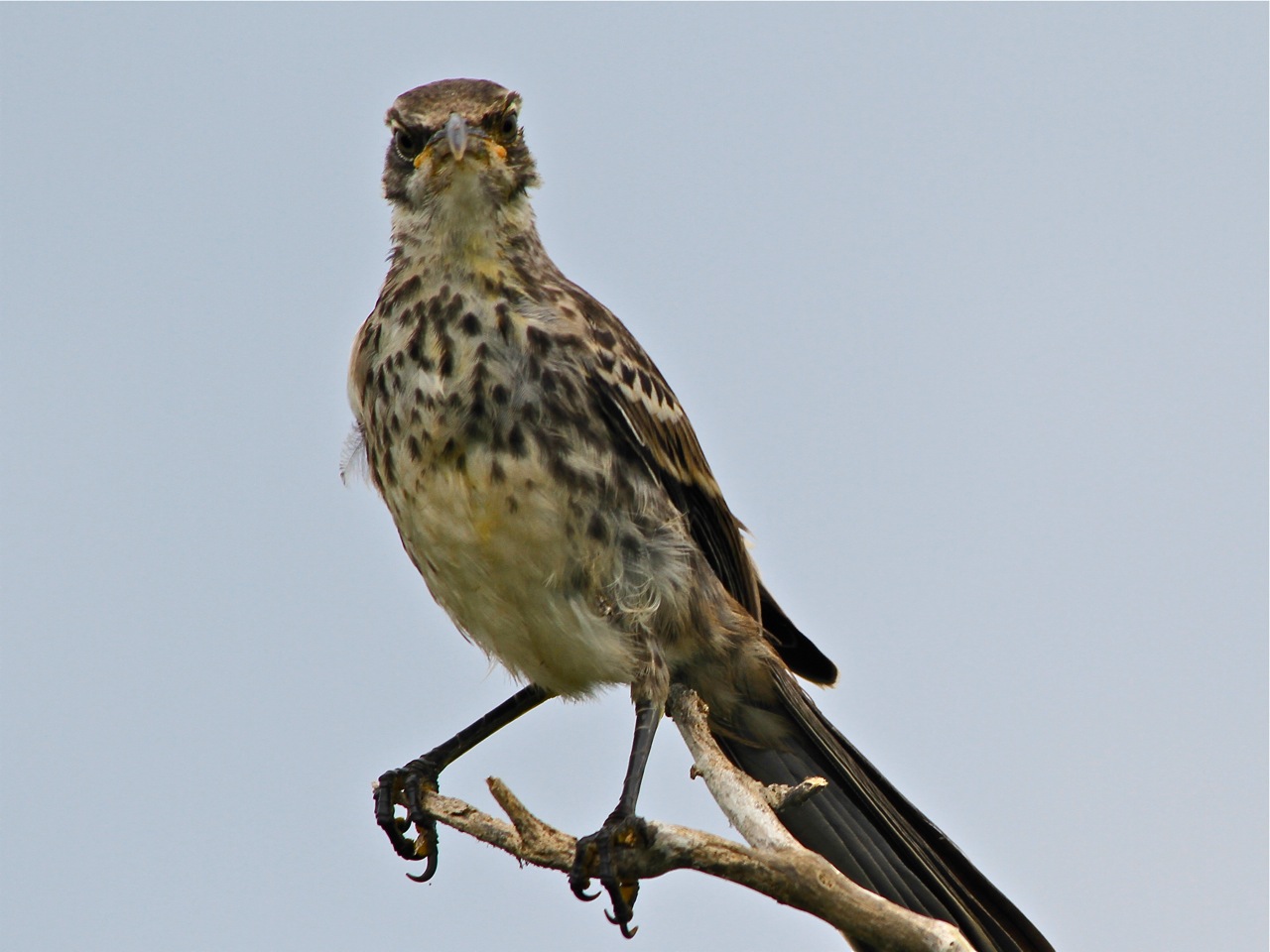
Nesomimus spp.                  Mimidae   

Distribution: Galápagos Islands. There are four species with no overlapping ranges.

Habitat: Arid zone.

Appearance:  Only thrush-sized, long-tailed, grey and brown streaked land bird.

Diet: Omnivorous and predatory compared to mainland relatives.  They eat young finches, lava lizards, centipeds, carrion and seabird eggs.

Reproduction:  They build their nests in trees and cacti.  About two or three females in each group breed at a time. Cooperative breeder on most islands: non-breeders act as helpers at nests in their group’s territory, and some breeders help raise nestlings in nests other than their own.

Remarks: It will steal any food left by humans unattended and also likes liquids using their large cured bill.

Evolution: It was the mockingbirds-not the finches that intrigued Darwin.  He found three different species on four different islands with each island home to just one species.  Since they were all closely related, he wondered if all were from a common ancestor. It was this line of thinking that led to his theory of evolution.

WordPress          http://wp.me/p1DZ4b-5l


Phaethon aetherus                           Phaethontidae


Distribution: Caribbean, South Atlantic, Indian Ocean and the Galápagos Islands.


Habitat: Anywhere there are cliffs.


Appearance; The adult is a slender, mainly white bird, 48 cm long, excluding the central tail feathers which double the total length, and a one meter wingspan. The long wings have black markings on the flight feathers. There is black through the eye. The bill is red.


Diet: P. aetherus feeds on fish and squid by plunge diving and they are also can take a flying fish in flight.


VIDEO LINK   http://www.youtube.com/watch?v=VySe1X12gqs&hd=1

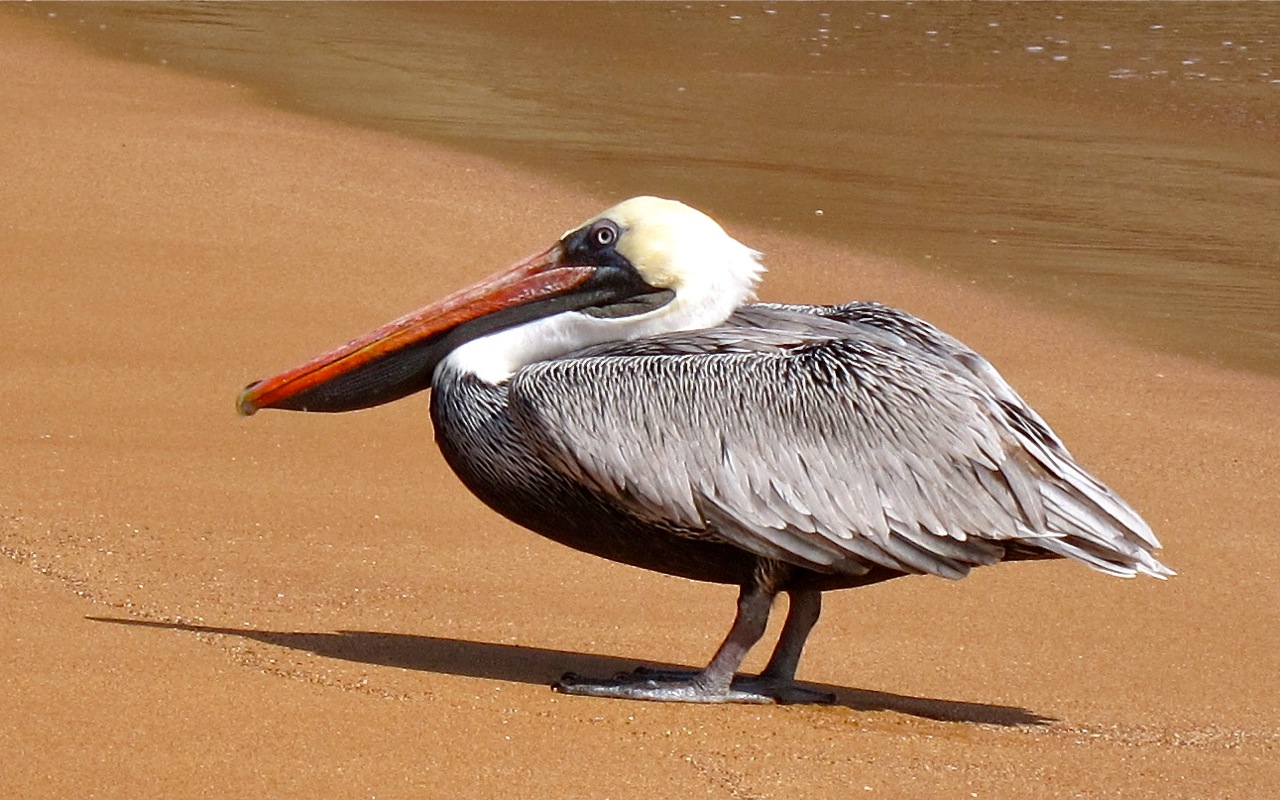
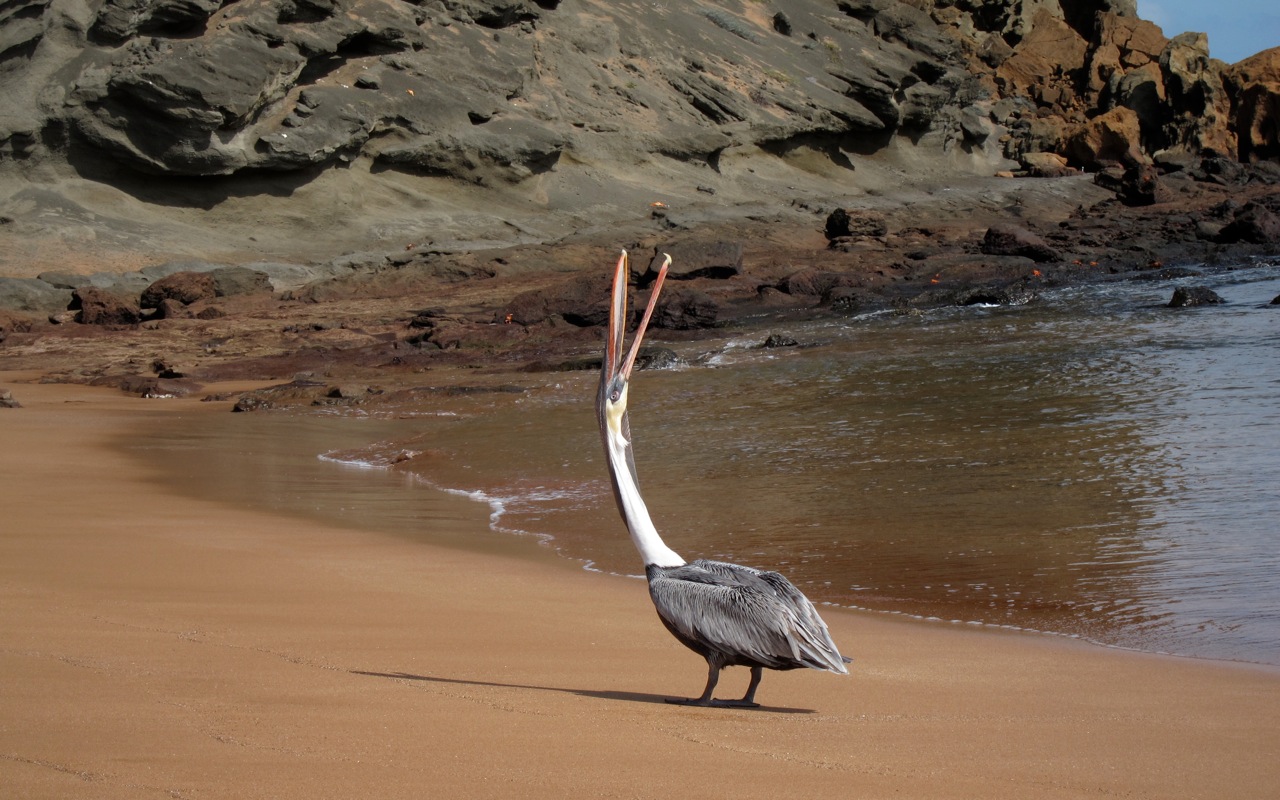
Pelecanus occidentalis     Pelecanidae   

Distribution:  California south to Tierra del Fuego and though out the Caribbean and Gulf of Mexico.

Habitat: Marine inhabiting bays and estuaries.

Appearance:  It is 106–137 cm (42–54 in) in length, weighs from 2.75 to 5.5 kg (6.1 to 12 lb) and has a wingspan from 1.83 to 2.5 m (6.0 to 8.2 ft).  It is uniformly brown. When breeding the adults develop a bright yellowish-white head and chestnut neck.  The pouch becomes various shades of red.

Diet: Small fish.

Remarks:  Nest among the mangroves in small colonies.

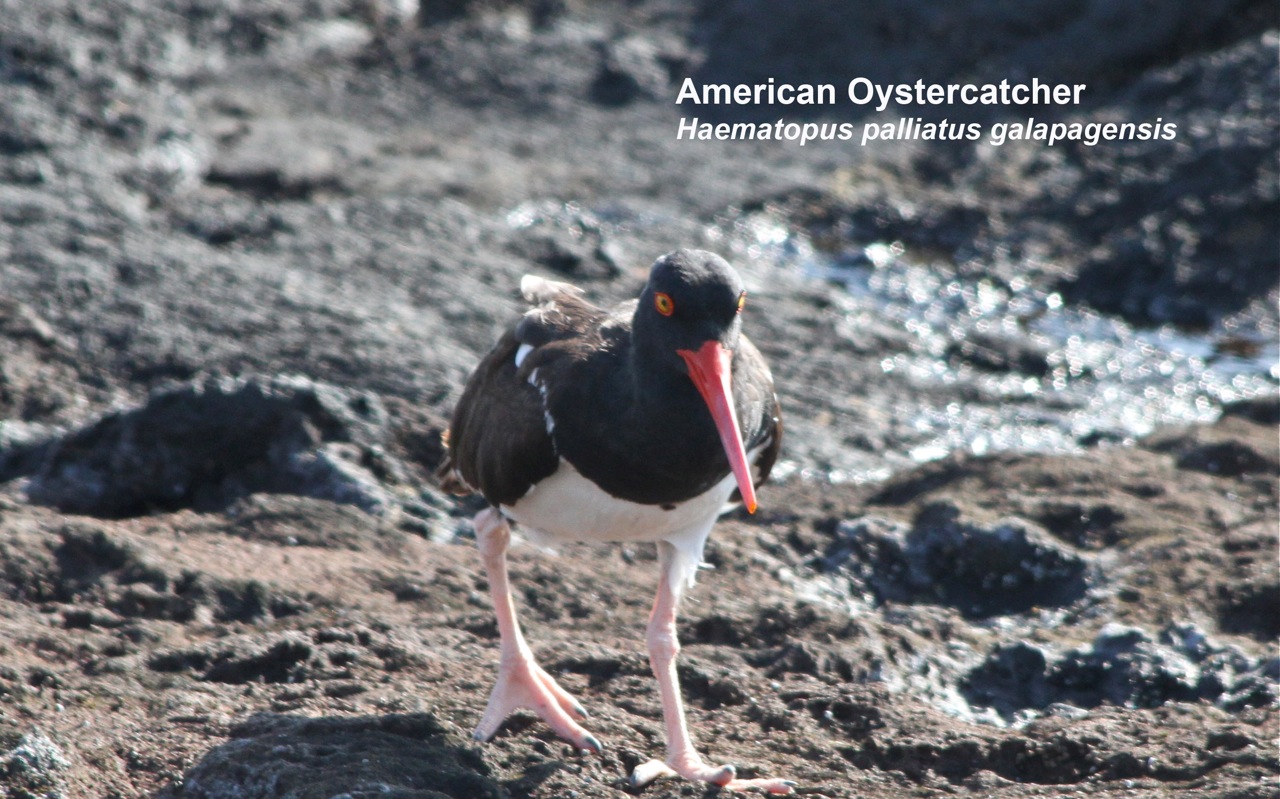
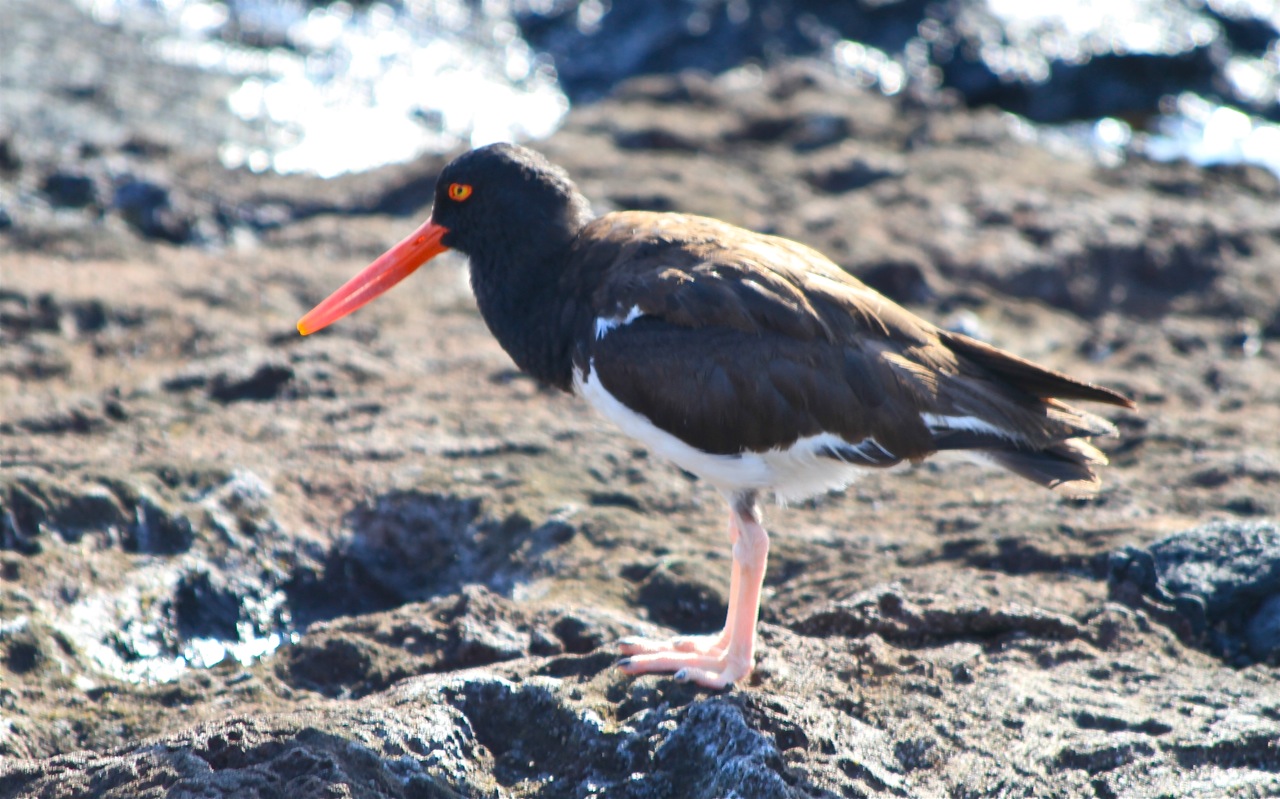
Haematopus palliatus galápagensis            Haematopodidae

Distribution: Galápagos Islands, coasts of Central and South America.

Habitat: Rocky shores and pebble beaches.

Appearance: Black and white body and a long, thick orange beak. This shorebird is approximately 19 inches (42 – 52 cm) in length.

Diet: Marine invertebrates. The large, heavy beak is used to pry open bivalve mollusks.

flickr LINK  http://www.flickr.com/photos/cas_docents/sets/72157626944185876/

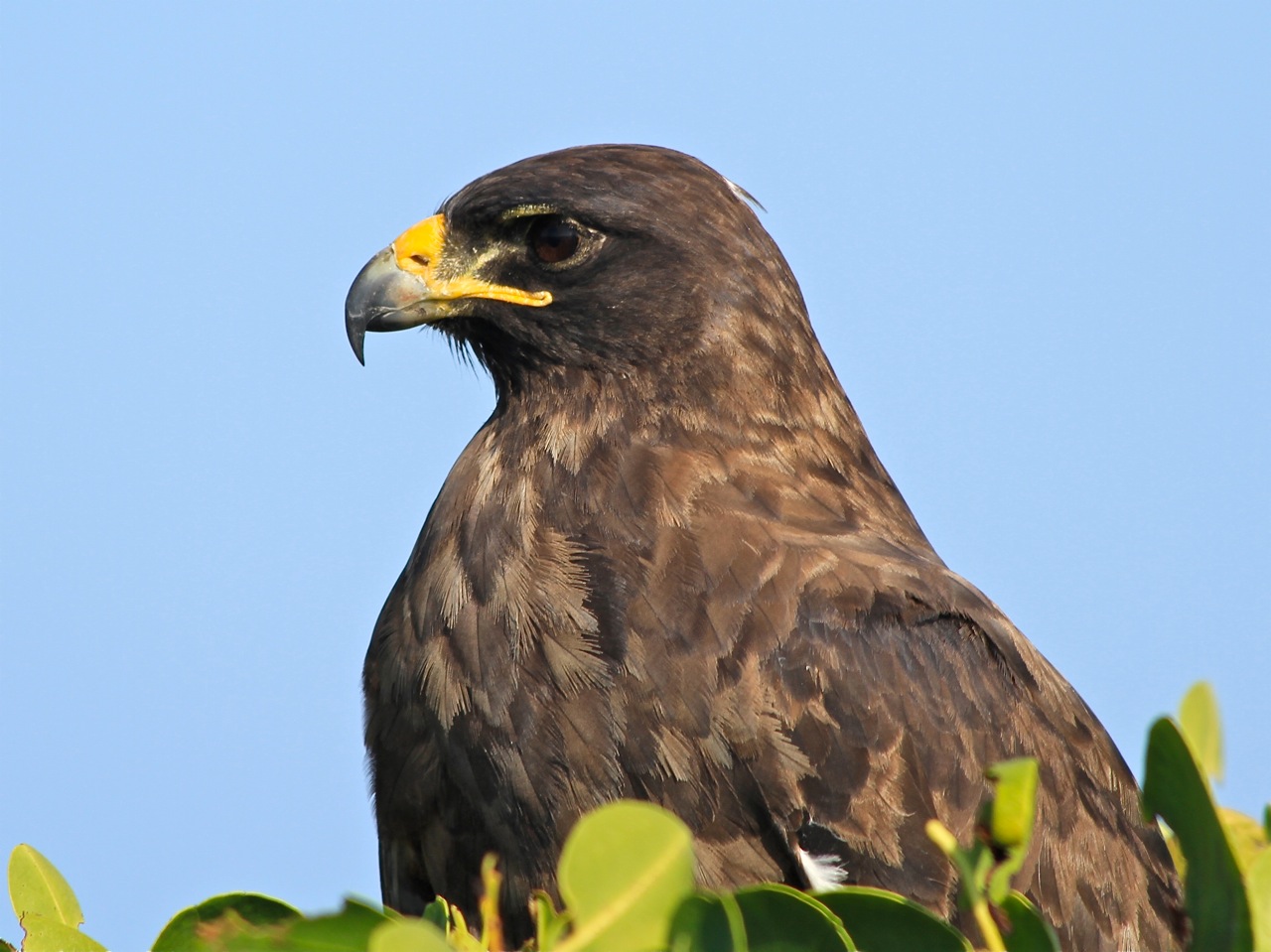
Buteo galapagoensis

Distribution: Endemic to the Galápagos Islands

gos Islands.

Habitat: Trees and shrubs.

Appearance:: Dark brown with pale under-wing markings.  Easy to identify since it is the only hawk on the islands.

Diet: Lizards, young Iguanas, rats, doves, mockingbirds, centipedes, grasshoppers, young seabird and any dead animal,

Remarks: Up to 4 males may mate with one female and all will help care for the young.

VIDEO LINK   http://www.youtube.com/watch?v=VySe1X12gqs&hd=1

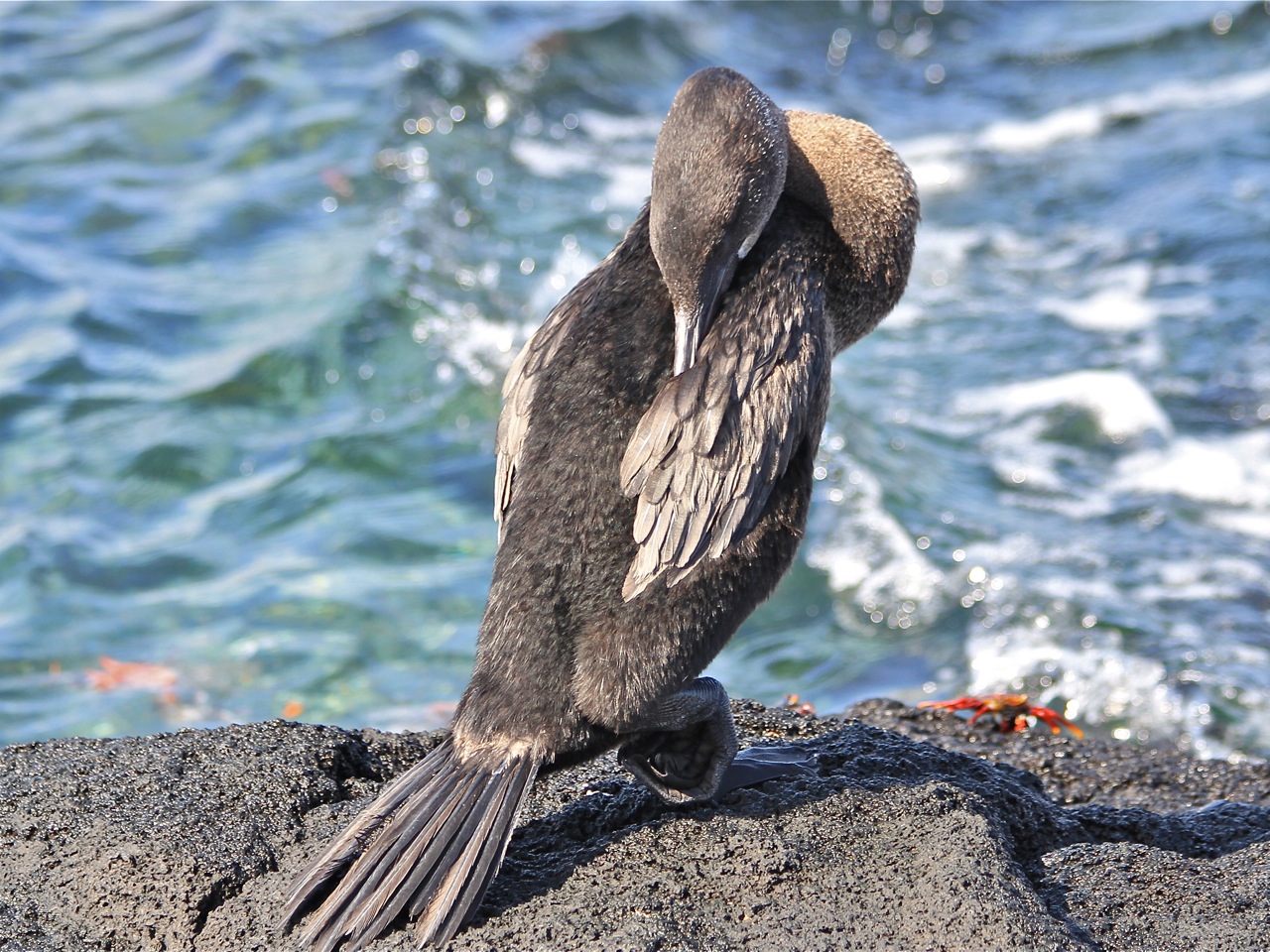
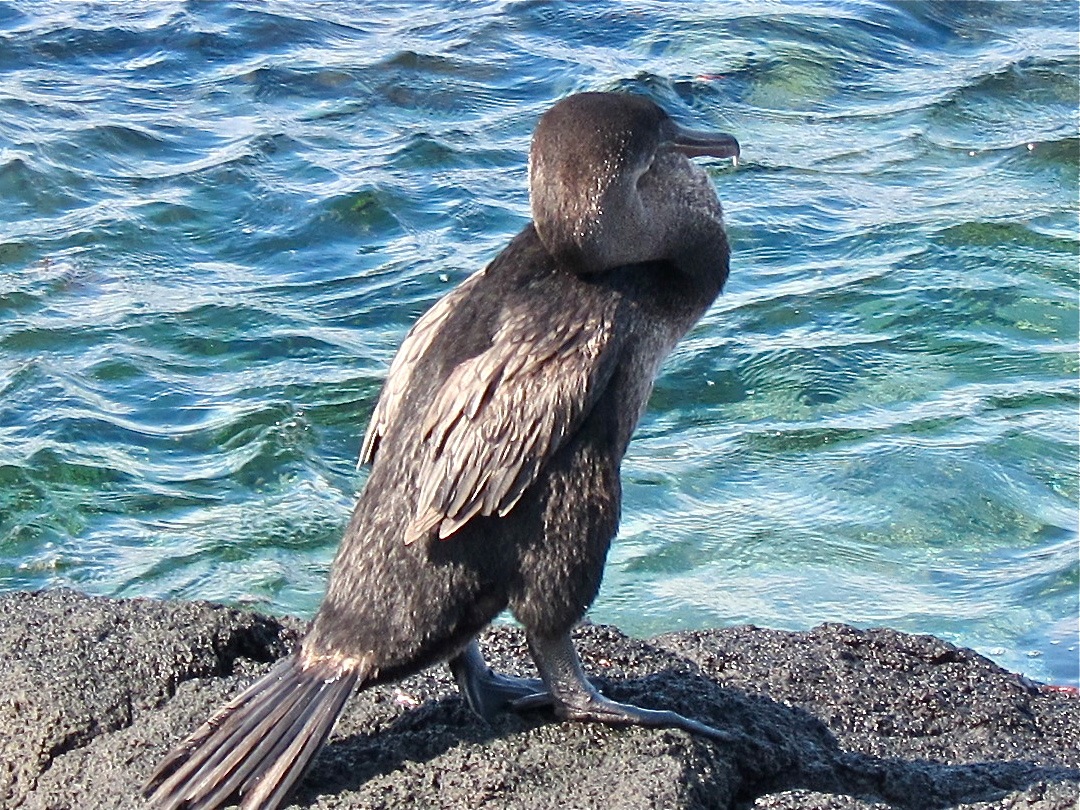
Flightless Cormorant

Phalacrocorax harrisi  Phalacrocoracidae

Distribution:  western Galápagos islands especially Punta Espinosa and Fernandina .

Habitat; Cold waters where the Cromwell Current upwells.

Appearance: Large for a cormorant reaching 39 inches (100 cm) and weighing almost 9 pounds (4 kg).  P. harrisi is grizzled brown with a long hooked beak, blue eyes, and large feet. The wings are small since it does not fly.

Diet: Fish.

VIDEO LINK   http://www.youtube.com/watch?v=VySe1X12gqs&hd=1

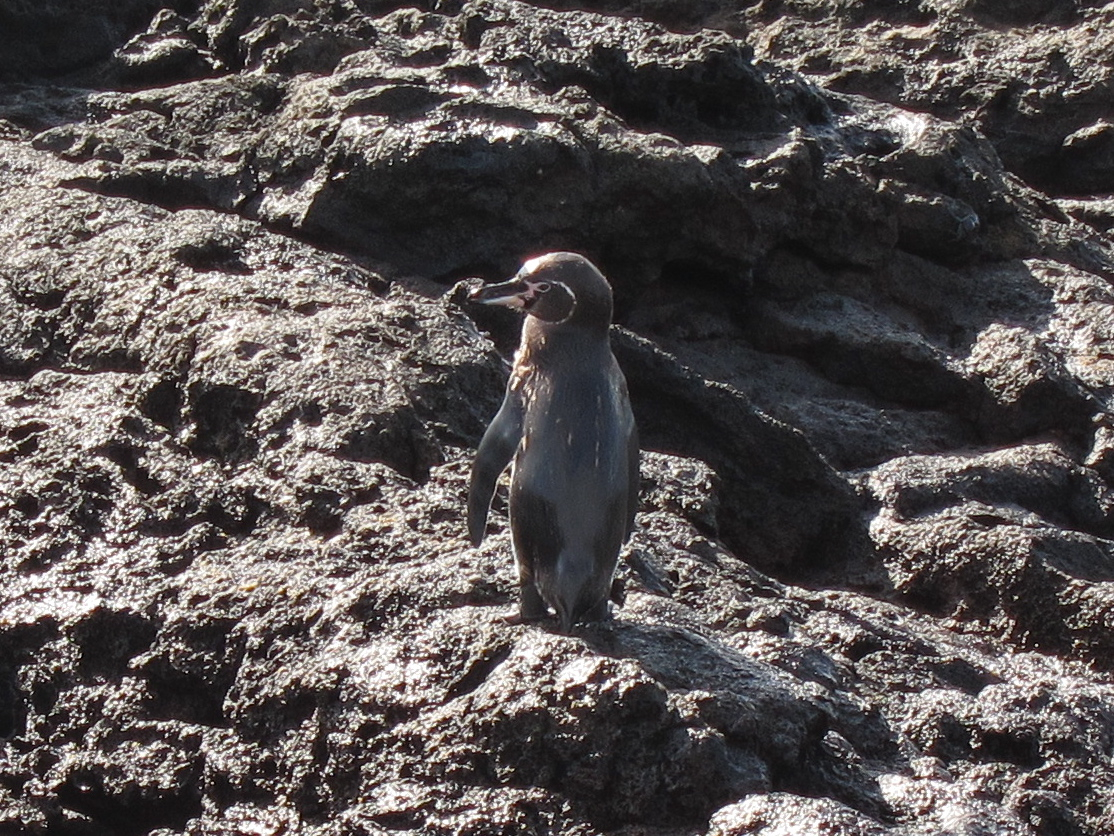
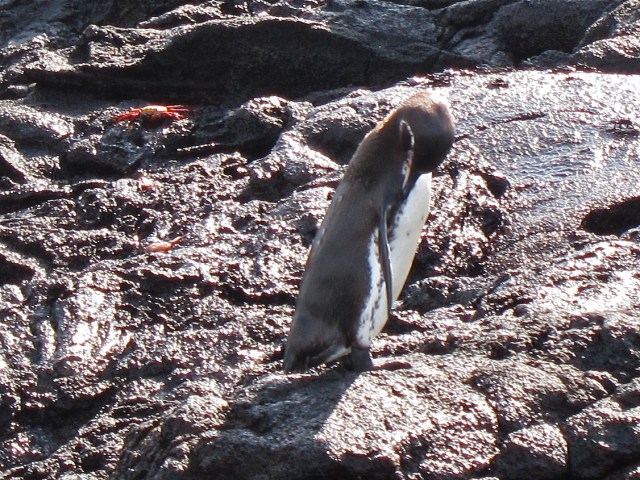
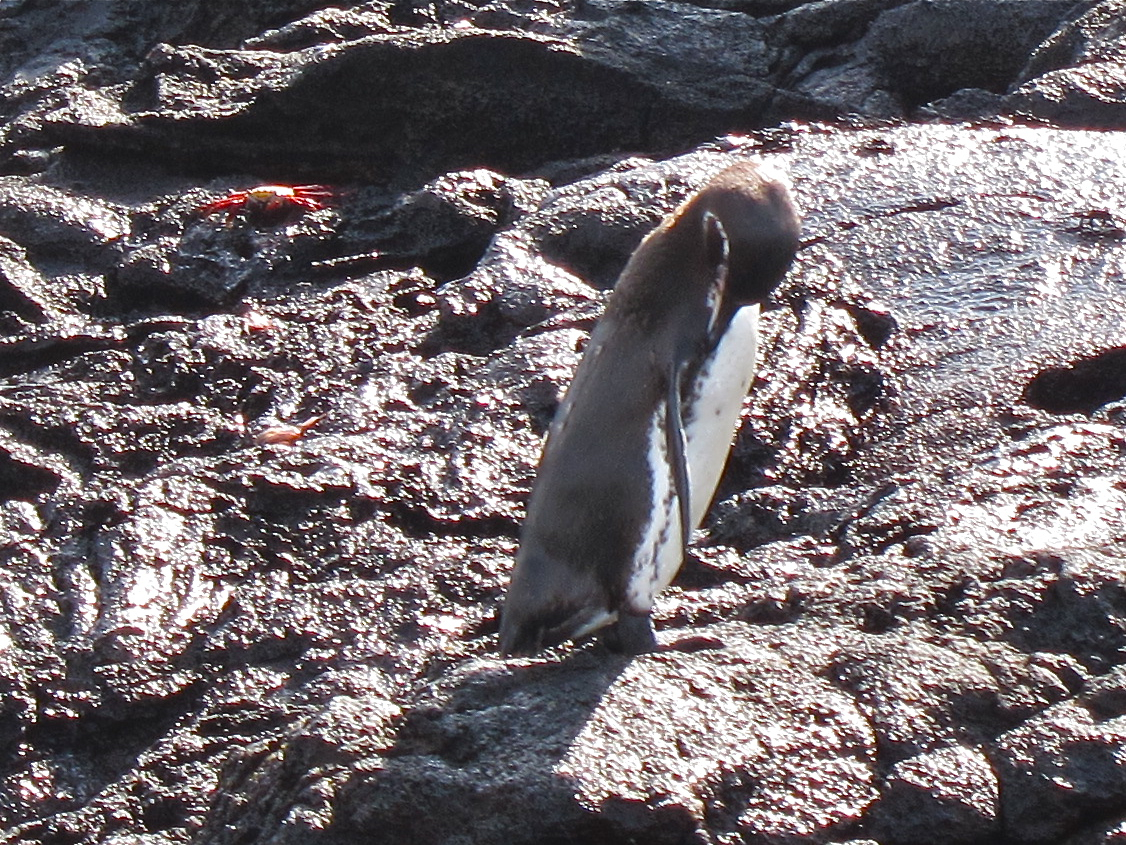
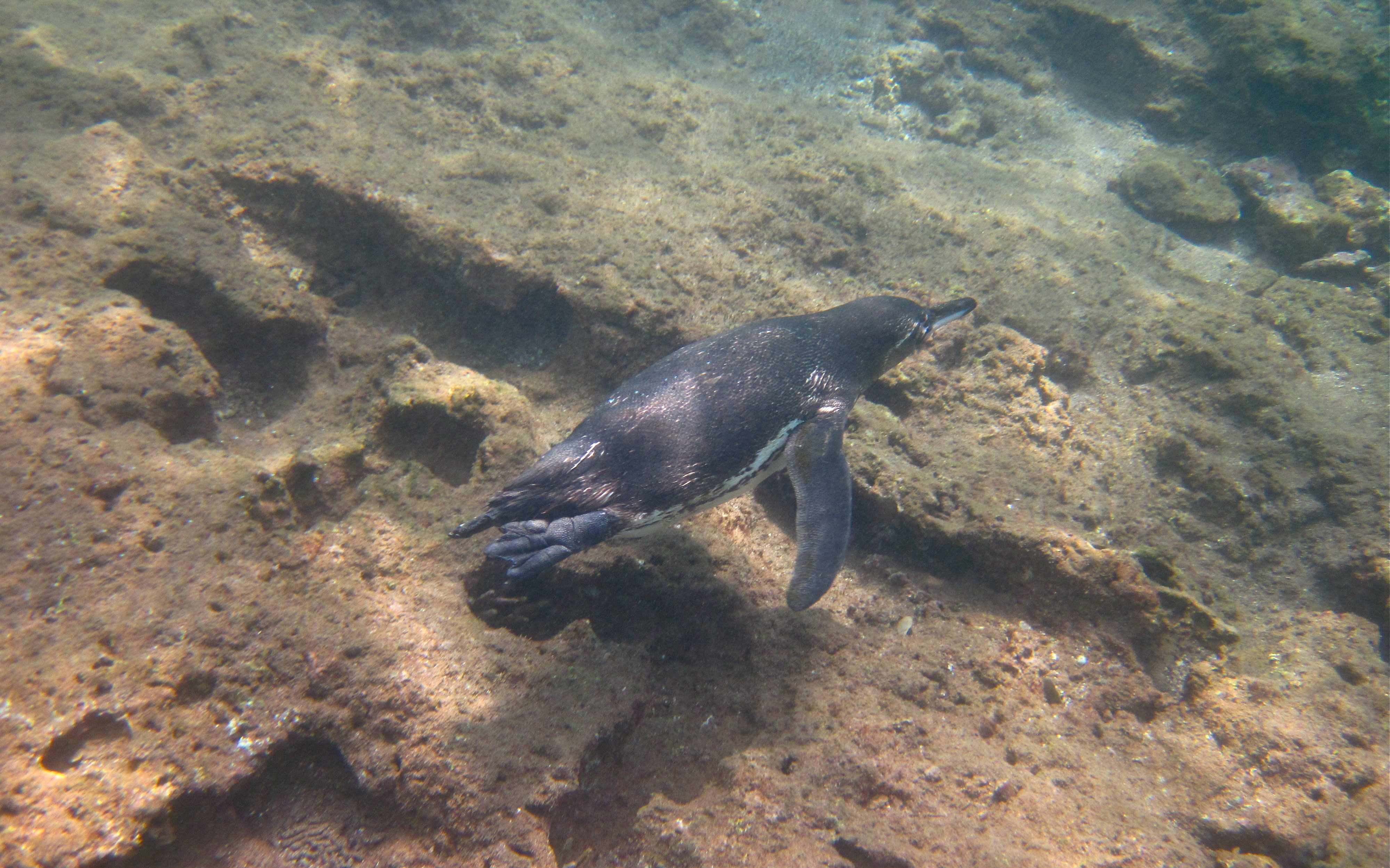
Spheniscus mendiculus

Distribution: Galapagos Islands.

Habitat: Nesting occurs on Fernandina and Isabela. The best chances for seeing Galapagos Penguins are on Fernandina, Isabela, Sombrero Chino, Bartolome (where display and mating can be seen), and Floreana. It is rare to see penguins on the other islands.

Appearance: Approximately 14 inches in height it is smaller and more duck-like than its southern cousins of the Antarctic. Adult penguins have a bluish-black head, back and flippers when new. Older worn feathers, dull to a brown color. Their underside is white with the exception of a black line along the side and scatter feathers on the chest.

Diet: small fish.

Reproduction: Galapagos Penguins mate for life. Nesting occurs throughout the year with the majority of nests being seen between May and January. Some penguins may mate as often as every 6 months. Female penguins lay 1 to 2 eggs each season. The eggs are laid in holes under the lava and the pair shares the responsibility of watching over the nest. In years with warm waters from the El Niño Current, life changes in the Galapagos including heavy declines in the penguin population.


Frigatebird VIDEO LINK   http://www.youtube.com/watch?v=VySe1X12gqs&hd=1

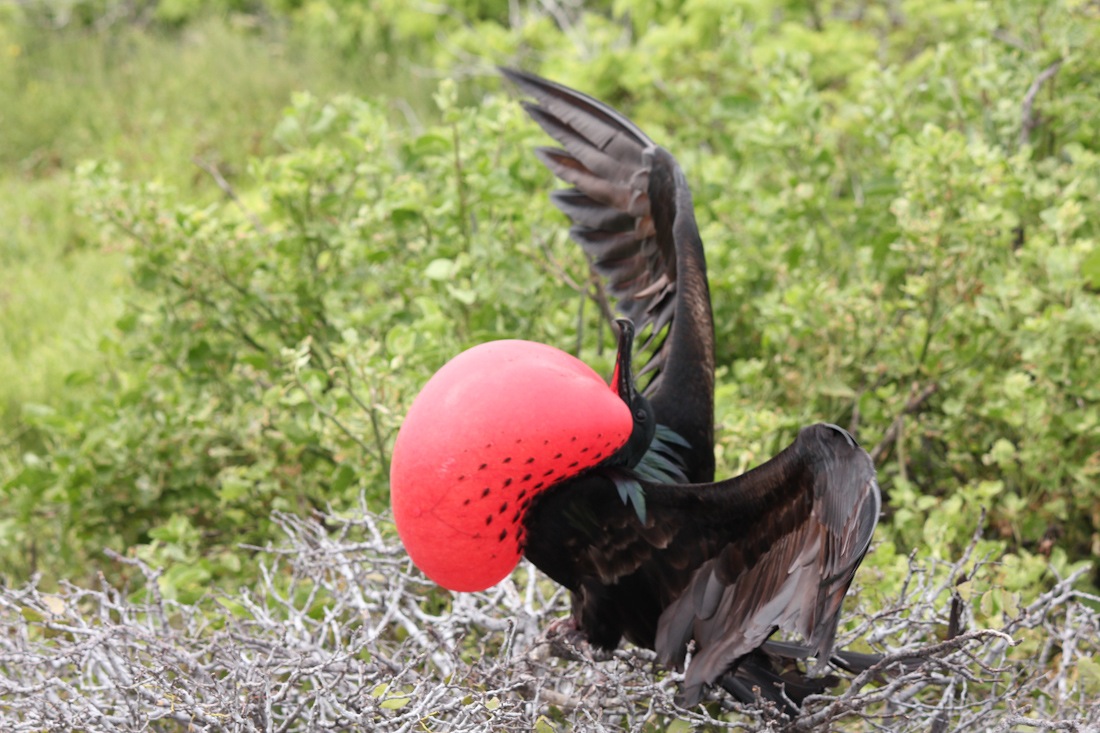
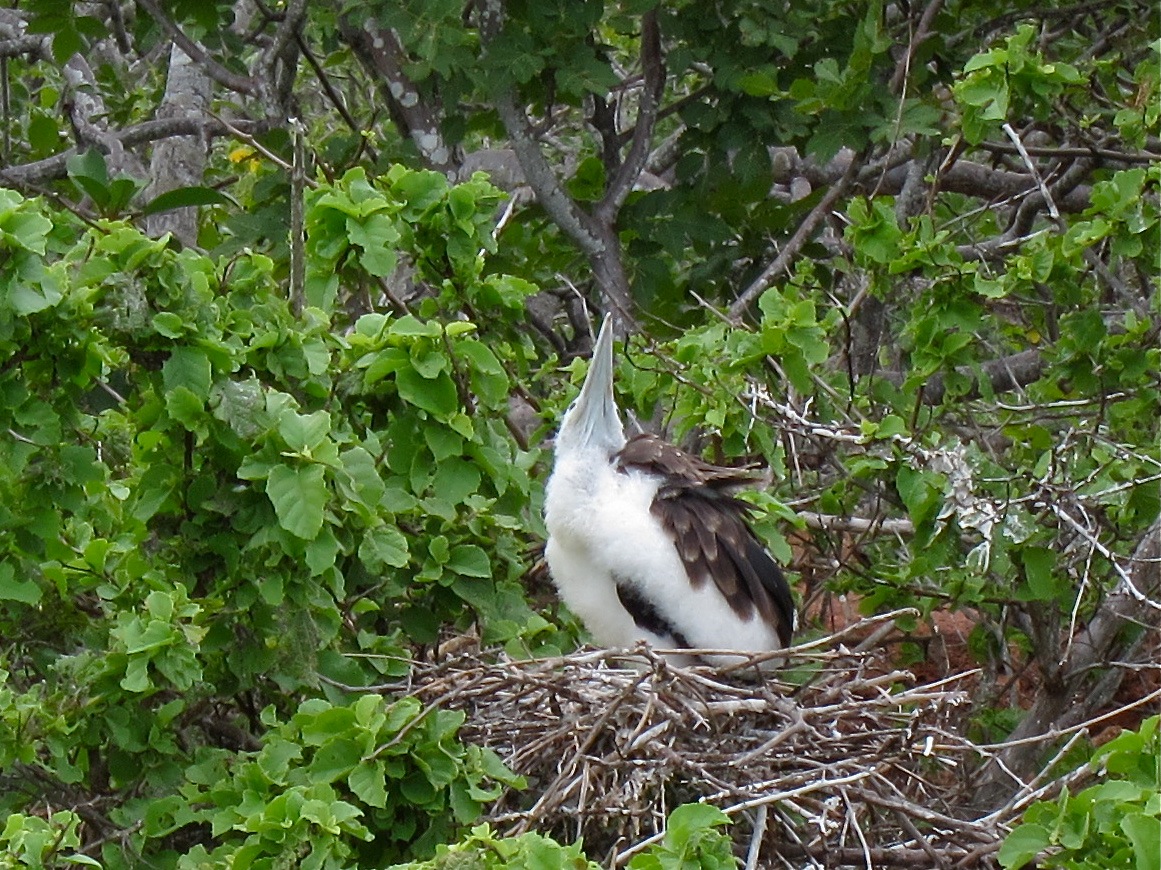
Great Frigatebird (Fregata minor) and the Magnificent Frigatebird (Fregata magnificens).                        Fregatidae

Distribution: Coastal on Galápagos Islands
pagos, North Seymour Island and most commonly Genovesa  Island.  Both species are found elsewhere in the Atlantic also.  In addition three other great pantropical frigatebird species are found elsewhere but not on the Galapagos Islands.  Habitat: Frigatebirds build nests in low-lying shrubs and producing a single egg.  They cannot swim because they will drown in water. They have a small uropygial gland thus have very limited oil for their feathers.

Appearance: They look like giant blackish swallows with  a wingspan of approximately seven feet and their deeply forked scissor-like tails afford them excellent  maneuverability. Males have large red gular sacs or throat sacs during mating season.  Male F. minor has green irridescence  while F. Magnificens has purple irridescence on it feathers.Reproduction: Nests in low-lying shrubs and produce a single egg. Both parents take turns feeding for the first three months but then only by the mother for another eight months. It takes so long to rear a chick that frigatebirds cannot breed every year. It is typical to see juveniles as big as their parents waiting to be fed.