
Pygocentrus nattereri
|
Actinopterygii (Ray-finned fishes) > Characiformes (Characins) > Characidae (Characins)
|
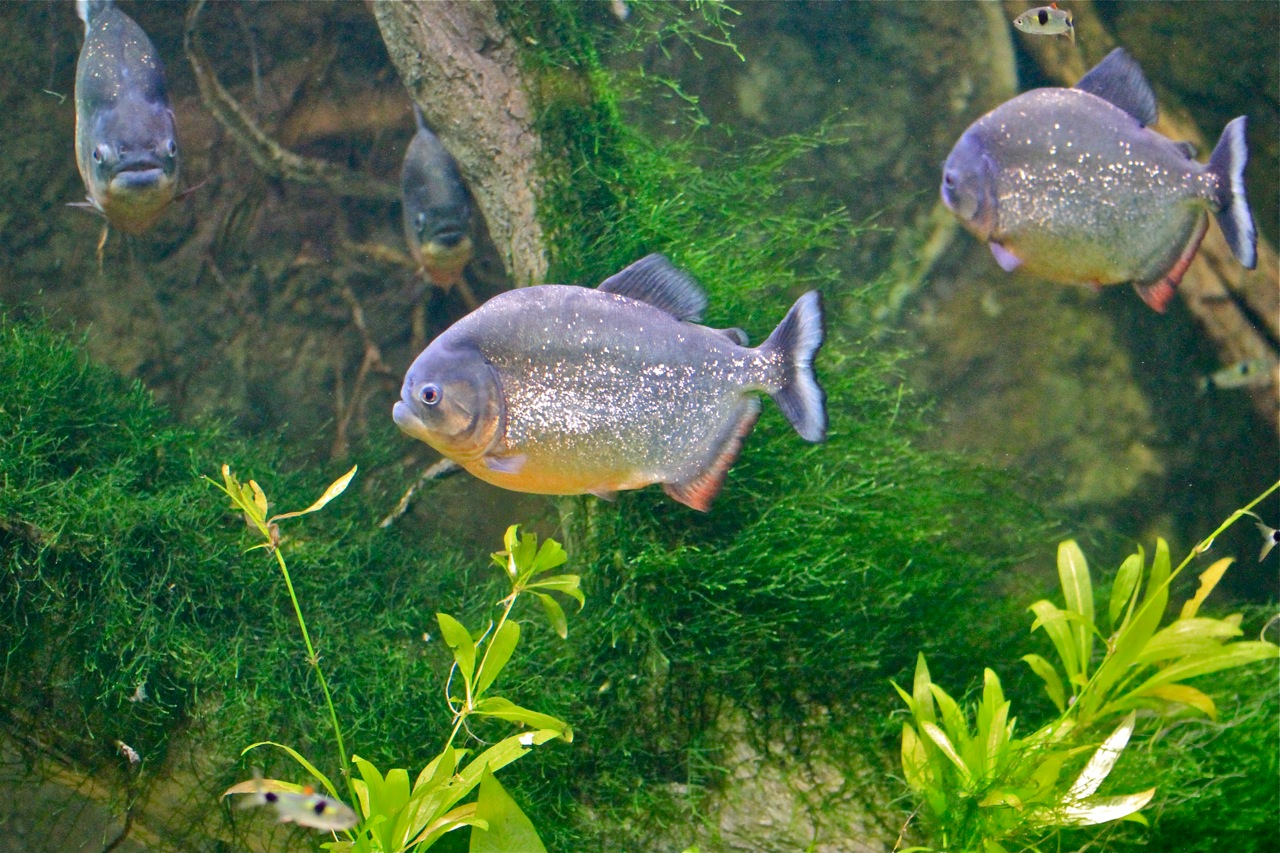
DISTRIBUTION: Amazon, Paraguay-Paraná and Essequibo basins.
HABITAT: Freshwater creeks and interconnected pools.
APPEARANCE: Length to 33 cm. Weight to 3.8 kg. Laterally compressed. Primarily dark scales with silvery glitter highlights. Chin and belly reddish.
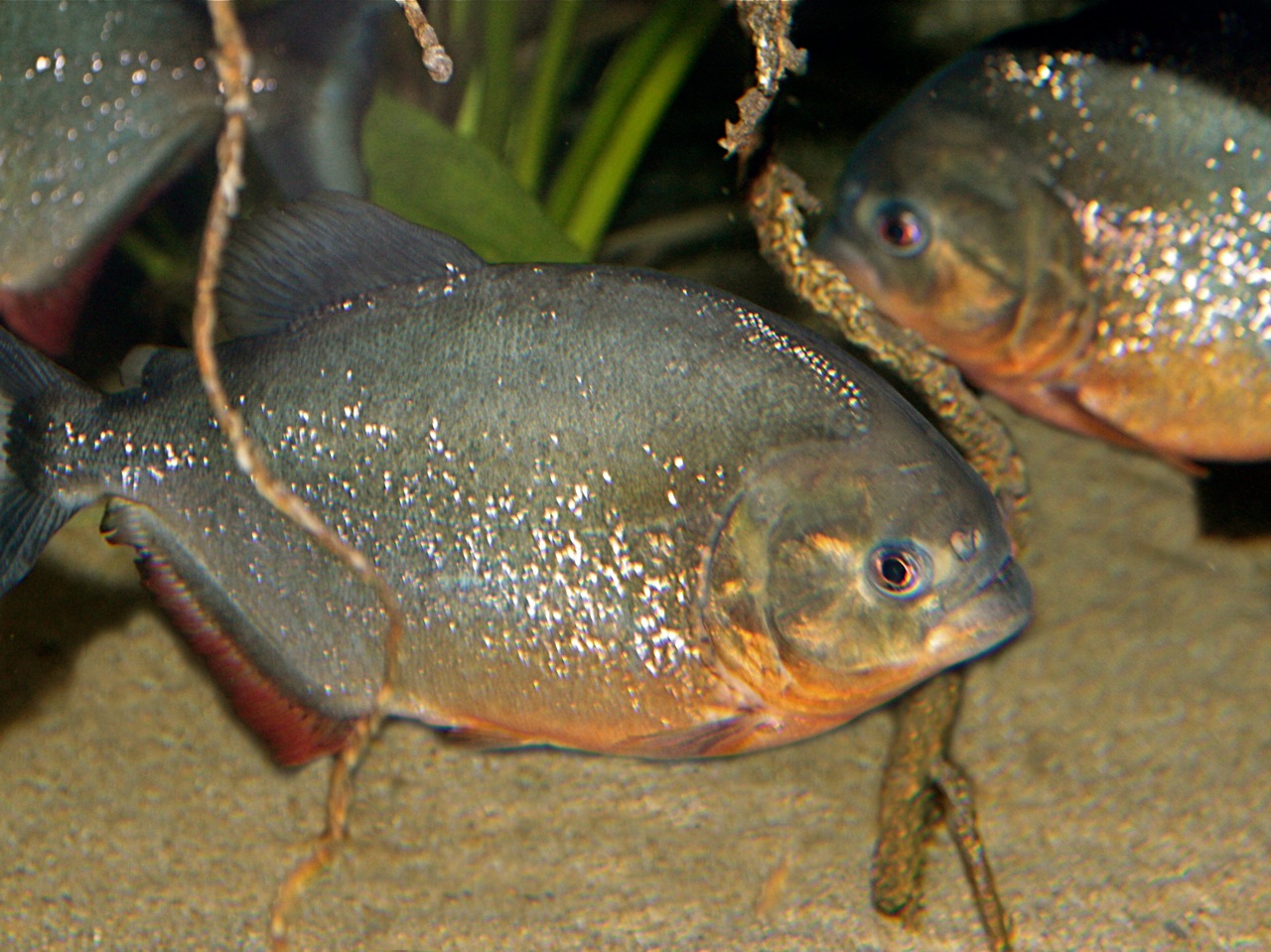
DIET: Prey primarily on wounded and diseased fish. Feed communally in groups of 20–30 individuals who wait in vegetation for the opportunity to ambush prey. Once prey is attacked a feeding frenzy ensues. Adults forage at dusk and dawn, medium-sized fish most active at dawn, late afternoon and at night; small fish feed by day.
REPRODUCTION: Spawn after an elaborate courtship ritual where the mating pair swim in circles. Female deposits layers of eggs on aquatic plants; male fertilizes. Male defends and turns eggs. Masses hatch in 9 or 10 days.
MORTALITY: Preyed upon by other fishes including large catfish, crocodilians, birds and larger mammals including jaguar.
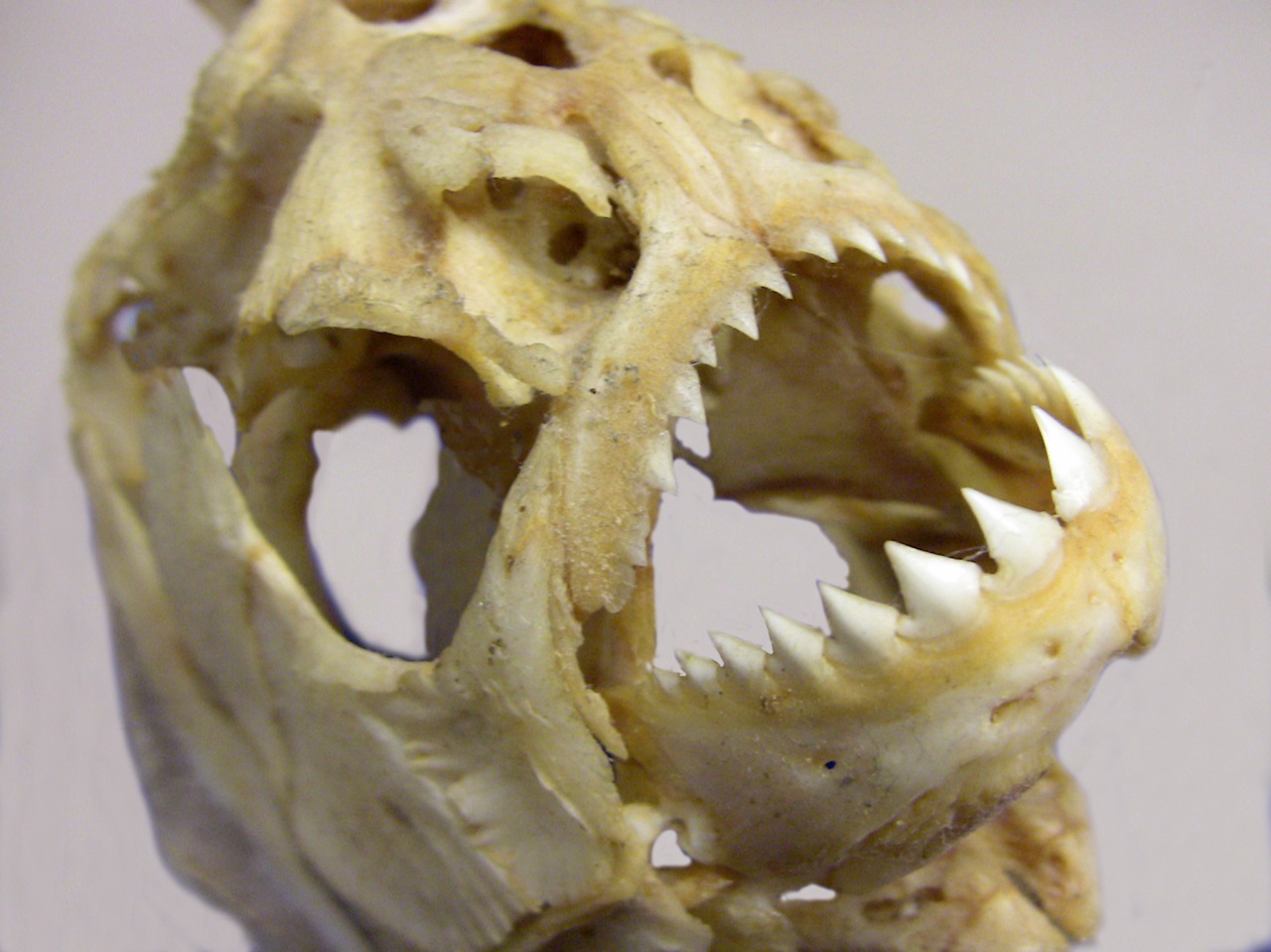
REMARKS: Piranhas’ reputation to be voracious human-eaters is highly exaggerated. Can inflict a serious bite to humans. Weak individuals in captivity are cannibalized. Maintain a vicious bite by regularly replacing teeth on alternate sides of jaw.
Of the 20 or so species of piranha, 12 do not attack in schools. Rather they take a quick bites of the fins or scales of passing fish, causing little damage as these parts grow back. Amazonian Indians use the sharp teeth as knives. They also coat the teeth with curare and attach them to the end of blow darts. AM8
WORDPRESS SHORTLINK http://wp.me/p1DZ4b-8i
 Ron's Critter of the Day