Category: FLOODED AMAZON


TAXONOMY

Kingdom: Animalia

Phylum: Chordata

Class: Reptilia

Family: Iguanidae.

Genus/species: Iguana iguana

DISTRIBUTION: Widely distributed from Mexico to southern Brazil and Paraguay, as well as on Caribbean Islands.

HABITAT: Tropical rainforests at low altitudes. Is arboreal and spends most of its time in the low canopy, 12–15 m (40–50 ft) above ground, coming down only to mate, lay eggs, and change trees.

APPEARANCE: Green iguanas are among the largest lizards in the Americas: 2 m (6.5 ft) in length, 5 kg (11 lbs) in weight. They can be various shades of green, ranging from bright green to a dull gray-green. The skin is rough with a set of pointy scales along the back. They have long fingers and claws to help them climb and grasp branches. Males have a flap of skin, called a dewlap, on the ventral side of the neck. It can be inflated to make them seem larger, to attract females, and to adjust their body temperature. The tail is almost half their length, and can be used as a whip to drive off predators. They can detach their tail if caught, and it will grow back.

DIET: Primarily herbivores, eating plants, especially leaves and fruit.

REPRODUCTION and DEVELOPMENT: Iguanas reach sexual maturity in 2–3 years. Green iguanas breed at the onset of the dry season. A month or two later, the females lay a clutch of 14–76 eggs in burrows excavated in communal nesting sites. At the end of a three month Incubation period, the newly hatched iguanas emerge. Because hatching takes place during the rainy season, food is plentiful.

MORTALITY/LONGEVITY: Reptiles, birds and mammals prey upon the hatchlings. Less than 3% live to adulthood. Adults are highly prized for their meat, and are hunted by humans. They are also captured for the pet trade.

CONSERVATION: The green iguana has become extinct in some countries and is endangered in others because of excessive hunting and habitat loss. In Costa Rica a program is being developed to breed and raise green iguanas in semi-captivity. After successful breeding, the hatchlings are maintained for 6–10 months, then released into the surrounding area with supplemental food and protection. When they are adults, some are harvested for food and to generate income by supplying leather for handicrafts. Such programs have decreased forest destruction and helped to protected wild iguanas.

REMARKS: In parts of Central America where iguanas are eaten for food, they are called “bamboo chickens” or “chicken of the trees.”

*Not currently on Display

WORDPRESS SHORTLINK  http://wp.me/p1DZ4b-bB

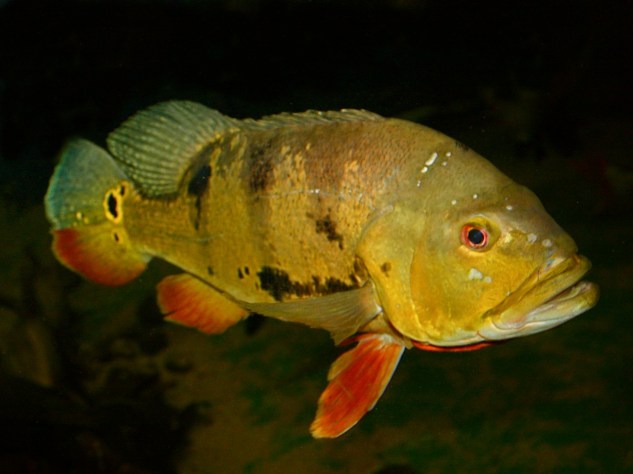
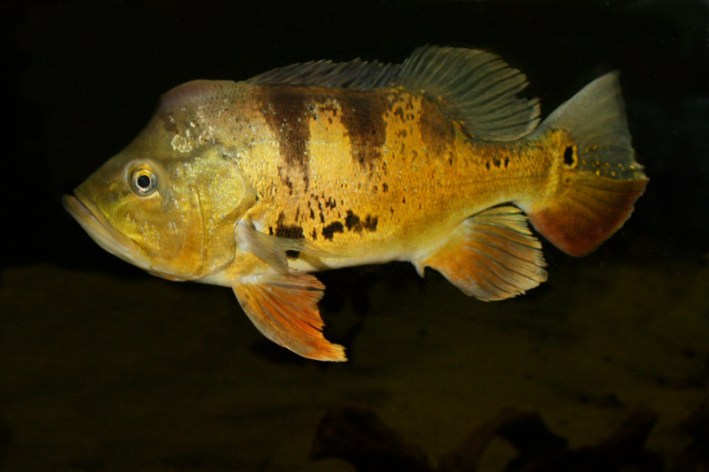
Cichla ocellaris (Cichlidae)  Cichlid

Female below.

DISTRIBUTION: Amazon, Orinoco, and La Plata basins in South America. Currently established in southern Florida.

HABITAT: Warm freshwater.

APPEARANCE: Elongate body with deeply notched dorsal fin, large mouth with projecting lower jaw. Color: olive-green fading ventrally to yellow-white, with three dark vertical bars on sides and series of dark spots in between. A large black spot encircled by silver adorns the caudal fin. Max. length: 60 cm. Male has a lump no top of the skull.

DIET: Diurnal feeders on other fishes. High speed pursuit predators.

REPRODUCTION and DEVELOPMENT: Substrate spawner. Both parents guard their clutch for about 9 weeks. Like most cichlids, breeding pairs are highly territorial and aggressive.

REMARKS: Legally introduced to Florida. Are considered a prized sport and food fish.

LOCATION: Flooded amazon tunnel, AM11

WORDPRESS SHORTLINK  http://wp.me/p1DZ4b-b9

Male below; note lump on top of the skull.

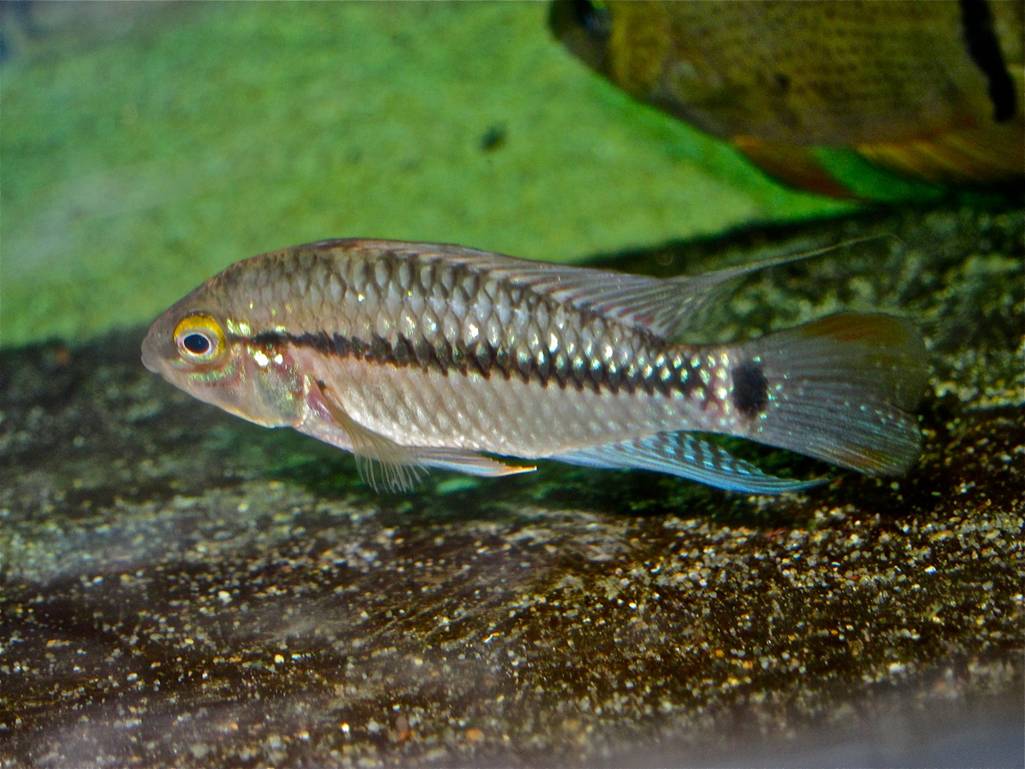
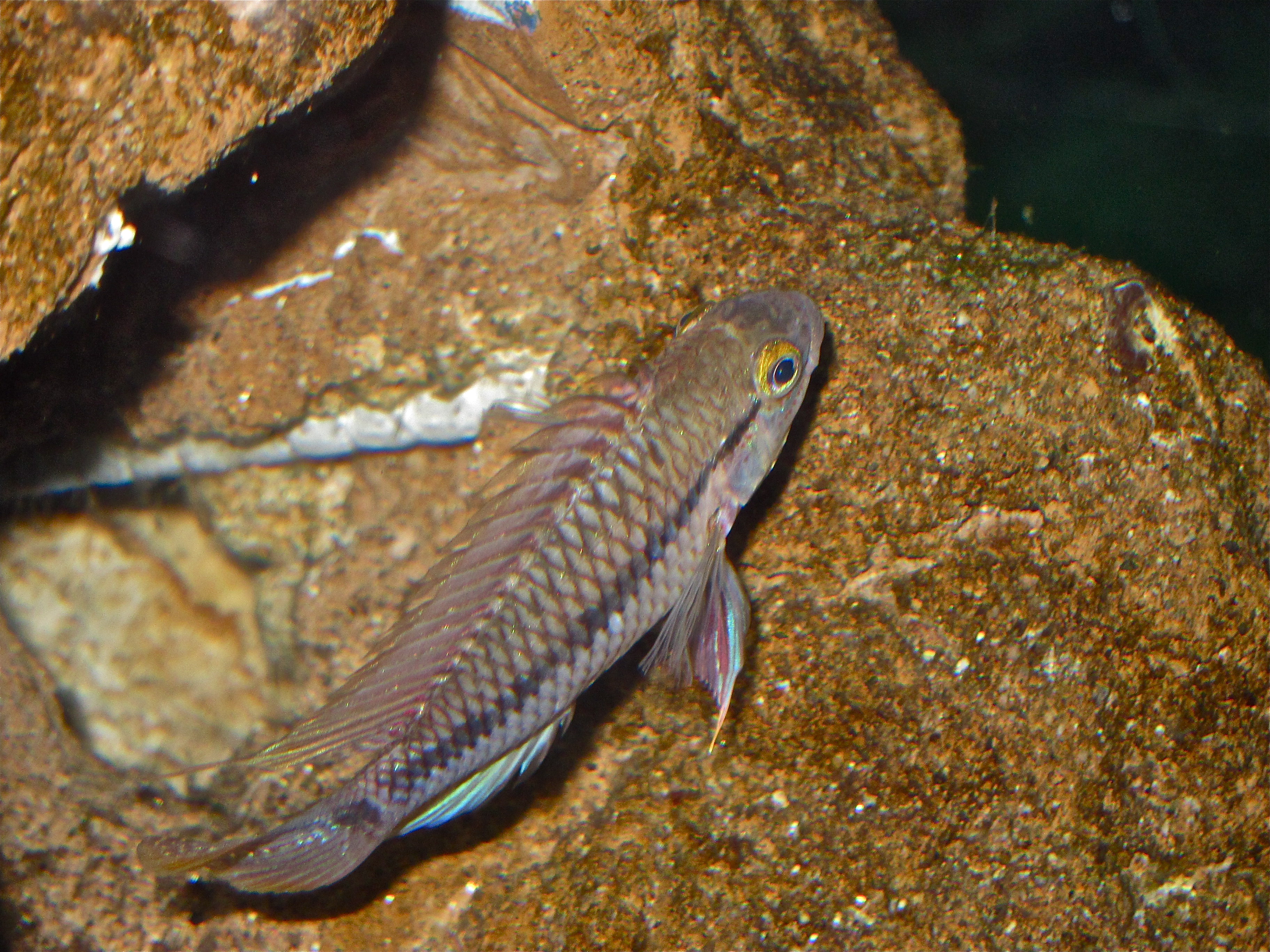
Apistogramma eunotus       Actinopterygii (Ray-finned fishes),Perciformes (Perch-likes) , Cichlidae (Cichlids)

DISTRIBUTION: Native to the western Amazon basin in the area around the Peruvian/Brazilian border. It’s found in the tributary systems of several rivers, including the Rio Ucayali, Rio Yavarí, Rio Japurá and the Amazon itself.

HABITAT: Slow-moving streams, creeks and tributaries, as well as smaller rivers.

APPEARANCE: Maximum length 3.5″ (male) 3″ (female).  The male is the larger fish and has much more prominent coloring, especially the blue markings around the gill area that give this fish its common name. The male also has elongated dorsal and anal fins.

DIET: A. eunotus is a micropredator. Their main prey items consist of insect larvae, fry of other fishes and other invertebrates

REMARKS:  Apistogramma is a genus of approximately a hundred species of fish from the family Cichlidae found in tropical areas of the Amazon basin and Venezuela. Apistogramma literally means “irregular lateral line” referring to a common trait of the species under this taxon. Most species are strongly sexually dimorphic.

Location: Flooded Amazon Tunnel, AM11

WORDPRESS SHORTLINK:  http://wp.me/p1DZ4b-ad

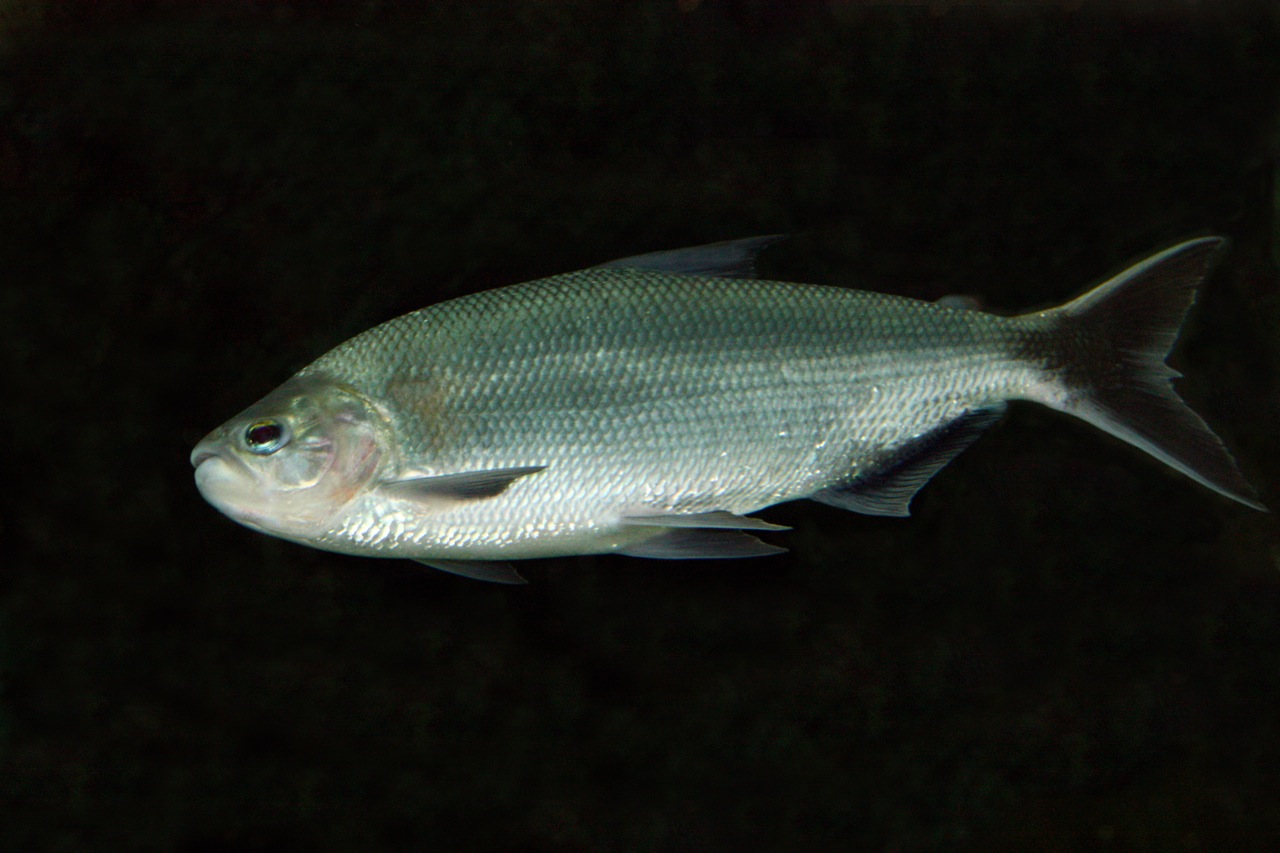
Brycon rubricauda

Little information available currently.  The following data were taken from Fishbase.

Actinopterygii (Ray-finned fishes) > Characiformes (Characins) > Characidae (Characins) > Bryconinae

DISTRIBUTION: South America: native to Magdalena river Basin in Columbia.

HABITAT: Tropical, Benthopelagic; freshwater

APPEARANCE: Maximum length 35 cm, (aprox. 3 feet). Maximum published   weight 725g. (1.6 pounds).

LOCATION: Amazon Flooded Tunnel, AM11

WordPress Shortlink  http://wp.me/p1DZ4b-9p

Pseudoplatystoma fasciatum

Actinopterygii (Ray-finned fishes) > Siluriformes (Catfish) > Pimelodidae (Long-whiskered catfishes)

DISTRIBUTION: South America: Amazon and Orinoco basins.

HABITAT: Riverbeds, shady streams, flooded forest areas.

APPEARANCE: Elongated, streamlined body with long snout; large mouth with three pairs of long barbels. Black spots and stripes on body and fins in irregular pattern; the pattern is banded, thus the common name. Usually silver to brown above; white to silver below.  Can grow to 90 cm or more in captivity.

DIET: Nocturnal hunter; feeds on fish and crabs.

REPRODUCTION and DEVELOPMENT: Separate sexes, external fertilization. Does not guard eggs.

REMARKS: Venomous spines.

Prized as food and game fish, and often found in South American food markets. Flesh is succulent.

WORDPRESS SHORTLINK: http://wp.me/p1DZ4b-8W

LOCATION; Flooded Amazon Tunnel


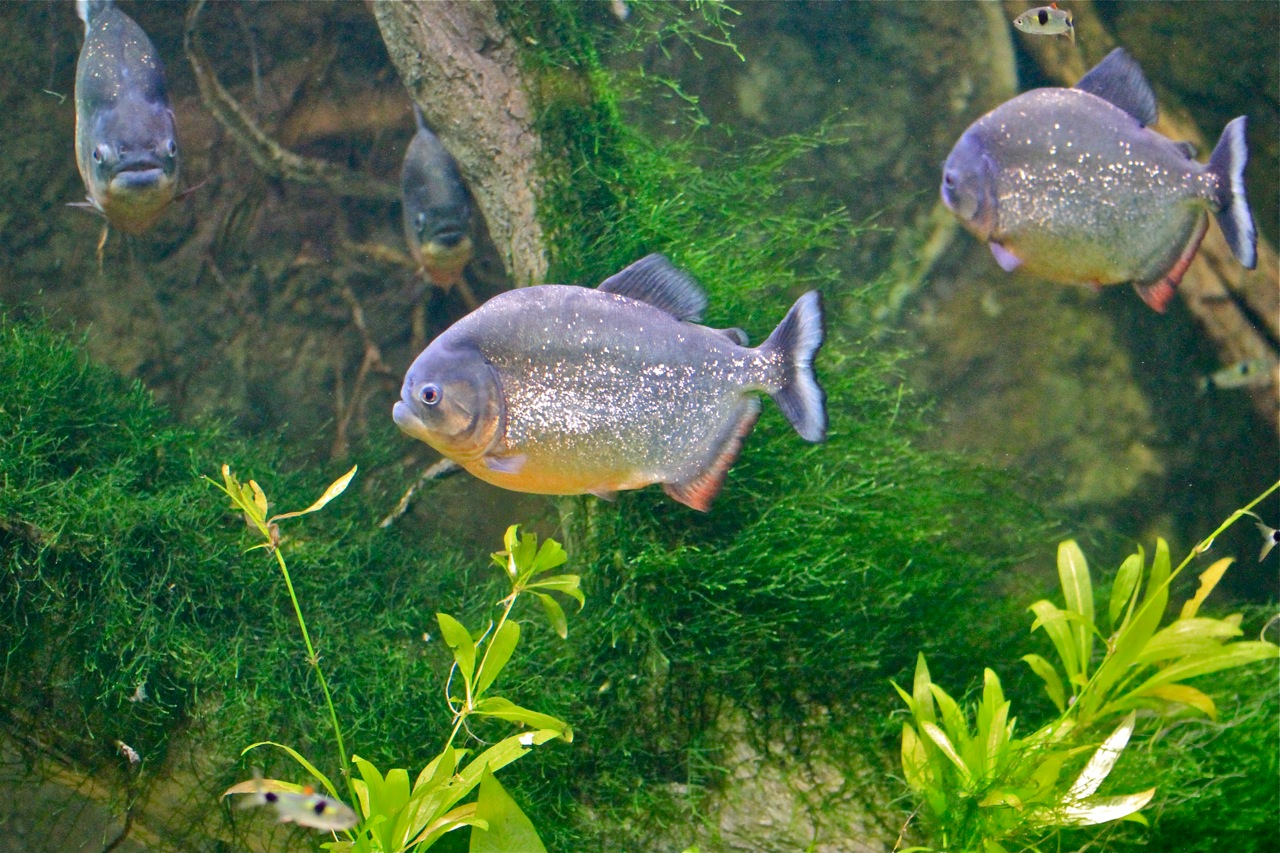
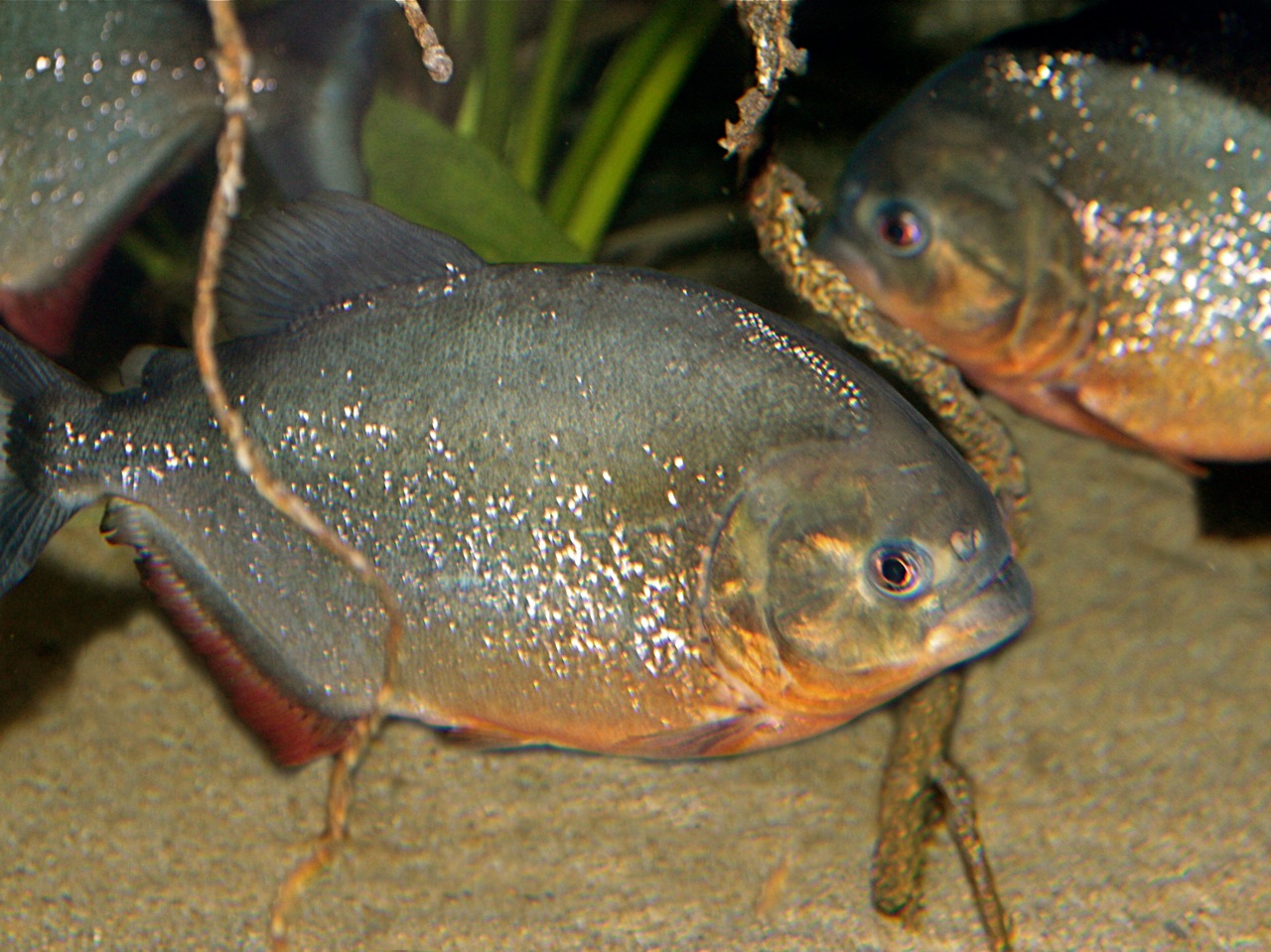
Pygocentrus nattereri

Actinopterygii (Ray-finned fishes) > Characiformes (Characins) > Characidae (Characins)

DISTRIBUTION: Amazon, Paraguay-Paraná and Essequibo basins.

HABITAT: Freshwater creeks and interconnected pools.

APPEARANCE: Length to 33 cm. Weight to 3.8 kg. Laterally compressed. Primarily dark scales with silvery glitter highlights. Chin and belly reddish.

DIET: Prey primarily on wounded and diseased fish. Feed communally in groups of 20–30 individuals who wait in vegetation for the opportunity to ambush prey. Once prey is attacked a feeding frenzy ensues. Adults forage at dusk and dawn, medium-sized fish most active at dawn, late afternoon and at night; small fish feed by day.

REPRODUCTION:  Spawn after an elaborate courtship ritual where the mating pair swim in circles. Female deposits layers of eggs on aquatic plants; male fertilizes. Male defends and turns eggs. Masses hatch in 9 or 10 days.

MORTALITY: Preyed upon by other fishes including large catfish, crocodilians, birds and larger mammals including jaguar.

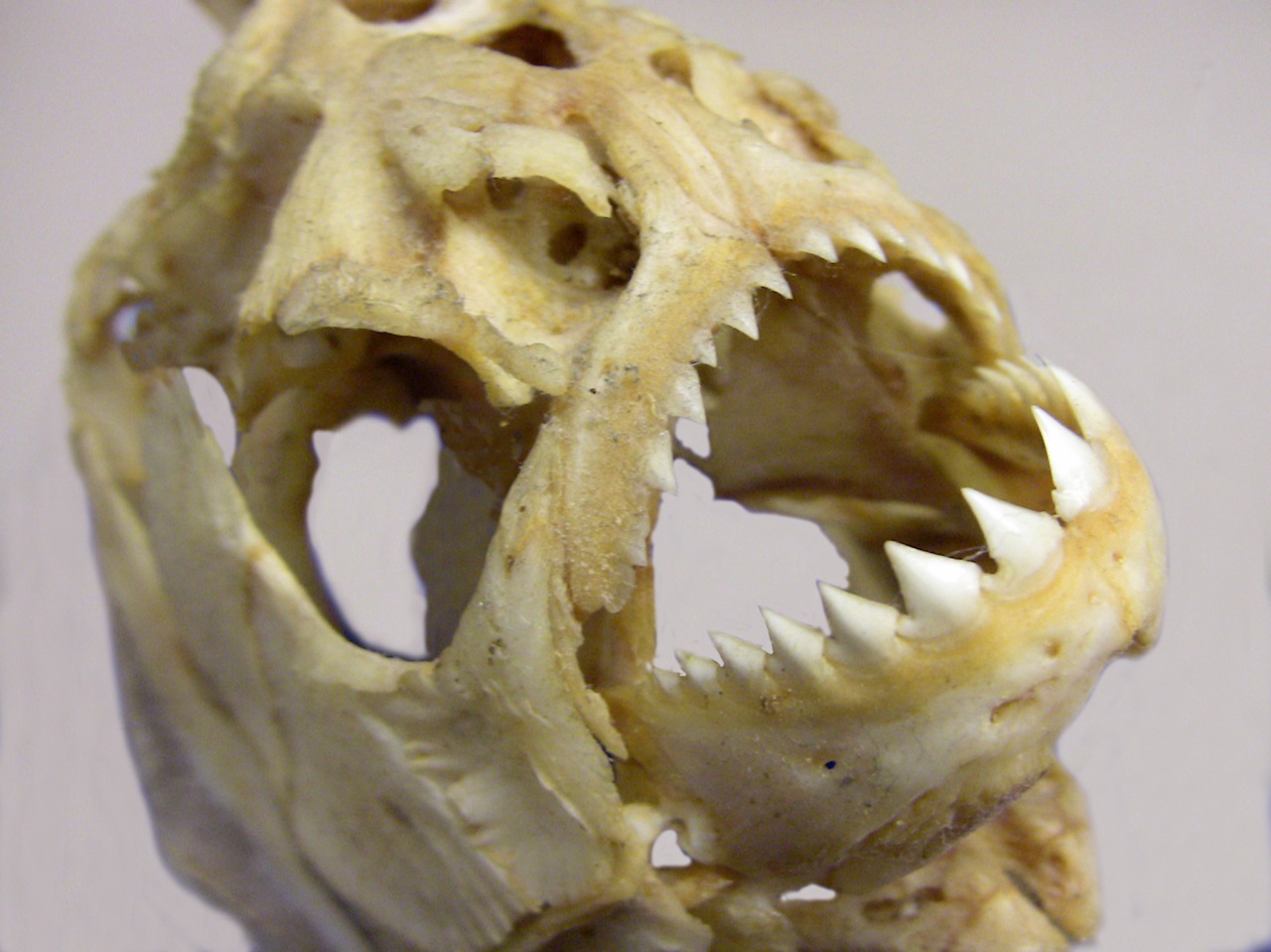
REMARKS:  Piranhas’ reputation to be voracious human-eaters is highly exaggerated. Can inflict a serious bite to humans.  Weak individuals in captivity are cannibalized.  Maintain a vicious bite by regularly replacing teeth on alternate sides of jaw.

Of the 20 or so species of piranha, 12 do not attack in schools. Rather they take a quick bites of the fins or scales of passing fish, causing little damage as these parts grow back. Amazonian Indians use the sharp teeth as knives. They also coat the teeth with curare and attach them to the end of blow darts. AM8

WORDPRESS SHORTLINK  http://wp.me/p1DZ4b-8i

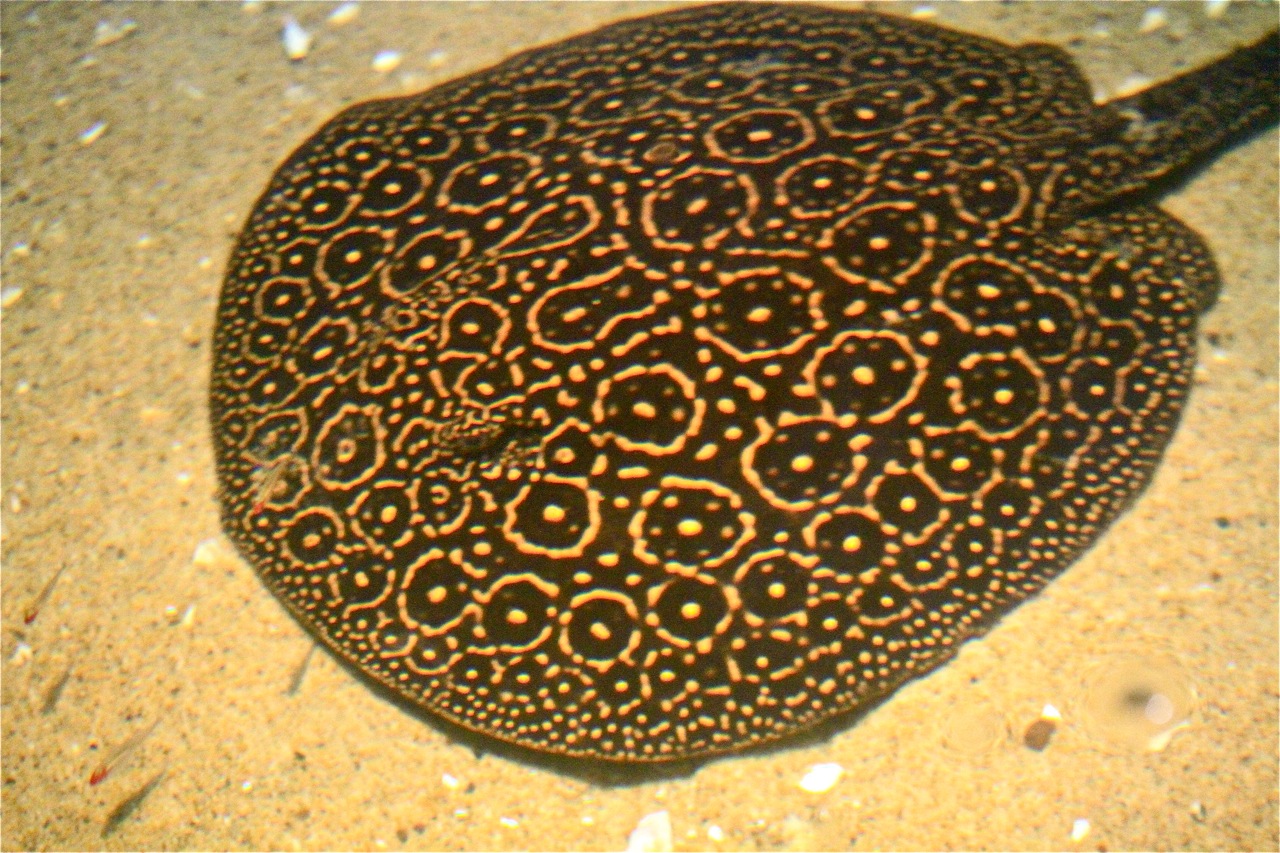
Potamotrygon sp.    Elasmobranchii (Sharks and rays) > Rajiformes (Skates and rays) > Potamotrygonidae (River stingrays) 

DISTRIBUTION: Collected in the Rio Tapajos River, Brazil.

HABITAT: The shallows of major rivers and slow-moving tributaries with substrates of mud or sand.   Lost ability to retain urea decreasing osmolarity for fresh water unlike salt water relatives.

APPEARANCE: The patterning of this “species” is highly variable, with no two examples appearing the same. Some have golden markings, while others are almost white. Similarly, the amount of darker pigmentation can also vary in both shade and coverage.

REMARKS: Consumed by native tribes of the Amazon.

Potamotrygon sp. Have a venomous barb which can cause a serious and painful wound usually in the lower leg.  (Walking with a shuffling gate in water will encourage the ray to move out of the way.)  In severe wounds symptoms may include nausea, vomiting, fainting, salivation, muscle cramps, diarrhea, seizures, shock and rarely death.  Initial treatment uses hot water to help inactivate the venom and transfer to a medical facility to clean the wound and treat symptoms.

WordPress Shortlink  http://wp.me/p1DZ4b-8i