
Phylum Arthropoda, Subphylum Crustacea, Class Malacostraca, Order Decapoda, Family Stenopodidae
Stenopus sp.
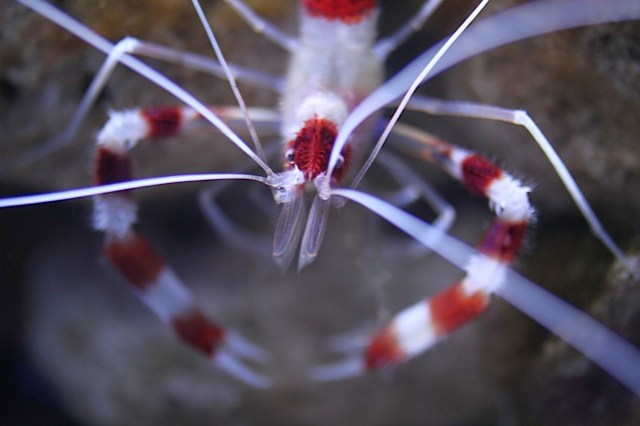
DISTRIBUTION: tropical coral reefs worldwide
HABITAT: Male and female coral banded shrimp pair up when young, claim a territory, and never travel outside the small patch of reef they call home.
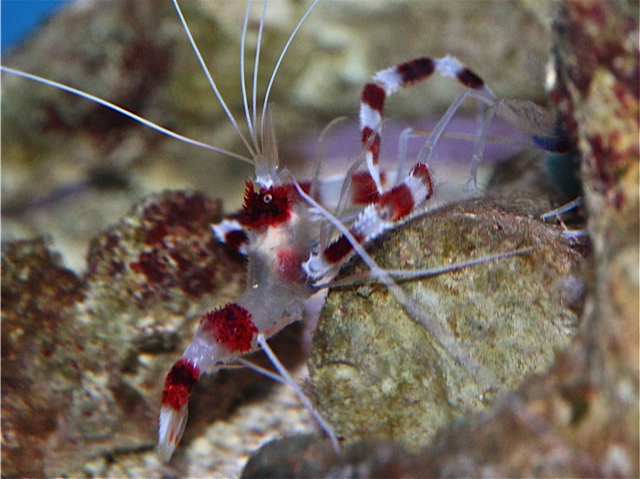
APPEARANCE: Strikingly colorful, they have a white body with contrasting red and white bands, bluish legs, slender pincers, and extremely long white antennae. Short spines cover the body and are used for defense. Males are smaller, more slender than females.
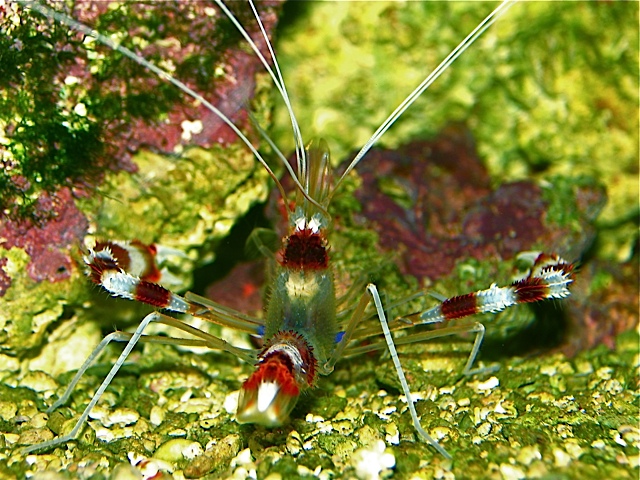
DIET: A cleaner shrimp, it removes dead tissue, algae and parasites from fish waving their long antennae to advertise their services. They are known to perform a dancing behavior, perched on a conspicuous spot near their home and whipping the antennae while swaying from side to side. A fish ready for cleaning remains still in the water, allowing the shrimp to clean the scales and even enter the mouth and gills. They have been known to clean under the fingernails of divers’ hands!
REPRODUCTION: They are committed monogamists mating for life, a breeding strategy rare among most animal groups. Stenopus sp. defend their territory aggressively attacking and sometimes killing intruding shrimps. Mating occurs when the female is receptive. The male approaches her and transfers a packet of sperm to a specialized receptacle on her abdomen. With a few hours, the female begins to produce eggs, which are fertilized as released and then carried on her abdomen until they hatch into larvae, become part of the plankton, and eventually settle.
flickr http://www.flickr.com/photos/cas_docents/3067708530/in/set-72157608602469734/
WORDPRESS SHORTLINK http://wp.me/p1DZ4b-pj

 Ron's Critter of the Day