Category: ARTHROPODS


TAXONOMY
Kingdom: Animalia
Phylum: Arthropoda
Class: Insecta
Order: Lepidoptera
Family: Saturniidae

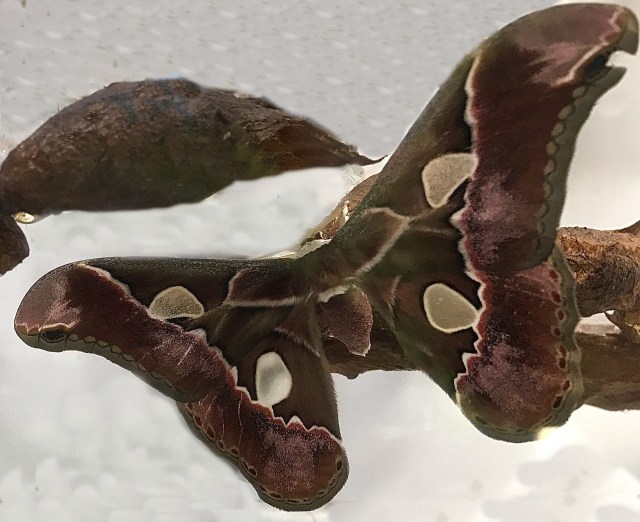
Genus/species: Rothschildia lebeau

GENERAL CHARACTERISTICS: Wings are reddish-brown with an olive tinge. The four clear spots or four windows give it its Spanish name cuatro ventanars. It may live as a pupa for two or three years before becoming an adult which does not eat in their short lifetime.

Wing Span: 9 – 12.5 cm (3 1/2 – 4 15/16 in)

DISTRIBUTION: Southern Texas To South America. Found in thorn scrub,

References

California Academy of Sciences Rainforest Level 3 2017 Vetting Tim Wong

Ron’s flickr https://www.flickr.com/photos/cas_docents/33312191516/in/album-72157608449327886/

Butterflies and Moths of North America  www.butterfliesandmoths.org/species/Rothschildia-lebeau

Ohio State Univ. bugguide.net/node/view/151823

Chicago Botanical Garden  www.chicagobotanic.org/butterflies/rothschild_silkmoth

Ron’s WordPress Shortlink http://wp.me/p1DZ4b-1MF

TAXONOMY
Kingdom: Animalia
Phylum: Arthropoda
Subphylum: Crustacea
Class: Malacostraca
Order: Decapoda
Infraorder: Caridea
Family: Hippolytidae

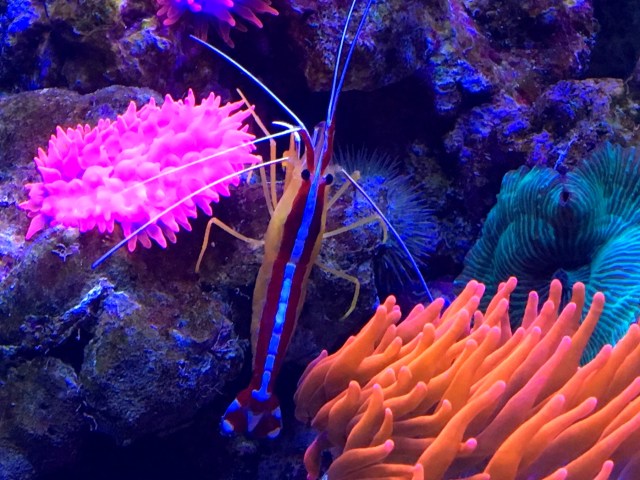
Genus/species: Lysmata amboinensis

GENERAL CHARACTERISTICS: Dorsal redline on tan body. Long white antennae.

DISTRIBUTION/HABITAT: Red Sea to Australia; Indonesia, Society Islands. Active day and night at cleaning stations on coral and rocky reefs, 8–25 m. Reside in pairs or groups (to 100 individuals) in caves and crevices.

cleaner shrimp24441637412_8890f98e21_oDIET IN THE WILD: It has been observed that fish with parasites may come to cleaning stations. in the reef. Certain species of fish and several types of cleaner shrimp may assist the fish in large numbers and even go inside the mouth (and then to the gill cavity) without being eaten.

cleaner shrimp4337509985_c72ab0aedf_o

REPRODUCTION: L. amboinensis initially develop and reproduce as males then develop female reproductive organs to become hermaphrodites and function as both males and females throughout the reproductive cycle. This system called protandric simultaneous hermaphroditism is so far known only from caridean shrimp in the closely related genera Lysmata and Exhippolysmata.

REMARKS: Cleaner shrimp advertise their services by their bright coloration and by waving their very long antennae, which contrast with the dark recess of their station.

Jacques, a character in Finding Nemo, is a humpback cleaner shrimp. In aquaria, cleaner shrimp are valued because they clean not only the fish, but the tank as well.

References

California Academy of Sciences Steinhart Aquarium Color on the Reef AQA17 2017

EOL www.eol.org/pages/128343/details

Ron’s WordPress shortlink http://wp.me/p1DZ4b-1KD

Ron’s flickr https://www.flickr.com/photos/cas_docents/24441637412/in/album-72157659465376212/

Kingdom: Animalia
Phylum: Arthropoda
Class: Arachnida
Order: Araneae
Family: Theraphosidae

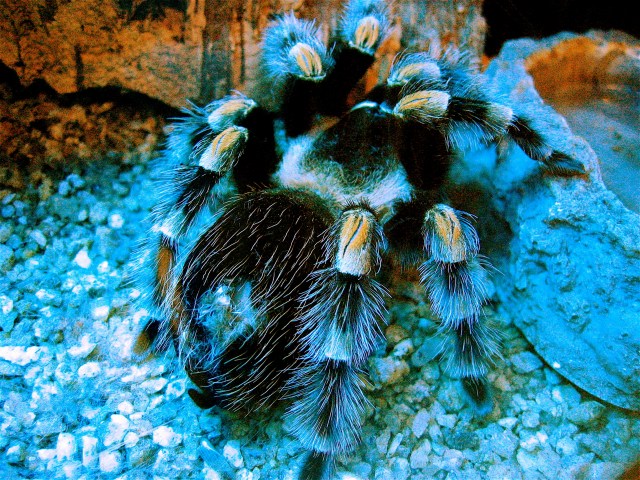
Genus/species: Brachypelma smithi

GENERAL CHARACTERISTICS: The body and legs are dark brown with orange-red leg joints. The ends of the legs can detect vibrations, smells and tastes, to help the tarantula locate prey and the opposite sex, although it also has a group of eight eyes on the top of the carapace.

Length up to 14 cm (5.5 in)

Mexican Red Knee Tarantula30463911086_990fd616a7_k

DISTRIBUTION/HABITAT: Found in in dry areas with little vegetation, usually in scrubland, deserts, dry thorn forests, or tropical deciduous forests along the central Pacific coast of Mexico.
DIET IN THE WILD: Hunting at night by lying in ambush, the Mexican redknee tarantula attacks insects, small frogs, small lizards, and mice. An area on the end of each leg is sensitive to smells, tastes and vibrations, and this is used to detect prey. The tarantula holds its prey with its pedipalps (front limbs) and injects it with venom delivered via two hollow fangs. This venom has a double purpose, paralysing the prey as well as beginning digestion. Once the venom has acted, the tarantula is able to suck up the proteins and fats of its prey, leaving just a small ball of undigested body parts

REPRODUCTION: Mating occurs in or near to the female’s burrow, where the male uses his pedipalps (front limbs) to transfer his sperm into openings in the underside of the female’s abdomen. After mating, some females will try to kill and eat the male. In the spring, the female deposits hundreds of eggs and the sperm onto a silk mat which she has made and then fashions this mat into a ball or egg sac. Fertilisation takes place within minutes and the spiderlings hatch in just less than three months. Once out of the egg-sac they spend two weeks in the burrow before dispersing. Males mature at about four years of age and females two to three years later at about six or seven years old. They are a long-lived species with females living up to 25 to 30 years old, however males only live about one year after maturity.


Mexican Red Knee Tarantula4515783385_eb611c7fd6_o

REMARKS: This usually docile tarantula will kick hairs off the abdomen with its hind legs when threatened, which cause blindness if they hit the eyes of a predator and can also cause a rash on the skin.
References

California Academy of Sciences Animal Attractions 2016

Ron’s Flickr   https://www.flickr.com/photos/cas_docents/30463911086/in/album-72157608653175263/

EOL  eol.org/pages/1181785/details

Ron’s WordPress Shortlink  http://wp.me/p1DZ4b-1IR


TAXONOMY
Kingdom: Animalia
Phylum: Arthropoda
Class: Arachnida
Order: Scorpiones
Family: Caraboctonidae (hairy scorpions)

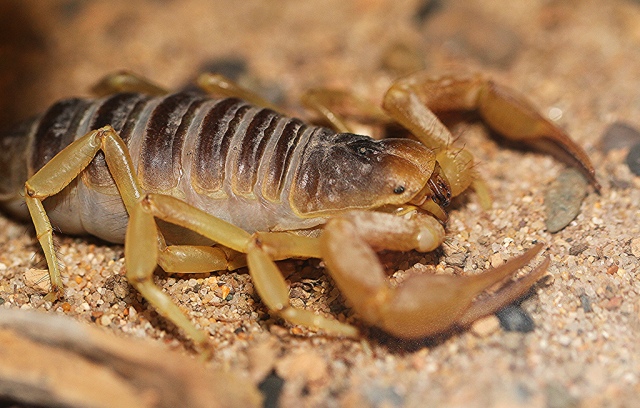
Genus/species: Hadrurus arizonensis

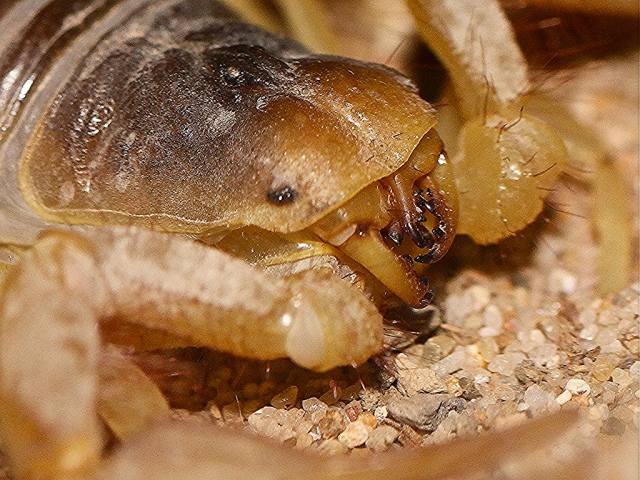
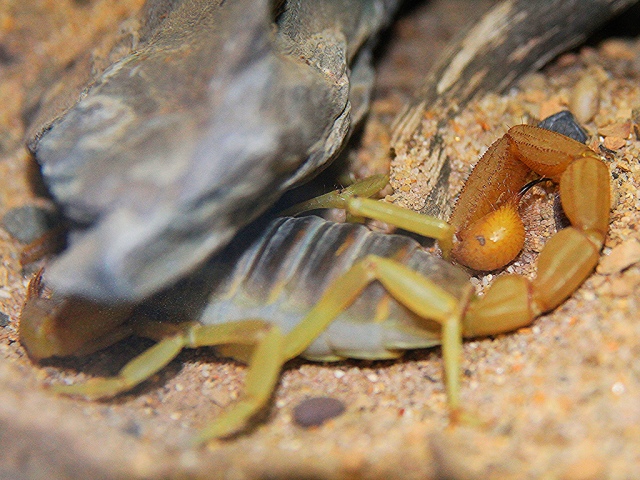
GENERAL CHARACTERISTICS: Black cephalothorax with pale yellow rimmed segments; pale yellow abdomen, pincer-like pedipalps, and legs; pale under-surface; and abundant erect dark brown sensory hairs.

Largest of the nine scorpion species in North America. Length 10 to 18 cm (3.94 to 7.09 in)
Ave. weight 5 g (0.18 oz)

They molt 4 to 6 times before reaching adulthood in about 4 years.

4798723964_ae2cf48854_b

DISTRIBUTION/HABITAT: Mexico, western Arizona, southern California and Nevada, southwestern Utah. Found in semi-arid and arid habitats. Dig and live in deep burrows in soil during summer.

4798092901_1093a6cf23_b

DIET IN THE WILD: Although the venom of North American hairy scorpions is fairly week compared to most scorpions (about the same as a bee sting) these solitary predators immobilize and eat other scorpions, insects, spiders, small lizards and snakes. Forages at night for prey and mates.

4104007609_fe7dccca9a_b

REPRODUCTION: Scorpions reproduce sexually following an intricate mating behavior. Gestation lasts 6 to 12 months. Females give live birth to a large litter of 25 to 35 individuals. Occasionally, after mating, the female tracks down her mate and eats him.

LONGEVITY; Up to 25 years in captivity, ave, 7-10 in the wild.

PREDATORS: Owls and large lizards. When provoked they raise their legs and orienting themselves vertically, striking blindly at anything deemed threatening.

CONSERVATION: IUCN Red List, Not Evaluated

REMARKS: Venom in the scorpion’s stinger is used to subdue struggling prey and for self-defense. The venom is not very potent or painful to humans. Like all scorpions, has poor eyesight, excellent hearing, and a fine sense of touch (body hairs detect air and ground vibrations).

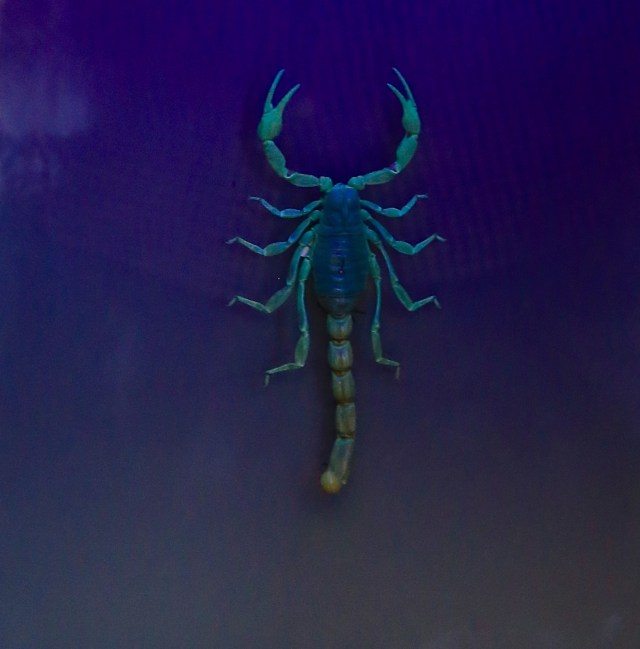
Color of Life note

Also like all scorpions, they fluoresce under ultraviolet light, a characteristic that allows scientists (and well-equipped backpackers) to detect them in the night and perhaps signals scorpions to avoid damaging UV light.

Ref. California Academy of Science Docent program 2015

IMG_0219

REFERENCES

California Academy of Sciences, Steinhart Aquarium, Little Water 2018 with exoskeleton

Ron’s flickr  https://www.flickr.com/photos/cas_docents/4770063879/in/album-72157608653175263/

Ron’s WordPress shortlink  http://wp.me/p1DZ4b-1zv

Animal diversity Web animaldiversity.org/accounts/Hadrurus_arizonensis/

Encyclopedia of Life eol.org/pages/3195616/details

Getty Images www.gettyimages.com/detail/photo/giant-desert-hairy-scorp…


TAXONOMY
Kingdom: Animalia
Phylum: Arthropoda
Class: Insecta
Order: Mantodea
Family: Hymenopodidae
Subfamily: Epaphroditinae

Genus/species: Phyllocrania paradoxa

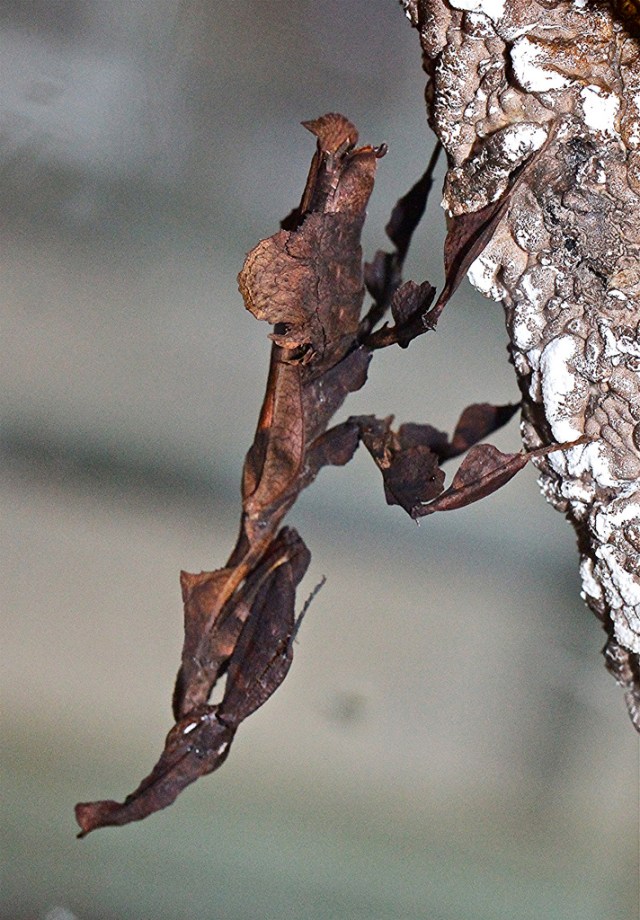
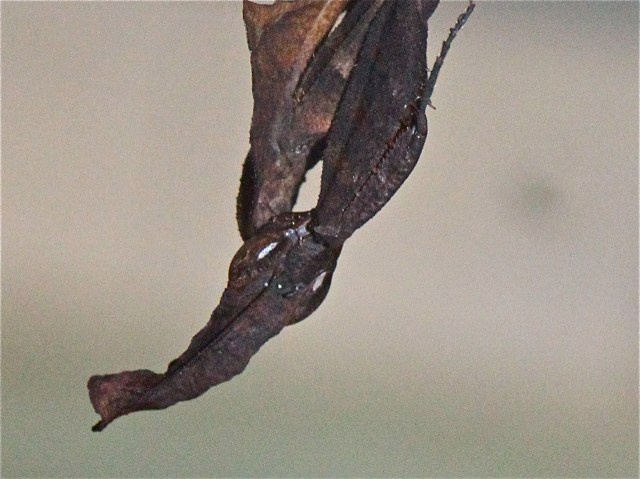
GENERAL CHARACTERISTICS: This is a miniature species of leaf mantis, growing to under 5 cm (2 in). Theses mantids exhibit sexual dimorphism with females being longer and having a wider abdomen than males. Colors can vary from grey/green to dark brown or almost black. Colors are dependent on humidity and light levels. Ghost mantids have leaf-like head and shoulder shields, and leaf-like protrusions hanging from their limbs. This “dead-leaf” appearance makes it very difficult to see. The scientific name is probably derived from Greek for “leaf “(phyllo) and Latin for “head” (crania).

Phyllocrania paradoxa6319511720_e34688f6b4_b

DISTRIBUTION/HABITAT: P. paradoxa are found in the warm, highly humid tropical forests of Tropical Africa including Madagascar, Mozambique, Namibia, and Somalia.

DIET IN THE WILD: This species will eat almost anything that moves, and it is very, very fast. When another insect comes within striking distance, the mantid flicks out the long front legs, and grabs it in a fraction of a second. They are remarkably patient, and will sit in the same position for weeks, just waiting for something to land near them.

DIET IN CAPTIVITY: Drosophila (fruit flies), houseflies, crickets, and flour worms.

MORTALITY and LONGEVITY: Generally a long-lived species.  Molt every 3–5 weeks, until the 4th and final molting.  Life span: up to 14 months in captivity.

REPRODUCTION: In general mantids reproductive organs are found at the tip of their abdomen. Females attract males with pheromones, there is a brief courtship dance, and the male alights on the female’s back. After delivering sperm, the male usually hurries away as females are known to consume their mates! After fertilization the female deposits batches of eggs, using an ovipositor at the tip of her abdomen. The eggs stick to stems and leaves, and each batch is housed in an egg case made from an abdominal secretion that hardens to protect the eggs from birds and other predators. After about a month the nymphs hatch and then molt several times, each time becoming more like the adult form. 

Juvenile below

Color of Life Note: Ghost mantids exhibit cryptic coloration (conceals or disguises an animal’s shape). They look like a vine draped on tree and bush branches.


LOCATION: Madagascar Rainforest

References

References. California Academy of Sciences Docent Rainforest Training Manual.

Ron’s flickr https://www.flickr.com/photos/cas_docents/4333501334/in/set-72157620708610230/

Ron’s WordPress shortlink  http://wp.me/p1DZ4b-eK

Encyclopedia of Life  http://eol.org/pages/3489690/details

ADW Animal Diversity Web animaldiversity.org/accounts/Phyllocrania_paradoxa/classi…


TAXONOMY

Kingdom: Animalia
Phylum: Arthropoda
Class: Insecta
Order: Phasmatodea (stick insects, phasmids, ghost insects and leaf insects)
Superfamily: Phyllioidea
Family: Phylliidae (true leaf insects or walking leaves)

Genus/species: Phyllium giaganteum

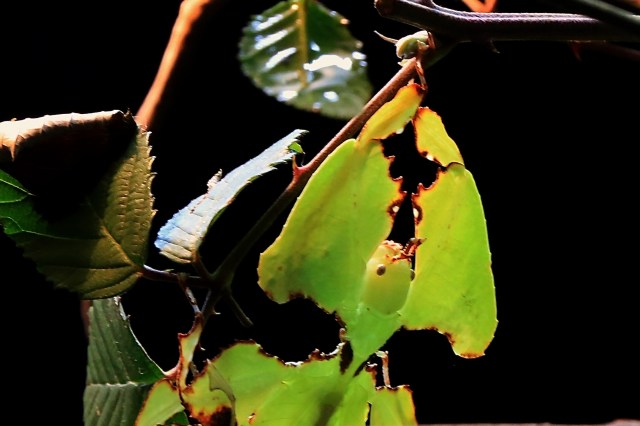
GENERAL CHARACTERISTICS: Use camouflage to mimic leaves and even waver when they walk like leaves blowing in the wind.

Giant Malaysian leaf insect19131910632_d71d7691e0_o

DISTRIBUTION/HABITAT: Southeast Asia to Australia

Giant Malaysian leaf insect18951496529_05edfe0096_o

DIET IN THE WILD: Plant leaves including Oak and bramble

Giant Malaysian leaf insect19141065381_b24c18b8d4_o

REPRODUCTION: Males are hard to find so females are able to reproduce by laying unfertilized eggs that grow into more females.

References

California Academy of Sciences Color of life exhibit, June 2015

Encyclopedia of Life  eol.org/pages/1077423/overview

Ron’s WordPress shortlink  http://wp.me/p1DZ4b-1xg

Ron’s flickr  https://www.flickr.com/photos/cas_docents/19131910632/in/album-72157652559028013/


TAXONOMY
Kingdom: Animalia
Phylum: Arthropoda (insects, arachnids, and crustaceans)
Class: Insecta
Order: Blattodea (cockroaches and the termites)
Family: Blaberidae (giant cockroaches)

Genus/species: Blaberus giganteus 

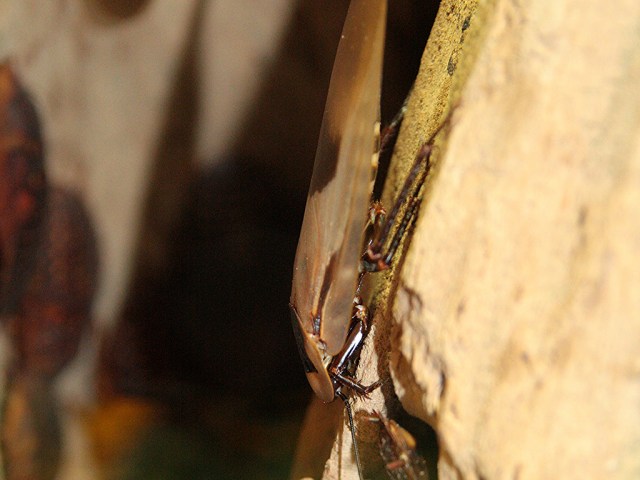
GENERAL CHARACTERISTICS: They have three pairs of legs, and two pairs of wings, the forewings being light brown in colour. Largest neotropical cockroach by weight. A giant cockroach has a flattened, oval body, about 9 cm (3.5 inches) long and 4 cm (1.5 inches) wide. Females are slightly larger than males. They commonly run along the ground, although the adults have wings that are rarely if ever used for flight. They have long, very slender antennae and two sensory organs, called cerci, at the tip of the abdomen.

Blaberus giganteus 3445478500_7a02fcb067_b

DISTRIBUTION/HABITAT: Central and South America. They prefer dark, damp locations such as caves, rock crevices, tree hollows, and spaces under loose tree bark.

Blaberus giganteus 3775296951_fd8e873273_b

DIET IN THE WILD: Cockroaches are omnivores and detritivores. Common diet includes bat guano, rotting wood, fruit, seeds, decomposing vegetation, dead insects, and other animals. They help recycle decaying matter on the ground into useful nutrients for plants. 

REPRODUCTION: Females emit a pheromone that induces males to mate. Male courtship rituals include raising wings at right angles to abdomen and making trembling movements with abdomen. After mating, the female B. giganteus will be pregnant for life producing eggs which turn into nymphs which later become adults.

Blaberus giganteus 3779077163_a2d1b493c7_b-2

MORTALITY/LONGEVITY: They can live about 20 months as adults.

PREDATORS:  Army ants kill and eat nymphs.

CONSERVATION:  IUCN: Not Listed; CITES: Not Listed  

Cockroaches dates back over 200-300 million years, and are very adaptable and resilient animals.

REMARKS:  The leg bristles and antennae are used for seeing and feeling, in their dark habitat, while their flat bodies enable them to hide in crevices and underneath rocks. Cockroaches do not have lungs to breathe, but instead they take air in through spiracles, which are tiny holes on the sides of their bodies, and are used to send oxygen to other parts of the body. This allows the cockroach to survive for a period of time without its head, until it dies of infection, starvation or dehydration. When threatened, the giant cockroach is able to produce a foul smell to ward off predators. 

Location: Rainforest Costa Rica CR04 

References: 

Toronto Zoo http://www.torontozoo.com/ExploretheZoo/AnimalDetails.asp?pg=445

Encyclopedia of Life  eol.org/pages/1075061/details

Sreng, L. 1993. Cockroach Mating Behaviours, Sex-Pheromones, and Abdominal Glands (Dictyoptera, Blaberidae). Journal of Insect Behaviour. 6: 715-735.

Ron’s WordPress shortlink  http://wp.me/p1DZ4b-1tE

Ron’s flickr https://www.flickr.com/photos/cas_docents/3776101942/in/set-72157620708938680

TAXONOMY
Kingdom: Animalia
Phylum: Arthropoda
Class: Arachnida
Order: Araneae
Suborder: Araneomorphae (fangs slope towards each other in a pinching action)
Family: Nephilidae

Genus/species: Nephila madagascariensis

3707840635_437d069402_b

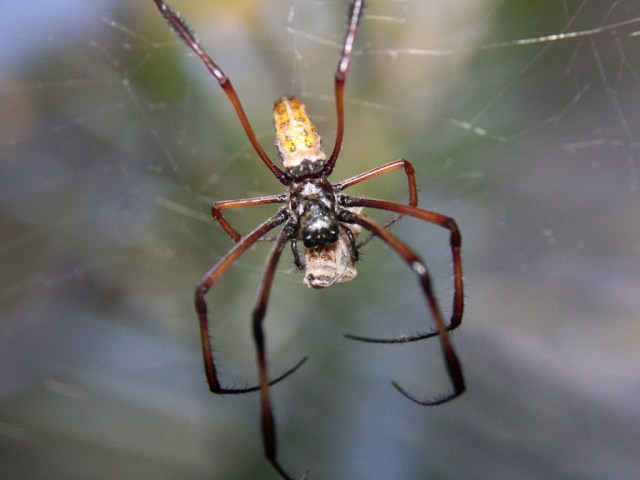
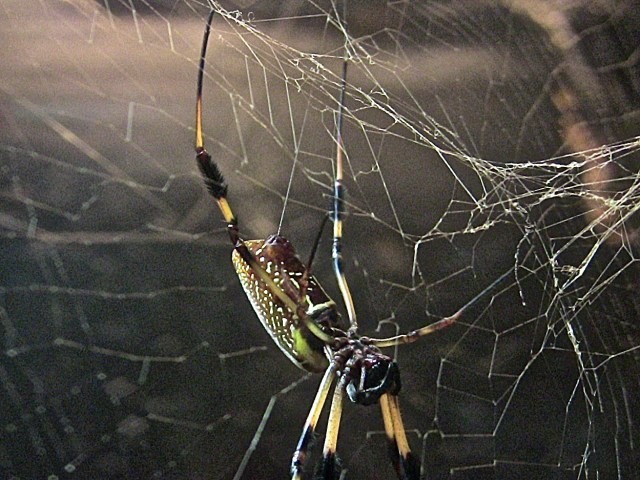
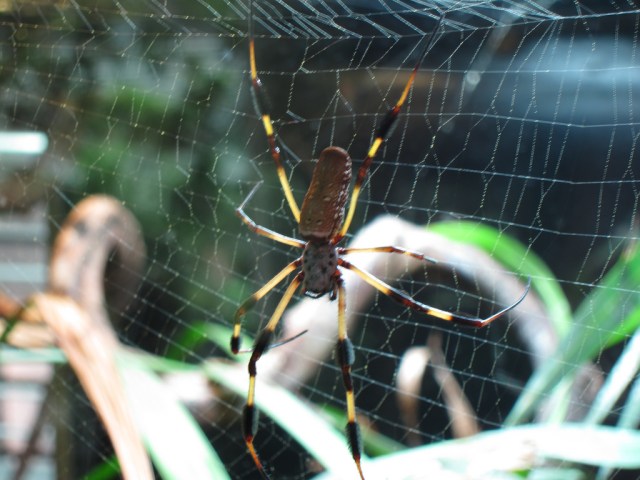
GENERAL CHARACTERISTICS: They have striped legs specialized for weaving (where their tips point inward, rather than outward as is the case with many wandering spiders). In females, the dorsal side of the abdomen has bright yellow markings surrounded by a light gray border. The rest of the body and legs are black with patches of brown. 4.8 – 5.1 cm (1.5 – 2 in) in females, not including leg span, with males being usually 2/3 smaller (less than 2.5 cm, 1 in). Named for yellow threads of their web shine like gold in sunlight not the color of the spider.

DISTRIBUTION/HABITAT: Various species of orb weaving spiders are widely distributed. They exist in the southern United States, Central and South America, Southeast Asia, and the South Pacific. Nephila madagascariensis madagascariensis is found on the island of Madagascar and certain parts of Southern Africa. 

Spinning web below

Golden Orb16121279421_89d739a11a_o

DIET IN THE WILD: Eat insects that get caught in their webs, primarily flying insects. They kill their prey with a venomous bite. While painful, a bite from this spider would not seriously hurt humans.

Golden Orb Weaver

LONGEVITY:: Females usually live about a year, and males about 6 mos.

REMARKS: Golden orb spiders weave large, strong webs out of golden-colored silk which can be as big as 2 m across. The silk strands are reputed to be five times stronger than steel and three times more elastic than Kevlar.
The oldest surviving genus of spiders, with a fossilized specimen known from 165 million years ago.

Rainforest, Madagascar

References

Ron’s WordPress Shortlink: http://wp.me/p1DZ4b-TC

Ron’s flickr http://www.flickr.com/photos/cas_docents/sets/72157608653175263/with/3707840635/

California Academy of Sciences: Madagascar Golden Orb Spider exhibit 2014

 iNaturalist www.inaturalist.org/taxa/49758-Nephila

TAXONOMY
Kingdom: Animalia
Phylum: Arthropoda
Subphylum: Hexapoda
Class: Insecta
Order Orthoptera (grasshoppers, locusts, crickets, katydids, and their relatives)
Family: Tettigoniidae

Genus/species: Copiphora rhinoceros

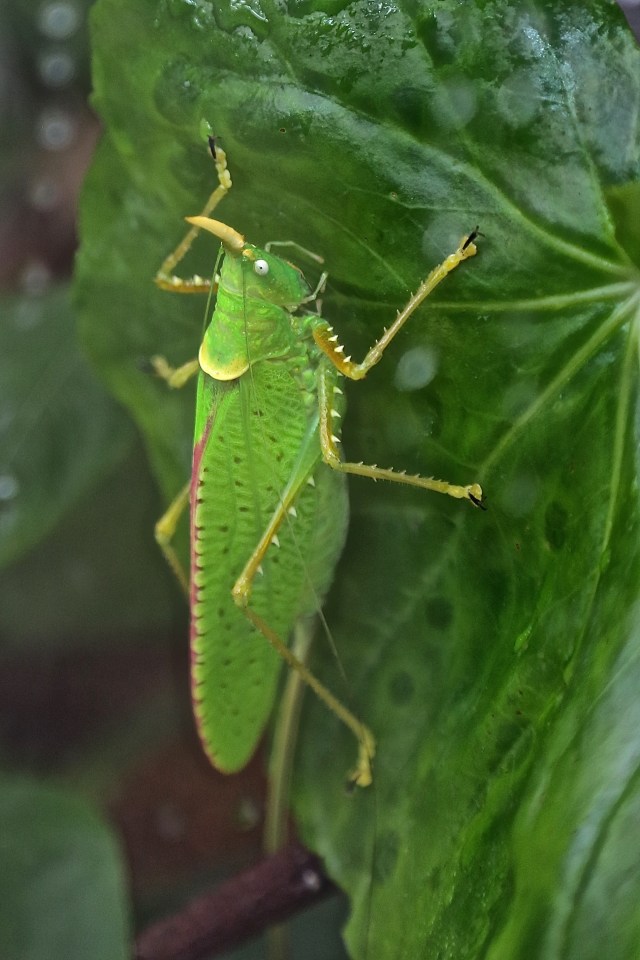
GENERAL CHARACTERISTICS OF KATYDIDS: They are usually green and have a thick body, usually taller than it is wide, and long thin legs. The head has chewing mouthparts and long thin antennae that reach back at least to the abdomen of the insect. The front wings have special structures that can be rubbed together to make sounds. They hear these sounds with flat patches on their legs that act as ears.

Tettigoniids may be distinguished from grasshoppers by the length of their filamentous antennae, which may exceed their own body length, while grasshoppers’ antennae are always relatively short and thickened.

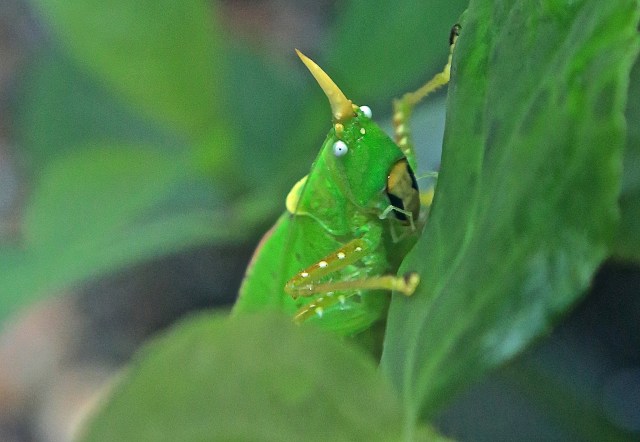
C. rhinoceros uses the horn like projection on their head for protection from hungry bats.

15762449040_a647afb916_o

DISTRIBUTION/HABITAT: Central, North and South America. Found in the forest canopy.

DIET IN THE WILD: They use their powerful jaws to subdue prey such as small invertebrates and consume plant material.

REMARKS Use sound to communicate across distances. Sometimes nearby males will all call together, trying to attract females. They also use their antennae to touch and smell each other.

Copiphora rhinoceros15949749665_c2933568be_k


References

Encyclopedia of life  eol.org/pages/972/details

Animal Diversity Web animaldiversity.org/accounts/Copiphora_rhinoceros/classif…

California Academy of Sciences Exhibit. San Francisco CA

Ron’s flickr  https://www.flickr.com/photos/cas_docents/15762449040/in/photostream/

WordPress shortlink  http://wp.me/p1DZ4b-1qb

TAXONOMY
Animalia (animals)
Phylum (Arthopoda)
Subphylum: Hexapoda
Class: Insecta
• Three body parts – head, thorax, abdomen
• Three pairs of legs attached to thorax
• Usually one or two pairs of wings
Order: Hymenoptera (ants)
Family: Formicidae

Genus/species: Atta cephalotes
4471989519_93ab359108_o

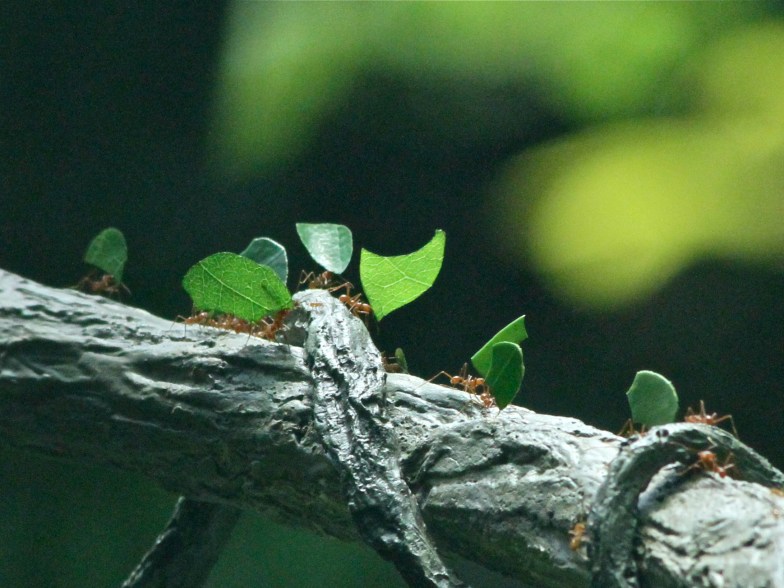
GENERAL CHARACTERISTICS: Rust colored with lighter colored legs, members of the genus Atta are among the largest, most socially complex leafcutters. The huge queen is up to 1.5 cm (0.5 inches) in length, an egg laying machine capable of building a colony of several million individuals. A. cephalotes is noted for its especially large head (hence the name). Workers take many forms and sizes, from large soldiers and major workers with their impressive mandibles. A soldier may be 10 times longer and weigh several hundred times more than the smallest worker.

DISTRIBUTION/HABITAT: Fungus growing ants, or gardening ants, number about 200 species, all in the tribe Attini, and are found only in the New World, in every mainland country except Canada and Chile. Most leaf cutter ant species are native to tropical Central and South America, though a few species occur in the southwestern United States. Atta cephalotes ranges from southern Mexico to Bolivia and Brazil.

Found throughout the tropical rain forest, tropical deciduous forest, and tropical scrub forest. Nests are underground to a depth of 6 m (20 ft). Some have up to 3000 chambers.
3003360666_7be42e475a_b

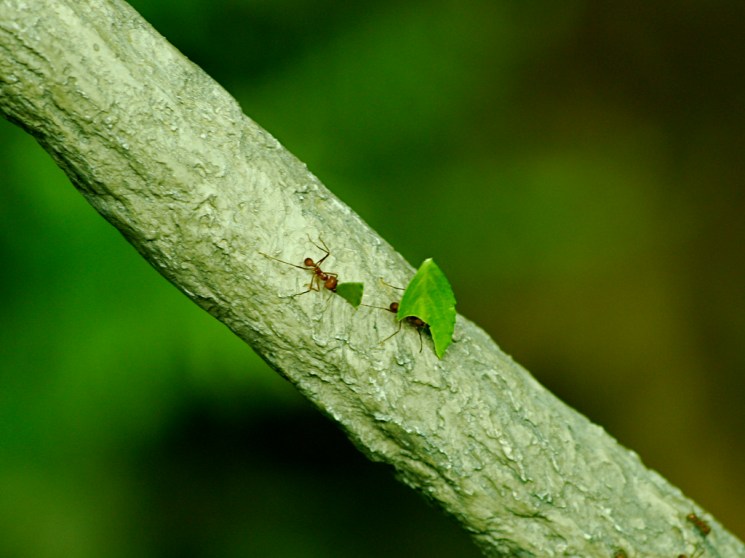
DIET IN THE WILD: They grow their own food by cutting leaves, mostly during the evening and nighttime, and carrying them back to the nest, where smaller workers then process them further and take them to underground “garden” chambers. All along the way, the leaves are fertilized by their handlers with anal secretions. Fungi then grow on the decaying vegetation, and the ants feed exclusively on the fungus, not the leaves. Each ant species grows a specific fungus.

REPRODUCTION: A. cephalotes swarm in mating flights at the onset of the rainy season. The queen mates with multiple males. The founding female has a pocket in her mouth cavity for storage of fungus spores to start her new nest. After she digs the first chamber for the garden, she deposits the spores, gathers appropriate leaves, and begins laying about 1,000 eggs each day. The first group of workers to develop takes over for the queen in caring for eggs, larvae, and pupae. The queen has only one job then—to lay the eggs that will build the colony.
The queen lives up to 10 years on average, but some have lived up to 14 years.

REMARKS: Fungus and ants are mutually dependent for survival. Obviously, the fungus provides the ants with food, but equally important, the fungus receives a warm, moist home and is supplied with fresh, fertilized nutrients. A large colony harvests the same amount of plant material that a cow consumes in a single day. Like most insects, are a good source of protein; they are eaten by people in parts of Mexico and in many places in South America. They also circulate nutrients and aerate huge quantities of soil.

Negative impacts of A. cephalotes include undermining building foundations, causing structural damage and destroying crops.

FOREST FLOOR BO14

References

Ron’s flickr  https://www.flickr.com/photos/cas_docents/4471989519/in/set-72157620567930293/

For Video ARKive  www.arkive.org/leaf-cutter-ant/atta-cephalotes/video-08.html

 Encyclopedia of Life  eol.org/pages/53197/overview

 Rainforest of the World docent training manual of the California Academy of Sciences 2014

Ron’s WordPress shortlink  wp.me/p1DZ4b-1pv